
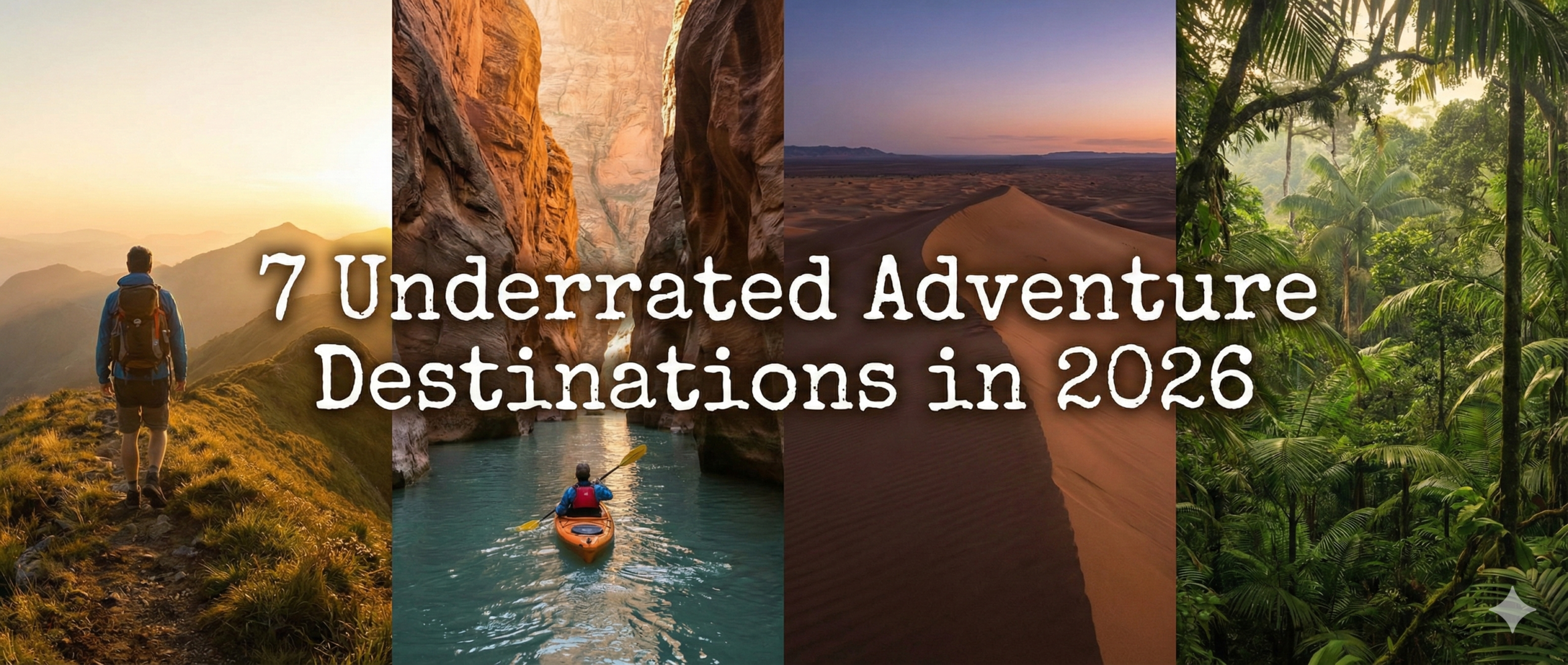
The era of “revenge travel” is over. We have entered the age of discovery.
In 2026, the modern adventurer is no longer looking for the perfect Instagram shot at the Trevi Fountain or fighting crowds at Machu Picchu. The narrative has shifted. Overtourism in classic hotspots like Venice, Barcelona, and Kyoto has pushed travelers to seek something deeper, rawer, and—crucially—quieter.
We are seeing a massive surge in demand for “off the beaten path travel 2026”. Travelers want digital detoxes in the steppes of Mongolia, jungle survival courses in South America, and silent treks in Central Asia. They want places where the map still has blank spots and where the Wi-Fi signal is happily nonexistent.
If you are tired of queues and crave the adrenaline of the unknown, this list is for you. We have scoured the globe, analyzed emerging flight routes, and tracked tourism infrastructure investments to bring you the 7 most underrated adventure destinations for 2026.
Pack your bags. The wild is calling.
1. Kyrgyzstan: The Trekking Mecca of Central Asia
While avid hikers have whispered about Kyrgyzstan for years, 2026 is the year it finally takes center stage—but without the crowds of Nepal or Patagonia. Known as the “Switzerland of Central Asia,” this landlocked nation is over 90% mountainous, offering some of the most pristine alpine scenery on Earth.
Why It’s Underrated
For decades, Central Asia was difficult to access due to visa bureaucracy and lack of infrastructure. That has changed. With visa-free entry for over 60 nationalities and improved flight connections to Bishkek, Kyrgyzstan is accessible but remains blissfully empty. You can trek for days in the Tian Shan mountains without seeing another soul, save for a semi-nomadic shepherd.
The Big Adventure: The World Nomad Games & Yurt Life
The ultimate adventure here isn’t just physical; it’s cultural.
- High-Altitude Trekking: The trek to Ala-Kul Lake (3,560m) is the crown jewel. It’s a grueling 3-4 day hike that takes you over the Ala-Kul pass, offering views of turquoise waters surrounded by jagged, snow-capped peaks. Unlike the Everest Base Camp trek, there are no tea houses here—just you, your tent, and the silence.
- Horse Trekking: You cannot visit Kyrgyzstan without riding a horse. It is central to the culture. In Song-Kul Lake, you can embark on multi-day horse treks, sleeping in traditional yurts heated by dung stoves.
- Eagle Hunting: In the southern region of Bokonbayevo, you can witness the ancient tradition of eagle hunting, where massive golden eagles are trained to hunt foxes and wolves.
2026 Logistics: How to Get Around
Infrastructure is improving rapidly. In 2026, the Community Based Tourism (CBT) network is stronger than ever. This unique system connects travelers directly with local families for homestays and guiding services, ensuring your money goes straight to the locals.
- Getting There: Fly into Manas International Airport (FRU) in Bishkek. Turkish Airlines and FlyDubai have increased daily flights.
- Transport: Shared taxis (Marshrutkas) are the standard way to move between towns like Karakol and Kochkor.
Estimated Cost & Budget
Kyrgyzstan is incredibly affordable, making it one of the best budget adventure destinations.
- Daily Budget: $30 – $50 USD.
- Yurt Stay: $15/night (includes dinner and breakfast).
- Guide per day: $40 – $60 USD.
Pro Tip: Visit in July or August. The passes are snow-free, and the high pastures (jailoos) are lush and green.
| ✅ Pros (The Good) | ❌ Cons (The Bad) |
| Untouched Wilderness: You can hike for days without seeing another tourist. | Language Barrier: English is rare outside Bishkek. Russian or Kyrgyz is essential (download Google Translate offline). |
| Visa-Free Access: Citizens of 60+ countries (EU, USA, Canada, AUS) need no visa. | Limited Infrastructure: Toilets in rural areas are often just “long-drop” holes in the ground. |
| Incredibly Cheap: Food, transport, and homestays are very affordable ($30/day is doable). | Seasonal Limits: High mountain passes are only accessible from late June to September due to snow. |
2. Guyana: The Raw Rainforest Frontier
Costa Rica is beautiful, but it’s manicured. If you want the jungle as it was a thousand years ago, you go to Guyana. Situated on the North Atlantic coast of South America, Guyana is the only English-speaking country in the continent and remains one of the least visited countries in the world.
Why It’s Underrated
Guyana doesn’t do “resorts.” It does eco-lodges deep in the Amazon. It has resisted mass tourism in favor of high-value, low-impact sustainable tourism. This keeps the crowds away and the nature pristine. It is a land of giants: giant anteaters, giant otters, giant river turtles, and the mighty jaguar.
The Big Adventure: Kaieteur Falls & Jungle Survival
- Kaieteur Falls: Forget Niagara and Victoria. Kaieteur is the world’s largest single-drop waterfall by volume, and it is 5 times higher than Niagara. The best part? There are no guard rails, no souvenir shops, and often, you are the only plane landing on the tiny airstrip nearby. It is nature in its most terrifyingly beautiful form.
- The Rupununi Savanna: This vast area transforms from wetlands to savanna depending on the season. Here, you can stay at the Karanambu Lodge, famous for its work in rehabilitating giant river otters.
- Survival Courses: For the hardcore adventurer, several operators in the Iwokrama Forest now offer 2026-style “survival vacations,” where you learn to fish for piranha, build shelters, and navigate the jungle with indigenous guides.
2026 Logistics: What’s New?
Direct flights to Georgetown (GEO) have opened up from major hubs like Miami and New York due to the recent economic boom (driven by oil, but funding conservation).
- Getting Around: This is bush-plane territory. Be prepared to fly in tiny Cessnas to get from Georgetown to the interior lodges.
- Health: Yellow Fever vaccination is mandatory. Malaria prophylaxis is highly recommended.
Estimated Cost & Budget
Guyana is not cheap. Because logistics are difficult (boats and planes required), it is a pricier destination than its neighbors.
- Daily Budget: $150 – $250 USD.
- Eco-Lodge: $200+/night (often all-inclusive of activities and meals).
Pro Tip: Combine your trip with a visit to neighboring Suriname for a culturally distinct experience (Dutch Caribbean vibes).
| ✅ Pros (The Good) | ❌ Cons (The Bad) |
| Authentic Jungle: One of the few places on Earth with pristine, unlogged rainforest. | High Cost: Internal travel requires small charter planes, making it expensive compared to other South American trips. |
| English Speaking: It is the only English-speaking country in South America, making communication easy. | Safety Concerns: The capital, Georgetown, has a high crime rate. You must take taxis at night. |
| Wildlife Density: High chances of seeing giants (Jaguars, Giant Anteaters, Harpy Eagles). | Mosquitoes: Malaria and Dengue are risks in the interior. Strong repellent is mandatory. |
3. Albania: The Affordable Mediterranean Alternative
Greece and Croatia have become victims of their own success, with soaring prices and beaches packed towel-to-towel. Enter Albania, the “Maldives of Europe” that still retains a rugged, untamed soul in its northern mountains.
Why It’s Underrated
While the “Albanian Riviera” (Ksamil and Saranda) is getting popular on TikTok, the adventure lies in the North. The Accursed Mountains (Albanian Alps) offer hiking that rivals the Swiss Alps but at 20% of the cost. Albania is safe, incredibly hospitable, and the food is a delicious hybrid of Italian and Turkish cuisines.
The Big Adventure: The Peaks of the Balkans
- The Theth to Valbona Hike: This is the holy grail of Albanian hiking. It’s a 17km trek over a mountain pass that connects two remote national parks. You start in the stone village of Theth (accessible only by 4×4 until recently) and hike through limestone peaks to Valbona.
- The Komani Lake Ferry: Often described as one of the most beautiful boat rides in the world, this ferry takes you through a narrow fjord-like reservoir. It feels like Norway, but it’s 30°C and sunny.
- Canyoning: The Osumi Canyon in the south offers world-class rafting and canyoning opportunities in spring when the water levels are high.
2026 Logistics: Easier Access
In 2026, the road to Theth has been fully paved, making it accessible by normal car, though the charm of the village remains. Tirana International Airport (TIA) is now a major hub for low-cost carriers like Wizz Air and Ryanair.
- Accommodation: In the mountains, you stay in “Guest Houses” (Kullas). These are fortified stone towers turned into B&Bs. The hospitality is legendary—expect to be fed until you can’t move.
Estimated Cost & Budget
Albania is arguably the best value destination in Europe for 2026.
- Daily Budget: $40 – $60 USD.
- Hostel: $10 – $15 USD.
- Three-course meal: $15 USD.
Pro Tip: Bring cash (LEK). While Tirana takes cards, the mountain villages and small coast towns are strictly cash-only economies.
| ✅ Pros (The Good) | ❌ Cons (The Bad) |
| Value for Money: You get Greek-style beaches and Swiss-style mountains for a fraction of the price. | Cash is King: Credit cards are rarely accepted outside luxury hotels. You must carry LEK cash everywhere. |
| Hospitality: “Besa” (the code of honor) means locals treat guests like royalty. | Erratic Driving: Road safety is poor. Drivers can be aggressive, and road conditions vary wildly. |
| Great Food: A delicious mix of Italian, Greek, and Turkish cuisines. | Public Transport: Buses (Furgons) have no fixed timetables. You just show up and ask around. |
4. Namibia: The Desert Wilderness
Namibia is not “new,” but it remains vastly underrated compared to safari heavyweights like South Africa or Kenya. It is a country of landscapes so alien they were used as the filming location for Mad Max: Fury Road. In 2026, it stands out as the ultimate road-trip destination for those who want solitude.
Why It’s Underrated
Namibia is the second least densely populated country on earth (after Mongolia). You can drive for 6 hours and see more oryx and zebras than people. It offers a “self-drive safari” experience that is safe, accessible, and deeply adventurous.
The Big Adventure: Skeleton Coast & Sossusvlei
- Climbing Big Daddy: Sossusvlei is home to the world’s oldest desert. Climbing “Big Daddy,” a 325-meter high sand dune, to look down into Deadvlei (a white clay pan filled with 900-year-old dead camel thorn trees) is a bucket-list experience.
- The Skeleton Coast: This treacherous coastline is littered with the rusting hulls of shipwrecks and massive seal colonies. It is eerie, foggy, and beautiful.
- Etosha National Park: Unlike other parks where you hunt for animals, in Etosha, you just park your car at a waterhole and wait. The animals—lions, elephants, rhinos—come to you.
2026 Logistics: The Self-Drive Boom
Renting a 4×4 with a rooftop tent is the standard way to see Namibia. In 2026, rental fleets have upgraded, offering more reliable vehicles with solar fridges and GPS.
- Roads: Most roads are gravel (B-roads and C-roads). You need to know how to change a tire.
- Booking: Campsites inside national parks (NWR resorts) book out 6-12 months in advance. Plan early!
Estimated Cost & Budget
Self-driving keeps costs down compared to fly-in safaris, but vehicle rental is pricey.
- Daily Budget: $100 – $150 USD (sharing a vehicle).
- 4×4 Rental: $120 – $180/day.
- Campsites: $20 – $40/person.
Pro Tip: Deflate your tires when driving on gravel to avoid punctures and improve traction. Ask your rental company for the correct pressure settings.
| ✅ Pros (The Good) | ❌ Cons (The Bad) |
| Safest in Africa: Politically stable and very low crime rate compared to neighbors. | Driving Distances: You will spend 5-7 hours a day driving on gravel roads to get between sights. |
| Self-Drive Friendly: You don’t need a guide; you just need a 4×4 and a map. | Expensive Rentals: Renting a reliable 4×4 with camping gear can cost $150+ per day. |
| Photography: The landscapes (Deadvlei, Fish River Canyon) are otherworldly. | Dessert Climate: Extremely hot days and freezing cold nights. Packing is tricky. |
5. Mongolia: The Ultimate Digital Detox
If 2026 is the year you want to disconnect, Mongolia is the answer. It is one of the last places on earth where nomadic culture is not a show for tourists—it is the way of life.
Why It’s Underrated
Mongolia is vast and intimidating to plan. Many travelers skip it for easier Asian destinations like Vietnam. But the government’s “Years to Visit Mongolia” campaign (extending into 2026) has eased visa restrictions and improved English signage, making it the perfect time to go before it commercializes.
The Big Adventure: The Gobi Desert & The Steppe
- Gobi Desert Expedition: Drive a Russian UAZ van across the “Singing Dunes” (Khongoryn Els). Search for dinosaur fossils at the Flaming Cliffs, where the first dinosaur eggs were discovered.
- Reindeer Herders (Tsaatan): For the truly adventurous, a trip to the remote North (near Lake Khovsgol) allows you to meet the Tsaatan people who herd reindeer in the Taiga forest. This requires a multi-day horse trek through muddy taiga.
- Naadam Festival: If you visit in July, you witness the “Three Manly Games”: wrestling, horse racing, and archery.
2026 Logistics: New Flight Routes
The new Chinggis Khaan International Airport has streamlined arrivals.
- Tours vs. Solo: Unless you are an expert mechanic and navigator, do not self-drive here. There are no roads, just tire tracks in the grass. Hiring a driver and guide is essential and affordable.
- Accommodation: You will stay in tourist Ger camps (comfortable yurts with showers) or with local families (very basic, no running water).
Estimated Cost & Budget
- Daily Budget: $70 – $120 USD.
- Group Tour: $1000 – $2000 for a 10-day trip (all-inclusive).
Pro Tip: Bring a high-capacity power bank and a solar charger. Electricity in the Gers is often limited to a few hours of generator power at night.
| ✅ Pros (The Good) | ❌ Cons (The Bad) |
| Nomadic Culture: Staying in a Ger with a family is a life-changing cultural experience. | Dietary Challenges: The food is heavy on mutton and dairy. Vegetarians will struggle in rural areas. |
| True Isolation: The best place in the world to disconnect from the internet and stress. | Rough Roads: “Roads” are often just tire tracks in the grass. Motion sickness is common. |
| Safety: Very safe for tourists, even solo travelers. | Short Season: You have a small window (June–August) before it gets dangerously cold. |
6. Uzbekistan: The Silk Road Adventure
Uzbekistan is having a moment. Once a hidden gem behind the Iron Curtain, it is now the hottest cultural adventure destination in the world. But beyond the famous blue tiles of Samarkand, there is a gritty adventure scene emerging in 2026.
Why It’s Underrated
Most tourists stick to the “Golden Triangle” (Samarkand, Bukhara, Khiva) and take the train. But the real adventure is in the Nuratau Mountains and the drying bed of the Aral Sea. It offers a blend of history and tragedy that is unmatched.
The Big Adventure: The Aral Sea & Yurt Camps
- Ship Graveyard of Moynaq: Drive to the edge of the Aral Sea (or what’s left of it). Seeing massive fishing trawlers rusting in the middle of a sandy desert is a haunting reminder of environmental change.
- Desert Yurt Camps: Stay in the Kyzylkum Desert near Aydarkul Lake. Ride camels, listen to folk songs around the fire, and swim in the lake.
- Hiking Nuratau: The ecotourism project in the Nuratau-Kyzylkum Biosphere Reserve allows you to hike between villages, staying in stone cottages with local families.
2026 Logistics: High-Speed Trains
Uzbekistan has the best train network in Central Asia. The Afrosiyob high-speed train connects the major cities efficiently.
- Visa: Visa-free for most European, Canadian, and Australian citizens (and e-visa for US).
- Money: In 2026, ATMs are finally reliable in major cities, but bring crisp US dollars for exchange in smaller towns.
Estimated Cost & Budget
Incredibly cheap luxury. You can stay in boutique hotels inside 500-year-old Madrassas for the price of a Motel 6.
- Daily Budget: $40 – $70 USD.
- Boutique Hotel: $50 – $80/night.
- Meal: $5 – $10 USD.
Pro Tip: Download the Yandex Go app. It works like Uber in Tashkent and Samarkand and saves you from haggling with taxi drivers.
| ✅ Pros (The Good) | ❌ Cons (The Bad) |
| High-Speed Trains: You can zip between Samarkand and Bukhara in comfort and speed. | Summer Heat: Temperatures can hit 45°C (113°F) in July/August. Sightseeing becomes exhausting. |
| Architecture: The scale of the Madrassas and Mosques is mind-blowing. | Bureaucracy: You must collect “registration slips” from every hotel you stay at, or risk a fine at the airport. |
| Safety: Heavy police presence makes it incredibly safe for walking at night. | ATM Issues: ATMs often run out of cash. You need to bring pristine USD notes to exchange. |
7. Laos: The Limestone Karst Playground
While Thailand gets the glory, Laos retains the soul. It is the “battery of Southeast Asia,” a land of rivers, waterfalls, and jagged limestone karsts. In 2026, Laos is shedding its reputation as just a backpacker stopover and emerging as a premium eco-adventure destination.
Why It’s Underrated
Laos is landlocked and moves at a snail’s pace. Travelers often rush through it. But the recent high-speed train connecting Vientiane to Luang Prabang and the Chinese border has revolutionized travel, turning 10-hour bus rides into 2-hour train journeys.
The Big Adventure: The Gibbon Experience & Vang Vieng
- The Gibbon Experience: Located in the Bokeo Nature Reserve, this is arguably the world’s best zipline adventure. You trek into the jungle and sleep in the world’s highest treehouses. By day, you zipline hundreds of meters above the canopy searching for the elusive singing gibbons.
- Vang Vieng 2.0: Once known for drunken tubing, Vang Vieng has cleaned up its act. It is now an adventure hub for rock climbing, paramotoring, and buggy racing through the mud. The limestone cliffs here are world-class.
- Thakhek Loop: A 3-4 day motorbike loop through central Laos that takes you through the massive Kong Lor Cave—a 7.5km river cave you navigate by boat in pitch darkness.
2026 Logistics: The Train Changed Everything
The Laos-China Railway (LCR) is the game changer for 2026. You can now zip from the capital Vientiane to the adventure hub of Vang Vieng in 1 hour.
- Booking: Train tickets are still hard to buy online officially. Ask your hotel to book them for you 3 days in advance.
- Money: The Laos Kip (LAK) has faced inflation, making it very cheap for foreign travelers, but bring US dollars or Thai Baht as backup.
Estimated Cost & Budget
- Daily Budget: $30 – $50 USD.
- Gibbon Experience: ~$300 USD (for 3 days/2 nights package).
- Street Food: $2 – $4 USD.
Pro Tip: Don’t skip the 4000 Islands (Si Phan Don) in the south. It’s the best place to do absolutely nothing in a hammock over the Mekong River.
| ✅ Pros (The Good) | ❌ Cons (The Bad) |
| Chill Vibe: The most relaxed atmosphere in Southeast Asia. No one is in a rush. | Burning Season: In March/April, farmers burn fields, causing terrible air quality (smoky haze). |
| New Train: The high-speed rail makes travel significantly faster than before. | UXO Danger: Unexploded ordnance from the Vietnam War is still a risk. Never trek off-marked paths. |
| Coffee Culture: The Bolaven Plateau produces some of the world’s best coffee. | Slow Service: Do not expect efficiency. “Laos time” means everything takes longer than expected. |
Conclusion: Which Adventure Will You Choose in 2026?
The world is opening up in new and exciting ways. Whether you choose to gallop across the steppes of Mongolia, drive the skeleton-lined coasts of Namibia, or hike the jagged peaks of Albania, 2026 is the year to step out of your comfort zone.
These underrated adventure destinations won’t stay secret for long. As infrastructure improves and the “travel dupes” trend continues, the crowds will eventually arrive. Our advice? Go now. Go while the trails are empty, the locals are curious, and the adventure is raw.
Ready to plan your trip? Browse our detailed Travel Guides or check out our Gear Reviews to ensure you have the best kit for your expedition.
Have you visited any of these places? Or do you have a hidden gem we missed? Let us know in the comments below!
Frequently Asked Questions (FAQs)
What is the safest adventure destination for solo female travelers in 2026?
Slovenia and Namibia are top choices. Namibia is excellent for solo road trips due to low crime rates, while Slovenia (and Albania) are incredibly safe with helpful locals.
Where is the cheapest place for adventure travel in 2026?
Laos and Kyrgyzstan offer the best value. You can trek, eat, and sleep for under $40 USD a day without sacrificing the quality of the experience.
Do I need travel insurance for adventure trips?
Absolutely. Standard insurance often excludes “high-risk” activities like climbing over 3,000m, motorbiking, or canyoning. Look for policies from providers like World Nomads or SafetyWing that specifically cover adventure sports.
How far in advance should I book for 2026 trips?
For destinations like Namibia (campsites) and Guyana (limited lodge space), book at least 6-9 months in advance. For Albania and Kyrgyzstan, you can be more flexible, booking 1-2 months out.
