
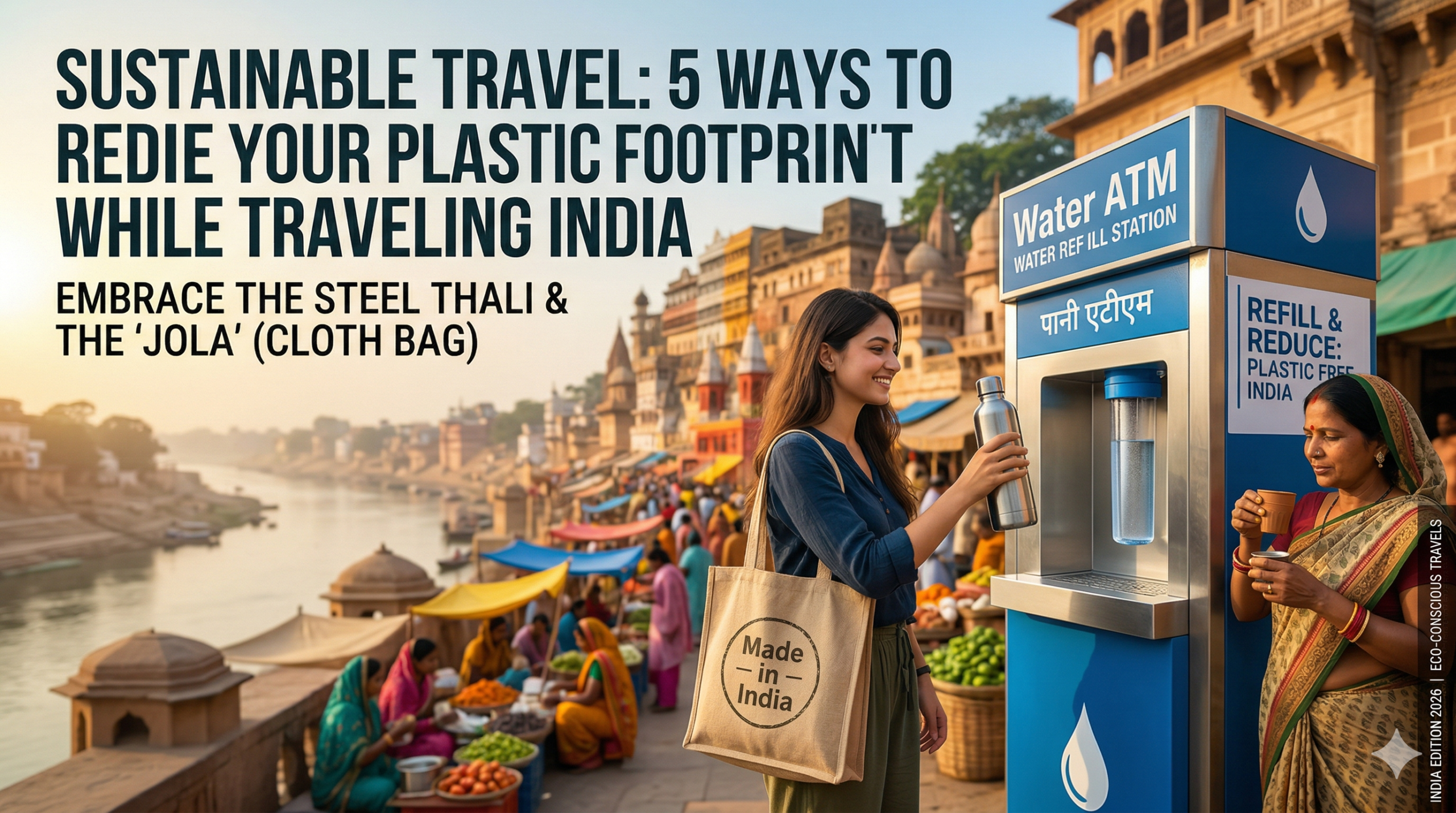
Traveling through India is a sensory explosion—the colors of Rajasthan, the backwaters of Kerala, and the bustling markets of Delhi. However, as more of us explore this beautiful subcontinent, the environmental “cost” of our footprints is becoming harder to ignore. Plastic waste, particularly single-use bottles and wrappers, often ends up in India’s beautiful rivers and mountain trails.
In 2026, sustainable travel is no longer a luxury or a niche trend; it is a necessity. The good news? Reducing your plastic footprint in India is surprisingly easy and can actually make your trip more authentic. From carrying your own filtered water to choosing local snacks over packaged ones, small changes lead to massive impacts. This guide breaks down five actionable ways to travel “plastic-free” across India while keeping your journey comfortable and budget-friendly.
Also Read:- Goa in the “Off-Season”: Why May is the Best Time for Budget Luxury
1. The Water Revolution: Beyond the Plastic Bottle
The single biggest contributor to plastic waste for travelers in India is the 1-liter PET water bottle. With temperatures often soaring, staying hydrated is non-negotiable, but buying 3–4 plastic bottles a day adds up to a mountain of trash over a two-week trip.
By 2026, India has seen a massive surge in “Water ATMs” and filtration stations in major railway stations, airports, and metro cities. Investing in a high-quality reusable bottle with a built-in filter (like Lifestraw or Steripen) allows you to drink tap water safely. Most high-end hotels and eco-homestays now provide glass bottles or filtered water dispensers. By refusing the “complimentary” plastic bottle and refilling your own, you save roughly 40-50 plastic bottles per trip.
2. Dine-In vs. Takeout: The Joy of Steel Thalis
India has a secret weapon against plastic: the Steel Thali. In local “Bhojanalayas” and dhabas, food is served on stainless steel plates with steel glasses and spoons. This is the ultimate zero-waste dining experience. The problem usually starts with “street food” or “takeaway” orders that come in plastic containers or silver-coated Styrofoam.
To reduce your footprint, prioritize sitting down to eat. Not only is the food fresher, but you also eliminate the need for disposable containers. If you are a street food lover, carry a small “travel cutlery kit” (bamboo or steel). When ordering a Lassi or Chai, look for vendors using Kulhads (traditional clay cups). These are biodegradable and add an earthy flavor to your drink that plastic or paper cups simply cannot match.
Quick Guide: Plastic vs. Sustainable Alternatives
| Item | The “Old” Way | The Sustainable Way (2026) | Impact |
| Water | Bottled Mineral Water | Reusable Filter Bottle / Water ATMs | High (Reduces 100% PET waste) |
| Dining | Plastic Cutlery / Takeaway | Steel Thali / Bamboo Cutlery Kit | Medium (Reduces landfill waste) |
| Shopping | Single-use Plastic Bags | Foldable Cloth/Jute Bag | High (Prevents littering) |
| Toiletries | Mini Plastic Hotel Bottles | Solid Shampoo Bars & Tooth Tabs | Medium (Reduces microplastics) |
| Coffee/Tea | Paper/Plastic Cups | Personal Bamboo Mug / Clay Kulhad | Low-Medium (Saves trees/plastic) |
3. The Power of the “Jhola”: Shopping with Jute and Cloth
India is a shopper’s paradise. Whether you are buying spices in Cochin or textiles in Jaipur, the default mode for most shopkeepers is to hand over a thin plastic bag. While several Indian states have “plastic bans” in place, implementation varies.
The easiest fix is to carry a “Jhola” (a traditional Indian cloth bag). Foldable cotton bags take up almost zero space in your luggage but are incredibly sturdy. When you refuse a plastic bag at a local market, you’re not just saving plastic; you’re also setting a visual example for other travelers. Furthermore, India produces some of the world’s best Jute—buying a locally made Jute bag as your primary day-pack is a great way to support the local economy while staying sustainable.
4. Rethinking the Toiletry Kit: Going “Solid”
Those tiny “travel-sized” shampoo and soap bottles provided by hotels are a recycling nightmare. They are rarely recycled because of their small size and the residue inside. In 2026, the trend has shifted toward “Solid Toiletries.”
Shampoo bars, conditioner bars, and solid deodorant sticks are game-changers for travelers in India. They are leak-proof (no more “shampoo explosions” in your suitcase), last much longer, and require zero plastic packaging. Additionally, consider “Tooth Tabs” instead of toothpaste tubes, which are made of bonded plastic and metal that are nearly impossible to recycle. Most eco-resorts in India now even stock these locally made, organic alternatives in their gift shops.
5. Pros and Cons of Plastic-Free Travel in India
Pros
- Cost Savings: Refilling water is much cheaper than buying 4 bottles a day.
- Health: Avoiding hot food in low-grade plastic containers reduces chemical leaching (BPA).
- Authenticity: Eating from clay cups and steel thalis is a much more “real” Indian experience.
- Lighter Luggage: Solid toiletries weigh less and take up less volume than liquids.
- Better Karma: You leave the trekking trails and beaches exactly as you found them.
Cons
- Preparation Time: You need to remember to pack your kit and dry out shampoo bars.
- Inconvenience: Sometimes you have to walk a bit further to find a water refill station.
- Initial Investment: High-quality filter bottles can be expensive upfront.
- Social Friction: Occasionally, you’ll have to explain to a persistent vendor why you don’t want the bag.
6. Expert Review: The Verdict
Expert Opinion: “Sustainable travel in India has moved from ‘optional’ to ‘essential.’ The Indian government’s ‘Swachh Bharat’ initiatives have made it easier for travelers to find disposal bins and water stations. However, the real change comes from the demand side. When travelers bring their own bags and bottles, it signals to the local tourism industry that sustainability is a priority. For a country with India’s population density, every single plastic bottle saved is a victory for the local ecosystem.”
The Do’s and Don’ts of Sustainable Travel
What to Do
- Carry a Filter Bottle: Essential for trekking in the Himalayas or walking through Rajasthan.
- Choose “Stay-Vacations”: Stay in homestays or eco-lodges that have clear waste management policies.
- Support Local Artisans: Buy handmade souvenirs that use natural materials like wood, clay, or cotton.
- Dispose Responsibly: If you must use plastic, carry it back to a major city where recycling facilities are better.
Also Read:- Traveling India on 1500 INR a Day: A Budget Guide for Students This Summer
What NOT to Do
- Don’t Litter in Trains: It’s tempting to follow old habits, but use the designated bins at stations instead of throwing waste out the window.
- Don’t Trust “Biodegradable” Plastic: In many parts of India, these don’t break down properly because the industrial composting facilities aren’t available. Stick to cloth or paper.
- Don’t Use Plastic Straws: Drink your coconut water directly from the fruit or use a reusable steel straw.
- Don’t Be Shy: Gently tell your hotel staff that you don’t need the daily plastic-wrapped amenities.
