
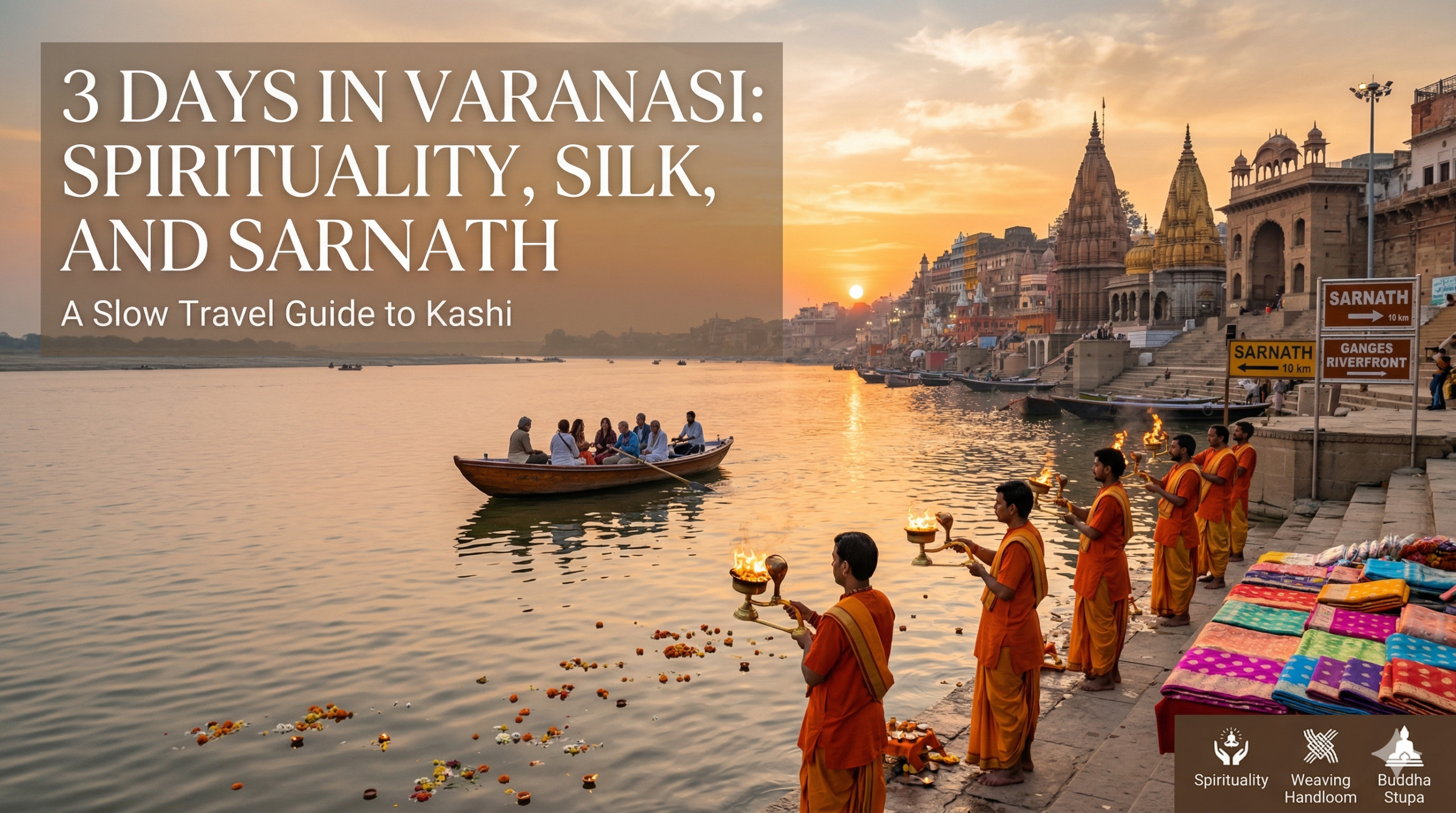
Namaste! If you are planning a trip to the oldest living city in the world, you aren’t just visiting a destination; you are stepping into a time machine. Varanasi (Kashi) is a sensory explosion of ringing bells, shimmering silk, and deep-rooted peace.
This guide is designed for the slow traveler—someone who wants to feel the heartbeat of the city rather than just ticking off a list. Here is your ultimate, updated 3-day plan for 2026.
3 Days in Varanasi: At a Glance
| Day | Theme | Key Highlights | Food to Try |
| Day 1 | The Spiritual Pulse | Ganga Aarti, Dashashwamedh Ghat, Kashi Vishwanath Temple | Tamatar Chaat, Blue Lassi |
| Day 2 | The Weave & The Walk | Silk Weaver Village, Thatheri Bazaar, BHU Campus | Kachori Sabzi, Banarasi Paan |
| Day 3 | The Path of Buddha | Sarnath, Dhamek Stupa, Archaeological Museum | Malaiyo (Winter), Thandai |
Day 1: The Spiritual Awakening
Experience Kashi’s Soul
Start your journey at the crack of dawn. In 2026, the Subah-e-Banaras at Assi Ghat has become a global phenomenon. Arrive by 5:00 AM to witness Vedic chanting, a morning Aarti, and live classical music as the sun rises over the horizon. The energy here is electric yet calm.
After the Aarti, take a rowing boat (avoid the noisy motorboats if you want the “slow travel” vibe). Drifting past the 84 ghats, you will see life and death side-by-side. You’ll pass Manikarnika, the eternal cremation ghat, where fires have burned for thousands of years. It’s a grounding experience that puts life into perspective.
Finish your morning at the Kashi Vishwanath Corridor. Since its massive renovation, the walk from the Ganga to the main temple is seamless and majestic. The gold-plated spires of the Shiva temple are a sight to behold.
The Evening Spectacle
As dusk falls, head to Dashashwamedh Ghat for the world-famous Evening Ganga Aarti. Seven priests perform a synchronized ritual with massive brass lamps. It is loud, crowded, and utterly mesmerizing.
Expert Review: “To get the best view of the Aarti without the crushing crowd, book a seat on a boat parked right in front of the ghat at least 30 minutes in advance.” — Local Heritage Guide
Day 2: Silk, Artisans, and Knowledge
The Magic of Banarasi Silk
Varanasi is the heart of India’s silk weaving. Instead of just buying a saree at a showroom, take an auto-rickshaw to the Sarai Mohana weaver village. Here, you can hear the rhythmic “clack-clack” of handlooms. You will see how a single saree can take fifteen days to six months to weave, using real gold and silver threads (Zari).
The craftsmanship is a UNESCO-recognized heritage. When you buy directly from a weaver’s home, you aren’t just getting a piece of clothing; you are supporting a family tradition that dates back to the Mughal era.
Bazaars and Universities
Spend your afternoon at BHU (Banaras Hindu University). It’s one of the largest residential universities in Asia and feels like a green lungs for the chaotic city. Visit the New Vishwanath Temple (VT) inside the campus—it’s made of white marble and is open to everyone regardless of caste or religion.
On your way back, stop at Thatheri Bazaar. This is the ancient metal-workers’ lane. You can buy hand-beaten brass Lassi glasses or copper puja items. The narrowness of these lanes is part of the charm; you’ll share the path with cycles, cows, and monks.
Day 3: Sarnath – The Silence of the Buddha
A Journey to Peace
Just 10 km from the chaos of the city lies Sarnath, where Lord Buddha gave his first sermon. The transition from the noise of Varanasi to the silence of Sarnath is striking. The Dhamek Stupa stands as a massive stone structure marking the exact spot of the sermon.
Walk through the ruins of ancient monasteries. The energy here is meditative. Visit the Sarnath Archaeological Museum (Note: Closed on Fridays) to see the Ashokan Lion Capital, which is the national emblem of India. The detailing on the 2,000-year-old sandstone is so fine it looks like polished metal.
The Final Farewell
Spend your last evening back at Assi Ghat. Sit at one of the rooftop cafes, like Pizzeria Vaatika, and watch the river flow. It’s the perfect spot to reflect on your journey. Before you leave, don’t forget to try the Banarasi Paan—it’s not just a mouth freshener; it’s a cultural rite of passage.
The Pros and Cons of Traveling to Varanasi
| Pros | Cons |
| Deeply Spiritual: An unmatched atmosphere of devotion. | Overwhelming: The noise, crowds, and smells can be intense. |
| World-Class Food: Incredible, affordable vegetarian street food. | Aggressive Vendors: Touts and “fake” guides are common near ghats. |
| History Everywhere: You are walking through 3,000 years of history. | Cleanliness Issues: While improving, the narrow lanes can be dirty. |
| Budget-Friendly: Great for both luxury and budget travelers. | Traffic: Moving through the city can take much longer than expected. |
Dos and Don’ts for Your Trip
What to Do ✅
- Dress Modestly: Cover your shoulders and knees, especially when entering temples.
- Wake Up Early: Varanasi is at its most beautiful between 5:00 AM and 8:00 AM.
- Carry Cash: Many small shops and rickshaws do not accept digital payments yet.
- Bargain: Whether it’s a boat ride or a souvenir, always negotiate the price first.
What Not to Do ❌
- Don’t Film Cremations: It is extremely disrespectful to take photos at Manikarnika or Harishchandra Ghat.
- Avoid Touts: If someone offers a “free tour” of a silk factory, they likely want a heavy commission on what you buy.
- Don’t Drink Tap Water: Always stick to bottled water or filtered water at your hotel.
- Don’t Rush: Varanasi cannot be “seen” in a hurry. Sit on the steps, watch the river, and let the city come to you.
