
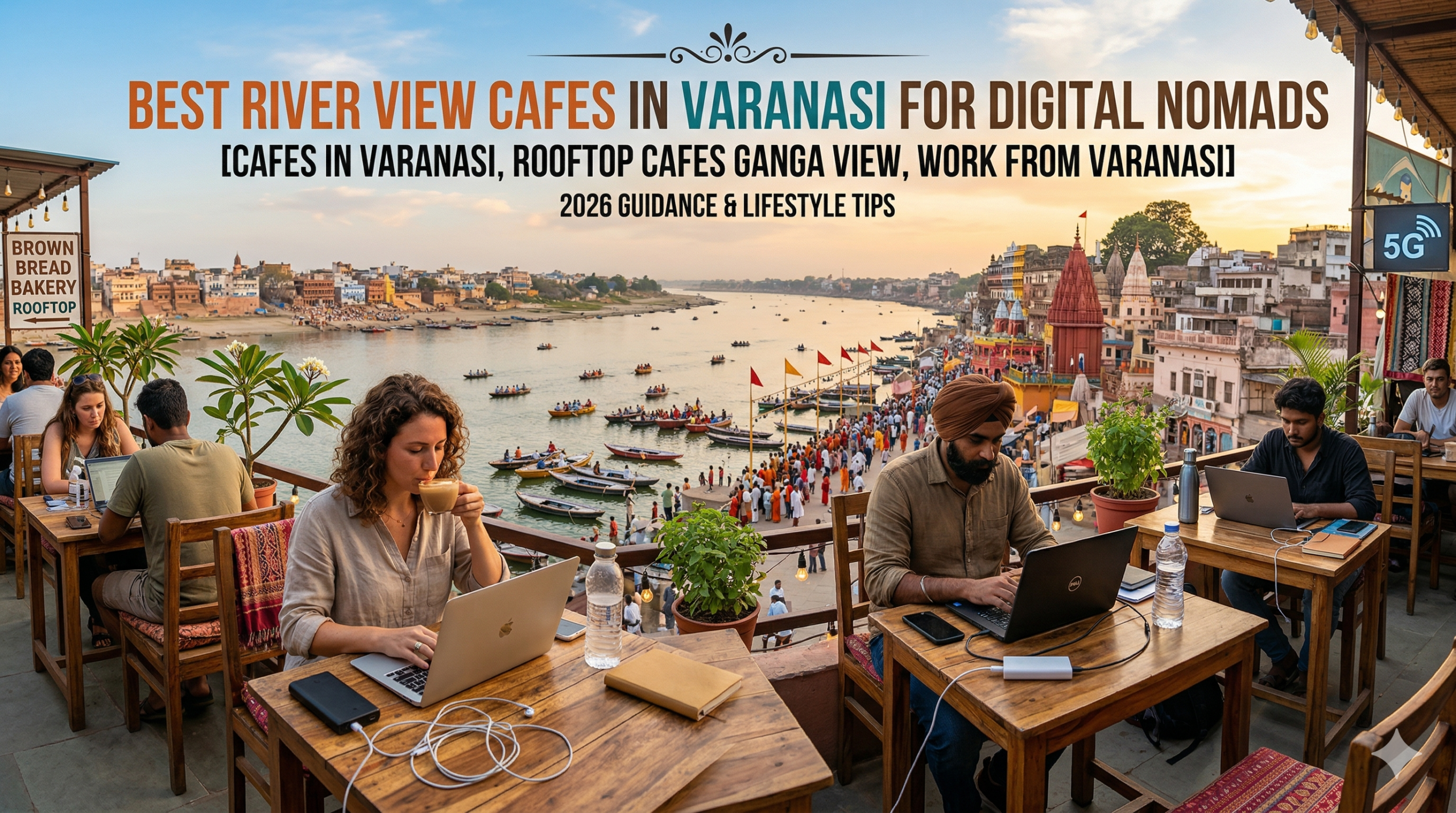
Varanasi, the spiritual heart of India, is rapidly transforming into a unique hub for digital nomads. Imagine trading your dull office walls for a 360-degree view of the ancient Ganges, where the sound of temple bells replaces the drone of air conditioners. In 2026, the “Work from Varanasi” trend is at an all-time high, thanks to improved high-speed 5G connectivity and a growing culture of “Sattvic” coworking.
For a digital nomad, a cafe isn’t just a place to eat—it’s an office. You need stable Wi-Fi, power sockets, and a vibe that inspires productivity without the overwhelming chaos of the main markets. The ghats of Varanasi offer a string of rooftop gems where you can attend a Zoom call with a backdrop of a 2,000-year-old sunrise and wrap up your day with a boat ride.
Also Read:- 3 Days in Varanasi: Spirituality, Silk, and Sarnath
1. The Assi Ghat Hub: Connectivity and Creativity
Assi Ghat is the undisputed headquarters for the digital nomad community in Varanasi. Located at the southernmost tip of the main ghat stretch, it is noticeably more relaxed and spacious than the labyrinthine alleys of the Old City. The cafes here have evolved to cater specifically to long-term travelers and remote workers. In 2026, many of these spots have upgraded to high-speed fiber-optic lines, realizing that “slow internet” is the only thing that could drive a nomad away.
The beauty of working from Assi is the balance. You have access to Western-style comforts like artisan espresso and sourdough bread, but you’re still only steps away from the morning Subah-e-Banaras rituals. The energy here is collaborative; you’ll often see groups of travelers sharing tables, trading tips on stock markets or software development over bowls of muesli. It’s the kind of place where you can stay for five hours with a single cup of coffee, and the staff will treat you like family rather than a customer occupying a seat.
Beyond the work, Assi Ghat’s cafes are centers for cultural exchange. After your “log-off” time, these spaces often host spontaneous flute recitals or poetry readings. For a nomad, this means your “office” provides built-in networking and entertainment. The streets leading away from the ghat, like the Assi-Ravindrapuri road, are lined with quiet guest houses, making it possible to live, work, and eat within a 500-meter radius.
Quick Guide: Top Nomad-Friendly Cafes in Varanasi
| Cafe Name | Location | Wifi Speed (Est.) | Best For | Average Cost (for 2) |
| Brown Bread Bakery | Near Pandey Ghat | 30-50 Mbps | Breakfast & Long Sessions | ₹600 |
| Terracotta Cafe | Near Assi Ghat | 40-60 Mbps | Quiet, healthy meals | ₹400 |
| Lotus Lounge | Mansarowar Ghat | 20-30 Mbps | Stunning views & Vibe | ₹800 |
| Roma’s Cafe | Lanka/Assi Area | 50+ Mbps (5G) | Professional work desk | ₹700 |
| Pizzeria Vaatika | Assi Ghat | 10-20 Mbps | Quick lunch with a view | ₹500 |
2. Rooftop Retreats: Mastering the “Office” View
The real magic of Varanasi happens on the rooftops. Because the city is built on a high bank, a third-story cafe provides an unobstructed view of the entire crescent-shaped riverfront. For a digital nomad, these rooftops offer a “sensory buffer”—you are high above the honking rickshaws and street vendors, but you can still see the colorful life of the ghats below.
Places like Brown Bread Bakery and Ganga View Cafe have become legendary in the nomad circuit. Brown Bread Bakery, in particular, is a pioneer; they were one of the first to provide reliable internet alongside an organic, eco-friendly menu. Their rooftop is multi-tiered, allowing you to find a secluded corner for deep work or a communal table for social hours. In April, the breeze from the river keeps these rooftops surprisingly cool until about 11:00 AM, making them perfect for morning sprints.
Working from a rooftop also gives you a front-row seat to the city’s rhythm. You can watch the laundry-wallahs drying clothes on the steps, pilgrims taking holy dips, and the evening fires starting at the cremation ghats in the distance. This constant movement acts as a unique “white noise” that many find more productive than a silent library. However, remember that “rooftop” often means “open-air,” so in 2026, always check if they have a shaded “AC section” for those high-noon hours when the sun becomes too bright for your laptop screen.
3. Beyond the Coffee: Food and Lifestyle for Nomads
A 7-day or month-long stay in Varanasi requires more than just caffeine. The “nomad diet” here is a mix of traditional Banarasi street food and international health bowls. Most work-friendly cafes have adapted their menus to include “Sattvic” options—food that is fresh, vegetarian, and easy on the stomach. This is crucial when you’re working long hours; the last thing you want is “Delhi Belly” interrupting your project deadlines.
Terracotta Cafe and Aum Cafe are favorites for health-conscious workers. They offer everything from vegan pancakes to Ayurvedic teas that help with focus and mental clarity. For those who miss a taste of home, the pizza at Vaatika Cafe or the hummus plates at Lotus Lounge are reliable staples. Many of these cafes also act as community centers where you can find flyers for yoga classes, classical music lessons, or even “Hindi for Expats” workshops.
The lifestyle of a nomad in Varanasi is about integration. You might start your day with a 6:00 AM yoga session on the ghats, work from a cafe until 4:00 PM, and then spend your evening exploring the hidden temples of the Old City. The cost of living is remarkably low—you can live quite comfortably on $800–$1,000 a month, including a private room with a view and eating out twice a day. This high “quality of life to cost” ratio is why Varanasi is climbing the ranks on platforms like Nomad List.
Pros and Cons of Working in Varanasi
| Pros | Cons |
| Low Cost of Living: High-quality life at a fraction of Western prices. | Sensory Overload: The noise and crowds can be draining for some. |
| Unique Inspiration: The spiritual energy fuels creativity. | Power Outages: Though improving, “jhatkas” (power cuts) still happen. |
| Fast 5G: India’s 5G rollout makes mobile hotspots a reliable backup. | Infrastructure: Narrow lanes make commuting with gear difficult. |
| Cultural Depth: Endless exploration opportunities after work hours. | Extreme Weather: April can be hot; summer is scorching. |
4. Expert Review: Tips for a Seamless Remote Setup
Having worked remotely from five different continents, I can say that Varanasi is one of the most rewarding yet challenging “offices” you’ll ever have. To succeed here, you need to be a “proactive nomad.” You cannot rely on a single source of power or internet.
The Tech Setup:
Always carry a portable power bank for your phone and, if possible, a laptop power bank. While most cafes have sockets, a sudden power surge or a 10-minute outage can disconnect you from a critical meeting. Additionally, rely on a local 5G SIM card (Jio or Airtel). In 2026, 5G speeds in Varanasi often outperform the cafe Wi-Fi. Using your phone as a hotspot while sitting in a cafe is the “pro move” to ensure a jitter-free connection.
The Location Strategy:
Don’t get stuck in one spot. Use your 7-day stay to “cafe hop.” Use the mornings for Assi Ghat (quiet and fresh), the afternoons for an AC-enabled cafe in the Ravindrapuri area (to beat the heat), and the evenings for a rooftop near Dashashwamedh to catch the Aarti vibes after you close your laptop. This variety keeps your mind sharp and ensures you see different facets of the city without ever missing a deadline.
Expert Tip: Download the “Ola” or “Uber” apps for auto-rickshaws, but remember that they can’t enter the narrow “galis” (alleys). If your cafe is deep in the Old City, you will be walking. Wear comfortable, slip-on shoes—you’ll be taking them off at every temple and many cafe entrances.
5. What to Do and What NOT to Do
To maintain your professional reputation while soaking in the spiritual vibes, follow these golden rules for working from the holy city.
What to Do:
- Respect the “Vibe”: If you’re in a quiet, meditative cafe, use headphones and keep your voice low during calls.
- Tip Your Sevadars: If you occupy a table for four hours, ensure you order something every 90 minutes and leave a generous tip for the staff who keep your water glass full.
- Dress Professionally (on top): Even if you’re wearing shorts under the table, keep a clean, modest shirt for video calls. It shows respect for the local culture and your clients.
- Explore the “Galis”: Some of the best hidden work-spots are tiny cafes tucked away in the alleys. Don’t be afraid to get a little lost.
- Carry a “Data Backup”: Have your files available offline. Local “fiber cuts” due to construction are common; being able to work without internet for an hour is a lifesaver.
What NOT to Do:
- Don’t Assume “Public” Wi-Fi is Secure: Always use a VPN, especially when accessing bank accounts or sensitive client data from cafe networks.
- Don’t Forget the Heat: April is the start of the “Loo” (hot winds). If you’re working on an open rooftop, stay hydrated and wear sunscreen.
- Don’t Take Photos of Cremations: If your cafe overlooks Manikarnika or Harishchandra Ghat, keep your camera away out of respect for the grieving families.
- Don’t Judge the Speed: Everything in Varanasi moves at a different pace—including the food service. Don’t go to a cafe for a “quick 20-minute lunch” if you have a meeting right after.
- Don’t Ignore the Monkeys: Varanasi monkeys are tech-savvy. Never leave your phone or shiny gear unattended on a rooftop table—they will steal it.
6. Closing: The Banaras Work-Life Balance
Varanasi isn’t just a destination; it’s a lesson in “Mindful Productivity.” By the end of your week, you’ll find that the city has forced you to slow down where it matters and speed up where it counts. You’ll stop fighting the noise and start finding the rhythm within it.
Whether you’re a freelance writer, a software dev, or a startup founder, working from the banks of the Ganga offers a perspective no co-working space in San Francisco or Bangalore can provide. You are working in a city that has seen civilizations rise and fall—it makes that “urgent” email seem a little less daunting, doesn’t it?
Also Read:- The Perfect 2-Day Varanasi Itinerary for First-Timers
