
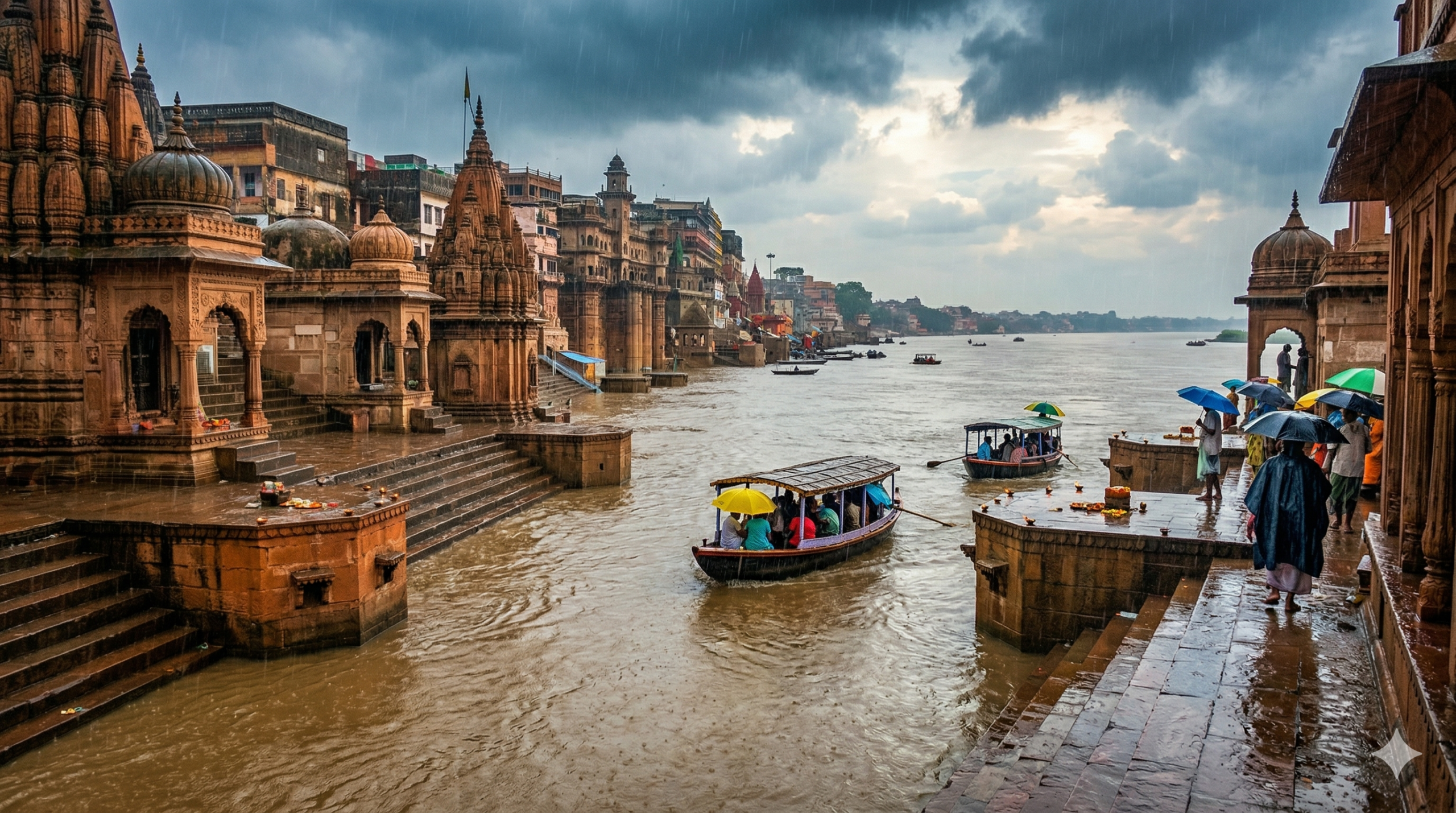
Varanasi, the spiritual capital of India, is a city that never sleeps, but it definitely changes its mood when the clouds roll in. Visiting Varanasi in July and August is a unique experience that splits travelers into two camps: those who love the mystical, rain-washed charm and those who find the flooded ghats a bit too much to handle.
If you are planning an off-season trip to this ancient city, you need more than just a raincoat; you need a strategy. This blog will walk you through every detail of the monsoon season in Kashi, from the rising water levels of the Ganges to the hidden perks of low-season travel.
Also Read:- Homestays in Varanasi: Living with a Local Family
1. The Weather and Atmosphere: A Rain-Washed Spiritual Hub
July and August mark the peak of the monsoon season in North India. In Varanasi, the heat of the summer (which can hit a brutal 45°C) is finally replaced by a cooler, albeit much more humid, climate. The temperatures usually fluctuate between 26°C and 32°C. While the drop in temperature sounds like a relief, the humidity often stays above 70%, making it feel quite “sticky.”
The atmosphere, however, is unmatched. The city’s famous dust is washed away, leaving the ancient stone walls of the temples and the lush trees of the Cantonment area looking vibrant and alive. The sky is often a dramatic canvas of dark grey clouds, providing a stunning backdrop for photography. However, be prepared for sudden, intense downpours that can last anywhere from 30 minutes to a couple of hours. These rains aren’t just “showers”; they are heavy enough to turn narrow lanes into small streams for a short period.
| Feature | July & August Details |
| Average Temperature | 26°C (Min) to 32°C (Max) |
| Humidity Level | Very High (approx. 75%-80%) |
| Rainfall Frequency | Frequent heavy bursts; occasional light drizzle |
| Crowd Levels | Significantly lower (Off-season) |
| Vibe | Mystical, green, and quiet |
2. The Flooded Ghats: Understanding the Rising Ganges
The most significant impact of the monsoon is the rise of the Ganges river level. Fed by Himalayan snowmelt and local rains, the river can rise up to 10–12 meters above its summer level. This is the “Dealbreaker” for many tourists. When the river rises, the famous “Ghat walk” becomes impossible. The lower steps where rituals take place are completely submerged, and at the peak of the monsoon, even the higher platforms may be underwater.
Interestingly, this doesn’t stop the life of the city; it just moves it higher. The Ganga Aarti, usually performed on the river’s edge, is shifted to the rooftops of the ghats or higher stone platforms. Watching the Aarti against the backdrop of a roaring, swollen river is a powerful sight, though you’ll be viewing it from a distance or from a rooftop rather than sitting on the steps. If your main goal is to walk the entire 7km stretch of ghats, July and August might disappoint you, as the path is often cut off by rising water.
| Aspect | Monsoon Impact |
| Ghat Accessibility | Low-lying ghats are often submerged; paths are blocked. |
| Ganga Aarti | Shifted to higher ground/rooftops; still held daily. |
| River Flow | Very strong currents; water looks muddy/brown. |
| Photography | Unique shots of “Submerged Temples” (like the Ratneshwar Mahadev). |
| Walking | Restricted to the upper lanes and gullies. |
3. Off-Season Travel: Perks and Price Drops
One of the biggest reasons to visit Varanasi in July and August is your wallet. Because this is technically the “off-season,” the tourism industry slows down. For a traveler, this means leverage. Luxury heritage hotels on the riverfront that are usually booked months in advance often offer discounts of 30% to 50%. You can experience a royal stay at a fraction of the winter price.
Beyond the cost, there is the luxury of space. The narrow lanes (Gullies) of Varanasi are legendary for their crowds. In the monsoon, the number of foreign and domestic tourists drops, allowing you to explore the Kashi Vishwanath Temple or the Sarnath ruins without being pushed around. You can actually sit in a cafe overlooking the river and hear the rain hitting the water without the constant hum of a thousand voices. It’s a time for “Slow Travel”—ideal for those who want to soak in the spirituality rather than just check off a list of sights.
Pros and Cons of Monsoon Travel
| Pros | Cons |
| Budget Friendly: Massive discounts on luxury stays. | Humidity: Can be draining and causes heavy sweating. |
| Quietness: Fewer crowds at major temples and ghats. | Limited Boating: Boat rides are often banned for safety. |
| Greenery: The city and nearby Sarnath look lush and fresh. | Muddy Alleys: The narrow lanes can become slippery/dirty. |
| Photography: Dramatic monsoon skies and moody lighting. | Mosquitoes: High risk of mosquito-borne illnesses. |
4. Activities and Safety: What to Do (and Not Do)
While some activities are restricted, others become even more magical. Sarnath, located just 10km away, is beautiful in the rain. The archaeological park turns into a green oasis, and the ancient stupas look majestic under the clouds. This is also a great time to explore the indoor culture of Varanasi—visit the silk weaving centers or spend hours in the famous Blue Lassi shop trying their 80+ varieties of yogurt.
However, safety is paramount. The river is extremely dangerous during this time. The currents are deceptively strong, and the water level can rise rapidly. Even if a local boatman offers you a ride, check the official government guidelines first. Often, small manual boats are banned, and only larger motorboats or government-regulated cruises are allowed. Additionally, the stone steps of the ghats become covered in algae and are incredibly slippery; a fall here can be serious.
What To Do
- Book a Heritage Hotel: Enjoy the “Old World” charm at a low price.
- Visit Sarnath: The greenery is at its peak.
- Explore the Gullies: Wander the lanes for street food like Malaiyo and Kachori Sabzi.
- Attend the “Rooftop” Aarti: A unique perspective on the famous ritual.
- Carry a High-Quality Umbrella: A cheap one won’t survive the Varanasi winds.
What Not To Do
- Don’t Swim: The river is at its most dangerous; currents are lethal.
- Avoid Raw Street Food: Stick to hot, fried, or freshly cooked food to avoid stomach issues.
- Don’t Walk Barefoot: Slippery algae on stones and waterlogged lanes are unhygienic.
- Don’t Take Unofficial Boat Rides: If the government says boating is closed, don’t risk it.
5. Expert Review and Final Verdict
Expert Review: “Varanasi in the monsoon is not for the ‘first-time’ traveler who wants the classic postcard experience. If you want to see the ghats in their full glory and take long sunrise boat rides, wait for October. However, for the seasoned traveler or the soul-seeker, the monsoon offers a raw, moody, and deeply authentic version of Kashi. The sound of the temple bells mixing with the heavy rain creates a meditative atmosphere that the winter crowds usually drown out. Just pack a pair of high-grip sandals and a waterproof bag for your camera!” — Travel Consultant & Cultural Enthusiast.
The Final Verdict: Should You Visit?
- Visit If: You are on a budget, you hate crowds, you love rainy-day vibes, and you have already seen the main sights before.
- Skip If: You are visiting for the first time, you have mobility issues (slippery steps), or your dream is a sunrise boat ride.
Also Read:- Scams to Avoid in Varanasi: Guides, Boats, and Blessings
