
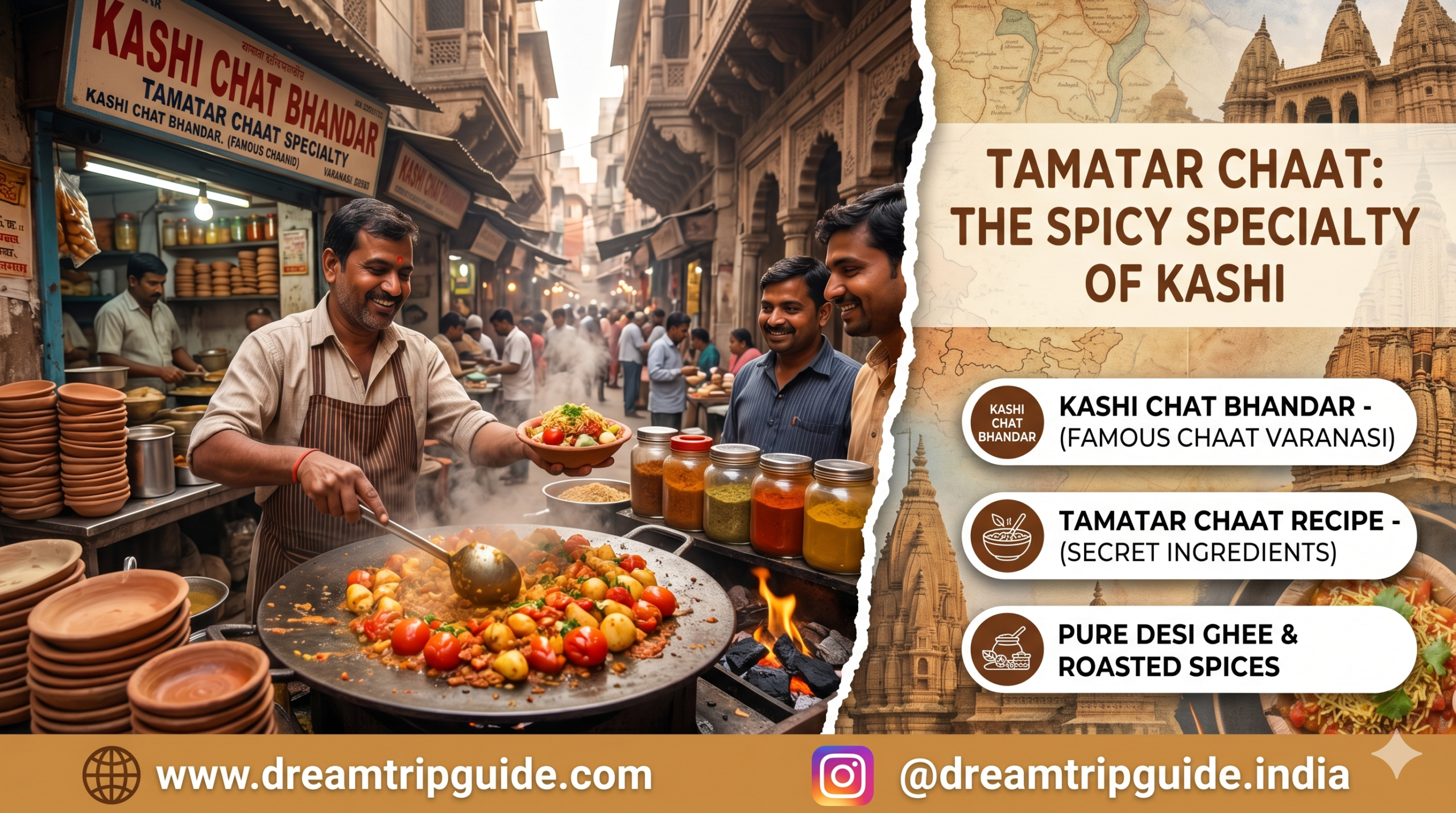
Varanasi, or Kashi, is not just a city of temples and ghats; it is a paradise for food lovers. Among the narrow alleys and bustling markets, one dish stands out as the undisputed king of Banarasi street food: Tamatar Chaat. If you are visiting Varanasi in 2026, your trip is incomplete without tasting this tangy, spicy, and buttery delight served in traditional earthen bowls (donas).
At www.dreamtripguide.com, we believe that food is the soul of travel. This guide will take you through the history, the best spots to eat, and even how to recreate this magic at home. Don’t forget to follow our journey on Instagram at dreamtripguide.india for live street food trails!
1. What Makes Tamatar Chaat the Soul of Varanasi?
Tamatar Chaat is unique to Varanasi. Unlike the Delhi or Mumbai style chaat that relies heavily on curd and papdi, the Banarasi version is a warm, cooked preparation. It is essentially a spicy tomato mash mixed with boiled potatoes, a variety of secret spices, and a generous amount of desi ghee. What truly sets it apart is the Hing (Asafoetida) water and the sugar syrup (Chashni) flavored with roasted cumin that is poured on top just before serving.
The texture is soft and almost stew-like, topped with crunchy namkeen (sev) and sometimes small pieces of crispy papdi. In 2026, while many modern cafes have opened up in Kashi, the authentic taste still resides in the old shops where the chaat is slow-cooked on large iron tawas. The smoky aroma of the coal fire and the earthy scent of the clay bowl add layers of flavor that a plastic or paper plate simply cannot provide. It is a dish that represents the chaotic yet harmonious spirit of Kashi—sweet, sour, spicy, and unforgettable.
Also Read:- Best Hotels in Varanasi with a View of the Ganges
2. Iconic Places to Eat: Kashi Chat Bhandar & More
When people talk about the “Famous Chaat of Varanasi,” one name dominates the conversation: Kashi Chat Bhandar. Located near Godowlia Crossing, this shop has been serving pilgrims and tourists for decades. In 2026, it remains the gold standard for Tamatar Chaat. The crowd here is a testament to its quality. However, there are other hidden gems that locals swear by.
Dina Nath Keshari Chat Bhandar is another heavyweight that offers a slightly different spice profile, often preferred by those who like a more robust, “chatpata” kick. For those exploring the area near Assi Ghat, Deena Chat Bhandar provides a stellar version that is perfect after watching the morning or evening Aarti. Each of these shops has its own “secret masala” that they have guarded for generations.
Top Chaat Spots Comparison (2026 Updated)
| Shop Name | Location | Signature Dish | Best Time to Visit |
| Kashi Chat Bhandar | Godowlia | Tamatar Chaat & Palak Chaat | 5:00 PM – 8:00 PM |
| Dina Nath Keshari | Luxa Road | Tamatar Chaat & Gulab Jamun | 4:00 PM – 9:00 PM |
| Deena Chat Bhandar | Dashashwamedh | Tamatar Chaat & Chura Matar | 6:00 PM – 10:00 PM |
| Keshari Chaat | Near Kashi Vishwanath | Tamatar Chaat (Spicy) | 12:00 PM – 8:00 PM |
3. The Secret Recipe: How to Make it at Home
While nothing beats the atmosphere of a Banarasi lane, you can try to capture the essence of Kashi in your kitchen. The key is the “Dugna” method—using twice as many tomatoes as potatoes.
Ingredients: Finely chopped tomatoes (500g), boiled mashed potatoes (250g), ginger-green chili paste, cumin seeds, turmeric, red chili powder, garam masala, and the star ingredient—Black Salt (Kala Namak).
Process:
- Sauté ginger and chilies in desi ghee. Add the tomatoes and cook until they turn into a mushy pulp.
- Add the dry spices and the mashed potatoes. Mix thoroughly.
- Prepare the ‘Chashni’ (sugar syrup) by boiling sugar with water and adding plenty of roasted cumin powder.
- While serving, mash a portion of the mixture on a hot tawa with more ghee, put it in a bowl, add a spoonful of cumin syrup, a squeeze of lemon, and top with sev or nimki.
The magic lies in the balance. The sugar syrup shouldn’t make it a dessert; it should only cut through the intense acidity of the tomatoes and the heat of the chilies.
4. Pros and Cons of Banarasi Street Food
Eating on the streets of Varanasi is an adventure. While the flavors are world-class, there are practical things to consider for your 2026 trip.
Pros:
- Authenticity: You get to taste history in every bite.
- Affordability: A plate of Tamatar Chaat usually costs between ₹40 to ₹70, making it a budget-friendly treat.
- Social Experience: Standing by a wooden bench, chatting with locals while eating, is the best way to soak in the culture.
- Vegetarian Friendly: Almost all traditional street food in Kashi is 100% vegetarian.
Cons:
- Hygiene Concerns: Some smaller stalls might not meet everyone’s hygiene standards. Stick to high-turnover shops like Kashi Chat Bhandar.
- Crowds: During peak hours, you will have to eat while standing in a sea of people.
- Spice Levels: Banarasi food can be very spicy. If you have a sensitive stomach, ask them to go easy on the “mircha.”
- Oil/Ghee Content: It is a heavy dish. If you are on a strict diet, this will definitely be your “cheat meal.”
5. Expert Review: Why it’s a Must-Try
As a travel blogger at Dream Trip Guide, I’ve eaten chaat across India, from the ragda-pattice of Mumbai to the aloo tikki of Lucknow. But the Tamatar Chaat of Varanasi is in a league of its own. It is more of a “warm hug in a bowl” than just a snack.
In 2026, I noticed that these shops have started using better packaging for takeaways, but I highly recommend eating it fresh. My expert tip: Don’t stop at Tamatar Chaat. Pair it with a hot “Gulab Jamun” or “Rabri” from the same shop. The contrast between the spicy tomato base and the milky sweetness of the dessert is what food dreams are made of. Also, look out for the “Palak Chaat” (crispy spinach) which is becoming a secondary favorite among tourists.
6. Do’s and Don’ts for Street Food Lovers
What to Do:
- Use the Dona: Always ask for the earthen bowl (dona). It is eco-friendly and enhances the taste.
- Watch the Making: Standing by the tawa and watching the “chaat-wala” mash the ingredients is a mesmerizing experience.
- Check for RO Water: Reputed shops like Kashi Chat Bhandar use purified water for their preparations.
- Try the Chura Matar: If you are visiting in winter, this flattened rice and green pea dish is a seasonal masterpiece.
What NOT to Do:
- Don’t Drink Unbottled Water: Even if the food is safe, the local tap water might not suit visitors. Stick to bottled water.
- Don’t Waste: The portions are surprisingly filling. Order one plate for two people if you plan to try multiple dishes.
- Don’t Rush: Street food in Kashi is prepared with patience. If there’s a queue, wait for it; the reward is worth it.
- Don’t Go Too Late: Most popular shops run out of Tamatar Chaat by 9:30 PM.
Frequently Asked Questions (FAQs)
Q1: Is Tamatar Chaat very spicy?
Yes, it generally has a medium-to-high spice level. You can ask the vendor to make it “Kam Tikha” (less spicy) if needed.
Q2: Is it safe for international tourists?
Yes, if you eat at established shops with high turnover like Kashi Chat Bhandar or Dina Nath. Their ingredients are fresh because they sell out every few hours.
Q3: Is Tamatar Chaat available all day?
Usually, chaat shops in Varanasi open after 3:00 PM or 4:00 PM and serve until late at night.
Q4: Can I get a vegan version?
Authentic Tamatar Chaat uses a lot of Desi Ghee. You can ask them to use oil, but it might not be available at traditional shops.
Q5: What is the best season for this?
While available year-round, it tastes best in the winters (October to March) when the tomatoes are juicy and the warm chaat provides comfort against the chill.
For more food guides and travel itineraries, visit www.dreamtripguide.com. Follow dreamtripguide.india on Instagram for more Banaras reels!
