
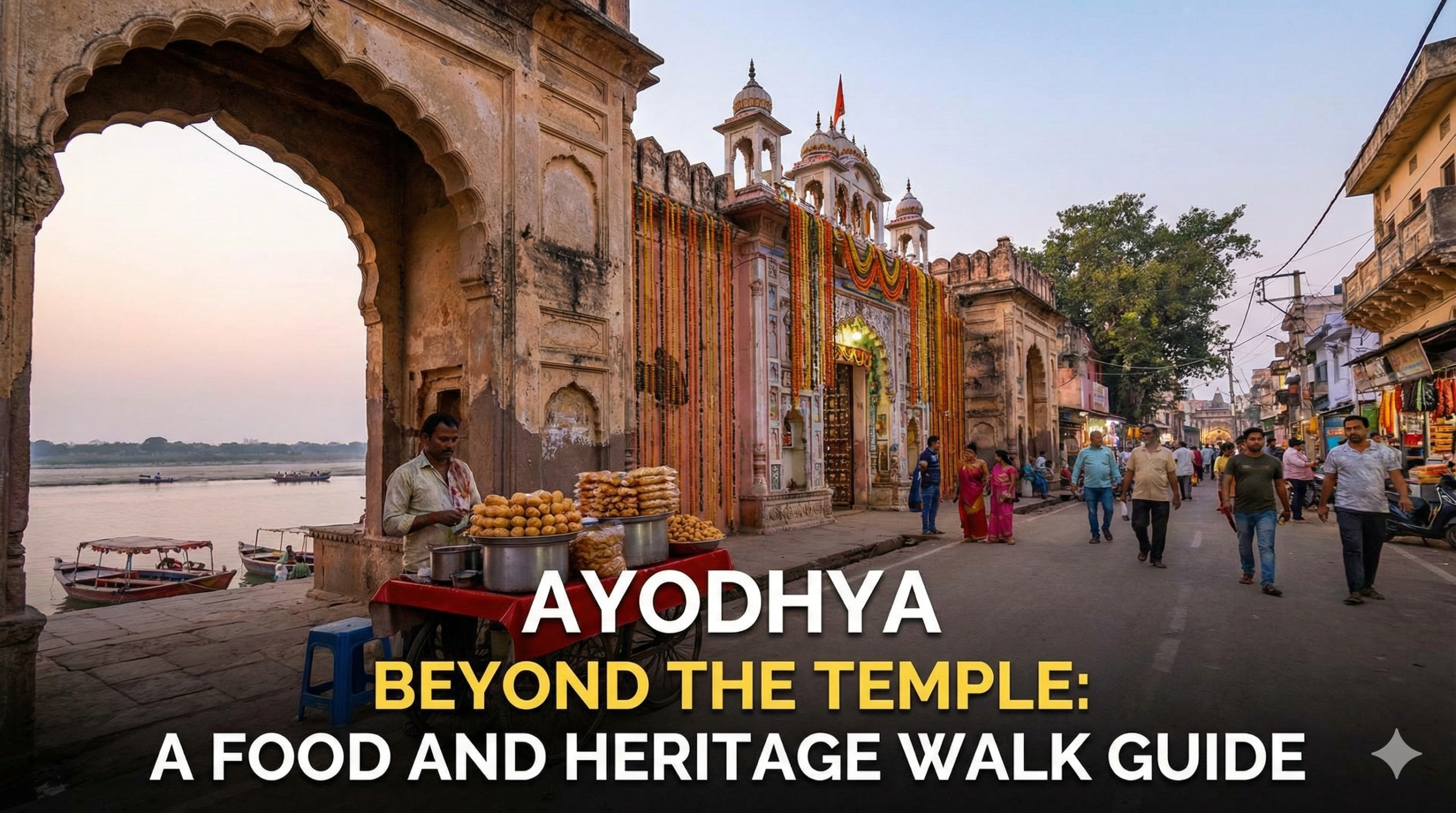
When we think of Ayodhya in 2026, the first image that comes to mind is the magnificent Ram Mandir. It is the heart of the city and a symbol of faith for millions. However, Ayodhya is much more than just one temple. It is a city that has lived through thousands of years of history. It is a city where every lane smells of cardamom tea and frying kachoris. It is a place where old palaces (Mahals) hide stories of kings and queens, and the river Saryu flows quietly, witnessing it all.
For a traveler in 2026, Ayodhya has changed. The roads are wider, the facilities are better, and it is easier to walk around. But the soul of the city remains in its narrow lanes, its hidden temples, and its street food. If you visit Ayodhya and only see the main temple, you are missing half the magic. This guide is for those who want to explore Ayodhya beyond the temple. We will take you on a “Food and Heritage Walk” that covers the best Ayodhya famous food, hidden architectural gems, and the most peaceful spots near the river.
Whether you are a pilgrim, a history lover, or a foodie, this guide will help you experience the real culture of this ancient town. We have designed a perfect Ayodhya 1 day itinerary that lets you soak in the heritage without rushing. So, put on your walking shoes and get ready to eat your way through history!
Also Read:- How to Visit Lakshadweep on a Budget in 2026 (Permit & Ferry Guide)
1. Starting the Day: Hanuman Garhi and the Morning Energy
There is an old saying in Ayodhya: “To reach the Lord, you must first ask his guardian.” This is why every heritage walk in Ayodhya must begin at Hanuman Garhi. In 2026, this area is bustling but organized. Hanuman Garhi is not just a temple; it is a fortress. It sits on top of a mound, and you have to climb 76 steep steps to reach the main courtyard.
As you start climbing these steps early in the morning, you will feel the energy of the city waking up. The air is filled with the sound of bells and the smell of marigold flowers. The shops lining the staircase sell “Besan ke Ladoo” (gram flour sweets), which are the favorite offering here. When you reach the top, take a moment to look at the view. You can see the entire city of Ayodhya spread out below you. It is a stunning sight, especially as the morning sun hits the golden spires of the temples.
Inside the temple, the atmosphere is electric. Devotees chant “Jai Bajrangbali” with great power. Unlike many other temples where you just walk past, here you feel a strong sense of protection. The idol of Lord Hanuman here is unique because he is depicted as a king, not just a devotee.
After you come down from the temple, do not rush away. The area around Hanuman Garhi is the oldest part of Ayodhya. The buildings here have intricate carvings on their balconies. In 2026, many of these old facades have been restored. You will see old wooden doors and small shrines tucked between shops. This is where the local life happens. You will see sadhus (monks) with ash on their foreheads discussing philosophy, shopkeepers setting up their wares, and cows walking peacefully through the crowd.
Walking through these lanes is like walking back in time. You are not just a tourist here; you are a witness to a tradition that has continued for centuries. The energy of Hanuman Garhi sets the perfect tone for the rest of your day. It wakes you up, both physically (thanks to the stairs!) and spiritually.
2. The Breakfast Trail: Famous Kachori and Jalebi Spots
After the climb at Hanuman Garhi, you will be hungry. This brings us to the most delicious part of the morning: the breakfast. In Ayodhya, breakfast is not cornflakes or toast. It is a serious affair involving Kachori-Sabzi and Jalebi.
The Ayodhya famous food scene is dominated by the humble Kachori. These are round, deep-fried pastries stuffed with a spicy mixture of lentils (dal). But the real magic lies in the Sabzi (curry) served with it. It is a spicy potato curry made with local spices and sometimes a hint of tamarind. It is hot, flavorful, and filling.
Where to eat?
In 2026, while many fancy restaurants have opened, the best taste is still found in the old shops. Look for a shop called “Ram Ji Samosa & Kachori” near the Hanuman Garhi crossing. It is a small shop, but the crowd outside will tell you how good it is. The kachoris here are crisp on the outside and soft on the inside. They are served on dried leaf plates (donas), which adds an earthy aroma to the food.
After the spicy Kachori, you need something sweet to balance the flavors. This is where the Jalebi comes in. Ayodhya’s jalebis are famous for being thin, crispy, and soaked in saffron syrup. They are not thick and spongy; they are crunchy.
Another famous spot is “Maurya Misthan Bhandar”. Their jalebis are legendary. In the morning, you will see them frying big batches of these golden spirals in pure ghee (clarified butter). The smell of hot ghee and sugar is intoxicating. The combination of eating a spicy bite of Kachori followed by a sweet crunch of Jalebi is the definition of a perfect Ayodhya morning.
For those who want something lighter, try the Dahi-Jalebi combination. The thick, creamy yogurt cuts the sweetness of the jalebi and makes it very refreshing. As you stand on the roadside eating this, watching the pilgrims pass by, you truly become part of the city. The food here is made with devotion, and locals believe that is why it tastes so different from anywhere else in India.
3. Heritage Gems: Kanak Bhawan and Dashrath Mahal
Once your stomach is full, it is time to feed your eyes with beauty. A short walk from Hanuman Garhi takes you to Kanak Bhawan, often called the “Golden Palace.” This is one of the most beautiful places to visit in Ayodhya near Ram Mandir.
Legend says this palace was a gift from Queen Kaikeyi to Goddess Sita when she married Lord Rama. The current structure was built in the 19th century by the royal family of Orchha, and it looks like a royal palace more than a temple. The architecture is a stunning mix of Rajasthani and Bundelkhandi styles.
As you enter the courtyard, you will notice the beautiful arched windows and the intricate designs on the walls. In 2026, the temple is well-maintained with clean marble floors. The main idols of Lord Rama and Goddess Sita here are wearing heavy gold ornaments, justifying the name “Kanak” (Gold). The atmosphere here is very different from Hanuman Garhi. It is quiet, musical, and soft. You will often hear musicians sitting in the corner singing soulful Bhajans (devotional songs). Sit here for 15 minutes, close your eyes, and just listen. It is incredibly peaceful.
A few minutes away is Dashrath Mahal, the palace of King Dashrath (Rama’s father). The entrance is grand, with colorful paintings of doorkeepers. Inside, it feels like a traditional Indian home with a large courtyard. This place is significant because it is believed to be the childhood home of Lord Rama.
While walking between these two palaces, pay attention to the old houses on the street. These are called “Havelis.” Many of them are hundreds of years old. You will see old brickwork and carved wooden balconies that are slowly fading away. Some of these have been converted into Dharamshalas (pilgrim stays). This part of the walk is a photographer’s dream. The sunlight filtering through the narrow lanes creates beautiful shadows on the colorful walls. It is a stark contrast to the modern construction happening in other parts of the city. This is the old, authentic soul of Ayodhya that you must see before it changes forever.
4. The Evening Peace: Guptar Ghat and Saryu River
By afternoon, the city center might get crowded. To escape the rush and find deep peace, you must head to Guptar Ghat. It is about 10 kilometers away from the main temple area, but in 2026, electric autos and buses make it very easy to reach.
Guptar Ghat is historically and spiritually very important. It is believed to be the place where Lord Rama took “Jal Samadhi” (left the earth and returned to his divine form) by entering the waters of the Saryu River. Because of this legend, the place has a very calm and mystical vibe.
Unlike the busy ghats in the city center, Guptar Ghat is wide, clean, and spacious. The government has developed a beautiful riverfront here. There are sandstone pathways, benches, and gardens. It is the perfect place to watch the sunset. As the sun goes down, the sky turns orange and purple, reflecting in the wide river. You can take a boat ride here. The boatmen often tell local stories and legends as they row you into the middle of the quiet river.
After the sunset, head back towards the city center to Ram Ki Paidi for the evening Aarti. Ram Ki Paidi is a series of ghats that have been renovated beautifully. At night, the water is illuminated with colorful lights. The Saryu Aarti is a grand spectacle. Priests in uniform hold large brass lamps filled with fire, moving them in rhythm to the chanting of Vedic mantras.
Thousands of people gather on the steps to watch this. The reflection of the lamps in the flowing water creates a magical atmosphere. You can also light a small earthen lamp (diya) and float it in the river. Watching your little lamp float away with hundreds of others is a very emotional and beautiful moment. It symbolizes letting go of your worries and sending a prayer to the universe. This experience at the ghats completes the spiritual journey of Ayodhya, connecting you to the element of water which is so central to the city’s identity.
5. Street Food Night Out: Chaat and Rabri
Your day in Ayodhya cannot end without exploring the evening street food. If the morning was about sweet and spicy, the evening is about “Chatpata” (tangy) flavors. Ayodhya serves some of the best Chaat in North India.
Head to the area near Naya Ghat or the main market. Look for stalls selling Aloo Tikki. The Aloo Tikki here is different. They fry the potato patties in large flat pans until they are dark brown and incredibly crispy. They smash it and top it with a white pea curry (matar), spicy green chutney, sweet red tamarind chutney, and a spoon of curd. The result is an explosion of flavors—hot, cold, sweet, sour, and spicy all at once.
Another must-try is the Pani Puri (also called Batashe here). The water is flavored with mint, coriander, and a special mix of spices that aids digestion. It is very refreshing after a long day of walking.
Finally, you must end your meal with Rabri. Since Ayodhya is in the milk-rich belt of India, the dairy products are exceptional. Rabri is milk that has been boiled for hours until it becomes thick and creamy, with layers of cream (malai). It is sweetened slightly and flavored with cardamom and saffron. It is served in small earthen pots (kulhads). Eating warm Rabri from an earthen pot is a heavenly experience.
If you are too full for Rabri, try a glass of Hot Milk. In the evenings, you will see large Kadais (woks) of milk boiling with almonds and saffron. Drinking a hot glass of this milk before sleeping is a tradition here. It relaxes your body and ensures you get a good night’s sleep.
The food in Ayodhya is simple, vegetarian, and rooted in tradition. It doesn’t use fancy ingredients, but the freshness and the “hand-made” feel make it world-class. It is the perfect ending to your Ayodhya 1 day itinerary.
6. Comprehensive Information Tables
Ayodhya 1 Day Itinerary (Food & Heritage)
| Time | Activity | Location | Food/Highlight |
| 07:00 AM | Morning Darshan & Views | Hanuman Garhi | Climb 76 steps, city view, Besan Ladoo. |
| 09:00 AM | Traditional Breakfast | Ram Path / Market | Kachori-Sabzi & Jalebi at a local Halwai shop. |
| 10:30 AM | Heritage Walk | Kanak Bhawan | “Golden Palace,” listen to devotional music. |
| 12:00 PM | History & Architecture | Dashrath Mahal | Explore the royal courtyard and old architecture. |
| 01:30 PM | Lunch Break | Near Ram Mandir | Authentic Satvik Thali (No onion/garlic) at a Bhojanalaya. |
| 03:30 PM | Riverside Peace | Guptar Ghat | Relax by the river, boat ride, sunset view. |
| 06:00 PM | Evening Ritual | Ram Ki Paidi | Watch the Saryu Aarti and light a floating Diya. |
| 08:00 PM | Dinner & Dessert | Naya Ghat Area | Aloo Tikki Chaat and Rabri/Hot Milk. |
Must-Try Food & Famous Spots
| Food Item | Description | Best Place to Try | Approx Cost |
| Kachori-Sabzi | Fried pastry with spicy potato curry. | Ram Ji Samosa, Hanuman Garhi. | ₹40 – ₹60 |
| Jalebi | Crispy, syrup-soaked sweet spirals. | Maurya Misthan Bhandar. | ₹200 / kg |
| Rabri | Thickened, sweetened creamy milk. | Shops near Naya Ghat. | ₹50 per cup |
| Aloo Tikki | Crispy potato patty with chutneys. | Chaat stalls at Ram Path. | ₹40 per plate |
| Satvik Thali | Complete veg meal (Dal, Roti, Rice). | Kanak Bhawan Bhojanalaya. | ₹100 – ₹200 |
7. Pros and Cons of a Heritage Walk in Ayodhya
It is important to have realistic expectations for your trip in 2026.
Pros:
- Rich History: You see buildings and spots that are centuries old, offering a deep cultural connection.
- Budget Friendly: Food and entry to most heritage sites are very cheap. You can eat like a king for under ₹500.
- Spiritual Peace: Places like Kanak Bhawan and Guptar Ghat offer genuine mental peace.
- Walkability: The government has improved the “Ram Path” and other corridors, making walking much easier than before.
Cons:
- Crowds: Ayodhya attracts millions. Even in 2026, the main areas near Hanuman Garhi can be very crowded and noisy.
- Monkeys: There are many monkeys in Ayodhya. They can snatch food or glasses. You need to be careful.
- Cleanliness: While improved, some narrow lanes can still be dirty or have open drains.
- Weather: It gets very hot in summer (April-June). Walking is difficult during these months.
Also Read:- Top Places to Visit in Kashmir: Srinagar, Gulmarg, Pahalgam & Sonmarg
8. Expert Review & Conclusion
Expert Review:
“Ayodhya in 2026 has successfully bridged the gap between the ancient and the modern. While the massive Ram Mandir is the main draw, the city’s administration has done a commendable job in preserving the smaller heritage sites like Guptar Ghat and the Kunds (ponds). The ‘Heritage Walk’ experience is now more viable because of better signage and cleaner roads. The food quality remains authentic, resisting the urge to become too commercialized. For a traveler, the real joy lies in the 6 AM walk near Hanuman Garhi and the 6 PM boat ride at the Ghats—these moments are magical.”
Final Verdict:
If you are planning a trip, do not just make it a “touch-and-go” visit to the temple. Dedicate at least one full day to this walking itinerary. The combination of faith, history, and mouth-watering street food makes Ayodhya a unique destination. The permit systems and queues are for the main temple, but the rest of the city is open, welcoming, and waiting for you to explore.
Next Step for You:
Would you like me to find a list of budget-friendly homestays near these heritage spots so you can stay right in the middle of the action?
