
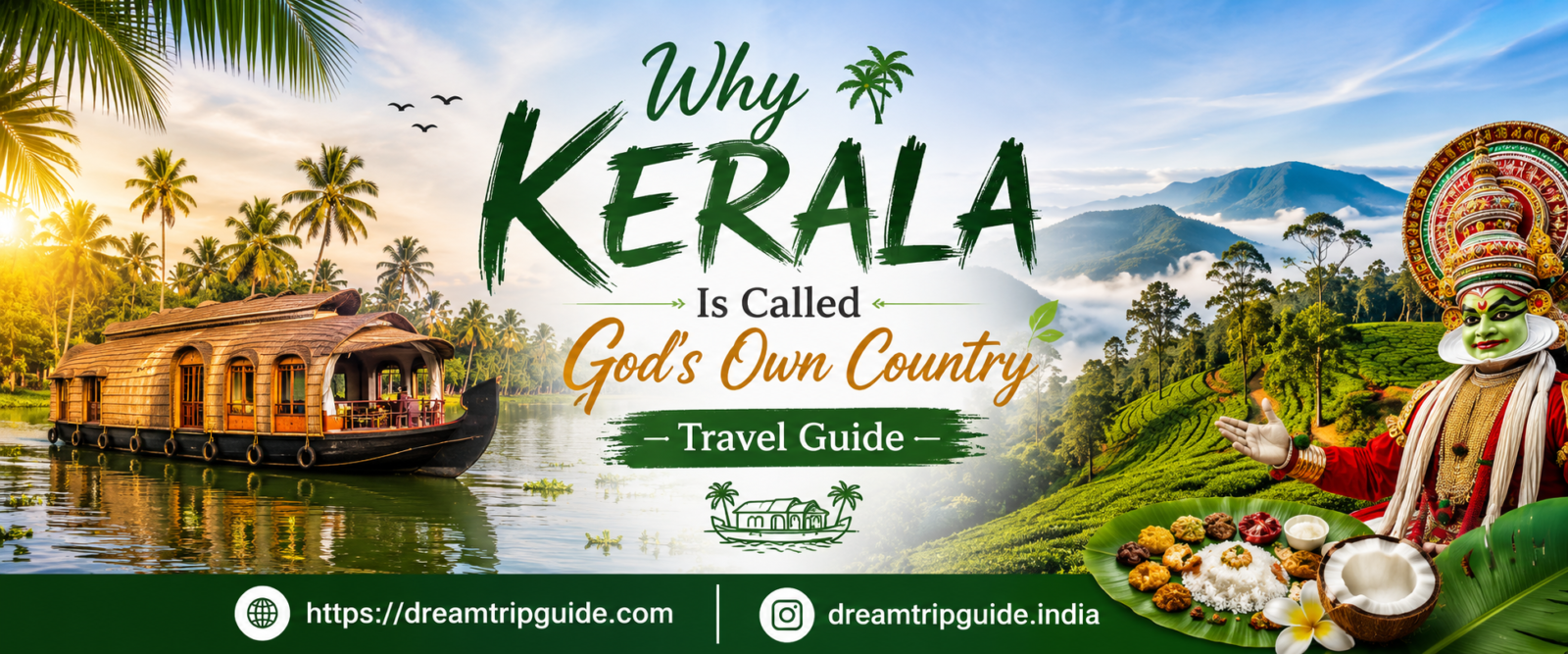
Tucked away between the pristine Arabian Sea and the mist-laden peaks of the Western Ghats lies a narrow strip of land that looks less like a geographical territory and more like a masterpiece of nature. This is Kerala. Revered globally as “God’s Own Country,” this coastal state in southwestern India has consistently topped international travel bucket lists, captivating luxury seekers, backpackers, and cultural enthusiasts alike.
But why Kerala is called God’s Own Country goes far beyond a brilliant marketing slogan coined in the late 1980s. It is rooted in ancient mythology, validated by breathtaking emerald landscapes, and brought to life by a deeply rich cultural heritage that treats every traveler like a divine guest.
Whether you are mapping out an extensive South India tourism circuit or organizing a dedicated Kerala vacation, this comprehensive Kerala travel guide serves as your blueprint. Discover why this tropical paradise deserves a spot on your itinerary, the best places to visit in Kerala, and expert travel tips tailored for international explorers.
Planning a flawless trip across India requires deep regional insight. Before booking your flights, explore curated itineraries and destination breakdowns on the Dream Trip Guide home page to align your next vacation with top-tier travel planning resources.
The Mythological Origin: How Kerala Was Formed
To truly appreciate God’s Own Country Kerala, one must delve into its foundational folklore. According to Hindu mythology, Kerala was created by Sage Parashurama, the sixth avatar of Lord Vishnu.
As the legend goes, Parashurama threw his divine battleaxe into the fierce Arabian Sea. In response to his command, the waters receded, and a fertile stretch of land emerged from the ocean depths—filled with coconut groves, rushing rivers, and rich alluvial soil. Because this land was reclaimed directly by a divine incarnation for spiritual penance, it has earned its enduring moniker.
Today, this spiritual aura continues to thrive within historic Kerala temples and traditional architectural sanctuaries scattered across the entire state.
1. The Iconic Kerala Backwaters: A Floating Oasis
There is no landscape on Earth quite like the labyrinth of brackish lagoons, lakes, and canals that parallel the Arabian Sea coast, universally known as the Kerala backwaters. This unique ecosystem constitutes the heart of backwater tourism.
The Quintessential Alleppey Houseboat Experience
A Kerala trip is incomplete without spending a night on an Alleppey houseboat (Kettuvallam). Originally used to transport rice and spices, these massive wooden vessels have been transformed into floating luxury suites. As you glide through Alappuzha tourism routes, you will witness classic rural life: fishermen casting nets, children walking along narrow canal banks, and low-lying paddy fields.
Kumarakom Backwaters and Luxury Wellness
For a more serene, exclusive retreat, the Kumarakom backwaters offer premium lakeside resorts focused on birdwatching and eco-tourism. It provides an ideal setting for a tranquil houseboat cruise Kerala experience where nature does all the talking.
If you are a fan of traditional water sports, planning your Kerala itinerary around August or September allows you to witness the legendary Kerala boat race events. The most prestigious of these is the Nehru Trophy boat race, where synchronized oarsmen command colossal snake boats (Chundan Vallams) through the waters to the rhythm of local folk songs.
2. Mist-Covered Kerala Hill Stations: The Green Bastion
As you move east from the coast, the terrain rises dramatically into the Western Ghats Kerala, a UNESCO World Heritage site older than the Himalayas and one of the world’s premier biodiversity hotspots.
Munnar Hill Station: Endless Tea Landscapes
Blanketed in manicured green carpets, Munnar hill station is a sanctuary for nature lovers. Our Munnar travel guide highlights key experiences like walking through historic Kerala tea gardens, breathing in air scented with wild cardamoms, and photographing cascading Munnar waterfalls like Attukad and Cheeyappara. Munnar also houses Eravikulam National Park, the natural habitat of the endangered Nilgiri Tahr.
Wayanad Tourism: Caves, Waterfalls, and Trekking
For travelers seeking a raw, untamed landscape, Wayanad tourism offers steep mountain trails, ancient prehistoric edicts inside the Edakkal Caves, and the heart-shaped lake at Chembra Peak. It is an absolute hotspot for Kerala trekking and eco-adventures.
Vagamon: The Offbeat Meadow
If you want to skip the mainstream crowds on a Kerala weekend trip, head to Vagamon. Known for its pine forests, green meadows, and paragliding festivals, it represents the quieter, more contemplative side of the hills.
3. Sun-Kissed Kerala Beaches: Where Cliffs Meet the Ocean
With a coastline stretching nearly 600 kilometers, the state offers diverse Kerala beaches catering to every style of traveler.
- Varkala Cliff Beach: Famous for its unique laterite cliffs flanking the Arabian Sea, Varkala is a bohemian paradise. It is highly popular for beachside yoga, sunset photography, and its natural mineral springs believed to wash away sins.
- Kovalam Beach: A bustling international beach destination featuring a iconic striped lighthouse, shallow waters ideal for swimming, and excellent seafood cafes.
- Marari Beach: Located close to Alleppey, Marari is a quiet, clean fishing village beach—perfect for a Kerala honeymoon destinations itinerary where relaxation is the priority.
- Bekal Fort Beach: Situated in north Kerala, this spot offers magnificent views of a 300-year-old keyhole-shaped fort extending right into the sea, offering a brilliant blend of history and coastal views.
4. Pristine Wildlife Sancturies and Eco-Tourism
The dense forests of the Western Ghats shelter an incredible array of flora and fauna, making Kerala nature beauty unparalleled.
Periyar National Park & Thekkady
Centering around a scenic, artificial lake, the Thekkady wildlife sanctuary inside Periyar National Park is famous for its herds of wild Kerala elephants, elusive tigers, and rare lion-tailed macaques. A boat safari on the lake offers unparalleled vantage points for wildlife photography.
Off the Beaten Path: Silent Valley & Athirappilly
- Silent Valley National Park: One of the last undisturbed tracts of South Indian tropical rainforest, representing pristine, raw conservation.
- Athirappilly Waterfalls: Often called the “Niagara of India,” this roaring 80-foot drop is surrounded by dense forests and serves as a dramatic highlight of any Kerala road trip.
5. Cultural Grandeur: Classical Arts and Ancient Traditions
What truly cements Kerala as God’s Own Country is its vibrant community, which preserves ancient art forms with fierce pride. Kerala cultural tourism is an immersive sensory experience.
Classical Performances & Martial Arts
- Kathakali Dance: A stylized classical dance-drama featuring heavy, elaborate makeup, giant headgears, and precise facial expressions depicting scenes from epics like the Ramayana.
- Kalaripayattu Martial Art: Acknowledged as one of the oldest fighting systems in existence, incorporating acrobatic leaps, weaponry, and fluid, animal-inspired movements.
- Theyyam Kerala: A ritualistic dance performance native to North Kerala where artists embody divine spirits amidst hypnotic drumming and fire displays.
Historic Fort Kochi Tourism
Walking through Fort Kochi feels like stepping into a living history book. It showcases a unique architectural tapestry shaped by successive waves of global visitors. Explore the iconic Chinese fishing nets lining the harbor, step inside the ancient Mattancherry Dutch Palace, and discover the deep trading roots preserved within the Muziris heritage sites.
6. Holistic Healing: Kerala Ayurveda and Wellness
Kerala’s unique climate is perfectly suited for the growth of medicinal herbs, making it the global capital for authentic Kerala Ayurveda. Unlike modern spa treatments, an Ayurvedic massage Kerala session or a full panchakarma treatment Kerala course focuses on holistic healing. Travelers flock to specialized Ayurveda retreats for Kerala wellness tourism to detoxify, realign their energies, and experience traditional rejuvenation therapies guided by certified doctors.
Your Kerala vacation guide is incomplete without exploring its aromatic culinary landscape, heavily defined by Kerala spices like black pepper, cardamom, cloves, and coconut milk.
- Traditional Kerala Sadya: A vegetarian banquet featuring over 20 distinct dishes served on a pristine banana leaf, typically enjoyed during the Onam festival.
- Malabar Biryani: A fragrant, slow-cooked rice dish from northern Kerala made with short-grain Kaima rice, pure ghee, and local spices.
- Kerala Sea Food & Toddy Shops: Freshly caught pearl spot fish (Karimeen Pollichathu) marinated in spices, wrapped in banana leaves, and grilled—best paired with spicy local curries at traditional countryside toddy shops.
To dive deeper into diverse regional cuisines, travel checklists, and seasonal packing guides across Asia, visit our tailored destination hubs on the Dream Trip Guide collections platform to refine your trip blueprints.
Practical Kerala Travel Tips for 2026
- Best Time to Visit Kerala: The ideal window is from October to March when the Kerala weather is pleasantly cool and dry. If you want to experience rejuvenation therapies, the Kerala monsoon tourism season (June to September) is highly recommended as the atmosphere remains cool and dust-free, maximizing the benefits of Ayurveda.
- Transportation: For flexibility, booking a private car or executing a Kerala road trip via pre-arranged taxis is best for navigating between the hills and coastlines. Trains are exceptionally reliable for long coastal movements.
- Cultural Etiquette: When visiting local temples, dress conservatively. Men are often required to remove their shirts in specific orthodox temples, and footwear must always be left outside.
Recommended 7-Day Kerala Itinerary Plan
| Day | Destination | Key Attractions & Activities |
| Day 1 | Kochi | Arrive in Kochi, explore Fort Kochi, witness a Kathakali performance. |
| Day 2 | Munnar | Drive to Munnar, stop by Cheeyappara Waterfalls, tour tea estates. |
| Day 3 | Munnar | Explore Eravikulam National Park, visit Mattupetty Dam. |
| Day 4 | Thekkady | Travel to Periyar, take a spice plantation tour, watch Kalaripayattu. |
| Day 5 | Alleppey | Check into a traditional luxury Alleppey houseboat, cruise backwaters. |
| Day 6 | Varkala | Move to Varkala, relax on the cliff beach, enjoy beachside yoga. |
| Day 7 | Kochi / Trivandrum | Final shopping for banana chips and spices; departure flight. |
Frequently Asked Questions (FAQs)
Why is Kerala called God’s Own Country?
The phrase has dual origins. Mythologically, it is believed the land was created by Sage Parashurama, an avatar of Lord Vishnu. Modernly, the term was created as part of a highly successful tourism campaign in the late 1980s to highlight the state’s pristine, untouched natural beauty, diverse ecosystems, and deep spiritual heritage.
Is Kerala safe for solo female travelers?
Yes, Kerala is widely recognized as one of the safest destinations in India for solo travelers and international tourists. The state boasts the highest literacy rate in India, a highly welcoming local culture, and an efficient tourist police network. Standard travel precautions regarding late-night transit apply.
How much does an average Kerala trip cost?
Kerala caters to all financial tiers. A Kerala budget travel plan can average around $30–$40 USD per day using homestays and public transit. Mid-range family trips average $70–$120 USD per day, while high-end luxury wellness resorts and private premium houseboats can scale upwards depending on seasonal demand.
Which is better: Alleppey or Kumarakom?
If you are looking for a bustling atmosphere with hundreds of houseboats, intricate canal networks, and a wide array of options, Alleppey is ideal. If you prefer a quiet, exclusive, luxury-centric vacation surrounded by open lake views and bird sanctuaries, Kumarakom is the superior choice.
Conclusion
From the rhythmic sway of the coconut palms along the tranquil Kerala backwaters to the aromatic, mist-laden air of the Munnar tea gardens, Kerala is a destination that heals your soul. It balances intense outdoor adventure with deep spiritual grounding, ensuring your holiday is both thrilling and restorative. Pack your bags for an incredible journey to God’s Own Country in 2026, and experience a landscape truly blessed by nature.
Dream Trip Guide Pvt Ltd
- Name: Dream Trip Guide
- Address: India Based Online Travel Blog, Helping Travelers Explore India
- Email: dreamtripguides@gmail.com
