
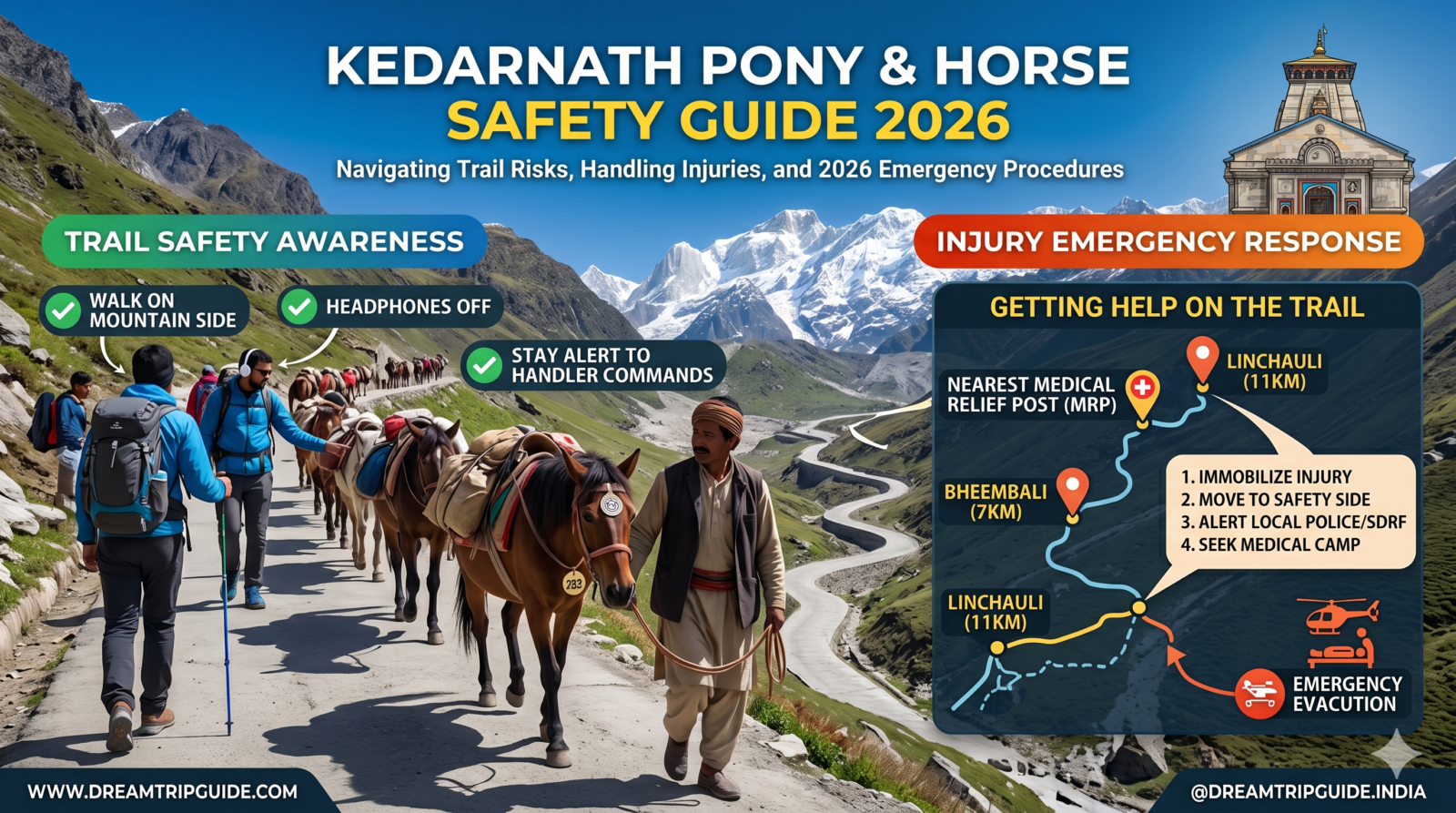
Worried about horse accidents or trail injuries on your yatra? Read our 3,000-word Kedarnath pony safety guide. Learn emergency steps, medical camp locations, insurance claims, and 2026 safety tips.
KEDARNATH WEATHER1. The Trail Reality: Understanding the Mule Traffic and Risks
The 16 km trek from Gaurikund to Kedarnath is shared by thousands of pedestrians, palanquin (Palki) carriers, and nearly 5,000 registered ponies and horses daily. As we move through the 2026 season, the track has been widened up to 4 meters in most places, but the sheer volume of traffic creates a chaotic environment. Ponies are the economic backbone of the yatra, moving luggage and weary pilgrims up the steep slopes. However, for a walking pilgrim, these animals represent a constant physical hazard.
Horses moving up or down the mountains do not have brakes. They follow a rhythmic, automated pace set by their handlers, who are often managing 3 to 4 animals simultaneously. Accidents happen when pedestrians walk carelessly with headphones on, try to click selfies mid-trail, or panic when a group of horses approaches from behind. Common injuries range from simple friction burns and minor kicks to severe ankle twists and fractures caused by falling on the slippery concrete tiles. At DreamTripGuide, we believe that knowing how to coexist with these animals on the trail is the most underrated skill required for a successful yatra. This section sets the stage for a proactive approach to trail safety, emphasizing that vigilance is your first line of defense.
2. Instant Action Protocol: What to Do in the First 10 Minutes of an Injury
If you are kicked by a horse, stepped on, or tumble down a paved slope, the first 10 minutes are critical. Panic is your biggest enemy at 10,000 feet because it spikes your heart rate and limits oxygen absorption, making pain management much harder.
First, drag yourself or the injured person to the inner mountain wall side immediately. Never sit down or evaluate injuries in the middle of the path where other horses can trample you. Check for heavy bleeding or bone deformity. If the skin is unbroken but swelling rapidly, it is likely a severe sprain or closed fracture. Apply a cold compress using available mountain water or wrap a crepe bandage firmly from your first-aid kit. If the person cannot walk, do not force them to move. Inform the nearest mule handler or look for the police guards deployed at every 500 meters.
Also Read – Book Kedarnath Package
🚨 Emergency Contact & Relief Command Chain (2026)
| Emergency Level | Action Required | Nearest Authority to Contact | Expected Response Time |
| Minor Injury (Cut/Sprain) | Self-treatment via first-aid or stop at the next mile-post. | Medical Relief Post (MRP) doctor. | Within 10-15 Minutes walking. |
| Moderate Injury (Deep cut/Kick) | Stop walking, apply pressure, request a static pony/palki descent. | Sector Magistrate / SDRF personnel on trail. | 15 – 30 Minutes on site. |
| Severe Emergency (Fracture/Head blow) | Immobilize the patient, do not move the limb, call for an emergency stretcher. | Dial 108 (Ambulance) or National Disaster Control Room. | Immediate dispatch from nearest base. |
3. Focus: The Trail Safety & Incident Management Box
Managing an injury requires knowing exactly where help is located on the route map. The Yatra administration in 2026 has set up dedicated infrastructure, but it is up to you to recognize the symbols and locations.
📦 Medical Camps & Accident Recovery Infrastructure
| Strategic Stop | Medical Facilities Available | Best Actions for Injured Pilgrims |
| Jungle Chatti (4 KM) | Basic first-aid, pain management injections, dressing tables. | Stop here if you get squeezed by horses in the narrow initial 3km patches. |
| Bheembali (7 KM) | Major Medical Base, X-Ray setup, oxygen nebulizers, overnight trauma beds. | If you suspect a bone fracture or deep muscle tear, ride a horse back down to this camp. |
| Linchauli (11 KM) | High-altitude stabilization unit, doctors on 24/7 rotation, emergency stretchers. | Best stop for treating sudden knee lockups or severe exhaustion caused by trail panic. |
| Kedarnath Base (16 KM) | Full-fledged hospital, emergency medical evacuation clearance unit. | Report major horse handler misbehavior or trail accidents directly to the control room here. |
4. Pros and Cons: Choosing a Pony vs. Walking Safely
Many people think that hiring a pony solves all safety issues, but riding an animal on a steep 16km Himalayan trail brings its own set of risks and physical strains.
Riding a Pony/Horse on the Route
- Pros: Saves your heart and lungs from extreme physical exertion, clears the 16km gap within 4-5 hours, ideal for people with low stamina.
- Cons: High risk of “Saddle Soreness” and acute lower back pain due to constant jerking; risk of falling off the animal if it slips on ice or gets startled by loud trekking groups.
Walking Safely (Pedestrian Route)
- Pros: Complete control over your own balance and pacing; you can easily duck into a rain shelter or step away from approaching animal lines.
- Cons: High physical stress on the knees during the descent; constant mental alertness required to watch out for horse movement behind you.
Expert Review: “Pony safety is a two-way street. If you choose to ride, never sit loosely; grip the saddle horn tightly and keep your feet balanced in the stirrups. If you are walking, your eyes must track the handlers. Never walk on the outer valley edge because a packing horse can accidentally push you off with its side luggage boxes.” — Saurav Pal, Lead Safety Consultant, DreamTripGuide.
5. Critical Safety Dos and Don’ts for Pedestrians & Riders
What to Do (Kya Karein):
- DO Walk on the Mountain Side: Always keep yourself on the inner wall side of the trail. Let the animals take the valley/cliff side.
- DO Keep Headphones Off: Avoid listening to loud music while trekking. You need to hear the constant shouting of handlers (“Hato-Hato”) and the sound of hooves approaching.
- DO Use a Trekking Pole: It acts as a stabilizer. If a horse passes too close, planting your pole firmly gives you a pivot to lean safely into the mountain wall.
- DO Note the Horse Registration Tag: Every legal horse wears a round metal or digital registration token on its neck. If a handler hits someone or causes an accident, take a photo of that tag immediately.
What NOT to Do (Kya Na Karein):
- DON’T Cross a Line of Horses Mid-Way: If a group of 5 horses is coming up, wait patiently on the side. Do not try to zigzag between them.
- DON’T Stand on the Blind Bends of Z-Turns: Horses coming down fast cannot see you around sharp corners. Rest only at designated flat shops.
- DON’T Pull the Horse’s Tail or Mane: If you are riding, do not make sudden loud noises or flash your phone camera directly in the animal’s eyes; it can startle them into a dangerous bucking run.
- DON’T Ignore a Minor Sprain: High altitude slows down blood circulation. A small sprain untreated at Linchauli can completely paralyze your movement by the time you reach the temple plaza.
🏔️ Kedarnath Yatra Checklist 2026: 12 Must-Have Items for a Successful Trek

- ✅Altitude Protection: Prevents breathlessness and headaches caused by low oxygen levels at Kedarnath top.
- ✅Instant Energy: Helps you recover faster during the steep 16km trek from Gauri Kund.
- ✅Lightweight: Fits easily in your side pocket and weighs almost nothing.

- ✅Unbeatable Grip: Anti-skid soles designed specifically for slippery mountain rocks and mud.
- ✅100% Waterproof: Keeps your feet dry during sudden rains or while crossing small streams.
- ✅Ankle Support: Prevents injuries on the uneven zig-zag paths of the Kedar valley.

- ✅Total Coverage: Covers you and your large backpack completely during heavy mountain rains.
- ✅Quick Dry: Much better than heavy raincoats; it's light and dries in minutes.
- ✅Windproof: Blocks the freezing cold winds that follow the rain at high altitudes.

- ✅Heat Retention: Advanced fabric that locks body heat even when the temperature drops to 0°C.
- ✅Odour Resistant: Can be worn for multiple days without feeling unhygienic.
- ✅Slim Fit: Fits comfortably under your regular clothes without looking bulky.

- ✅Cold Protection: Battery dies fast in cold weather; this ensures your phone stays alive for photos.
- ✅Massive Capacity: Charge your phone and camera 4-5 times fully during the trip.
- ✅Fast Charging: Don't waste time at charging points in tea stalls.

- ✅Knee Support: Reduces 25% of the pressure on your knees during the steep descent.
- ✅Better Balance: Essential for crossing slippery patches or walking in narrow trails.
- ✅Anti-Shock: Absorbs ground impact to prevent wrist and shoulder pain.

- ✅12H Hot: Keep hot water/tea ready to fight the freezing cold of the Himalayas.
- ✅BPA Free: Safe and healthy stainless steel that won't rust.
- ✅Strong Body: Survives accidental drops on rocky terrains easily.

- ✅Mountain Ready: Contains pain sprays, bandages, and altitude sickness tablets.
- ✅Lightweight: Small enough to fit in any backpack side pocket.
- ✅Must Have: Medical help is far away on the trek; be your own first responder.
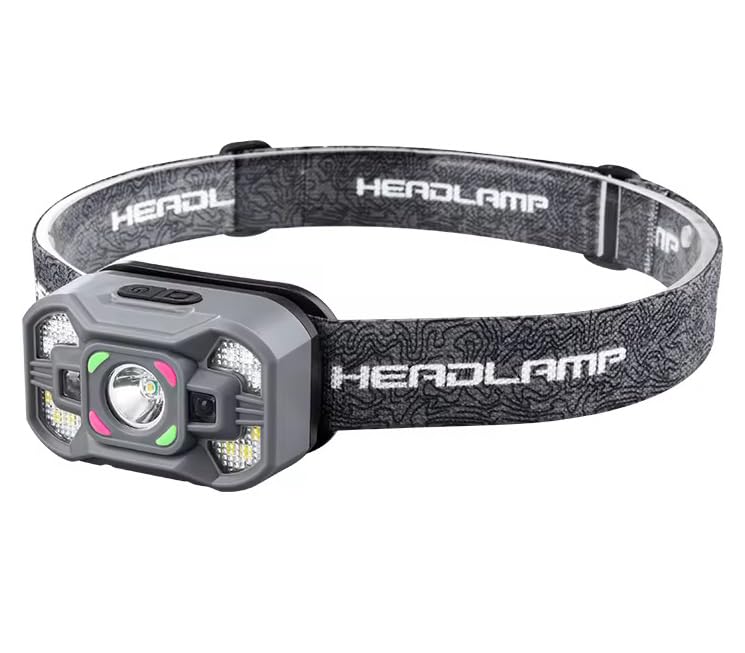
- ✅Hands-Free: Essential for early morning treks (3 AM) so you can use trekking poles freely.
- ✅High Brightness: Powerful beam that covers up to 100 meters clearly.
- ✅Weatherproof: Continues to work even during rain or heavy mist.
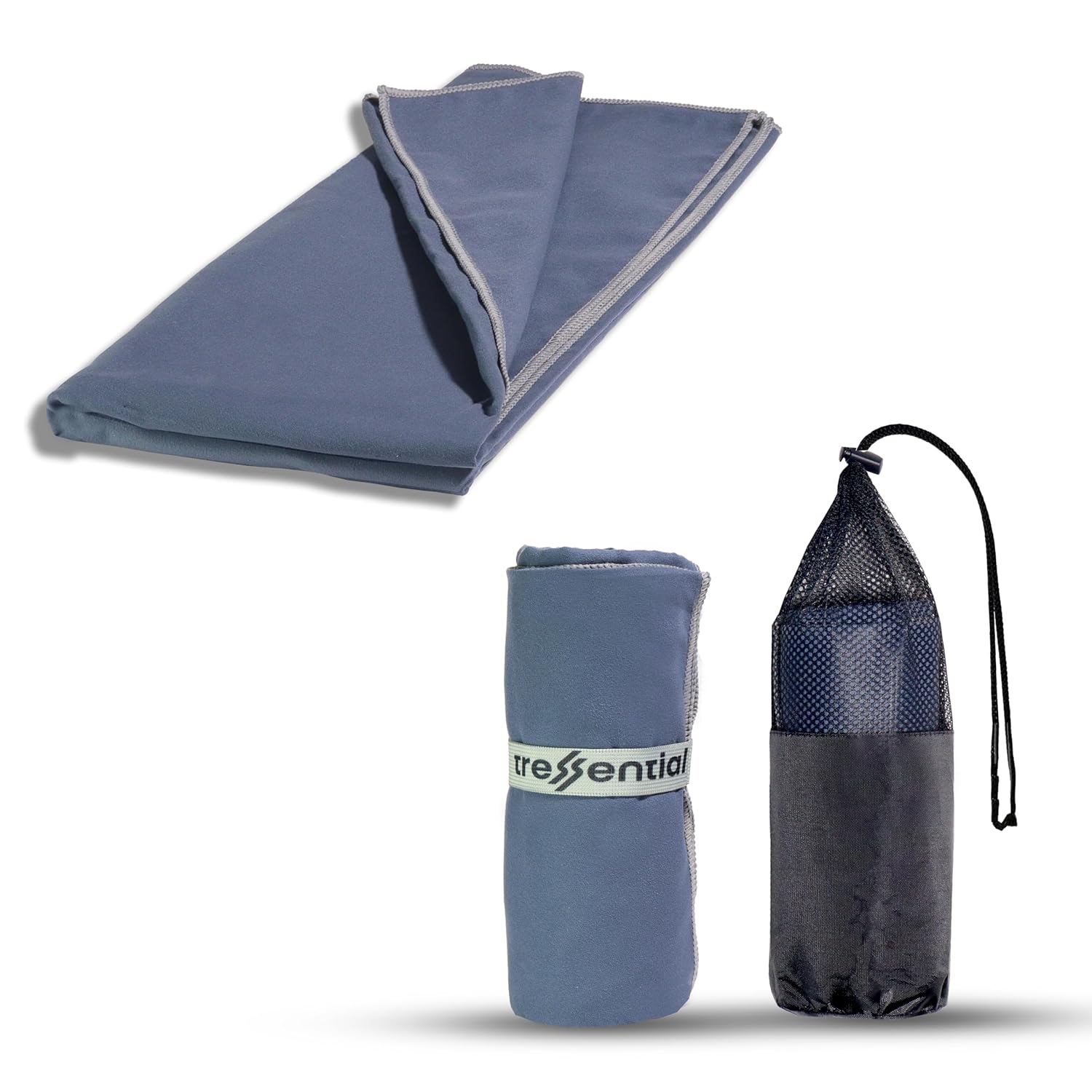
- ✅No Wet Smell: Dries in minutes so you don't carry a heavy, smelly towel in your bag.
- ✅Super Tiny: Folds into a small pouch, leaving more room for warm clothes.
- ✅Gentle: Ultra-soft fabric that is perfect for cold weather skin care.

- ✅High Altitude Protection: Himalayan sun is harsh and causes severe tanning & burns.
- ✅Non-Greasy: Doesn't feel oily while trekking or sweating.
- ✅Sweat Resistant: Stays on your skin even during high-intensity walking.

- ✅Dual Protection: Ponchos are good, but this ensures no water enters your bag.
- ✅Reflective Logo: Helps others see you in heavy mist or night treks.
- ✅Universal Fit: Fits perfectly on all 30L to 60L trekking backpacks.
6. Legal Rights & Insurance: How to Claim Compensation
In 2026, the Uttarakhand government has integrated a mandatory Travel Insurance Cover into your official Yatra Registration Pass. This means every pilgrim who completes the biometric slip is automatically insured for accidental injuries or casualty on the trail.
If you are involved in a significant accident caused by a commercial mule:
- Get a Medical Slip: Visit the nearest government medical relief post (MRP) at Bheembali, Linchauli, or the Temple Base and get a formal injury certificate stamped by the on-site medical officer.
- File an Incident Report: Report the registration number of the pony/handler to the local sector magistrate office or the police booth at the base camps.
- Claiming via DreamTripGuide Steps: Save all medical bills, prescription slips, and your original yatra pass. You can submit these online through the official Uttarakhand tourism portal to claim reimbursement for medical expenditures or emergency evacuation costs. Knowing your rights ensures you don’t face financial stress along with physical trauma.
7. People Also Ask (PAA) – Trail Safety & Injury Management
- What is the most common cause of injury on the Kedarnath trek? Slipping on wet paved tiles and getting nudged or stepped on by passing ponies due to lack of trail awareness.
- Is there an ambulance service on the walking trail? Traditional vehicles cannot access the path. Emergency evacuation is done via specialized stretchers, manual dandies, or medical helicopters from Linchauli/Kedarnath.
- Are the horse rates fixed by the government in 2026? Yes, official rates are displayed at Gaurikund and Sonprayag stands. Never pay third-party agents without an official receipt.
- What should I do if a horse handler misbehaves or leaves me midway? Note their registration tag number and file an immediate complaint at the nearest police outpost or Sector Magistrate office.
- Where can I get a crepe bandage or pain spray on the route? Every Medical Relief Post (MRP) provides them for free. You can also buy them at local shops at major stops.
- Does smelling camphor help with injury shock? It helps settle panic and hyperventilation, which common during acute pain or breathing distress at 11,000 feet.
- Can I walk down from the temple if my knee locks up? If your knee locks, do not walk down. Rent a pony or a palki for the descent to prevent permanent ligament damage.
- Is government travel insurance free for all pilgrims? Yes, it is included inside your mandatory Yatra Registration Card/Pass.
- What is the best way to avoid horses while walking? Keep your ears open, stay glued to the inner mountain wall, and walk in a straight single line rather than in groups.
- Where can I track live safety guidelines and weather alerts for the route? We run real-time updates and emergency notifications on our official digital channels.
Stay Safe, Stay Prepared with DreamTripGuide!
The path to Baba Kedar requires faith, but it also demands extreme practical caution. Keep your eyes on the trail, respect the working animals, and carry your safety gear with priority:
👉 Instagram: @dreamtripguide.india
👉 Safety Hub & Guides: www.dreamtripguide.com
