
Planning an expedition into the pristine high-altitude ecosystems of northern India requires accurate logistics, geographic knowledge, and strategic foresight. For international trekkers and mindful eco-tourists searching for the ultimate travel guide to uncover hidden Himalayan gems, the deoria tal trek stands out as an unmissable destination. Located inside the protected perimeter of the Kedarnath Wildlife Sanctuary in Uttarakhand, this lake offers an incredible mix of dense forest trails, vibrant birdlife, and unforgettable views of snowy mountain peaks.
This detailed, publication-grade manual serves as your definitive travel guide blog resource. It details verified trail distances, exact elevations, transit options, and seasonal guidelines to ensure a flawless mountain trip.
1. Geographic Framework & Spatial Coordinates
To plan a seamless high-altitude mountain trip, you must first understand the topography of the region. The trail moves through dramatic changes in altitude, connecting dense oak forests with open alpine meadows.
Altitude & Distance Blueprint
- Sari Village (Base Camp): Sits at a comfortable elevation of 2,000 meters (6,561 feet). This peaceful village serves as the main trailhead, offering traditional homestays and basic amenities.
- Deoria Tal Altitude: The lake itself rests beautifully at an elevation of 2,438 meters (7,998 feet).
- Deoria Tal Trek Distance: Exactly 2.5 kilometers (1.5 miles) of uphill walking from Sari Village along a well-constructed, stone-paved path.
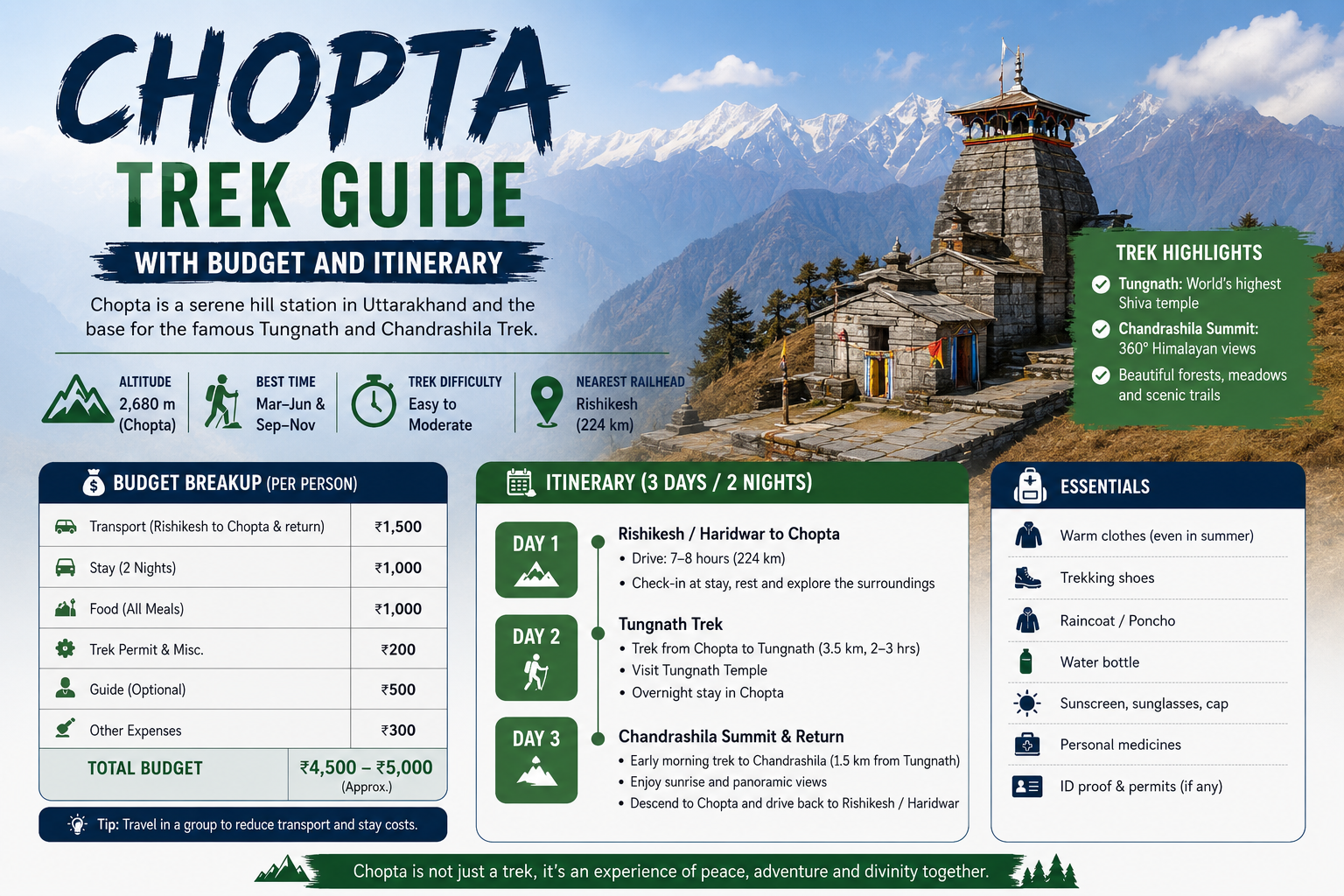
- Chopta Hill Station Base: Located a short 50-minute drive away, sitting at a chopta height of 2,680 meters (8,790 feet).
- Tungnath Altitude: Reaches 3,680 meters (12,073 feet), making it home to the highest stone Shiva temple in the world.
- Chandrashila Peak Height: Peaks at 4,000 meters (13,123 feet), offering a panoramic 360-degree view of the Garhwal Himalayas.
2. The Step-by-Step Deoria Tal Trek Itinerary
The deoria tal trek is highly regarded across the Uttarakhand trekking destinations network. Because it offers immense visual rewards with manageable physical demands, it is incredibly versatile—ideal for an independent solo trip to Chopta, an intimate chopta couple trip, or a relaxed chopta family trip.
1.Phase 1: Trailhead Ascension from Sari Village:Distance: 2.5 km | Time: 1–1.5 Hours.
Begin your trek at the official stone archway marker in Sari Village. Follow the steady, well-paved stone stairs as they climb past local terraced farmlands. This initial stretch provides a fantastic warm-up for your legs while offering beautiful views of the valley below.
2.Phase 2: Navigating the Rhododendron Canopy:Elevation Change: +438 Meters.
As you leave the village limits behind, the trail enters a thick forest filled with oak and native rhododendron trees. If you visit chopta in summer, this entire canopy bursts into a vibrant sea of crimson flowers, making it one of the premier chopta photography spots.
3.Phase 3: Arrival at the Emerald Lake:Altitude: 2,438 Meters.
The trail levels out opens up to reveal the stunning lake. Find a quiet spot along the shore to take in the clear chandrashila view and the massive, multi-peaked Chaukhamba massif reflecting perfectly on the water’s glassy surface.
4.Phase 4: Setting Up an Eco-Friendly Camp:Overnight Forest Stay.
Coordinate with your guides to set up camp at the designated chopta campsites near the lake. Spending the night here allows you to experience crisp mountain air and clear, star-filled skies far away from city light pollution.
3. The Grand Circuit: Linking Deoria Tal with Chopta Chandrashila
For avid adventurers utilizing a comprehensive trip planning guide to build out an unforgettable holiday, the ultimate strategy is combining this lake with the larger chopta tungnath chandrashila trek circuit. Known fondly as the chandrashila deoriatal trek or deoriatal chandrashila trek, this unified path connects the area’s finest forests, meadows, and peaks.
Exploring the Chopta Valley Connection
After completing your lakeside stay, a short drive brings you into the heart of the stunning chopta valley. Often called the mini Switzerland in Uttarakhand, this area features expansive, rolling green alpine meadows (bugyals) framed by towering, snow-covered mountains.
From the Chopta base camp, you can tackle the famous chopta to tungnath trek distance of 3.5 km (2.1 miles). Beyond the ancient temple, another 1.5 km (0.9 miles) of rugged ridge climbing takes you directly to the summit of Chandrashila. Completing the entire tungnath to chandrashila trek distance rewards you with a breathtaking chopta valley view point that spans across iconic Himalayan giants like Nanda Devi, Trishul, and Kedarnath.
4. Road Connectivity & Regional Transit Logistics
Reaching this mountain paradise requires navigating well-maintained mountain roads that snake through the lower river valleys.
Key Driving Routes & Distances
- Rishikesh to Chopta / Sari: The drive from Rishikesh spans roughly 165 km (102.5 miles) and takes about 5.5 to 6.5 hours along National Highway 7 (NH-7). The road traces the sacred Alaknanda and Mandakini rivers, passing historic towns like Devprayag and Rudraprayag.
- Ukhimath to Chopta Distance: Ukhimath serves as the major winter seat of the temple deities and sits just 15 km (9.3 miles) from Sari Village, making it an excellent base for local homestays.
- Delhi to Chopta Route: For travelers coordinating a complete delhi to chopta road trip or bike expedition, the journey covers 410 km (254.7 miles) and requires 11 to 12 hours of driving.
- Chopta to Kedarnath Distance: If you plan to visit multiple pilgrimage sites, the drive from the Chopta foothills to Sonprayag (the gateway for Kedarnath) covers 95 km (59 miles) and takes 4 to 5 hours.
5. Seasonal Weather, Budgeting & Packing Tips
Weather Variations & Best Time to Visit
- Spring & Summer (April to June): Expect clear driving conditions, excellent trail visibility, and comfortable daytime temperatures ranging from 15°C to 24°C (59°F–75°F). This is the absolute peak window for birdwatching and photography.
- Chopta Snowfall Guide (November to March): The region transforms into a snowy paradise. While the deoria tal trek distance remains accessible with proper winter boots, the higher night chandrashila trek paths require microspikes and expert winter guides due to heavy snow accumulation and freezing temperatures.
Travel Costs & Packages
Planning a chopta budget trip is highly cost-effective. Independent backpackers can easily find basic mountain food and clean local homestays for approximately $25 to $40 USD per day. For a more seamless vacation, booking a structured tungnath trek package or an all-inclusive chopta tour package covers your wilderness permits, tent rentals, transportation clearances, and certified local guides.
Frequently Asked Questions (FAQs)
1. What is the exact Deoria Tal trek distance?
The foot trail from the village base camp of Sari up to the shores of Deoria Tal is exactly 2.5 kilometers (1.5 miles). The path features well-maintained stone steps and takes most hikers between 1 and 1.5 hours to complete.
2. Can I camp overnight directly next to Deoria Tal?
To protect the local ecosystem, camping is allowed only in designated eco-friendly zones located a short distance away from the water’s edge. This helps protect the natural habitat inside the Kedarnath Wildlife Sanctuary while still offering a spectacular wilderness camping experience.
3. Why is this region referred to as the Mini Switzerland of Uttarakhand?
The combination of Chopta’s rolling alpine meadows, dense forests, crisp mountain air, and sweeping backdrops of snow-capped peaks looks incredibly similar to classic Swiss landscapes, earning it the beloved titles of mini Switzerland of Uttarakhand and chopta mini Switzerland.
4. How far is the drive from Chopta to Rishikesh?
The total driving distance between Chopta and Rishikesh is approximately 165 kilometers (102.5 miles). The journey along the national highways usually takes between 5.5 and 6.5 hours, depending on traffic, mountain road conditions, and weather.
5. What should I pack for a winter trek to Deoria Tal?
If you are planning a winter trip, it is essential to pack thermal base layers, a heavy down jacket, waterproof trekking boots, gloves, a warm beanie, and reliable trekking poles to navigate sections of the trail that may have ice or snow.
👉 Also Read – Book Kedarnath Package
