
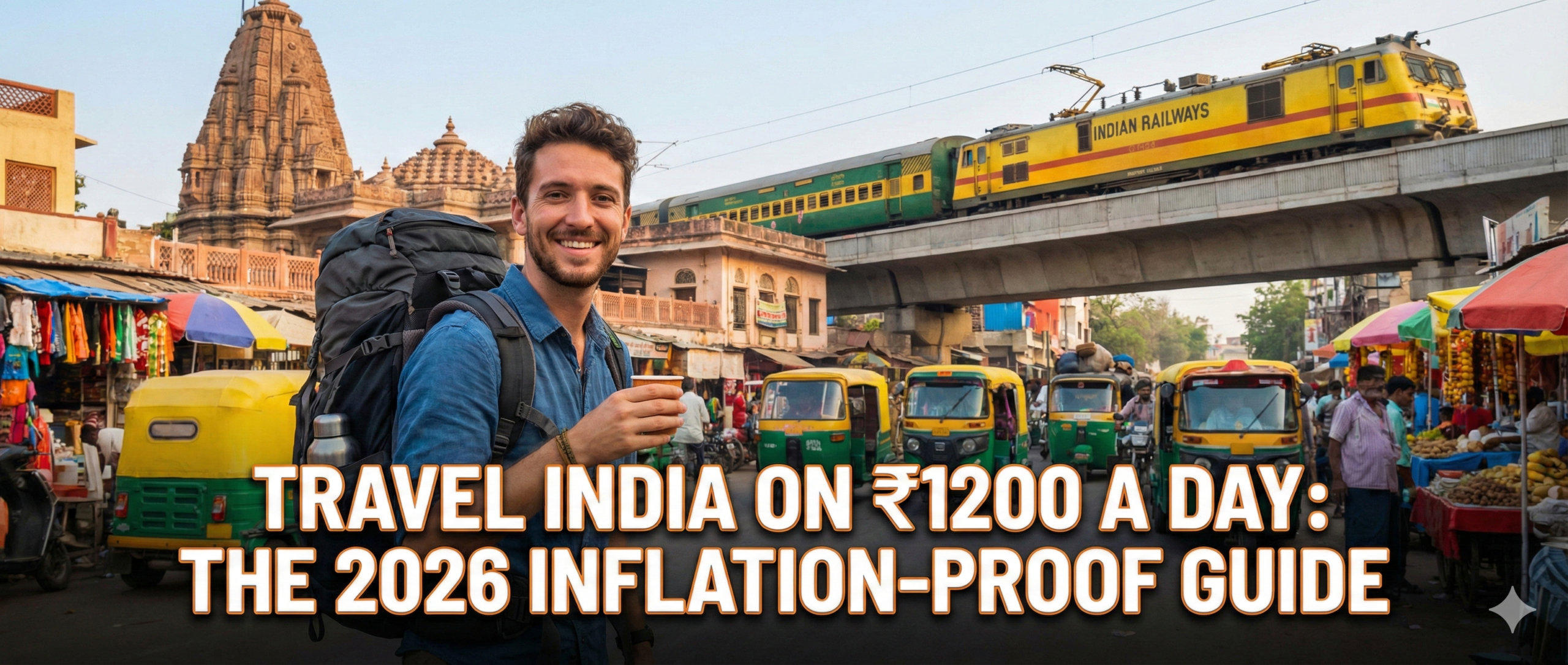
Traveling India has always been a backpacker’s dream, but let’s be real—2026 has brought some sticker shock. With the new luxury Vande Bharat Sleeper trains and rising hostel prices in metro cities, the days of the “dirt cheap” India trip are evolving. However, the magic of India is that it remains accessible to anyone willing to trade a little comfort for authentic experiences.
Is it still possible to travel on ₹1200 (approx. $15 USD) a day in 2026? Yes. But you can no longer just “wing it.” It requires strategy, smart choices, and dodging the “tourist inflation” traps.
This guide is your blueprint. We have broken down exactly how to allocate your ₹1200, where to go, and the specific hacks you need to survive (and thrive) on a budget this year.
Read Also:- 5 Best Stopovers on a Delhi to Varanasi Road Trip
1. Accommodation: The “Dorm & Ashram” Strategy
Budget Allocation: ₹400 – ₹600 per night
In 2026, accommodation will likely be your biggest fixed cost. The era of ₹200 hostel beds in major cities like Delhi or Mumbai is largely over, with prices now hovering closer to ₹800+. To stick to your ₹1200 limit, you need to look beyond the popular hostel chains.
The Hostel Hack:
Stick to “Backpacker Hostels” rather than “Boutique Hostels.” Apps like Hostelworld are great, but booking directly via Instagram or WhatsApp often saves you the 10-15% platform fee. In places like Pushkar, Varanasi, and Hampi, competition is high, so you can still find dorm beds for ₹400 if you walk in and negotiate for a multi-day stay.
The Ashram Alternative:
For the ultimate savings, look for Ashrams or Dharamshalas, especially in spiritual towns like Rishikesh or Varanasi. These are not hotels; they are community rest houses. They often charge a nominal donation (₹200-₹300) or are sometimes free. The trade-off is strict rules: usually no alcohol, early curfews, and simple living conditions.
Zostel vs. Local Guesthouses:
While branded hostels (like Zostel) guarantee hygiene, they are charging premium rates in 2026. Local, family-run guesthouses (homestays) are often cheaper. Look for signs saying “Rooms for Rent” in backpacker ghettos (like Paharganj in Delhi or Lake Side in Udaipur).
Accommodation Cost Table (2026 Estimates)
| Accommodation Type | Avg. Cost (Per Night) | Comfort Level | Best For |
| Branded Hostel Dorm | ₹800 – ₹1200 | High (AC, Wi-Fi) | Solo travelers wanting community |
| Non-Branded Dorm | ₹350 – ₹600 | Medium (Fan, Basic) | Budget purists |
| Ashram / Dharamshala | ₹150 – ₹400 | Basic (Strict Rules) | Spiritual seekers |
| Railway Retiring Room | ₹200 – ₹500 | Basic (Clean) | Transit stays (Valid ticket needed) |
Pros & Cons
- Pros: Ashrams offer a deep cultural immersion you won’t get in a hostel; Homestays feed money directly to local families.
- Cons: Cheap dorms often lack AC (tough in May/June); Ashrams may have strict curfews (e.g., gates close at 9 PM).
Expert Review:
“In 2026, the biggest mistake backpackers make is booking accommodation weeks in advance online. Unless it’s Diwali or Christmas, walk-in rates are almost always 20% cheaper than online prices because owners want to fill empty beds.”
2. Food: The “Thali & Street” Rule
Budget Allocation: ₹300 – ₹400 per day
Food is where you can save the most money in India without sacrificing quality. In fact, the cheaper food is often safer because it’s cooked fresh in front of you at high heat.
The Thali Economics:
The “Thali” (a platter with roti, rice, dal, and veggies) is the inflation-beater of 2026. While à la carte menu prices have risen, the standard “Veg Thali” in local “Bhojanalayas” remains incredibly affordable. A filling unlimited thali can still be found for ₹100-₹150. Two thalis a day plus chai and snacks fits perfectly into your budget.
Street Food Safety:
Eat at stalls with high turnover. If a line of locals is waiting, the food is fresh. Avoid cut fruits or chutneys made with tap water. Stick to cooked items like Aloo Tikki, Dosa, Parathas, and Omelets.
Water Hack:
Bottled water (₹20/bottle) adds up to ₹60-₹80 a day. That is 7% of your daily budget! Bring a LifeStraw or a filter bottle. Most hostels have free filtered water refills—use them.
Daily Food Budget Breakdown
| Meal | Item Suggestion | Est. Cost (2026) |
| Breakfast | Poha, Chai, or Omelet-Bread | ₹40 – ₹60 |
| Lunch | Veg Thali (Dhaba/Local Eatery) | ₹120 – ₹150 |
| Dinner | Street Snacks (Rolls/Chowmein) or Thali | ₹100 – ₹150 |
| Water | Refill at Hostel/Station | ₹0 (Free) |
| Total | ~₹300 – ₹360 |
Pros & Cons
- Pros: Authentic taste; incredible variety; Thalis provide a balanced diet.
- Cons: “Delhi Belly” risk if not careful; spicy food can be tough for some stomachs initially.
Expert Review:
“Avoid ‘Tourist Cafes’ that serve pancakes and pasta. A pasta dish in a backpacker cafe now costs ₹350+ in 2026. That is your entire day’s food budget! Eat local to save money.”
3. Transport: Trains over Planes (and Buses)
Budget Allocation: ₹150 (Averaged Daily)
Transportation is the budget killer. With fuel prices rising, bus tickets (Volvos) have become expensive. Domestic flights are out of the question for this budget.
The Golden Rule: Sleeper Class Trains (SL)
The Indian Railways “Sleeper Class” (Non-AC) is the lifeline of budget travel. It costs a fraction of AC classes. For example, a 12-hour journey might cost ₹400-₹500.
- Note for 2026: Avoid the new “Vande Bharat” trains if you are on a budget; their fares are premium. Stick to standard “Express” or “Mail” trains.
The “General Class” Gamble:
If you are truly desperate, “General Class” tickets are dirt cheap (e.g., ₹50 for 200km), but they are incredibly crowded. Only attempt this for short journeys (<4 hours) or if you are extremely adventurous.
Slow Travel is Cheaper:
Don’t try to see North and South India in one trip. Every time you move cities, you spend money. Stay in one region (e.g., Rajasthan or Himachal) for 2-3 weeks to minimize long-distance transport costs.
Transport Cost Comparison (Delhi to Varanasi)
| Mode | Est. Cost (2026) | Comfort |
| Flight | ₹4,500+ | High |
| Vande Bharat Train | ₹1,800+ | High |
| AC 3-Tier Train | ₹1,100 | Medium |
| Sleeper Class (SL) | ₹450 | Basic (Open windows) |
| Govt Bus (Non-AC) | ₹800 | Low (Bumpy) |
Pros & Cons
- Pros: Sleeper class is a great place to meet locals; incredibly cheap; saves a night of accommodation cost.
- Cons: Noisy; cleanliness can be an issue; tickets sell out weeks in advance (Book early!).
Expert Review:
“The ‘Tatkal’ ticket scheme is a lifesaver if you didn’t book early, but it costs extra. To stay under ₹1200, you must book your trains 2-3 weeks in advance via the IRCTC app.”
4. Activities: The Best Things in India Are Free
Budget Allocation: ₹100 – ₹150 per day (saved for big tickets)
You don’t need expensive tours to experience India. The chaos of the streets, the temples, and the landscapes are free.
Free Experiences:
- Varanasi: Walking the Ghats and watching the Ganga Aarti (evening ceremony) is free.
- Amritsar: The Golden Temple is free, and they even feed you for free (Langar).
- Jaipur: You don’t need to pay to enter Hawa Mahal to see it; the view from the street is iconic.
- Hiking: In Himachal (Kasol/Manali), hiking trails are free.
Where to Splurge:
Save your “Activity Budget” for the undeniable must-sees: The Taj Mahal (~₹1100 for foreigners, ₹50 for Indians) or the Ajanta Caves. Skip the “City Palace” museums which are often overpriced and stick to the forts which offer better views and value.
What to Do and What Not to Do:
| DO | DON’T |
| Do walk everywhere. Auto-rickshaws rip off tourists. Walking 2-3km is standard. | Don’t take “guided tours” from touts at monuments. Use Google Lens/Wikipedia for history. |
| Do use “Share Autos” (Vikrams) used by locals (₹10-₹20) instead of private taxis. | Don’t buy souvenirs near main attractions. Walk 3 streets away for 50% off. |
| Do bargain hard in markets. Start at 40% of the quoted price. | Don’t give money to beggars; donate to registered charities or Gurdwaras instead. |
5. The 2026 Budget Itinerary: “The Golden Triangle + Spirit”
Duration: 15 Days
Total Budget Goal: ₹18,000
Here is a sample route optimized for cheap trains and high impact.
- Days 1-3: Delhi. Stay in Paharganj/Majnu Ka Tila. Eat street food in Old Delhi. (Metro is cheap).
- Days 4-5: Agra. Train from Delhi (₹150). See Taj Mahal from Mehtab Bagh (cheaper view) or enter if budget allows.
- Days 6-9: Jaipur/Pushkar. Bus to Jaipur. Train to Ajmer/Pushkar. Pushkar is incredibly cheap for food and stay.
- Days 10-13: Udaipur. Train from Ajmer. Stay near the lakes.
- Days 14-15: Train back to Delhi (Sleeper Class).
Expert Final Tip:
“Always carry a valid Student ID if you have one. Many monuments in India offer massive discounts for students. Also, carry small cash (₹10, ₹20, ₹50 notes). Shopkeepers often claim to have ‘no change’ to keep the balance.”
Read Also:- The Ultimate Long-Haul Flight Kit: 8 Gadgets to Help You Sleep
Next Step for You: Would you like me to generate a packing list specifically designed for “Sleeper Class” train travel and budget hostels in India?
Travel India on a Budget | ₹1000 Challenge
(Watch recent challenges to see real-time food and transport prices in action)
