
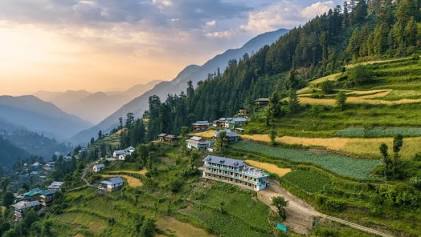
If you are looking for a calm place away from crowded hill stations, Shoja is the answer. Tucked inside the serene Seraj Valley near Jibhi and the Great Himalayan National Park, Shoja is a quiet Himalayan village surrounded by dense deodar forests, wooden houses, and mist-covered mountain peaks.
Visiting Shoja in September is special. The heavy monsoon rains begin to fade, leaving behind vivid green valleys, clear skies, fresh mountain air, and roaring waterfalls.
Welcome to your complete weekend travel guide by Dream Trip Guide. For real-time updates and aesthetic mountain photos, connect with us on Instagram at @dreamtripguide.india.
1. Shoja Weather in September & Why You Should Visit Now
September is a transition month in Himachal Pradesh. The harsh monsoon recedes, leaving the entire Seraj Valley painted in deep shades of emerald green.
What to Expect from the Weather
- Temperature Range: Day temperatures stay comfortable between 15°C and 22°C. Nights start getting chilly, dropping to around 8°C to 12°C.
- Rainfall: Early September sees occasional light showers, but by mid-to-late September, the skies clear up, revealing sharp views of snow-dusted peaks in the distance.
- Atmosphere: Expect morning fog rolling over deodar trees, crisp afternoons, and clear, star-filled night skies.
Why September is ideal for Shoja
- Lush Post-Monsoon Greenery: The hillsides, orchards, and forest trails look vibrant. Waterfalls like Waterfall Point and Jibhi Waterfall run at full force.
- Low Tourist Crowds: Popular nearby hubs like Shimla, Manali, and Kasol stay busy, but Shoja retains its slow, peaceful pace.
- Perfect Trekking Conditions: Trails leading to Jalori Pass, Serolsar Lake, and Raghupur Fort are soft, cool, and scenic without the extreme cold of winter or the heavy mud of July-August.
- Apple Harvesting Season: September is peak apple harvesting season across the Banjar region. Orchards are heavy with red apples, giving you a chance to see fresh local farm life up close.
| Climate Parameter | September Value | Travel Tip |
| Average Daytime Temperature | 15°C – 22°C | Wear light cottons or t-shirts with a fleece layer |
| Average Nighttime Temperature | 8°C – 12°C | Carry a warm windproof jacket & woolens |
| Rain Expectation | Light, sporadic showers | Keep a compact umbrella or raincoat handy |
| Road Conditions | Good to Average | Drive carefully around curves on Aut-Banjar route |
| Crowd Level | Very Low | Excellent for peaceful, budget-friendly stays |
2. How to Reach Shoja from Delhi: Route & Transport Breakdown
Shoja sits roughly 490 km from Delhi. While there is no direct airport or train station right in Shoja, getting here by road is simple once you know the route options.
Route Breakdown
Delhi → Chandigarh → Mandi → Aut Tunnel → Banjar → Jibhi → Shoja
Transportation Options
Option 1: By Volvo Bus + Local Taxi / Bus (Most Popular & Budget-Friendly)
- Take an overnight Volvo or HRTC bus from ISBT Kashmiri Gate, Delhi, heading toward Manali.
- Get down at Aut Tunnel (roughly 11–12 hours journey).
- From Aut, hire a local cab directly to Shoja (approx. ₹1,500 – ₹2,200) or take a local state transport bus heading toward Banjar / Anni.
- If you take the bus to Banjar Bus Stand, switch to a local taxi or shared jeep for the final 14 km stretch up to Shoja via Jibhi.
Option 2: By Self-Drive Car or Motorbike
- Drive along NH44 from Delhi toward Chandigarh, then follow the Kiratpur-Manali highway.
- Turn right just before the Aut Tunnel toward Banjar/Jibhi.
- The drive from Aut to Shoja goes along the Tirthan/Palchan river streams and takes about 1.5 to 2 hours.
Option 3: By Flight
- The nearest airport is Bhuntar (Kullu-Manali Airport), around 60 km away.
- From Bhuntar, hire a direct taxi to Shoja (takes around 2.5 hours).
| Transport Mode | Route / Details | Approx Cost per Person | Total Travel Time |
| Volvo Bus + Local Taxi | Delhi ISBT to Aut Tunnel → Local Taxi to Shoja | ₹1,200 (Bus) + ₹800 (Shared Cab) | 13 – 14 Hours |
| Self-Drive / Bike | Delhi – Chandigarh – Mandi – Aut – Jibhi – Shoja | ₹4,000 – ₹6,000 (Fuel/Tolls) | 12 – 13 Hours |
| Flight + Taxi | Delhi to Bhuntar Airport → Cab to Shoja | ₹5,000 – ₹10,000 (Flight) + ₹2,500 (Cab) | 5 – 6 Hours |
3. Best Things to Do in Shoja: Top Attractions & Treks
Despite being a quiet hamlet, Shoja offers scenic mountain views, gentle treks, and nature walks.
Top Attractions & Experiences
1. Jalori Pass (3,120 meters / 10,280 feet)
Located just 5 km above Shoja, Jalori Pass connects the Kullu Valley with the Shimla district. It offers 360-degree views of the Great Himalayan range. In September, the drive up to Jalori Pass is lined with wildflowers and misty turns.
2. Serolsar Lake Trek
Starting from Jalori Pass, this gentle 5 km trek (one way) winds through a dense oak and pine forest. The lake is considered sacred by locals and is dedicated to Goddess Budhi Nagin. The water stays clear year-round, framed by a quiet wooden temple on one side.
3. Raghupur Fort Ruins Trek
Another popular trek starting near Jalori Pass is the 3 km hike to Raghupur Fort. While only a few outer stone walls remain today, the high-altitude meadow atop the fort provides panoramic views of the entire valley.
4. Waterfall Point & Meadow Walks
Located a short walk from the main Shoja village, Waterfall Point is a calm spot tucked inside the forest. You can spend mornings walking through pine trails, birdwatching, or sitting by cold mountain streams.
5. Local Village Exploration
Walk through Shoja’s old lanes to view classic Himachali architecture featuring handcrafted wood and stone houses, terraced corn fields, and friendly local villagers carrying fresh produce.
| Sight / Trek | Distance from Shoja | Trek Difficulty | Ideal Duration | Highlight |
| Jalori Pass | 5 km | Easy (Driveable) | 2 – 3 Hours | 360° Mountain Views & High Pass Vibe |
| Serolsar Lake | 5 km from Jalori | Easy to Moderate | 4 – 5 Hours (Round Trip) | Sacred Hidden Lake & Oak Forest Walk |
| Raghupur Fort | 3 km from Jalori | Moderate | 3 – 4 Hours (Round Trip) | High Altitude Meadow & Sunset Viewpoint |
| Waterfall Point | 1.5 km | Easy Walk | 1 – 2 Hours | Natural Forest Waterfall & Quiet Stream |
4. Perfect Shoja Weekend Itinerary (3 Days / 2 Nights)
Here is a balanced 3-day weekend itinerary designed for travelers starting from Delhi on a Thursday night.
Day 1: Arrival, Village Walk & Relaxation
- Morning: Reach Aut Tunnel by 7:00 AM. Take a local cab/bus to Shoja via Banjar and Jibhi. Check into your guesthouse or wooden homestay by 10:00 AM.
- Afternoon: Freshen up and enjoy a warm local meal (Siddu or hot Rajma Chawal). Take a slow walk through Shoja village, visit the local wood-carved houses, and absorb the quiet atmosphere.
- Evening: Hike to Waterfall Point. Enjoy hot chai and local snacks while watching the mist settle over the valley.
- Night: Stargazing and dinner by a bonfire at your homestay.
Day 2: Jalori Pass, Serolsar Lake & Raghupur Fort
- Morning: Start early at 7:30 AM. Drive up to Jalori Pass (5 km). Begin the 5 km forest trek to Serolsar Lake.
- Mid-Day: Reach Serolsar Lake by 10:30 AM. Spend an hour by the sacred lake, visit the temple, and grab fresh maggi or parathas at small eco-huts along the trail.
- Afternoon: Trek back to Jalori Pass. If energy permits, take the 3 km hike up to Raghupur Fort meadows for panoramic mountain views.
- Late Afternoon: Return to Shoja by 5:00 PM. Rest your legs and sample fresh apple juice at a local café.
Day 3: Jibhi Exploration & Return Journey to Delhi
- Morning: Enjoy breakfast with a view. Check out from your homestay and drive down to Jibhi (only 7 km away).
- Mid-Day: Visit the famous Jibhi Waterfall and walk across the wooden bridges over river streams. Explore Jibhi’s cozy cafes for lunch.
- Afternoon: Head back to Aut Tunnel by 4:00 PM. Board your return Volvo bus to Delhi.
- Monday Morning: Arrive in Delhi refreshed and ready for the week ahead.
| Day | Primary Focus | Key Locations Covered | Recommended Activity |
| Day 1 | Arrival & Local Vibe | Shoja Village, Waterfall Point | Slow village walks & forest cafe relaxing |
| Day 2 | Nature Treks | Jalori Pass, Serolsar Lake, Raghupur Fort | Forest trekking, photography & meadow views |
| Day 3 | Waterfalls & Departure | Jibhi Waterfall, Local Cafes, Aut | Café hopping, souvenirs & return drive |
5. Shoja Budget Breakdown for a 3-Day Weekend Trip
Shoja is budget-friendly compared to major tourist hubs. You can choose from cozy dorms, authentic Himachali homestays, or boutique wooden cottages.
Estimated Expense Categories (Per Person basis)
1. Accommodation
- Budget Homestays / Hostels: ₹700 – ₹1,200 per night.
- Mid-Range Wooden Cottages: ₹2,000 – ₹3,500 per night.
2. Food & Meals
- Local dhabas serve traditional Himachali food (Siddu, Kadi, Rajma) and basic Indian meals for ₹150 – ₹300 per meal.
- Expect ₹500 – ₹800 per day for food.
3. Transport
- Delhi-Aut-Delhi Volvo bus ticket: ₹2,000 – ₹2,500 (round trip).
- Shared local taxis / buses between Aut, Banjar, Shoja, and Jalori Pass: ₹1,000 – ₹1,500 per person.
| Travel Style | Stay Cost (2 Nights) | Food Cost (3 Days) | Transport Cost | Total Estimated Cost |
| Backpacker / Solo | ₹1,500 | ₹1,500 | ₹3,200 | ₹6,200 – ₹7,000 |
| Mid-Range / Couple | ₹5,000 | ₹3,000 | ₹5,000 (Private Cab) | ₹13,000 – ₹15,000 |
| Luxury / Private Drive | ₹10,000+ | ₹5,000 | ₹7,000+ (Fuel & Tolls) | ₹22,000+ |
6. Pros, Cons & Expert Travel Review for Shoja in September
To help you make an informed decision, here is a breakdown of what makes Shoja great, along with potential challenges.
Pros
- Unmatched Peace: Far fewer crowds than Kasol, Manali, or Shimla.
- Stunning Post-Monsoon Views: September brings emerald green mountains, clear streams, and cloud-dusted valleys.
- Great Base for Treks: Direct access to Jalori Pass, Serolsar Lake, and Great Himalayan National Park trails.
- Authentic Local Vibe: Traditional wooden architecture and warm local hospitality.
Cons
- Limited ATM Access: ATMs in Shoja and Jibhi often run out of cash; keep cash handy from Mandi or Aut.
- Narrow Mountain Roads: Steep, narrow turns between Jibhi, Shoja, and Jalori Pass require careful driving.
- Patchy Mobile Network: Airtel and Jio work reasonably well, but connection drops in deeper forests and higher pass zones.
Expert Review from Dream Trip Guide
“Shoja in September is a sweet spot for nature lovers, slow travelers, and weekend trekkers. The weather is cool without being bitterly cold, monsoon hazards subside significantly by mid-month, and the mountain air is fresh. If you want luxury malls and party nightlife, Shoja isn’t for you. But if you want pine-scented breezes, starry nights, wood-fired meals, and crisp forest hikes, Shoja is one of Himachal’s best hidden gems.”
7. Essential Do’s and Don’ts for Your Shoja Trip
To ensure a safe and memorable journey, keep these practical tips in mind:
What to Do (Do’s)
- DO carry sufficient cash: Electronic payments (UPI) work in many cafes, but poor network connectivity can stall transactions.
- DO pack layered clothing: Daytime is warm, but evenings drop in temperature. Carry a light jacket, thermal wear, and sturdy walking shoes.
- DO respect local traditions: Serolsar Lake and nearby village temples hold religious value for locals. Avoid entering sacred areas with shoes on.
- DO keep your travel plans flexible: Early September might still see light rain, so keep buffer time during road drives.
What NOT to Do (Don’ts)
- DON’T litter along trek trails: Serolsar Lake and Jalori Pass are ecologically sensitive areas. Always bring your plastic bottles and wrappers back to your guesthouse.
- DON’T night-drive on Jalori Pass: The road to Jalori Pass is narrow with sharp ascents. Avoid driving after dark, as fog can reduce visibility significantly.
- DON’T play loud music outdoors: Shoja is cherished for its silence and natural birdsong. Keep music restricted to indoor areas.
8. “People Also Ask” (PAA) – Frequently Asked Questions
Q1: Is September a safe time to visit Shoja?
Yes, September is generally safe. By mid-September, monsoon rains subside, reducing landslide risks. The roads from Aut to Shoja clear up, offering good driving conditions and pleasant weather.
Q2: How far is Shoja from Jibhi?
Shoja is located roughly 7 km above Jibhi on the road leading toward Jalori Pass. The drive takes around 20 to 25 minutes by taxi or local bus.
Q3: Do I need a guide for the Serolsar Lake trek?
No, a guide is not strictly necessary for the Serolsar Lake trek. The trail from Jalori Pass to the lake is well-marked and frequented by travelers. However, if you plan to explore offbeat trails inside the Great Himalayan National Park, hiring a local guide is recommended.
Q4: Is mobile connectivity good in Shoja?
Jio and Airtel provide good 4G network coverage in main Shoja village and Jibhi. However, connectivity gets patchy along the trek to Serolsar Lake and near Jalori Pass.
Q5: How many days are sufficient for a Shoja trip?
A 3-day, 2-night weekend itinerary is ideal for covering main highlights like Shoja village, Jalori Pass, Serolsar Lake, Raghupur Fort, and Jibhi Waterfall.
Plan Your Next Escape with Dream Trip Guide!
For more detailed itineraries, hotel recommendations, and mountain guides, visit our official blog at www.dreamtripguide.com.
Don’t forget to tag us in your mountain photos on Instagram at @dreamtripguide.india! Happy traveling!
