
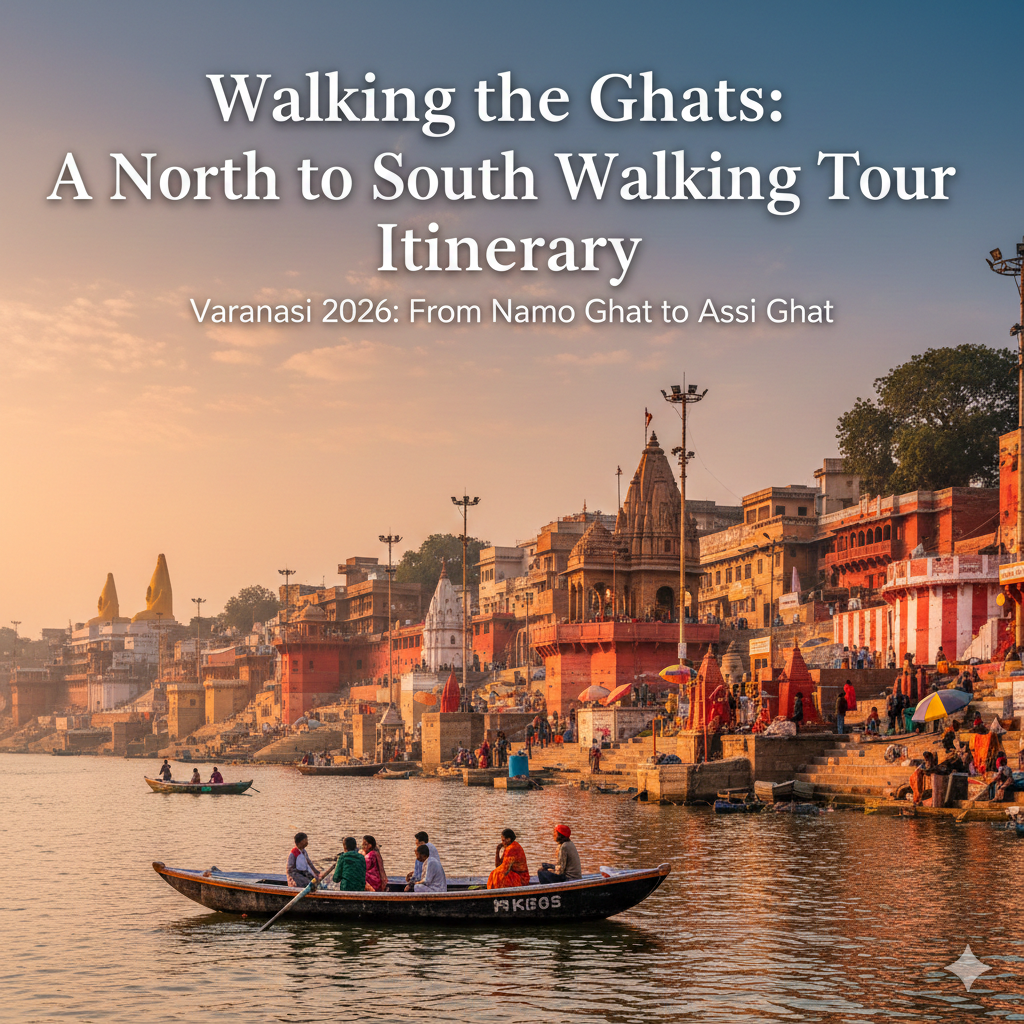
Walking along the banks of the Ganges in Varanasi is more than just a stroll; it is a journey through time, spirituality, and the very cycle of life. Known as the “City of Light,” Varanasi is home to over 84 ghats, each with its own story, architecture, and purpose.
In this comprehensive guide, we take you on a North-to-South walking tour for 2026, starting from the newly developed Namo Ghat and ending at the vibrant Assi Ghat. Whether you are a first-time visitor or a seasoned traveler, this itinerary ensures you experience the raw, unfiltered heart of India.
Read Also:- Varanasi Boat Ride Guide: Prices, Scams, and Best Time
1. The North End: Starting at the Modern Namo Ghat
The northern stretch of the Varanasi riverfront has seen a massive transformation as of 2026. Your journey begins at Namo Ghat, easily recognizable by the giant “Namaste” sculptures (hands folded in prayer). This is the most modern addition to the city and serves as a perfect, accessible starting point. Unlike the ancient, narrow steps of the central ghats, Namo Ghat offers wide promenades, clean facilities, and even a helipad.
As you walk south from Namo Ghat, you leave the modernity behind and enter the spiritual heart of Kashi. You will pass Adi Keshav Ghat, located at the confluence of the Varuna and Ganges rivers. This is where the city is said to have begun. The atmosphere here is significantly quieter than the bustling center. You’ll see locals engaged in morning prayers, children playing cricket on the wider stone platforms, and a sense of “Old Banaras” that hasn’t yet been swept up by the heavy tourist crowds.
Walking further south, you reach Panchganga Ghat. This is one of the most sacred spots in the city, where five holy rivers are believed to meet. The architecture here is dominated by the Alamgir Mosque, built by Aurangzeb over an ancient Hindu temple. The fusion of styles and the sheer height of the steps make this a photographer’s dream. In the early morning, the light hits the stone facades in a way that feels almost ethereal.
Highlights of the North Section
| Feature | Namo Ghat | Panchganga Ghat |
| Vibe | Modern, spacious, family-friendly | Deeply spiritual, historic, quiet |
| Best For | Morning walks, accessibility, photos | Meditation, history, architecture |
| Crowd Level | Moderate | Low to Medium |
| Must See | Namaste Statues | Alamgir Mosque & Ancient Shrines |
2. The Spiritual Core: Manikarnika to Scindia Ghat
As you continue your walk south, the air begins to change. The scent of sandalwood and incense is replaced by the smell of woodsmoke. You are entering the most intense part of Varanasi: Manikarnika Ghat, the “Mahashmashan” or the Great Cremation Ground. In 2026, a major renovation project is ongoing to create a “Manikarnika Corridor,” similar to the Kashi Vishwanath Dham, making the area more organized while preserving its sacred rituals.
Walking through Manikarnika is a grounding experience. Here, life and death exist side by side. You will see piles of wood stacked high, mourning families, and the “Eternal Flame” that has supposedly been burning for thousands of years. Note: Photography is strictly prohibited here out of respect for the deceased. Keep your camera tucked away and walk quietly.
Just south of Manikarnika is Scindia Ghat. It is famous for the Ratneshwar Mahadev Temple, which is partially submerged in the river and leans at a steeper angle than the Leaning Tower of Pisa. According to legend, the temple is cursed because it was built by a son for his mother to “repay” her for raising him—a debt that can never be truly repaid. The quiet lanes behind Scindia Ghat are a labyrinth of tiny shrines and hidden Sanskrit schools (Gurukuls) where you can hear students chanting Vedic hymns.
Pros and Cons of the Central Ghats
- Pros:
- Unrivaled cultural immersion and spiritual insight.
- Witnessing the “Leaning Temple of Varanasi.”
- Direct access to the Kashi Vishwanath Temple via the new corridor.
- Cons:
- Intense sights and smells (not for everyone).
- Persistent “burn wood” scammers and touts.
- Uneven terrain and ongoing construction work in 2026.
3. The Grand Center: Dashashwamedh to Kedar Ghat
You have now reached the pulsating heart of Varanasi: Dashashwamedh Ghat. This is the most famous ghat in the world, where the legendary Ganga Aarti takes place every evening at sunset. If you arrive here around midday, the ghat is a hive of activity—priests sitting under bamboo umbrellas (Chhatris) giving blessings, pilgrims taking holy dips, and street food vendors selling spicy Kachoris.
Walking south from Dashashwamedh, the path becomes more “tourist-friendly” but remains deeply traditional. You will pass Man Mandir Ghat, which features a beautiful 17th-century observatory built by Raja Jai Singh of Jaipur. The stone instruments used to measure the stars are still visible on the roof.
Further south lies Kedar Ghat, which is hard to miss because of its bright red-and-white striped walls. This ghat is the primary spot for South Indian pilgrims. The Kedarshwar Temple here is a replica of the one in the Himalayas. This section of the walk offers some of the best people-watching opportunities, as the diversity of India is on full display—from Bengali widows in white sarees to South Indian families in silk dhotis.
Essential Information Table
| Detail | Description |
| Distance | Approximately 5-6 km (Namo to Assi) |
| Time Needed | 3-4 hours (if walking leisurely) |
| Best Starting Time | 5:30 AM (for sunrise) or 3:00 PM (for sunset Aarti) |
| Footwear | Comfortable walking shoes or sturdy sandals |
| Safety | Very safe for solo travelers; watch out for slippery steps |
4. The Southern Stretch: Shivala to Assi Ghat
The southern part of the walk is where the chaos of the center begins to fade into a more “bohemian” and relaxed atmosphere. Starting from Shivala Ghat, you will notice grand palaces that belonged to former kings. The architecture here is more fortified, reflecting the royal history of the region.
Passing through Harishchandra Ghat (the second, smaller cremation ghat), you enter the area surrounding Tulsi Ghat. This ghat is named after the poet-saint Tulsidas, who wrote the Ramcharitmanas here. It is also home to an Akhara (traditional wrestling pit) where you can watch “Pehalwans” training in the mud at dawn. This is one of the most authentic experiences you can have in Varanasi—seeing the physical discipline that goes hand-in-hand with the city’s spiritual life.
Finally, you reach the southern terminus: Assi Ghat. In 2026, Assi Ghat remains the cultural hub for students, artists, and expats. It is famous for the Subah-e-Banaras, a morning ritual that includes Aarti, Vedic chanting, and a classical music performance at dawn. The area is lined with cafes (like Pizzeria Vaatika) where you can grab a wood-fired pizza or an apple pie to reward yourself for finishing the long walk.
5. Expert Review & Tips for 2026
Expert Review: “Varanasi in 2026 is a blend of ‘Smart City’ infrastructure and ‘Eternal City’ chaos. The connectivity between ghats has improved significantly, but the soul of the walk remains in the narrow galis (alleys). For the best experience, start your walk at Namo Ghat to see the new face of Varanasi, but spend most of your time between Manikarnika and Kedar Ghat to feel the city’s heartbeat. Don’t just stay on the riverfront—dip into the alleys for a glass of lassi at Blue Lassi or a plate of Tamatar Chaat.” — Rishi K., Local Cultural Guide.
What to Do (The “Dos”)
- Do Wear Modest Clothing: Cover your shoulders and knees to respect the religious nature of the site.
- Do Carry Water: The humidity can be intense, even in the morning.
- Do Engage with Locals: Sit on the steps and chat with a priest or a boatman; their stories are the real history of Banaras.
- Do Take a Boat Return: After walking North to South, take a rowing boat back to your starting point at sunset to see the ghats illuminated from the water.
What Not to Do (The “Don’ts”)
- Don’t Photograph Cremations: It is deeply disrespectful and can lead to aggressive confrontations.
- Don’t Touch the Water if Sensitive: The Ganges is cleaner than before but still contains high levels of bacteria; avoid drinking it or splashing it on open wounds.
- Don’t Fall for the “Wood Donation” Scam: Touts near Manikarnika may ask for money for “poor families’ cremation wood.” These are almost always scams.
- Don’t Rush: Varanasi isn’t a checklist; it’s a mood. If a particular ghat feels right, sit there for an hour.
Read Also:- Budget Challenge: How I Did Delhi-Varanasi in 3 Days Under ₹5,000
