
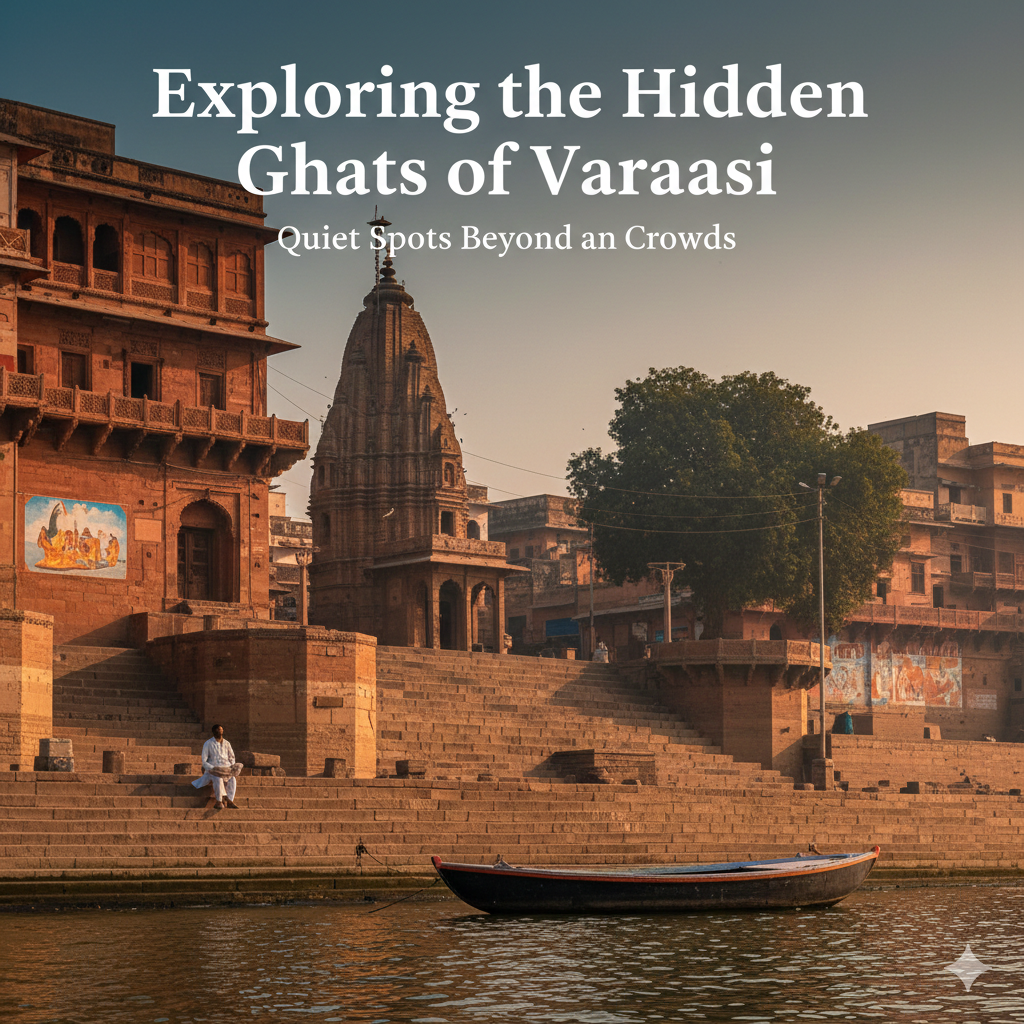
While the famous Dashashwamedh and Assi Ghats draw thousands of visitors, the true “Soul of Kashi” often hides in the quiet stretches in between. Exploring the hidden ghats of Varanasi allows you to experience the city’s spiritual depth without the megaphone-led tour groups.
In this guide for 2026, we explore the lesser-known riverfronts where scholars meditate, ancient legends live, and the river feels truly timeless.
Read Also:- Walking the Ghats: A North to South Walking Tour Itinerary
1. Narad Ghat: The Sanctuary of Solitude
Named after the celestial sage Narada, this ghat is a masterpiece of quietude. Unlike the bustling central ghats, Narad Ghat serves as a silent witness to individual devotion. The architecture is defined by the Naradeshwara Temple, which houses four significant idols. As of 2026, the area remains remarkably preserved, offering a glimpse into the 18th-century stone craftsmanship funded by Dattatreya Swami.
What makes Narad Ghat truly “hidden” is a local superstition that keeps crowds away: it is widely believed that married couples should avoid bathing here together. Legend says that since Sage Narada was a lifelong celibate (Brahmachari), the energy of the ghat promotes solitude and may cause discord in relationships. Consequently, you will mostly find solo meditators, serious Sadhaks (practitioners), and locals who enjoy the undisturbed view of the Ganges.
The Legend and Atmosphere
The steps here are often cleaner than the central ones because of the lower footfall. Walking through the narrow alleys leading to Narad Ghat, you’ll find small Sanskrit schools where the sound of students chanting echoes against the old stone walls. It is the perfect spot for those looking to “walk inward.”
| Feature | Narad Ghat Details |
| Primary Theme | Wisdom, Celibacy, and Solitude |
| Unique Ritual | Individual meditation and Tarpan |
| Best Time | 4:00 PM to 6:00 PM for sunset reflection |
| Crowd Level | Very Low |
2. Panchganga Ghat: The Mystical Confluence
Panchganga Ghat is one of the five most sacred ghats in Varanasi, yet it remains surprisingly peaceful compared to its peers. It is named after the mythical confluence of five holy rivers: the Ganga, Yamuna, Saraswati, Kirana, and Dhutapapa. While only the Ganga is visible to the naked eye, the spiritual weight of all five is felt by the pilgrims who come here for a “purifying dip.”
Historically, this ghat is a bridge between cultures. It is home to the Alamgir Mosque, built by Mughal Emperor Aurangzeb over the ruins of the grand Bindu Madhav Temple. In 2026, the site is recognized for its unique Hindu-Persian architectural fusion. It was also the home of the great poet-saint Kabir, who lived and studied here under his guru, Ramananda. Walking these steps, you are walking the same ground where India’s greatest reformist poetry was born.
Cultural Significance
During the Hindu month of Kartik (Oct-Nov), the ghat transforms. Hundreds of lanterns are hung in bamboo baskets high above the steps to guide the souls of ancestors. If you visit in early 2026 during the winter months, you can still catch the remnants of this glowing tradition.
| Feature | Panchganga Ghat Details |
| Historical Key | Confluence of 5 rivers; Home of Saint Kabir |
| Major Landmark | Alamgir Mosque & Bindu Madhav Temple |
| Pros | Incredible history, quiet morning Aarti |
| Cons | Steep steps; can be physically demanding |
3. The Northern Quiet: Gulariya and Adi Keshav Ghats
If you want to truly leave the tourists behind, head to the far northern stretches. Gulariya Ghat is named after the sacred Gular (cluster fig) tree. It is a tiny, often overlooked spot that feels like a village within the city. The stone steps are often occupied by local washermen (Dhobis) early in the morning, providing a raw, authentic look at the daily labor that sustains the city.
Further north is Adi Keshav Ghat, the point where the Varuna River meets the Ganga. This is technically the northernmost border of the sacred city. Because it is far from the main “Ghat Walk” circuit, it remains an oasis of calm even during festivals. In 2026, with the expansion of the Namo Ghat nearby, accessibility has improved, but the spiritual stillness of Adi Keshav remains intact.
Pros and Cons of the Hidden North
- Pros:
- Perfect for landscape photography without people in the frame.
- Authentic glimpse into the life of local artisan communities.
- The cleanest air and water in the city stretch.
- Cons:
- Far from most hotels and restaurants.
- Fewer boatmen willing to row this far north (expect to pay more).
4. Jain & Lali Ghat: Colors and Contemplation
Located in the southern half of the city, Jain Ghat is a visual treat with its painted murals depicting the lives of the Tirthankaras (Jain spiritual teachers). It is believed to be the birthplace of the 7th Tirthankara, Suparshvanatha. The atmosphere here is one of extreme non-violence and austerity.
Right next to it is Lali Ghat, which is small and barely marked on most maps. It is often used by locals for quiet morning exercise or yoga. These two ghats provide a “breather” between the more famous Shivala and Kedar Ghats. They are characterized by wide stone platforms where you can sit and watch the river without being approached by vendors.
Expert Review for 2026
“Varanasi is becoming more modernized every year, with projects like the Kashi Vishwanath Corridor and Namo Ghat. However, the ‘hidden’ ghats like Narad and Panchganga are where the old Kashi still breathes. My advice for 2026: hire a local rowing boat for a ‘one-way’ drop to Panchganga and walk back south through the alleys. You’ll see a side of the city that 90% of tourists miss.” — Ananya S., Cultural Researcher.
5. The “Do” and “Don’t” Guide for Offbeat Exploration
Exploring hidden areas requires a higher level of sensitivity than visiting the main tourist hubs. Here is your checklist for a respectful and safe journey.
What to Do (The “Dos”)
- Do Dress Conservatively: Especially at hidden ghats where locals are more traditional. Cover shoulders and legs.
- Do Carry a Physical Map: GPS can be notoriously unreliable in the narrow galis (alleys) behind the ghats.
- Do Ask Permission for Photos: At quiet ghats, people are often there for private prayer. Always nod and ask before clicking.
- Do Support Local Tea Stalls: The small Chai shops near Narad Ghat are great places to sit and hear local legends.
What Not to Do (The “Don’ts”)
- Don’t Bathe as a Tourist: Unless you are familiar with the current and water quality, it’s safer to sprinkle water on your head rather than a full dip.
- Don’t Accept Guided Tours from Strangers: Stick to licensed guides or self-exploration.
- Don’t Disturb Meditators: If you see someone in deep meditation at Narad Ghat, walk around them quietly.
- Don’t Ignore the “Couple Bathing” Rule at Narad Ghat: Even if you aren’t superstitious, respecting local customs prevents awkward interactions with priests.
Read Also:- Varanasi Boat Ride Guide: Prices, Scams, and Best Time
