
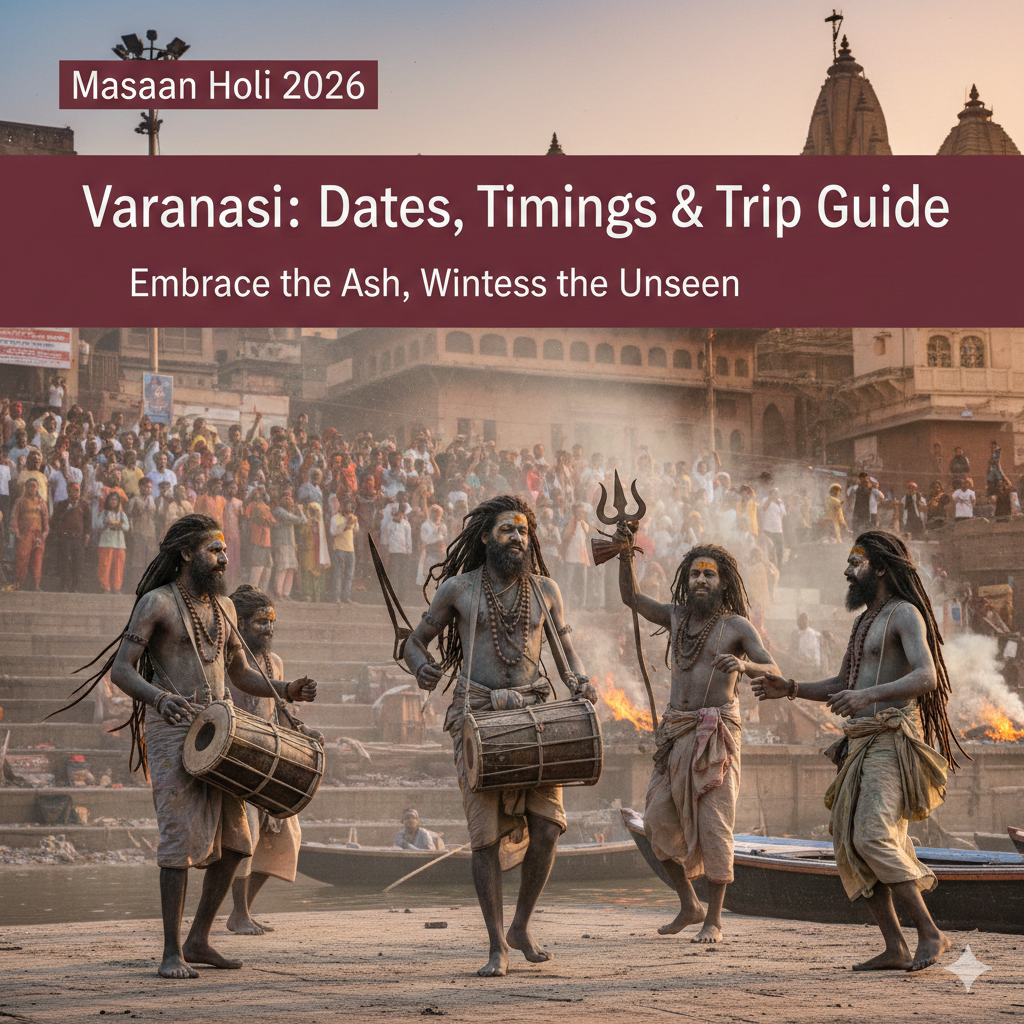
Varanasi, the city of light, life, and liberation, offers a celebration unlike any other in the world: Masaan Holi. While the rest of the globe plays with vibrant gulal and water, the ghats of Kashi witness a raw, spiritual ritual where devotees play with the ashes (Bhasma) of funeral pyres. This is not just a festival; it is a profound embrace of the cycle of life and death.
If you are planning to witness this mystical event in 2026, timing is everything. This guide provides the exact schedule, travel logistics, and expert tips to ensure your journey to the heart of Shiva’s city is seamless.
Read Also- Beyond Gulal: The Legend of Lord Shiva and the Ghosts of Manikarnika
1. Masaan Holi 2026: Exact Dates and Timings
The most critical part of your planning is the calendar. Masaan Holi is traditionally celebrated on the day after Rangbhari Ekadashi. In 2026, the main festivities will take place at the end of February, well before the national Holi date.
The 2026 Schedule
| Event | Date (2026) | Primary Location | Importance |
| Rangbhari Ekadashi | February 27, 2026 | Kashi Vishwanath Temple | Lord Shiva brings Parvati to Kashi. |
| Masaan Holi | February 28, 2026 | Manikarnika & Harishchandra Ghat | The “Holi of Ashes” with the Ganas. |
| Holika Dahan | March 3, 2026 | Various street crossings | Sacred bonfires across the city. |
| Rangwali Holi | March 4, 2026 | All Ghats & Streets | Main day for water and colors. |
Export to Sheets
Timings to Remember
- Morning (10:00 AM – 12:00 PM): The ritual typically begins with a special Aarti at the Mahashamshan Nath Temple located at Manikarnika Ghat.
- Afternoon (1:00 PM – 4:00 PM): This is the peak time for the Bhasma Holi. The atmosphere is electric with the sound of Damrus, chants of “Har Har Mahadev”, and clouds of ash filling the air.
- Late Evening: The energy settles into a somber yet divine peace, perfect for a quiet boat ride to observe the eternal fires of the ghats from a distance.
2. How to Reach Varanasi: Logistics for 2026
Reaching Varanasi has never been easier, thanks to significantly improved infrastructure. However, because Masaan Holi attracts thousands of spiritual seekers and photographers, booking 3–4 months in advance is non-negotiable.
By Air
The Lal Bahadur Shastri International Airport (VNS) is about 25 km from the main city. It is well-connected to major hubs like Delhi, Mumbai, Bengaluru, and Kolkata.
- Pro Tip: Pre-book a prepaid taxi at the airport counter. During the festival, App-based cabs (Uber/Ola) may have high surge pricing or limited access to the narrow lanes of the “Old City.”
By Train
Varanasi is a major railway junction. You can arrive at:
- Varanasi Junction (BSB): The most central station.
- Banaras Station (BSBS): A cleaner, modern alternative with many premium trains.
- Pt. Deen Dayal Upadhyaya Junction (DDU): About 15 km away, but serves as the main stop for many Rajdhani and Express trains.
Local Transport
The heart of Varanasi (near the ghats) is a maze of narrow alleys where vehicles cannot enter. You will mostly rely on E-rickshaws and walking. For Masaan Holi, the roads leading to Godowlia Crossing and Manikarnika Ghat will be heavily congested, so plan to reach the ghats on foot or by boat.
3. Where to Stay: Heritage and Luxury Recommendations
To truly experience the soul of Masaan Holi, you should stay near the Ganga. Living in a heritage property allows you to witness the sunrise Aarti and avoid the logistical nightmare of commuting from the outer city.
Heritage Stays near Dashashwamedh & Assi Ghat
- BrijRama Palace (Luxury): Located right on Darbhanga Ghat, this is one of the oldest and most luxurious structures in the city. It offers a royal vantage point of the river.
- Palace on Ganges (Heritage): Situated at Assi Ghat, this hotel features rooms themed after different regions of India. It’s perfect for those who want a blend of culture and comfort.
- Amritara Suryauday Haveli: A beautiful 20th-century mansion at Shivala Ghat. It offers a peaceful retreat while being walking distance from the main action.
- Hotel Banaras Haveli: A highly-rated mid-range option near Assi Ghat, known for its rooftop views and traditional hospitality.
Budget and Boutique Options
- Gostops Varanasi: For solo travelers or photographers on a budget, this hostel provides a vibrant community atmosphere.
- The Holy Meander: A great base for exploring the ghats with modern amenities at a reasonable price point.
4. Pros and Cons of Visiting During Masaan Holi
Witnessing Masaan Holi is a “bucket-list” experience, but it is not for the faint-hearted. Here is what you should expect:
The Table of Truth
| Pros | Cons |
| Unparalleled Spirituality: Witness a centuries-old tradition that explores the depth of Kashi’s philosophy. | Extreme Crowds: The narrow lanes become claustrophobic; moving from one point to another takes time. |
| Photographer’s Paradise: The visual of ash-smeared Aghoris and the golden sun is breathtaking. | Intensity: The smell of burning pyres and the raw nature of the event can be overwhelming for some. |
| Unique Cultural Insight: You get to see the “real” Banaras, beyond the tourist-friendly Ganga Aarti. | Hygiene & Dust: Playing with ash (and the accompanying dust) can be tough on those with respiratory issues. |
Export to Sheets
5. Expert Review: Is it Right for You?
The Verdict: Masaan Holi is a masterclass in the “Aghora” philosophy—finding beauty in what the world fears.
If you are a cultural researcher, a serious photographer, or a spiritual seeker, this is a must-visit. The energy at Manikarnika Ghat during these few hours is unlike anything else in India. However, if you prefer organized, “clean” festivals or are traveling with very young children or elderly people with mobility issues, you might find the main event at the cremation grounds too chaotic. In that case, watching the procession from a private boat is a much better alternative.
6. Do’s and Don’ts for Masaan Holi 2026
What to Do
- Book a Boat: To see the rituals without being pushed in the crowd, hire a boat at Dashashwamedh or Assi Ghat and ask them to take you to the Manikarnika waterside.
- Dress Modestly: This is a religious site. Wear simple, breathable cotton clothes (preferably ones you can discard later).
- Seek Permission: If you are photographing Naga Sadhus or Aghoris, a simple nod or asking “Can I?” is respectful. Some may ask for a small donation (Dakshina).
- Stay Hydrated: The February sun in Varanasi can be deceptively sharp. Carry a water bottle.
What NOT to Do
- Don’t Obstruct Rituals: Remember that Manikarnika is a working cremation ground. Families are there for final rites; do not block their path for a “perfect shot.”
- Don’t Enter the Inner Circle: There are specific areas where only the Aghoris and locals play with ash. Stay on the peripheral steps or on a boat.
- Don’t Wear Contact Lenses: The ash and gulal can easily get into your eyes. Use glasses or sunglasses for protection.
- Don’t Panic: The crowd can be pushy. Keep your valuables in a waterproof, secure chest bag and go with the flow of the movement.
Read Also:- The Paradox of Kashi: Celebrating Life at the Great Cremation Ground
Would you like me to help you draft a 3-day itinerary starting from February 27th to ensure you don’t miss any of the key rituals?
