
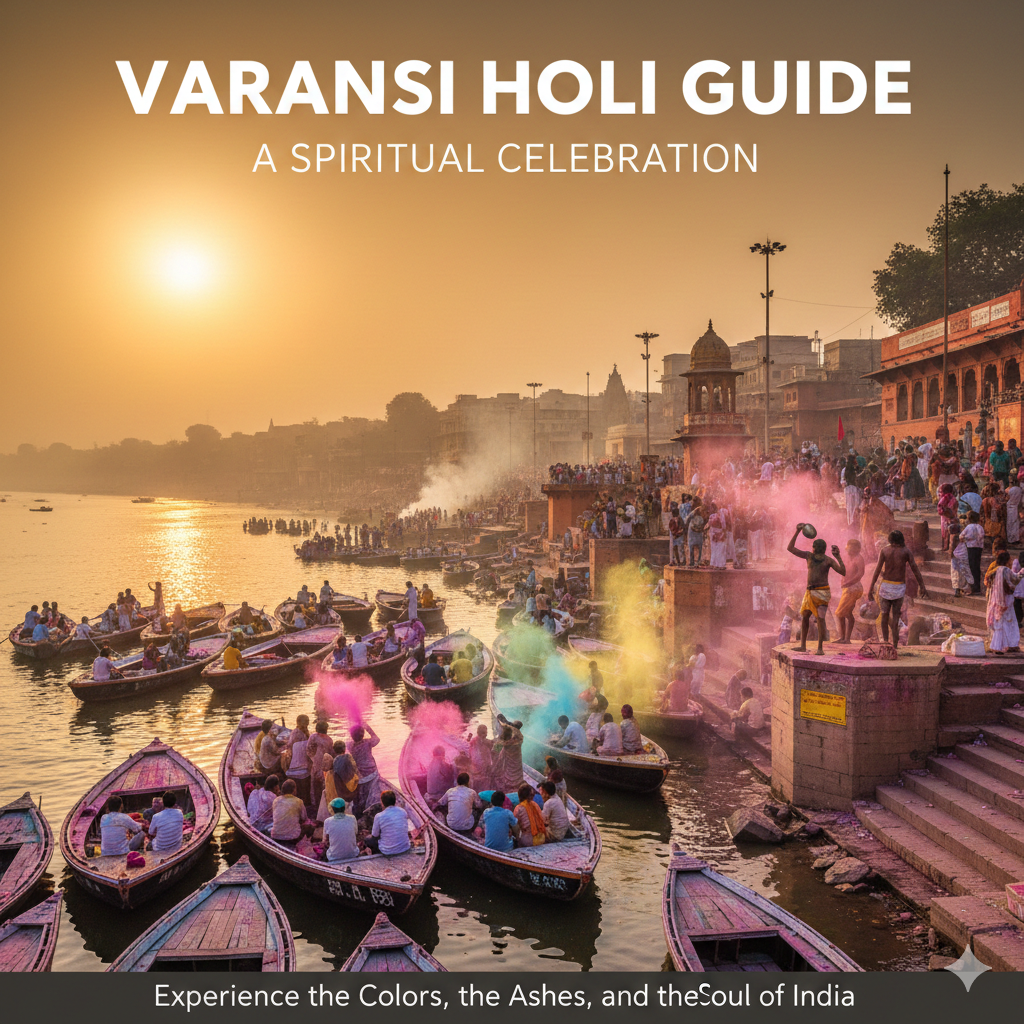
Holi in Varanasi (Kashi) isn’t just a festival of colors; it’s a sensory explosion where the divine meets the chaotic. While the rest of India plays with water and gulal, Varanasi takes it a step further with ancient rituals, boat rides on the Ganges, and the world-famous “death Holi.”
This guide walks you through the soul of the celebration, ensuring you experience the magic without getting lost in the madness.
Read Also:- Top 5 Peaceful Holi Getaways for Solo Travelers
1. The Morning Magic: Assi Ghat and Sunrise Boat Rides
The day begins before the sun even touches the horizon. Assi Ghat is the spiritual heart for travelers and locals alike. Starting your Holi here provides a gentle, breathtaking introduction to the festivities.
What to Expect
At dawn, the Subah-e-Banaras program features Vedic chants and a localized Aarti. As the ceremony ends, the first clouds of pink and yellow powder begin to drift through the air. The best way to witness this is from the water.
Hiring a wooden rowing boat allows you to see the ghats transform into a multi-colored canvas from a peaceful distance. From the middle of the Ganges, the reflection of the rising sun mixed with the drifting Holi colors creates a view that feels like a living painting.
The Atmosphere
The air smells of incense, marigolds, and sandalwood. On the boat, you are shielded from the “aggressive” play found in the narrow alleys. You can watch locals taking their ritual dips in the river and applying small tilaks to each other’s foreheads. It is a moment of profound peace before the high-energy celebrations take over the city streets.
2. Masane Wali Holi: The Ashes of Manikarnika
This is the most unique—and polarizing—tradition in the world. Celebrated at Manikarnika Ghat, the main cremation ground, “Masane wali Holi” involves playing with the ashes of the departed.
The Spiritual Significance
While it may sound macabre to outsiders, for the people of Kashi, it is a celebration of the cycle of life and death. Legend says that Lord Shiva (Mahadev) plays Holi with his devotees here using cremation ashes (Bhasma). It represents the ultimate truth: that everything eventually returns to dust, and death is not something to be feared, but a transition to be celebrated.
What to Expect
Expect intense crowds, the smell of burning wood, and a sea of grey ash mixed with red gulal. Naga Sadhus and local devotees dance to the beat of drums and damrus. It is loud, dusty, and emotionally overwhelming. If you are sensitive to smoke or deep spiritual intensity, it is best to view this from a boat or a high balcony nearby. It is not “fun” in the traditional sense; it is a raw, powerful experience.
Once you leave the ghats and enter the narrow lanes of the old city, the vibe shifts from spiritual to high-energy chaos. This is where the “real” Varanasi Holi happens.
The “Pakka Mahal” Experience
The lanes of Vishwanath Gali and Thatheri Bazar become a gauntlet of color. Local youths roam in groups, often drenched in permanent dyes. You will hear the sound of “Har Har Mahadev” echoing off the ancient stone walls.
Finding the Balance
While the energy is infectious, these alleys can be claustrophobic. If you want to experience the colors but feel overwhelmed, look for “safe zones” like cafes with rooftop seating (many in the Bangali Tola area). From a rooftop, you can watch the festivities below and drop a little color on passersby without being caught in a crush of people.
Quick Reference: Varanasi Holi at a Glance
| Feature | Assi Ghat | Manikarnika Ghat | Dashashwamedh Ghat |
| Vibe | Cultural & Artistic | Raw & Spiritual | Grand & Iconic |
| Main Activity | Morning Aarti & Music | Ash Holi (Bhasma) | Massive Group Celebrations |
| Crowd Level | Moderate | Very High/Intense | High |
| Best For | Families & Photographers | Spiritual Seekers | First-timers |
| Start Time | 5:30 AM | 11:00 AM (approx.) | 9:00 AM |
Pros and Cons of Holi in Varanasi
Pros
- Unmatched Authenticity: You won’t find the “Ash Holi” anywhere else in the world.
- Photographer’s Dream: The contrast of ancient stone and vibrant powder is stunning.
- Spiritual Depth: It’s more than a party; it’s a religious experience.
Cons
- Overwhelming Crowds: The narrow streets can get very congested.
- Safety for Solo Travelers: Can be intimidating; it is better to move in groups.
- Stained Clothes: The dyes used here are often strong and permanent.
Expert Review: Is it for you?
“Varanasi Holi is the ‘Final Boss’ of Indian festivals. It is beautiful, terrifying, and life-changing all at once. For the best experience, stay by the river. The Ganges acts as a natural buffer. Avoid the deep interior alleys after 11:00 AM if you aren’t comfortable with physical crowds. If you respect the local culture—especially at the cremation ghats—you will be welcomed with open arms.” — Travel Expert Note
The “Do’s and Don’ts” for a Safe Holi
Do
- Wear Old Clothes: Assume whatever you wear will be thrown away.
- Apply Oil: Put coconut oil in your hair and on your skin; it prevents the dye from sticking.
- Book a Boat in Advance: Prices triple on the day of Holi.
- Carry a Waterproof Pouch: Your phone and camera need protection from water balloons.
Don’t
- Don’t Go Out Alone: Especially if you are a solo female traveler; stay with a group or a guide.
- Don’t Take Photos at Manikarnika without Permission: It is a cremation site; be respectful of grieving families.
- Don’t Consume ‘Bhang’ Carelessly: The local cannabis-infused drink is very strong. Know your limits.
- Don’t Wear Contact Lenses: Powder in the eyes can be painful; wear glasses instead.
Read Also:- Celebrating Holi 2026: Vrindavan vs. Pushkar – The Ultimate Guide
