
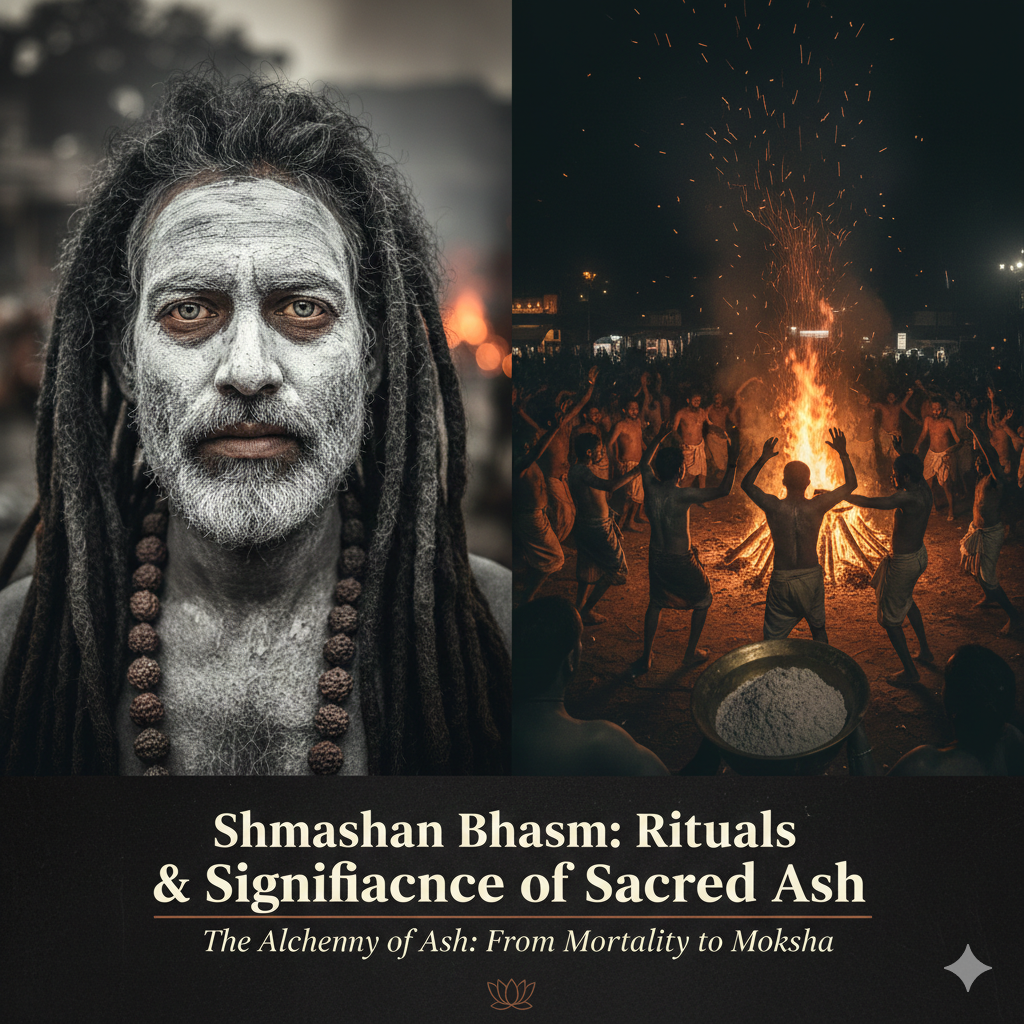
The concept of Shmashan Bhasm (cremation ash) often evokes a sense of mystery or even fear in the uninitiated. However, in the heart of Indian spiritual tradition—particularly in the ancient city of Kashi—it is revered as the ultimate symbol of purity and detachment.
By 2026, as global interest in “conscious mortality” and ancient rituals grows, understanding the science and soul behind Chita Bhasm has never been more relevant. This blog explores why this sacred ash is used, the role of the enigmatic Aghori Sadhus, and how a ritual involving death is actually a celebration of the eternal soul.
Read Also:- Rangbhari Ekadashi vs. Masaan Holi: Understanding the Two Faces of Banaras Holi
The Origin and Essence of Chita Bhasm
In Sanskrit, Bhasm refers to that which is “consumed by fire.” While common holy ash (Vibhuti) is usually made from burnt cow dung or wood, Chita Bhasm is specifically the ash collected from a funeral pyre. To the spiritual seeker, this isn’t “remains”; it is the “essence” of a human life after the five elements (Panch Tattva) have returned to their source.
The use of this ash is deeply rooted in the worship of Lord Shiva, also known as Mahakal (The Great Time). Shiva is often depicted smeared from head to toe in white ash. This represents his role as the destroyer of the ego. By 2026, modern psychology has begun to look at these rituals as “Memento Mori”—a practice of remembering one’s own mortality to live a more meaningful life. When a devotee or a Sadhu applies this ash, they are symbolically stating that the physical body is temporary, and only the consciousness is eternal.
The Role of Aghori Sadhus in the Ceremony
The Aghori Sadhus are perhaps the most misunderstood practitioners of the Shmashan rituals. Contrary to popular belief, their practices are not about darkness; they are about “non-duality.” For an Aghori, there is no difference between the beautiful and the ugly, the pure and the impure. Everything is a manifestation of the Divine.
During the Masaan Holi or daily Shmashan rituals, Aghoris play a central role. They are the guardians of the cremation grounds. Their use of Chita Bhasm is a ritualistic tool to overcome the “eight fetters” (hatred, shame, fear, etc.) that bind the human soul. By smearing ash and meditating amidst burning pyres, they confront the ultimate fear—death—and transcend it. In 2026, the administration in Varanasi has created specific viewing galleries so that pilgrims can witness these intense rituals from a respectful distance, ensuring the sanctity of the Aghori’s Sadhana is preserved while allowing seekers to learn from their philosophy.
The Symbolic Purification of the Soul
Why is ash considered “pure” when it comes from a dead body? In the science of Tantra, fire is the ultimate purifier. Whatever passes through fire loses its worldly identity. A king and a beggar, when reduced to ash, look exactly the same. This “sameness” is the purification of the soul’s perspective.
The ritual of applying Bhasm is called Bhasma Snana (Ash Bath). It is believed that the ash absorbs the negative vibrations of the physical self and grounds the seeker. Symbolically, it represents the “burning” of desires, attachments, and past karmas. By the time the ash is applied, the “person” is gone, and only the “spirit” remains. This is why the ash is considered “sacred”—it is the residue of a life that has been offered back to the universe.
| Aspect | Material Meaning | Spiritual Significance |
| Texture | Fine, grey/white powder | The final state of all matter |
| Process | Burning in a pyre | Purification by the fire of knowledge |
| Application | Smearing on the skin | Cloaking the self in detachment |
| Deity | Lord Shiva (Bhairava) | The Lord of Transformation |
| Outcome | Physical disintegration | Liberation of the Atman (Soul) |
Pros and Cons of Engaging with Shmashan Rituals
Pros:
- Ego Dissolution: Deeply humbles the practitioner and reduces arrogance.
- Fear Management: Facing the reality of the Shmashan helps reduce the existential anxiety of death.
- Spiritual Grounding: Provides a powerful perspective on what truly matters in life.
- Cultural Connection: Offers a direct link to the most ancient, unchanged rituals of Vedic and Tantric India.
Cons:
- Emotional Intensity: Can be overwhelming for those recently grieving or those with sensitive temperaments.
- Health Risks: If not handled correctly, fine ash can cause respiratory irritation or skin allergies.
- Misinterpretation: Without a proper guide, the rituals can be seen as “dark” or “macabre,” leading to spiritual confusion.
Expert Review: The Alchemy of Ash
Expert Take: “The science of Bhasm is actually the science of Alchemy. It is the transformation of the ‘Heavy’ (the physical body) into the ‘Light’ (the ash). In 2026, we see a global shift where people are moving away from sanitized versions of spirituality. They want the raw truth. Shmashan Bhasm is the rawest truth there is. It is the only thing that remains when everything else is gone.”
Strategy for Seekers:
- Observe, Don’t Imitate: Do not try to apply Chita Bhasm yourself without the guidance of a traditional practitioner or Guru. It carries intense energy.
- Meditation Focus: Use the sight of the ash to meditate on the phrase “Aham Brahmasmi” (I am the Infinite), realizing you are not the body that turns to ash.
- Respect the Space: Treat the Shmashan as a temple, not a tourist spot. The silence there is more powerful than any mantra.
What to Do vs. What Not to Do
What to Do:
- Maintain Silence: The cremation ground is a place of deep transition for souls. Keep your voice low.
- Bow to the Mahashmashan: Offer a mental prayer to Lord Shiva as the protector of souls before entering.
- Dress Modestly: Simple, traditional white or earthy tones are preferred to respect the solemnity.
- Wash After Visiting: It is a traditional practice to take a full bath and wash your clothes immediately after returning from a Shmashan.
What Not to Do:
- Don’t Take Photos of Mourners: While the Aghoris may allow photos, never photograph families performing the final rites of their loved ones.
- Don’t Touch the Ash Without Permission: It is considered a sacred element; treat it with the same respect you would treat a temple idol.
- Don’t Consume Heavy Food: Avoid eating a heavy meal immediately before or after witnessing these rituals; the energy shift can affect your digestion.
- Don’t Judge: You may see things that challenge your logic. Keep an open mind and realize these are practices thousands of years old.
Read Also:- Varanasi Holi Guide: A Spiritual Celebration on the Ghats
