
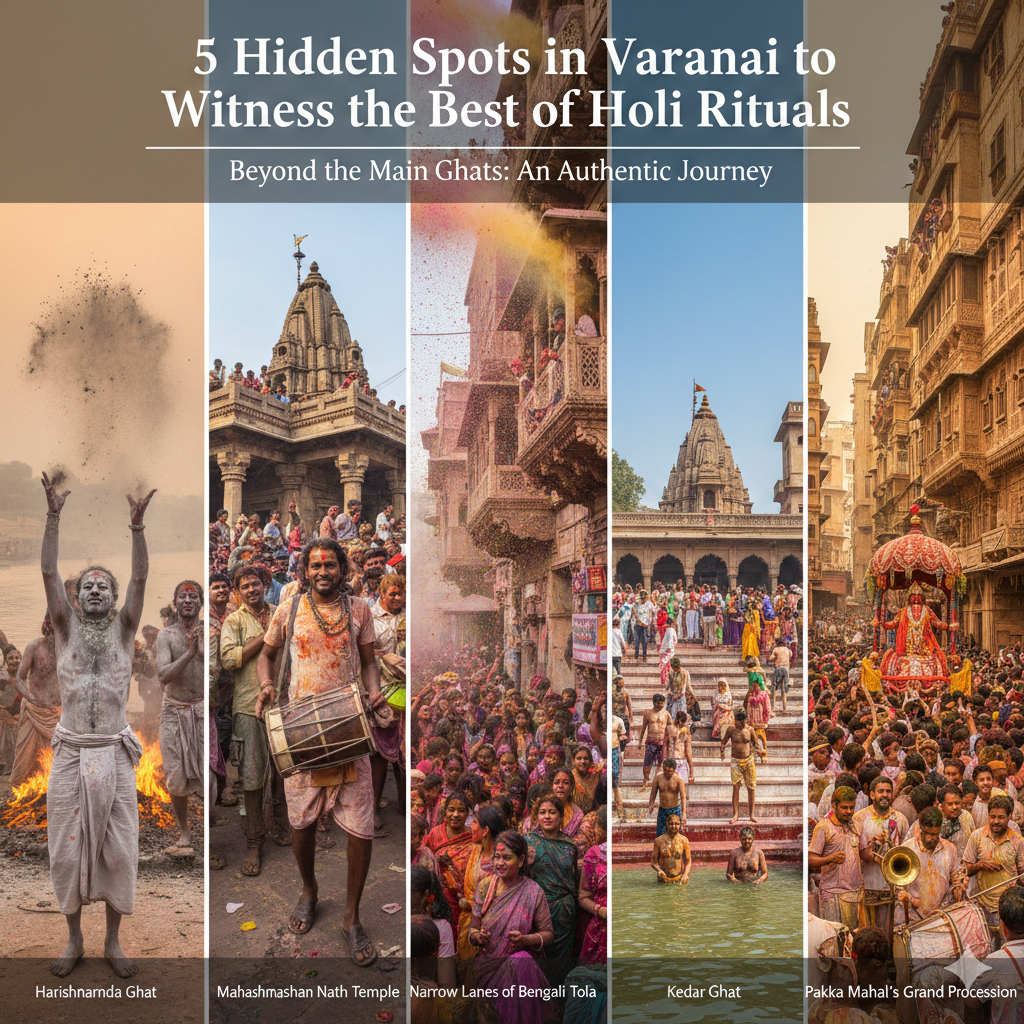
Varanasi doesn’t just celebrate Holi; it lives it through a lens of life, death, and rebirth. While the rest of India plays with colors and water, the “City of Light” engages in rituals that date back millennia. If you want to move beyond the tourist crowds at the main ghats, you need to dive into the spiritual heart of the city.
Here are the 5 hidden spots to witness the soul of Holi in Varanasi.
Read Also:- The History of Scindia Ghat and the Mysterious Leaning Temple of Varanasi
1. Harishchandra Ghat: The “Other” Burning Ghat
While Manikarnika gets the fame, Harishchandra Ghat offers a more intimate, albeit intense, look at Varanasi’s relationship with the afterlife during Holi. On the day of Masane ki Holi (Holi of the Crematorium), devotees gather here to celebrate with pyre ashes.
The Ritual of Ash
The belief is that Lord Shiva (Mahadev) plays Holi with his devotees using the ashes of the departed. It sounds macabre to an outsider, but to a local, it is a profound celebration of liberation (Moksha). At Harishchandra, you can witness the “Smashan Holi” in a setting that feels less like a spectacle and more like a raw, religious experience.
Why It’s Special
The air is thick with the scent of incense and woodsmoke. Unlike the chaotic crowds at Manikarnika, Harishchandra allows you to observe the rituals from a respectful distance. You’ll see Aghori sadhus smeared in white ash, chanting “Hara Hara Mahadev” while throwing handfuls of grey dust into the air. It is a visual representation of the phrase “dust to dust,” celebrated with hauntingly beautiful music.
| Feature | Details |
| Best Time | 12:00 PM to 3:00 PM (Rang Bhari Ekadashi) |
| Key Element | Human Pyre Ash (Bhasma) |
| Crowd Level | Moderate to High |
| Atmosphere | Spiritual, intense, and transcendent |
2. Mahashmashan Nath Temple
Tucked away near the cremation grounds, the Mahashmashan Nath Temple is the epicenter of the Masane ki Holi festivities. This isn’t just a spot; it’s a sanctuary for the eccentric and the deeply devout.
The Legend of the Lord of the Dead
The temple is dedicated to Shiva in his form as the Lord of the Great Crematorium. On the day of Rang Bhari Ekadashi, the idol of Shiva is taken in a procession. After the formal rituals, the temple courtyard becomes a sea of grey and red.
The temple is small, and during Holi, it becomes incredibly packed. However, the energy is infectious. Local musicians play the Damru (Shiva’s drum) and sing folk songs that have been passed down for generations. This is where you witness the “Tandav” spirit of Holi—a dance that is both destructive and creative. It’s a sensory overload of sound, smell, and sight that you won’t find in any travel brochure.
| Feature | Details |
| Best Time | Early afternoon |
| Key Activity | Traditional folk singing and Damru playing |
| Accessibility | Narrow stairs; very crowded |
| Expert Tip | Cover your mouth with a scarf to avoid inhaling ash |
3. The Narrow Lanes of Bengali Tola
To see the “Civilian Holi,” you must leave the riverbank and enter the labyrinthine alleys of Bengali Tola. This area is a melting pot of cultures, and its narrow lanes make the celebrations feel like a private party you’ve been invited to join.
The Procession of Colors
The lanes are so narrow that the sunlight barely touches the ground, but during Holi, they are lit up by vibrant Gulal (powdered color). The procession here is less about the dead and more about the community. Residents stand on their balconies, raining flower petals and colors down on those walking below.
The Taste of Holi
In these lanes, you’ll find the best traditional Holi treats. Look for small shops selling Gujiya (sweet dumplings) and Thandai. Be cautious, as many shops serve “Special Thandai” containing Bhang (cannabis), which is a local tradition. The intimacy of these lanes allows for genuine interactions with Banarasi families who have lived here for centuries.
| Feature | Details |
| Best Time | 9:00 AM to 1:00 PM |
| Key Element | Organic Gulal and flower petals |
| Crowd Level | Dense but friendly |
| Photography | Excellent for portraits and “street” style shots |
4. Kedar Ghat: The South Indian Connection
Kedar Ghat is one of the cleanest and most visually striking ghats in Varanasi, recognizable by its red-and-white striped steps. While Dashashwamedh Ghat is packed with tourists, Kedar Ghat hosts a more localized, rhythmic celebration.
Rituals and Bathing
Many locals come here for the ritualistic bath in the Ganges after playing with colors. The sight of the river turning multi-colored near the banks is a photographer’s dream. At the top of the ghat sits the Kedareshwar Temple, where special Vedic chants are performed on Holi morning.
A Communal Spirit
Kedar Ghat is known for its strong community vibe. You’ll see groups of friends gathered on the steps, sharing snacks and singing Hori (folk songs). It is significantly safer and calmer than the main ghats, making it the perfect spot for families or solo travelers who want to experience the festival without the aggressive “rowdiness” often found elsewhere.
| Feature | Details |
| Best Time | Sunrise for prayers, 11:00 AM for colors |
| Key Element | Rhythmic chanting and community bathing |
| Visuals | Striking red and white architecture |
| Vibe | Relaxed and spiritual |
5. The Lanes of Pakka Mahal (Near Kashi Vishwanath)
The area surrounding the Kashi Vishwanath Temple, known as Pakka Mahal, is where the “Royal” Holi procession passes. This is the historic heart of the city, where the buildings are centuries old and the culture is “Banarasi” to the core.
The Procession of the King of Kashi
Historically, the Kashi Naresh (King of Varanasi) would lead a procession. Today, the spirit remains through massive community marches. You will see brass bands playing Bollywood hits mixed with traditional bhajans, and people dressed as deities (Swaroops) riding on chariots.
Hidden Courtyards
If you peek into the doorways of the old Havelis (mansions) in Pakka Mahal, you’ll see private Holi celebrations. These often involve classical music performances, known as Baithaks. The contrast between the loud, colorful streets and the soulful, melodic music inside these courtyards is the ultimate Varanasi experience.
| Feature | Details |
| Best Time | Mid-morning |
| Key Element | Brass bands and “Swaroop” performers |
| Vibe | Traditional, grand, and historical |
| Top Tip | Wear old clothes you plan to discard |
Pros, Cons, and Expert Review
Comparison Table
| Feature | Pros | Cons |
| Crematorium Holi | Deeply spiritual, unique in the world. | Very intense, can be distressing for some. |
| Old City Lanes | Highly photogenic, authentic food. | Extremely crowded, easy to get lost. |
| Riverfront Ghats | Beautiful views, easy access to water. | Can get slippery and chaotic. |
| Local Temples | Traditional music and rituals. | Very loud and physically demanding. |
Expert Review
“Varanasi during Holi is not for the faint of heart, but it is the most rewarding cultural experience in India. To truly see it, you must move away from the ‘Main Ghat’ mentality. The real magic happens in the Galais (lanes) of Bengali Tola and the ash-covered steps of Harishchandra. My advice? Embrace the chaos, but keep your back to a wall in crowded lanes to avoid being overwhelmed.” — Arjun Mehra, Cultural Historian.
The Ultimate “Do’s and Don’ts” for Holi in Varanasi
What to Do
- Wear a Bandana: Protect your hair from permanent dyes and your lungs from ash at the crematorium ghats.
- Use Coconut Oil: Apply it liberally to your skin and hair before going out; it makes the color wash off much easier.
- Hire a Local Guide: The hidden spots are hard to find, and a local can navigate the “social codes” of the narrow lanes for you.
- Carry a Waterproof Bag: Your phone and camera are at high risk from water balloons and colored powder.
What NOT to Do
- Don’t Go Alone (if possible): While Varanasi is generally safe, Holi can get rowdy. Being in a group is always better.
- Don’t Ingest “Bhang” Unprepared: It is much stronger than most tourists expect and can last for 8-12 hours.
- Don’t Wear Contact Lenses: Powder in the eyes is common; wear glasses to provide a physical barrier.
- Don’t Forget Consent: Even though it’s Holi, respect people’s space. If someone says “No,” move on.
Read Also:- Exploring Hidden Ghats of Varanasi: Quiet Spots Beyond the Crowds
