
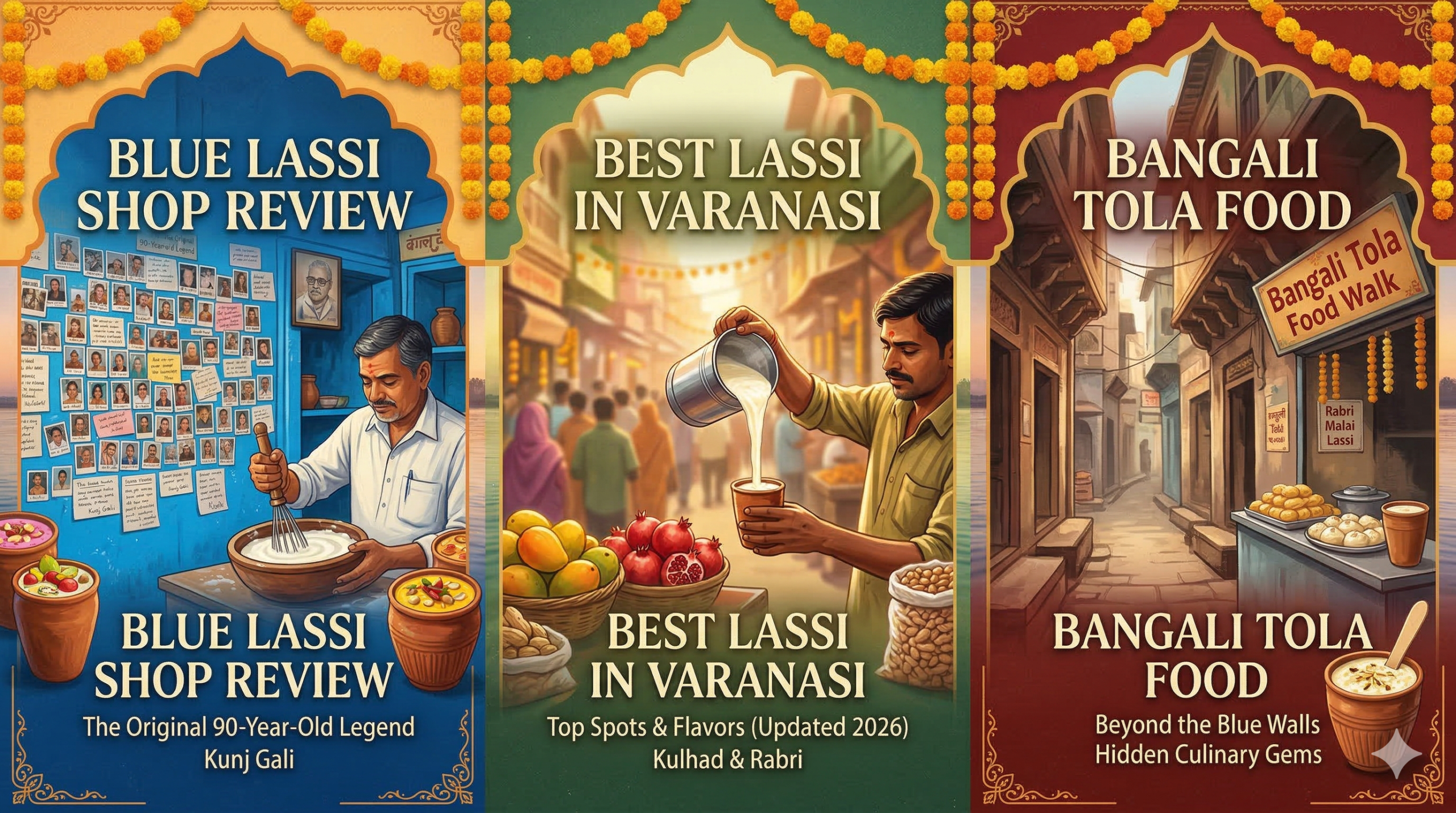
In the heart of Varanasi’s labyrinthine alleys lies a blue-walled sanctuary that has become as much a pilgrimage site for foodies as the Kashi Vishwanath is for devotees. This guide explores the legendary Blue Lassi Shop, updated with 2026 insights, to help you navigate the “Galis” (lanes) and find the perfect earthen cup of creamy bliss.
Read Also:- Sankat Mochan Hanuman Temple: Timings and Prasad Guide
1. Blue Lassi Shop: The Legend of the Blue Walls
Located near the Manikarnika Ghat, the Blue Lassi Shop is a 90-year-old institution that has transitioned from a local secret to a global phenomenon. Originally started by Pannalal Yadav, the shop gained its current name in 2003—rumored to be suggested by a group of Korean tourists who were enchanted by the shop’s vibrant blue decor.
The Experience
Walking into this tiny “hole-in-the-wall” is like entering a time capsule. The walls are plastered with thousands of passport-sized photos and handwritten notes from travelers across the globe. You sit on small wooden benches, watching the third-generation owners hand-churn yogurt in large wooden bowls. The rhythm of the wooden whisk against the clay pot is the soundtrack of the shop.
| Feature | Details (Updated 2026) |
| Full Name | Blue Lassi Shop (Original) |
| Location | CK 12/1 Kunj Gali, near Manikarnika Ghat |
| Timings | 9:30 AM – 9:00 PM |
| Price Range | ₹80 to ₹150 per cup |
| Signature Dish | Pomegranate Chocolate & Mixed Fruit Lassi |
| Payment | Cash preferred (UPI accepted but sometimes unreliable in deep lanes) |
Pros and Cons
- Pros: Over 90 unique flavors; incredible “Old Kashi” atmosphere; fresh, high-quality ingredients used daily.
- Cons: Very cramped seating; located on the path to the cremation ghat (you will see funeral processions passing by); can be hard to find without a map.
Expert Review: “Blue Lassi isn’t just about the drink; it’s about the ‘Banarasi’ rhythm. While some purists prefer plain lassi, their fruit-based innovations like the ‘Mango-Coconut’ are unmatched in texture. It’s a 5/5 experience for any traveler’s bucket list.” — Varanasi Food Critic
While Blue Lassi is the superstar, the surrounding area of Bangali Tola and Dashashwamedh is a goldmine for lassi lovers. If the crowd at the Blue Lassi shop is too overwhelming, these nearby spots offer equally authentic, often cheaper, alternatives.
The Lassi Trail
Bangali Tola is famous for its “Bengali” influence, but its dairy culture is purely Banarasi. Shops here often focus on the traditional Rabri Malai Lassi—a thick, sweet yogurt base topped with a generous layer of clotted cream (malai) and thickened milk (rabri).
| Nearby Shop | Specialty | Why Visit? |
| Deepak Lassi Shop | Traditional Plain Lassi | Located right near Dashashwamedh; very fresh. |
| Siwon Lassi | Banana & Nut Lassi | Popular with the backpacker crowd in Bangali Tola. |
| Bana Lassi | Apple & Cinnamon | Great for those who want a fusion twist. |
Pros and Cons
- Pros: Less wait time compared to Blue Lassi; cheaper prices (often ₹50–₹70); easier to access from the main Ghat road.
- Cons: Fewer flavor varieties; less “Instagrammable” history than the original Blue Lassi.
3. The Art of the Lassi: What Makes It Special?
Varanasi lassi is not a drink; it’s a meal. Unlike the watery lassi found in other parts of India, Banaras lassi is so thick you need a wooden spoon to eat it.
Preparation & Variety
The secret lies in the earthen pots (Kulhad). The clay absorbs excess moisture from the yogurt, making it denser and adding an earthy aroma. In 2026, the menu at Blue Lassi has expanded to include exotic combinations that cater to modern palates while maintaining traditional churning methods.
| Flavor Category | Examples | Best For |
| Fruit Based | Mango, Papaya, Custard Apple | Refreshment on a hot day. |
| Nut Based | Saffron, Cashew, Pistachio | High-energy spiritual fuel. |
| Indulgent | Chocolate, Coffee, Rabri | Dessert lovers. |
Pros and Cons
- Pros: Natural probiotic benefits; eco-friendly packaging (clay cups); no artificial preservatives.
- Cons: High calorie/sugar content; very filling (you might skip your next meal).
Expert Review: “The ‘Saffron-Pistachio’ lassi here is a masterpiece. They don’t use syrups; they use real threads of kesar and freshly crushed nuts. It’s the gold standard of Indian yogurt drinks.” — Global Street Food Blogger
4. Your Lassi Checklist: Do’s and Don’ts
What to Do
- Bring a Photo: If you want to leave your mark, bring a small passport-sized photo to stick on the wall.
- Go with an Empty Stomach: A single “Special Lassi” is heavy and can easily replace a lunch.
- Watch the Churning: Stand near the counter to see the rhythmic hand-whisking process—it’s mesmerizing.
- Explore Nearby Galis: Use the lassi break as a starting point to explore the hidden temples of the Chowk area.
What Not to Do
- Don’t Rush: This isn’t fast food. Quality lassi takes 5–10 minutes to prepare per cup. Be patient.
- Avoid “Bhang” lassi if Unsure: While Varanasi has a culture of Bhang (cannabis), the Blue Lassi Shop is a family-friendly spot that usually does not serve it. For Bhang lassi, only go to government-authorized shops.
- Don’t Be Disrespectful: Since the shop is on the way to the cremation ghat, you will see mourners. Keep your voice down and be respectful of the local customs.
- Don’t Follow Random “Guides”: Many people will try to lead you to “another” Blue Lassi shop. Follow your GPS to the original in Kunj Gali.
Read Also:- The Ultimate Street Food Guide to Varanasi
Would you like me to create a custom Google Maps itinerary for your “Varanasi Food Walk” that includes these lassi spots and other must-try snacks?
