
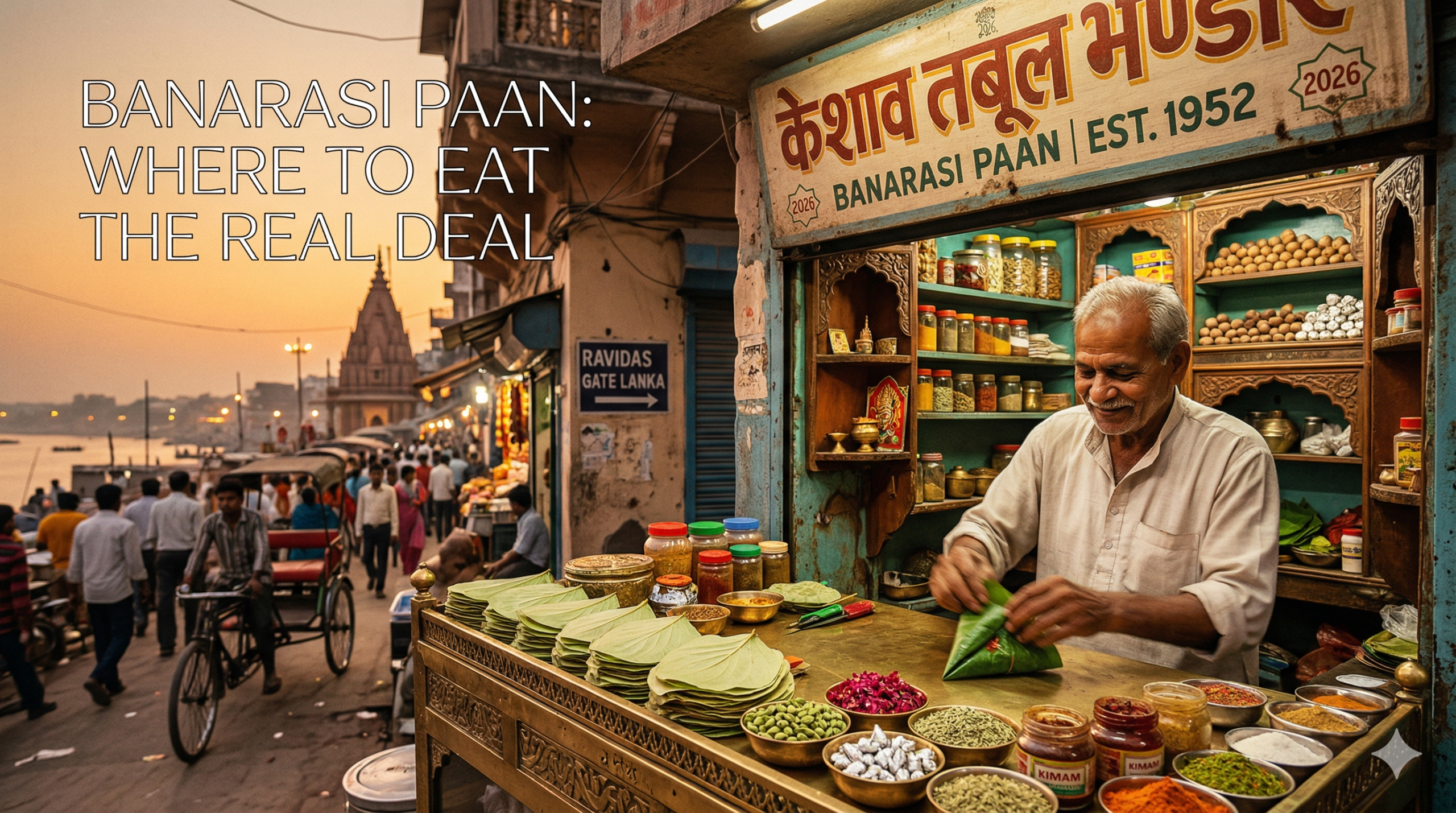
If you visit the ancient city of Varanasi and don’t try the famous Banarasi Paan, did you even go? In India, paan is more than just a mouth freshener; it is a symbol of hospitality, a digestive aid, and a piece of living history. In the narrow, winding lanes of Kashi, the art of making paan has been perfected over centuries, turning a simple betel leaf into a legendary culinary experience.
This guide explores why Banarasi Paan is world-famous, its deep cultural significance, and exactly where you can find the “Real Deal” in 2026.
Also Read:- Where to Find the Best Blue Lassi in Varanasi
1. What Makes Banarasi Paan So Famous?
The secret of Banarasi Paan lies in the Maghai leaf. Unlike the thick, fibrous leaves found elsewhere, the Maghai leaf is incredibly soft and delicate. It is said that a perfectly made Banarasi Paan should literally melt in your mouth without leaving any fibrous residue behind. This “melt-in-mouth” quality is the gold standard for any paan enthusiast.
The process is an art form. The Paanwaari (paan maker) treats the leaf like a canvas. First, a thin layer of Katha (catechu) and Chuna (lime) is applied. Then comes the magic: a curated mix of Gulkand (sweet rose petal preserve), Saunf (fennel), Khopra (grated coconut), and secret spices. In Varanasi, the water itself is credited for the unique taste. Locals believe the minerals in the Ganga water used to wash and soak the leaves give them a distinct crispness and flavor that cannot be replicated in any other city.
Quick Snapshot: The Banarasi Paan Profile
| Feature | Details for 2026 |
| Primary Leaf | Maghai (Premium) or Desi |
| Star Ingredient | Gulkand (Rose Jam) and Suoari (Betel Nut) |
| Texture | Soft, non-fibrous, and “melting” |
| GI Tag Status | Officially GI Tagged (Geographical Indication) |
| Best Time to Eat | Post-lunch or after a heavy dinner |
| Estimated Price | ₹20 – ₹150 (depending on ingredients) |
2. The Legend of Keshav Tambul Bhandar
If there is one name that defines the paan culture of Varanasi, it is Keshav Tambul Bhandar. Located near the Ravidas Gate in Lanka, this small shop has attained cult status. It isn’t just a shop; it’s a landmark. For decades, it has served everyone from local students of Banaras Hindu University (BHU) to Bollywood celebrities and international diplomats.
What sets Keshav apart is the consistency. They use the highest quality Kimam (a fragrant tobacco-based paste, though non-tobacco versions are the most popular now) and a secret blend of spices passed down through generations. When you stand in the queue at Keshav, you aren’t just waiting for a snack; you are waiting for a ritual. The speed at which they fold the Gilori (the triangle shape of the paan) is mesmerizing. In 2026, it remains the top recommendation for anyone looking for the most authentic, hygienic, and traditional taste of Kashi.
3. Cultural Significance: More Than Just a Snack
In Varanasi, the paan is a social glue. It is the “common man’s luxury.” You will see people from all walks of life—professors, rickshaw pullers, and priests—standing together at a wooden paan shop, discussing politics or religion. This is known as the “Paan Culture” of Kashi.
Historically, offering a paan was a sign of respect. In the royal courts, a Paan-daan (an ornate box for storing paan) was a prized possession. Even today, at weddings in Varanasi, a dedicated paan stall is a necessity. Spiritually, it is also offered to deities in temples. The act of chewing paan, known as Sewa, is often associated with the slow, relaxed lifestyle of the city, famously called “Banarasi Masti.” It encourages you to slow down, savor the flavors, and enjoy the moment—a stark contrast to the fast-paced digital world of 2026.
4. Pros, Cons, and Expert Review
While Banarasi Paan is a delight, there are things every first-timer should know to ensure a great experience.
The Breakdown
| Pros | Cons |
| Explosion of Flavor: A unique mix of sweet, spicy, and refreshing. | Acquired Taste: The strong flavor of Chuna or Katha can be sharp for some. |
| Digestive Benefits: Traditional ingredients like Saunf and Elaichi aid digestion. | Red Stains: If not careful, the juices can stain clothes or teeth. |
| Authentic Experience: Connects you to the 2000-year-old history of Kashi. | Sugar Content: The sweet versions (Meetha Paan) are very high in sugar. |
| GI Tagged Quality: Ensures you are eating a regulated, traditional product. | Crowds: Famous shops like Keshav always have long wait times. |
Expert Review
“The Banarasi Meetha Paan is the undisputed king of Indian desserts. In 2026, with the GI tag protection, the quality in Varanasi has reached a new peak. If you are a beginner, always ask for the ‘Sada Meetha’ (Plain Sweet) version. It skips the tobacco and heavy lime, letting the natural fragrance of the Maghai leaf and Gulkand shine through. It is an edible poem.” — Varanasi Food Historian
5. The “Do’s and Don’ts” of Eating Paan
To enjoy your paan like a true Banarasi, follow these simple etiquette and safety tips:
What to Do:
- Ask for ‘Meetha Paan’: If you don’t want tobacco (Zarda) or सुपारी (Supari), explicitly ask for “Meetha” or “Sada” paan.
- Eat it Whole: Don’t bite into a paan like a sandwich. Tuck the entire Gilori (triangle) into the side of your cheek and let it slowly release its juices.
- Visit Famous Spots: While every corner has a shop, stick to legends like Keshav Tambul or Ramchandra Chaurasia for the best hygiene.
- Rinse Your Mouth: After finishing, rinse with water to avoid the lime (chuna) from drying out your mouth.
What NOT to Do:
- Don’t Swallow Immediately: Paan is meant to be chewed slowly. Swallowing it too fast ruins the experience.
- Do Not Spit in Public: Varanasi has strict cleanliness drives in 2026. Use designated bins or washrooms if you need to clear your mouth.
- Avoid Unknown Additives: If a street vendor offers “Fire Paan” or “Ice Paan,” be cautious. Stick to the traditional versions for the “Real Deal” taste.
- Don’t Eat on an Empty Stomach: The lime and catechu can be slightly acidic; it’s best enjoyed after a meal.
Also Read:- Sankat Mochan Hanuman Temple: Timings and Prasad Guide
