
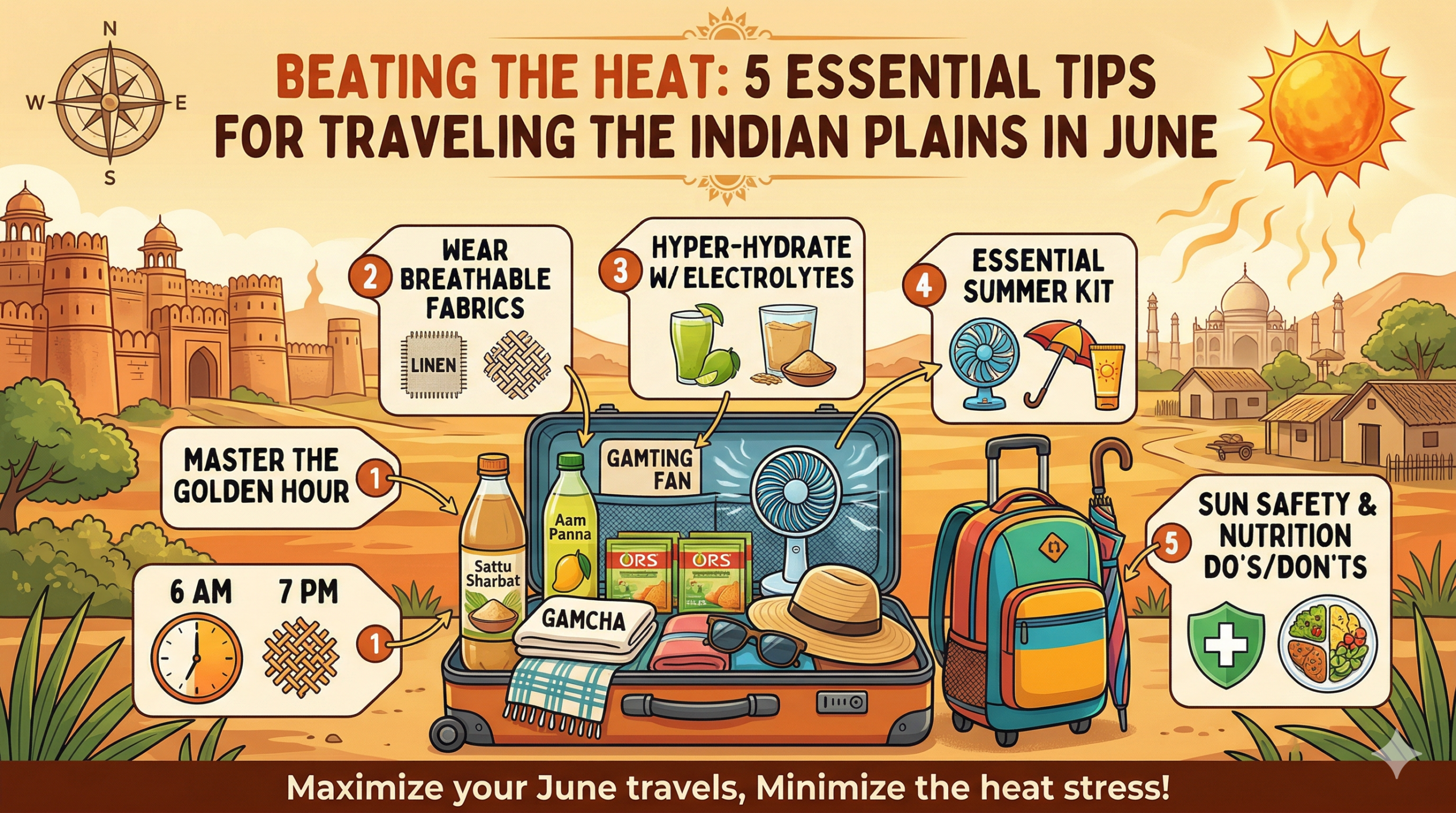
The Indian plains in June are a test of endurance. With temperatures frequently soaring above 40°C (104 F}) and the pre-monsoon humidity beginning to settle in, the “Loo” (hot dry winds) can make even a short walk feel like a marathon. However, for many—students on summer break, business travelers, or those visiting family—staying home isn’t always an option. If you find yourself navigating the golden, heat-baked expanses of North or Central India this June, you need a strategy that goes beyond just carrying a water bottle.
June 2026 is projected to follow the recent trend of record-breaking summers. But traveling during this time doesn’t have to be a miserable experience. By adjusting your clock, your wardrobe, and your diet, you can explore the architectural wonders of Rajasthan, the ghats of Varanasi, or the bustling streets of Delhi without succumbing to the heat. This guide breaks down the five pillars of summer travel survival in the Indian plains.
Also Read:- The 2026 Long Weekend Calendar: How to Maximize Your Leaves in April and May
1. Master the “Golden Hour” Itinerary
In the Indian plains, the sun isn’t just a light source; from 12:00 PM to 4:00 PM, it’s a physical weight. The most critical tip for June travel is to flip your schedule. The period between 11:00 AM and 5:00 PM should be reserved for indoor activities, transit in air-conditioned vehicles, or a traditional Indian “Siesta.” Your “active” day should begin at 5:30 AM and resume after the sun begins its descent.
Early morning sightseeing allows you to witness monuments like the Taj Mahal or the forts of Jaipur in the soft, cool light of dawn—perfect for photography and avoiding the midday glare. By 10:30 AM, you should be heading toward an indoor museum, a cooled cafe, or your hotel. Evening explorations after 6:00 PM are equally rewarding, as Indian cities come alive with night markets and street food vendors once the temperature drops to a manageable level.
The Ideal June Travel Schedule
| Time Range | Activity Level | Recommended Action |
| 5:30 AM – 9:30 AM | Peak Activity | Outdoor sightseeing, trekking, or walking tours. |
| 10:00 AM – 12:00 PM | Transition | Indoor museums, shopping in AC malls, or travel between cities. |
| 12:00 PM – 4:30 PM | Mandatory Rest | Stay indoors. Nap, read, or enjoy a long lunch in a cooled space. |
| 5:00 PM – 8:00 PM | Moderate Activity | Evening markets, garden walks, or sunset viewpoints. |
| 8:00 PM onwards | Social/Leisure | Dinner at rooftop (with fans/misters) or night-time heritage walks. |
2. Fabric Engineering: Wear Your Shade
When the mercury hits 45°C, your choice of clothing acts as your primary defense system. Many travelers make the mistake of wearing synthetic “quick-dry” gym wear or heavy denim. In the dry heat of the plains, you need fabrics that breathe and allow sweat to evaporate, which naturally cools the skin. Cotton, Linen, and Khadi are the undisputed kings of the Indian summer.
Loosely fitted, light-colored clothing is essential. Dark colors absorb heat, while tight clothes trap sweat against your skin, leading to heat rashes and discomfort. A “Gamcha” (a traditional thin cotton towel) or a light cotton stole is a multi-purpose tool: you can soak it in water and wrap it around your neck or head for instant evaporative cooling. Always cover your extremities; while it seems counterintuitive to wear long sleeves, protecting your skin from direct UV rays prevents sunburn and keeps your internal temperature lower than exposing bare skin to the scorching wind.
Fabric Comparison for 40°C+ Weather
| Fabric | Breathability | Moisture Absorption | Expert Verdict |
| Handloom Cotton | Excellent | Very High | Best Choice. Keeps body cool and dry. |
| Linen | High | High | Great. Dries faster than cotton but wrinkles easily. |
| Khadi | Maximum | High | Authentic. Unique weave allows maximum airflow. |
| Polyester/Nylon | Poor | Low | Avoid. Traps heat and causes skin irritation. |
| Denim | Low | Moderate | Avoid. Too heavy and restrictive for June. |
3. Hyper-Hydration Beyond Plain Water
Staying hydrated in June isn’t just about the volume of water you drink; it’s about replacing the salts (electrolytes) you lose through constant sweating. If you only drink plain water, you risk water intoxication or electrolyte imbalance, which leads to fatigue and headaches. Traditional Indian summer drinks are designed specifically for this environment.
Incorporate drinks like Sattu Sharbat (roasted gram flour drink), Aam Panna (raw mango juice), and Buttermilk (Chaas) into your routine. These are natural coolants that provide salt and minerals. Be wary of ice from street vendors, as it is often made from non-purified water. Stick to bottled water or carry a filtered reusable bottle. A golden rule for June: if your urine is anything darker than pale straw color, you are already dehydrated.
Pros and Cons of Hydration Choices
Pros:
- Coconut Water: Nature’s best electrolyte balancer; safe and hygienic.
- ORS (Oral Rehydration Salts): Essential for long transit days; prevents heat exhaustion.
- Seasonal Fruits: Watermelon and Musk melon provide hydration + natural sugars for energy.
Cons:
- Caffeine (Coffee/Tea): Diuretic effect; can actually lead to more fluid loss.
- Sugary Sodas: Provide a quick spike but can worsen thirst and dehydration.
- Alcohol: Severely dehydrates the body and impairs the ability to regulate temperature.
4. The Summer Survival Kit: Gadgets & Essentials
Traveling light is a virtue, but in June, your bag must contain a few non-negotiable items. A high-quality sunscreen (SPF 50+) is a given, but you also need physical barriers. A sturdy umbrella (not just for rain!) provides portable shade that can be up to 5 degrees cooler than standing in direct sunlight.
Technology can also be a lifesaver. Portable neck fans or handheld misting fans are no longer “gimmicks”—they provide a consistent breeze that helps sweat evaporate in humid conditions. Additionally, keep a small spray bottle filled with rose water or plain water in your bag; a quick spritz on the face and neck provides immediate relief when the hot wind feels like a hairdryer.
Expert Review: The “Cooling” Kit
“The biggest mistake travelers make is underestimating the power of a wet cloth. In 45-degree dry heat, a damp cotton scarf around the head creates a micro-climate of cool air. Combine this with a portable fan, and you can withstand 15–20 minutes of outdoor exposure that would otherwise be dangerous. Also, always carry a small packet of Glucose-D for an instant energy boost if you feel dizzy.” — Dr. A. Verma, Travel Medicine Consultant
5. Nutrition and Sun Safety: What to Do and Not Do
Your digestive system slows down in extreme heat as the body redirects blood flow to the skin to help with cooling. Eating a heavy, oily “Butter Chicken” meal for lunch in 44°C weather is a recipe for lethargy and indigestion. Stick to “cooling” foods—curd-based dishes, salads (only at reputable places), and light grains.
Safety also means knowing the signs of Heat Exhaustion vs. Heat Stroke. If you start feeling dizzy, nauseous, or stop sweating despite the heat, it is a medical emergency. Immediately find shade, pour water over your head and pulse points (wrists and neck), and seek medical help.
Also Read:- 3-Day Weekend Trips from Delhi Under ₹10,000: Top 10 Picks for 2026
The “Do’s and Don’ts” of June Travel
| What To Do | What Not To Do |
| DO pre-cool your vehicle before entering. | DON’T leave children or pets in a parked car for even a minute. |
| DO wear polarized sunglasses to protect your eyes from the glare. | DON’T walk barefoot on stone floors of temples/forts (they can cause burns). |
| DO use wet wipes or a damp sponge to cool your pulse points. | DON’T eat “stale” or street food that has been sitting in the sun. |
| DO carry a wide-brimmed hat that covers your ears and neck. | DON’T plan strenuous activities immediately after a heavy meal. |
| DO check the “RealFeel” temperature on weather apps, not just the base temp. | DON’T ignore a headache; it’s the first sign of heat stress. |
