
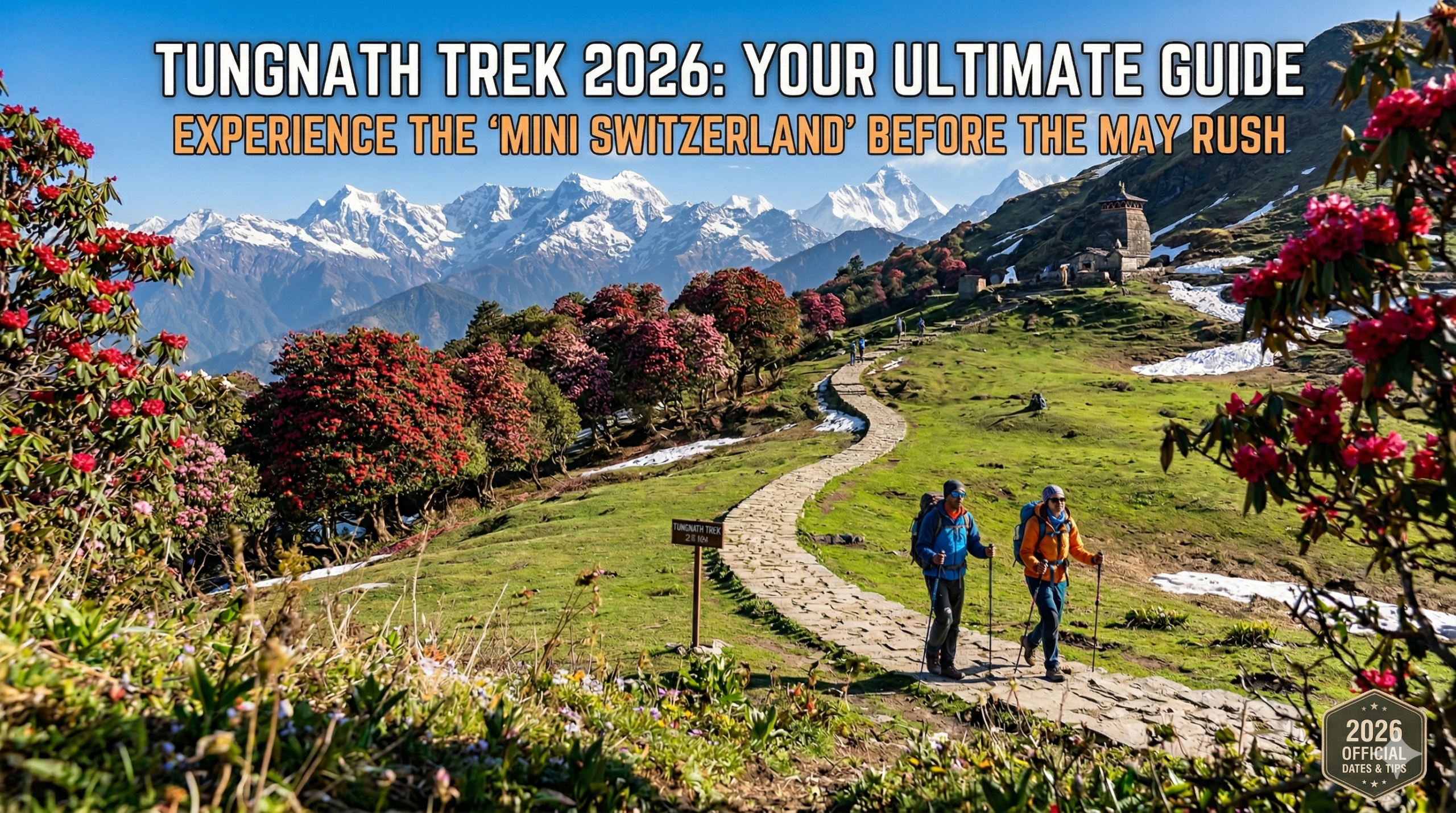
This guide is your all-access pass to trekking Chopta and Tungnath in 2026. Known as the “Mini Switzerland of India,” this region transforms into a floral paradise in April and early May, just before the massive summer rush begins.
For 2026, the Tungnath Temple is tentatively scheduled to open on May 2nd. Trekking before this date offers a peaceful, snow-kissed experience, while trekking just after the opening allows you to witness the grand “Utsav Doli” procession.
Also Read:- Dehradun to Maldives: The Perfect Honeymoon Guide
1. The Magic of Chopta: Why Visit Before the May Rush?
Chopta is a small, serene region in Uttarakhand that serves as the base for the trek to Tungnath, the highest Shiva temple in the world. Visiting in late April or the very first week of May is a “sweet spot” for travelers. During this time, the heavy winter snow has started to melt, revealing lush green meadows (Bugyals) and vibrant red Rhododendrons (Buransh) that carpet the mountainside.
The biggest advantage of timing your trip before the mid-May rush is the solitude. Once the Char Dham Yatra gains full momentum in late May, the narrow trails of Tungnath can become crowded. By going early, you get the “Mini Switzerland” feel without the noise. You can enjoy the 360-degree views of peaks like Nanda Devi, Trishul, and Chaukhamba in silence. The air is crisp, the homestays are easier to book, and the local Garhwali hospitality feels more personal.
Quick Facts: 2026 Update
| Feature | Details for 2026 |
| Temple Opening Date | May 2, 2026 (Tentative) |
| Trek Distance | 3.5 km (Chopta to Tungnath) |
| Highest Altitude | 12,073 ft (Tungnath) |
| Difficulty Level | Easy to Moderate |
| Best Starting Point | Rishikesh / Haridwar |
| Mobile Network | BSNL (Best), Jio/Airtel (Patchy) |
2. Step-by-Step Trekking Guide to Tungnath
The trek starts from the Chopta market. The path is well-paved with stone stairs, making it accessible even for beginners. However, do not let the “Easy” tag fool you; the steep incline at this altitude can make you catch your breath quickly.
- The Forest Stretch (0–1.5 km): You begin amidst thick forests of Oak and Rhododendron. In late April, look out for the Himalayan Monal, a stunning multi-colored bird often spotted here.
- The Meadow Stretch (1.5–3 km): As you climb higher, the trees disappear, replaced by vast alpine meadows. This is where the wind picks up. The views of the snow-capped Himalayas become permanent companions here.
- The Final Ascent (3–3.5 km): The last half-kilometer is a series of zig-zags. If you are trekking before May 2nd, you might encounter patches of old snow on the trail. While the temple doors (Kapat) will be closed, the spiritual energy of the structure against the backdrop of the peaks is unmatched.
For those with extra energy, a further 1.5 km climb from Tungnath leads to Chandrashila Peak (13,123 ft), offering a legendary 360-degree view of the entire Garhwal and Kumaon ranges.
3. Essential Packing List & Budgeting
Being prepared is the difference between a memorable trip and a miserable one. Even in May, the temperature at Tungnath can drop to 5°C or lower at night.
Your 2026 Gear Checklist:
- Clothing: Use the 3-layer rule—a moisture-wicking base layer, a fleece jacket, and a heavy down jacket for the summit.
- Footwear: High-ankle trekking shoes with good grip. If trekking in April, carry micro-spikes (can be rented in Chopta) for slippery snow.
- Health: Carry ORS packets, Paracetamol, and a small oxygen cylinder if you are prone to altitude sickness.
- Cash: Carry enough cash from Rishikesh or Rudraprayag. There are no ATMs in Chopta.
Estimated Budget (Per Person for 3 Days):
- Budget: ₹5,000 – ₹7,000 (Shared transport, basic homestays).
- Mid-Range: ₹8,000 – ₹12,000 (Private taxi, deluxe camps/Swiss tents).
4. Pros, Cons, and Expert Review
Every destination has two sides. Here is the unfiltered truth about trekking Chopta-Tungnath in the early season.
Pros and Cons
| Pros | Cons |
| Blooming Flora: Stunning Rhododendrons in full bloom. | Unpredictable Weather: Sudden rain or hail is common. |
| Less Crowded: Peaceful trails and quiet campsites. | Limited Amenities: Most dhabas on the trail open only after May 2. |
| Photography: Best clarity in the atmosphere for peak views. | Cold Nights: Temperatures can still hit freezing points. |
| Easier Logistics: Better rates for taxis and stays. | Temple Closure: No indoor darshan if visiting before May. |
Expert Review
“Chopta is the most ‘reward-to-effort’ efficient trek in India. For just a 3.5 km walk, the views you get are usually reserved for 10-day expeditions. In 2026, I highly recommend the ‘Pre-May’ window. The crispness of the air and the lingering snow patches make it feel like a true Himalayan adventure rather than a crowded pilgrimage.” — Himalayan Trekking Consultant
5. The “Do’s and Don’ts” for a Safe Journey
To ensure you respect the local culture and stay safe, follow these golden rules:
What to Do:
- Start Early: Aim to start your trek by 5:00 AM. This ensures you reach the summit for sunrise and return before the afternoon clouds roll in.
- Acclimatize: Spend at least one night in Chopta or Dugalbitta (8,000+ ft) before attempting the summit.
- Hydrate: Drink 3–4 liters of water. Dehydration is the #1 cause of Acute Mountain Sickness (AMS).
- Carry Waste Back: Chopta is an eco-sensitive zone. Carry a small bag for your wrappers and plastic bottles.
What NOT to Do:
- Don’t Rush: It’s a trek, not a race. Walk at a rhythmic pace where you can still hold a conversation.
- No Alcohol/Smoking: These significantly increase the risk of altitude sickness and dehydration.
- Don’t Stray from the Path: The stone-paved path is there for a reason. Shortcuts damage the meadows and can be dangerous if there’s hidden ice.
- Avoid Loud Music: Respect the silence of the mountains and the sanctity of the temple area.
Read Also:- Delhi to Maldives: The Ultimate Honeymoon Guide
