
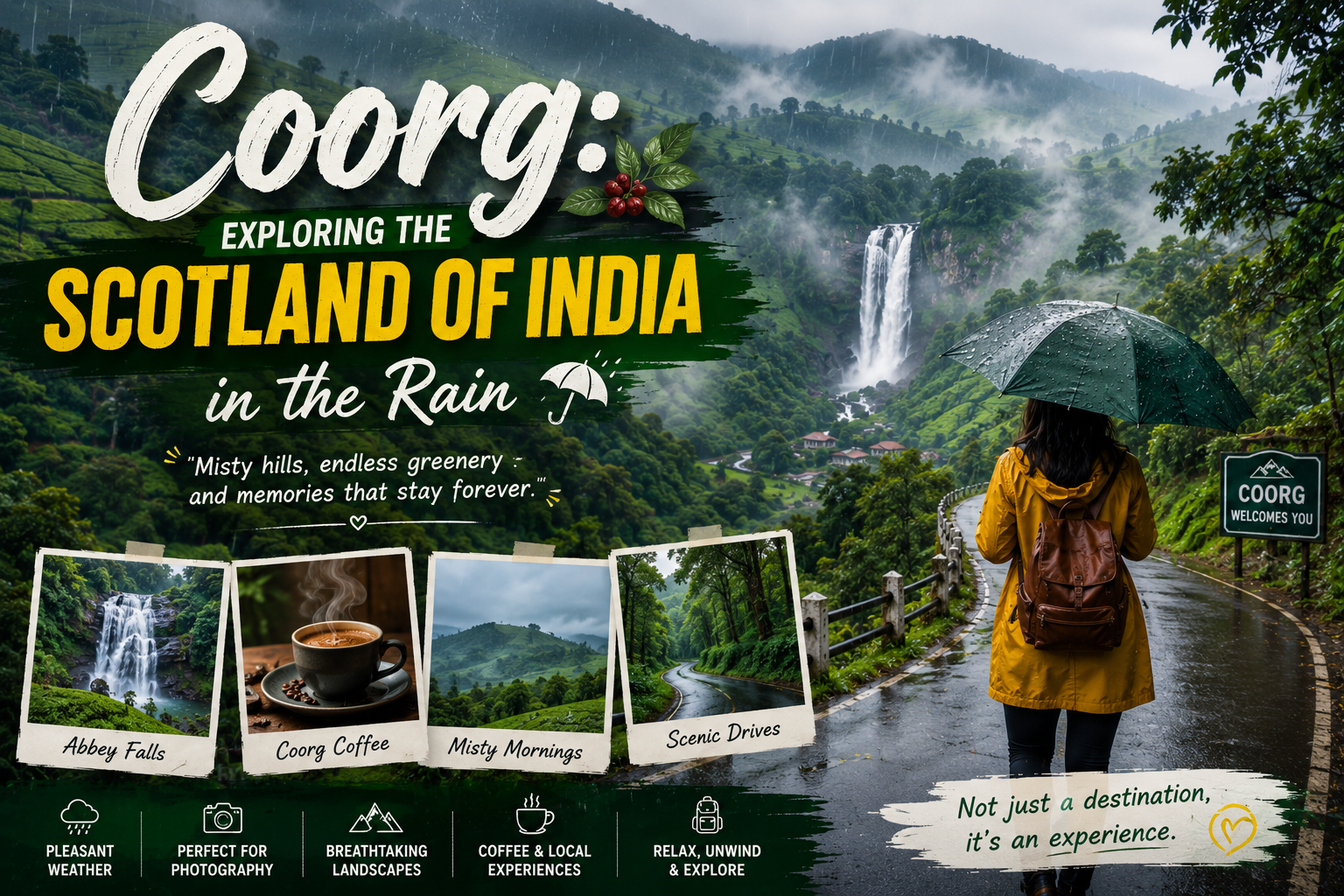
Coorg, officially known as Kodagu, is one of Karnataka’s most enchanting hill destinations. Nestled in the Western Ghats, the region is famous for rolling green hills, mist-covered landscapes, coffee plantations, forests, waterfalls, and its distinctive Kodava culture. Because of its cool climate and atmospheric mountain scenery, Coorg is popularly known as the “Scotland of India.”
While Coorg is attractive throughout the year, the Coorg monsoon season creates a particularly dramatic experience. From June to September, rain transforms coffee estates and forested hills into vivid shades of green, while waterfalls become more powerful and mist frequently settles over the valleys. Karnataka Tourism specifically highlights Coorg as one of the state’s standout monsoon destinations.
For travelers who enjoy nature, photography, peaceful stays, scenic drives, coffee experiences, and monsoon adventures, Coorg in the rain can be an unforgettable getaway.
Why Visit Coorg During the Monsoon?
The monsoon gives Coorg a completely different personality. Instead of simply sightseeing, visitors experience the destination through rain-soaked plantations, cloud-covered hills, flowing streams, and the sound of waterfalls.
The coffee estates become especially atmospheric, with mist drifting between trees and plantations. Karnataka Tourism describes June to September as the period when Coorg becomes lush, green, and fragrant, making it attractive for travelers who specifically enjoy monsoon landscapes and plantation stays.
Here are some reasons to consider a rainy-season trip:
- Lush green coffee plantations
- Misty mountain roads
- Powerful waterfalls
- Pleasant, cool weather
- Photogenic landscapes
- Cozy plantation homestays
- Fewer crowds on selected days
- Scenic road-trip opportunities
- Opportunities for nature walks and trekking
However, monsoon travel also requires flexibility. Heavy rainfall can affect roads, outdoor activities, and forest routes, so travelers should check local conditions before setting out. Karnataka Tourism advises visitors to carry rain protection and exercise caution around forested routes during the rainy season.
Best Places to Visit in Coorg During the Rain
1. Abbey Falls
Abbey Falls is one of Coorg’s most recognizable attractions and a particularly impressive stop during the rainy season. Located near Madikeri, the waterfall drops approximately 70 feet over rocky terrain and is surrounded by coffee and spice plantations.
The walk toward the waterfall adds to the experience, as visitors pass through lush plantation surroundings before reaching the viewing area.
The official tourism information notes that bathing or swimming at Abbey Falls is not permitted, making it important to enjoy the waterfall from designated viewing areas.
Monsoon tip: Visit early when possible, carry rain protection, and avoid standing near slippery or restricted areas.
2. Raja’s Seat
Raja’s Seat in Madikeri is one of the classic viewpoints for enjoying Coorg’s hills and valleys. During rainy weather, the surrounding landscape can become covered with clouds and mist, creating a beautiful atmospheric setting.
Sunset conditions can be unpredictable during the monsoon, but even a cloudy evening can produce dramatic scenery.
3. Mandalpatti Viewpoint
Mandalpatti is famous for expansive views over Coorg’s hills and valleys. On misty days, the landscape can look almost surreal as clouds move across the ridges.
Karnataka Tourism recommends Mandalpatti as a scenic viewpoint where visitors can experience clouds, valleys, and greenery from the higher terrain.
If you are planning a monsoon visit, confirm local road and jeep-tour conditions before traveling because heavy rain can affect access to hill routes.
4. Tadiandamol
For adventure travelers, Tadiandamol is one of Coorg’s most appealing trekking destinations. At 1,748 metres, it is the highest peak in Coorg and the third-highest in Karnataka.
The monsoon creates lush vegetation and misty surroundings, but wet trails can also become slippery and challenging. Trekkers should check current trail conditions and use appropriate footwear.
5. Iruppu Falls
Iruppu Falls, located in the Brahmagiri region, is another scenic waterfall experience associated with Coorg. The surrounding forest and flowing water make it an excellent choice for nature lovers.
During heavy rainfall, water levels and access conditions can change, so always follow local safety instructions.
6. Namdroling Monastery
The Namdroling Monastery, popularly known as the Golden Temple, provides a peaceful cultural experience away from Coorg’s waterfalls and viewpoints.
It can be especially atmospheric during rainy weather, when the surrounding greenery complements the monastery’s architecture.
7. Coffee Plantations
A visit to Coorg is incomplete without experiencing its coffee culture. The region is known for coffee estates where Arabica and Robusta varieties are cultivated among shade trees and spice plants.
Guided plantation walks can introduce visitors to coffee cultivation, harvesting, processing, and brewing. Depending on the property and season, travelers may also see pepper, cardamom, or vanilla growing within the plantation landscape.
Coorg Coffee Experience: More Than Just a Cup
Coffee is deeply connected with Coorg’s identity. A plantation visit provides an opportunity to understand how coffee moves from cultivated plants to the finished beverage.
For travelers, the experience can include:
- Guided estate walks
- Coffee cultivation explanations
- Plantation photography
- Coffee tasting
- Traditional food
- Plantation homestays
- Birdwatching
- Peaceful nature walks
Karnataka Tourism also highlights traditional Kodagu homes, plantation stays, and local cuisine as ways to experience the region beyond conventional sightseeing.
Things to Do in Coorg During Monsoon
Coorg offers more than waterfalls. Depending on weather and local availability, travelers can enjoy:
Scenic Drives
The winding roads through coffee country are among the highlights of visiting Coorg. Drive slowly, particularly during heavy rain, fog, or low visibility.
Photography
Monsoon is an excellent season for capturing:
- Misty hills
- Waterfalls
- Coffee plantations
- Rain-covered leaves
- Cloudy valleys
- Forest roads
- Plantation architecture
Carry waterproof protection for cameras and smartphones.
Trekking
Tadiandamol, Nishani Motte, and other trekking experiences can appeal to adventure travelers. However, monsoon trekking should only be attempted when trails are open and conditions are suitable. Karnataka Tourism identifies several trekking experiences in Coorg, including Tadiandamol and Nishani Motte.
River Adventures
Coorg also offers rafting experiences on rivers such as the Barapole, with monsoon conditions contributing to stronger rapids. Because water conditions can change rapidly, participate only through authorized operators and follow their safety instructions.
What to Pack for a Coorg Monsoon Trip
Rain can be unpredictable, so packing correctly is essential.
Carry:
- Lightweight rain jacket
- Waterproof backpack cover
- Quick-drying clothes
- Extra socks
- Comfortable trekking shoes
- Waterproof phone pouch
- Power bank
- Small first-aid kit
- Personal medicines
- Mosquito and insect protection
- Reusable water bottle
- Small towel
- Plastic-free waterproof storage bags
Avoid carrying unnecessary luggage if you are planning a road trip or moving between multiple destinations.
Is Coorg Safe During the Monsoon?
Coorg can be an enjoyable monsoon destination, but travelers should understand that heavy rain creates additional risks.
Wet roads can become slippery, visibility can decrease, and forest or mountain routes can experience temporary restrictions. Karnataka Tourism specifically advises travelers to carry rain protection and avoid forested routes during difficult monsoon conditions.
For a safer trip:
- Check the weather before leaving.
- Avoid driving quickly on wet mountain roads.
- Do not cross flooded roads.
- Follow local warnings.
- Avoid restricted trekking routes.
- Stay away from waterfall edges.
- Wear shoes with good grip.
- Keep emergency contacts accessible.
- Avoid isolated trails during severe weather.
The objective is to enjoy the rain—not challenge it.
Best Time to Visit Coorg
The ideal season depends on what you want from your trip.
June to September: Best for travelers who love monsoon greenery, mist, waterfalls, and plantation landscapes.
October to March: Generally better for comfortable sightseeing, trekking, nature walks, and clearer weather. Karnataka Tourism identifies October to March as an ideal period for exploring Karnataka’s hill and coffee-country destinations.
April to May: Warmer than the monsoon and winter periods, but Coorg’s elevation keeps it attractive compared with many hotter parts of southern India.
If your goal is specifically to experience Coorg in the rain, the monsoon months offer the atmosphere you are looking for—but flexible plans are essential.
How to Reach Coorg
Coorg does not have its own major railway station or commercial airport. Travelers commonly reach the region by road from nearby cities.
Karnataka Tourism lists approximate distances of around 260 km from Bengaluru, 120 km from Mysuru, and about 160 km from Mangaluru Airport in its current destination information.
Road travel is particularly popular because it allows visitors to experience the changing landscapes of Karnataka’s Western Ghats.
For a road trip, plan additional travel time during heavy rain and avoid unnecessary night driving on unfamiliar mountain roads.
Where to Stay in Coorg
Coorg offers accommodation ranging from hotels and resorts to plantation stays and homestays.
For a monsoon holiday, a plantation homestay can be particularly rewarding. Imagine waking up to mist around coffee plants, listening to rainfall, and enjoying locally prepared food.
When choosing accommodation, consider:
- Road accessibility
- Parking availability
- Power backup
- Rainwater drainage
- Nearby restaurants
- Cancellation policies
- Distance from planned attractions
A centrally located stay around Madikeri can be convenient for sightseeing, while plantation stays are ideal for travelers looking for a slower and more immersive experience.
Suggested 3-Day Coorg Monsoon Itinerary
Day 1: Madikeri & Waterfalls
Arrive in Coorg and check into your accommodation.
Explore:
- Madikeri
- Raja’s Seat
- Madikeri Fort
- Omkareshwara Temple
- Abbey Falls
End the day with a relaxed plantation or homestay experience.
Day 2: Coffee & Mountains
Start with a coffee plantation walk.
Depending on weather and access, continue toward:
- Mandalpatti
- Nearby viewpoints
- Plantation trails
- Local villages
Keep the schedule flexible because heavy rain may affect hill-road access.
Day 3: Culture & Nature
Visit:
- Namdroling Monastery
- Dubare area
- A nearby nature attraction
- Local coffee estate
Return after enjoying a relaxed breakfast and a final drive through the green hills.
Responsible Tourism in Coorg
Coorg’s beauty depends on its forests, plantations, rivers, wildlife, and local communities. Visitors should help protect these resources.
Follow simple responsible-travel practices:
- Carry reusable bottles.
- Avoid single-use plastic.
- Never leave waste on trails.
- Do not disturb wildlife.
- Stay on designated paths.
- Respect plantation owners and local communities.
- Follow instructions at waterfalls and forest attractions.
- Avoid loud music in natural areas.
- Do not damage plants or collect natural objects.
Responsible travel ensures that Coorg remains beautiful for future generations.
Frequently Asked Questions
Why is Coorg called the Scotland of India?
Coorg is popularly called the Scotland of India because of its rolling green hills, misty landscapes, cool climate, forests, and scenic beauty.
Is Coorg worth visiting during the monsoon?
Yes. The monsoon brings lush greenery, mist, and stronger waterfalls, making Coorg particularly scenic. However, heavy rainfall can affect outdoor activities and road conditions.
Which is the best waterfall to visit in Coorg during monsoon?
Abbey Falls is one of the most accessible and popular choices near Madikeri, while Iruppu Falls is another attractive nature destination. Always check current access conditions before visiting.
Is Coorg good for a family trip during the rainy season?
Yes, provided you plan around the weather. Waterfalls, viewpoints, monasteries, plantations, and relaxed homestays can make a family-friendly itinerary. Avoid risky trails and exposed areas during heavy rain.
What should I wear in Coorg during monsoon?
Wear quick-drying clothing, sturdy shoes with good grip, and a lightweight rain jacket. Carry extra socks and waterproof protection for electronics.
Can I go trekking in Coorg during the monsoon?
Some trekking routes can be enjoyable during monsoon, but trails may become slippery or temporarily restricted. Check current local conditions and use authorized guides where required.
Final Thoughts
Coorg in the rain is more than a conventional hill-station getaway. It is an experience of mist-covered mountains, fragrant coffee plantations, roaring waterfalls, winding roads, peaceful homestays, and the distinctive culture of Kodagu.
The monsoon reveals a greener and more dramatic side of the Scotland of India. From the roar of Abbey Falls to the mist around Tadiandamol and the quiet atmosphere of coffee estates, every part of the journey offers something different.
If you are planning a monsoon road trip, romantic getaway, photography holiday, or nature escape, Coorg deserves a place on your India travel list. Just remember to respect the weather, follow local safety instructions, and keep your itinerary flexible.
For more travel inspiration, destination guides, road-trip ideas, and practical trip-planning resources, explore Dream Trip Guide and discover your next adventure across India.
Paid Blog Post & Sponsored Content – Dream Trip Guide
Dream Trip Guide also accepts paid blog posts, sponsored articles, promotional content, brand features, and guest posts for relevant businesses, websites, travel brands, services, and other suitable industries. If you are looking to promote your website, business, product, service, travel company, or online platform through a professionally written and SEO-focused article, you can contact our team for paid publishing opportunities. We aim to provide useful, reader-friendly content while maintaining the overall quality and travel-focused nature of the website. For paid blog post inquiries, publishing requirements, pricing, available categories, and collaboration opportunities, please contact us directly by email. We also publish paid real-estate blog posts and promotional content through our associated real-estate website, UpcomingProperty.in.
Contact for Paid Blog Posts
Name: Dream Trip Guide
Email: dreamtripguides@gmail.com
Instagram: @dreamtripguide.india
Website: Dream Trip Guide
Real Estate Paid Blog Posts
For real-estate sponsored articles, property promotions, real-estate guest posts, and paid content publishing, you can also explore UpcomingProperty.in.
To discuss a paid publication or promotional collaboration, email us at dreamtripguides@gmail.com with your website/business details, preferred topic, target URL, and content requirements.
