
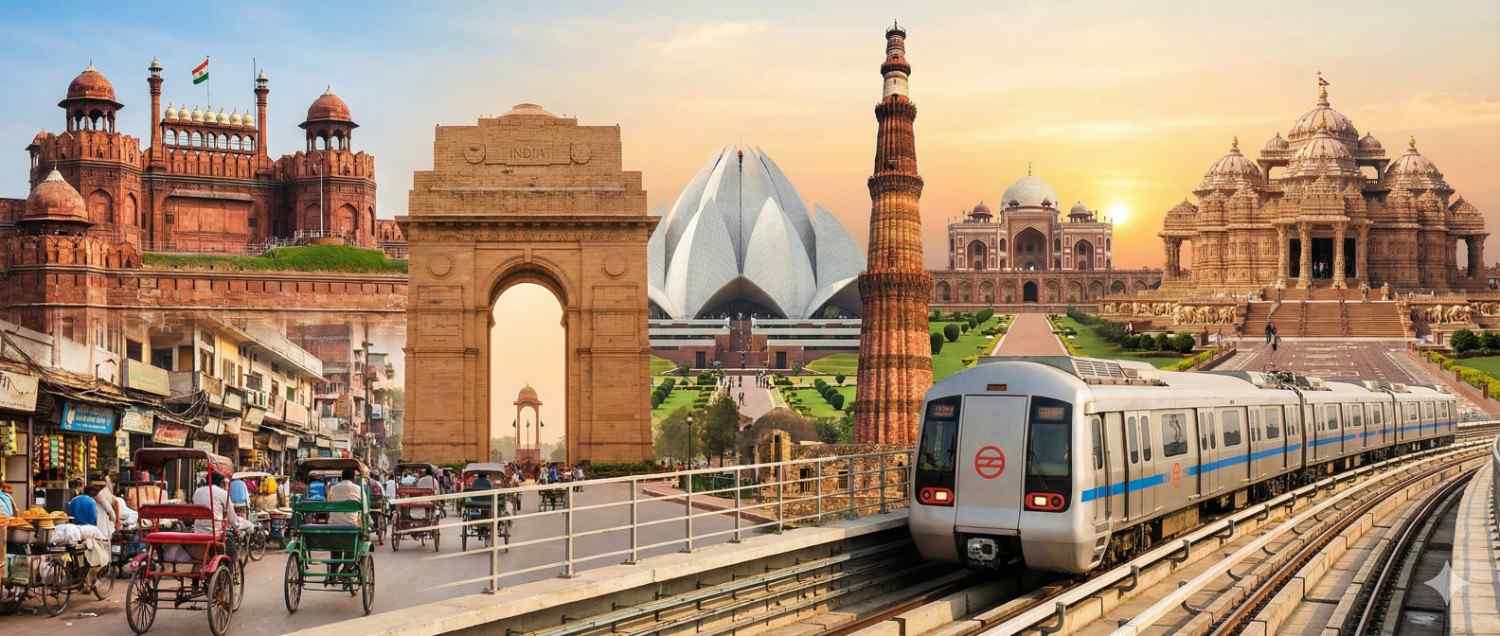
Delhi is not just a city; it is an emotion. It is a place where time travel is possible where you can stand inside a 17th-century Mughal fort in the morning and shop at a glitzy, world-class mall in the evening. As the capital of India, Delhi is a sensory explosion of culture, history, food, and modern ambition.
For a first-time traveler, Delhi can be overwhelming. The traffic, the noise, and the sheer size of the metropolis are intense. But beneath the chaos lies a city of breathtaking beauty and deep soul.
At Dream Trip Guide, we believe the best trips are the ones that balance the popular landmarks with the hidden gems. Whether you are a history buff, a spiritual seeker, or a foodie, the capital has something for you.
Here is our curated list of the Top 20 Tourist Places in Delhi that you absolutely must include in your 2026 itinerary.
I. The Historical Giants (Mughal & British Era)
Delhi has been destroyed and rebuilt seven times. The result is a landscape dotted with ruins and monuments that tell the story of empires.
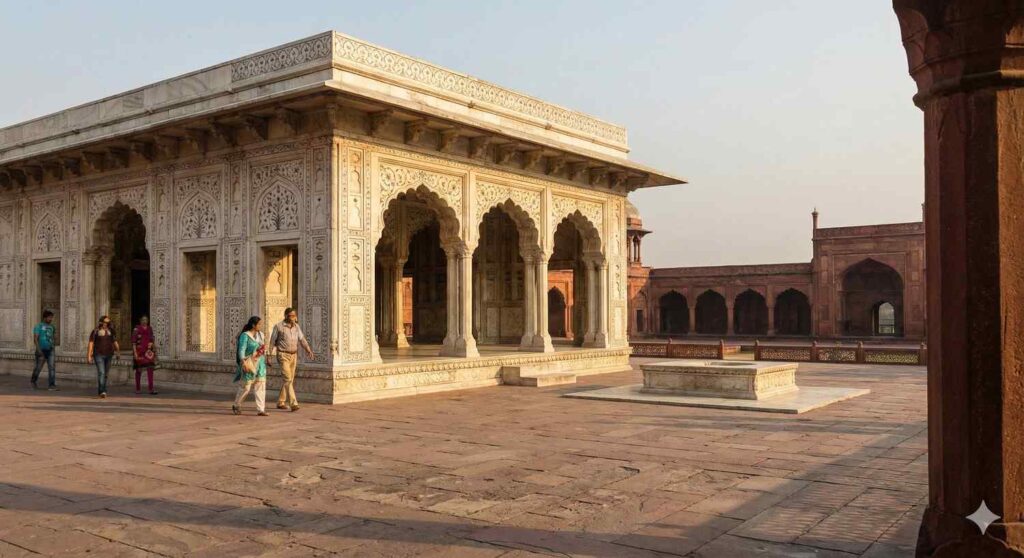
1. The Red Fort (Lal Qila)
- The Vibe: Majestic, Imperial, Iconic.
- Why Visit: Built by Shah Jahan in 1639, this massive red sandstone fort was the seat of the Mughal Empire for nearly 200 years. It is a UNESCO World Heritage Site and the symbol of India’s sovereignty (the Prime Minister hoists the flag here on Independence Day).
- What to See: Walk through the Lahori Gate, shop at the covered Chhatta Chowk bazaar (once for royal ladies), and admire the Diwan-i-Aam (Hall of Public Audience). Don’t miss the evening Light and Sound Show that narrates Delhi’s history.
- Dream Trip Tip: Visit early in the morning to avoid the heat.
- Nearest Metro: Lal Qila (Violet Line).
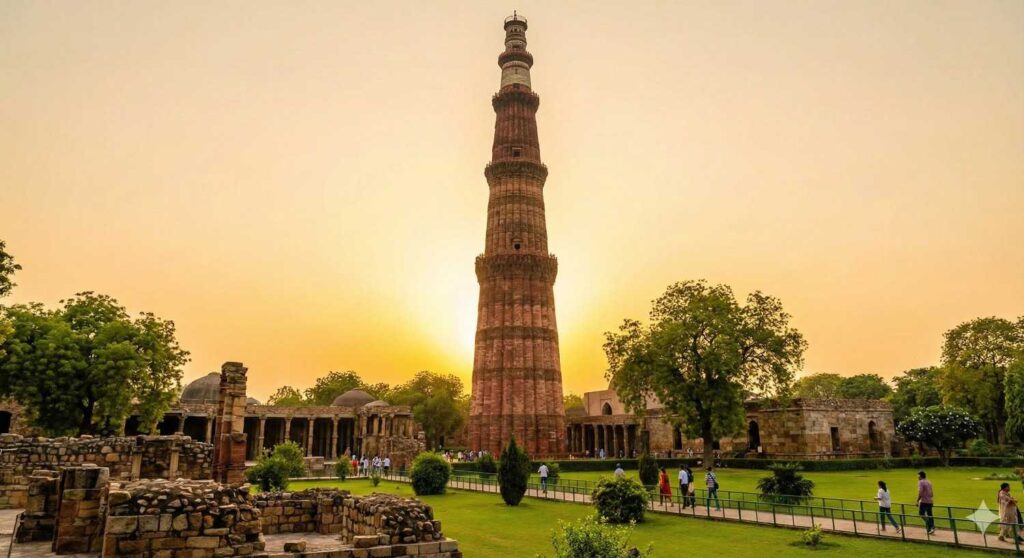
2. Qutub Minar
- The Vibe: Ancient, Architectural Marvel.
- Why Visit: Standing at 73 meters, this is the tallest brick minaret in the world. Built in 1193, it marks the beginning of Muslim rule in India. The complex is a treasure trove of history, featuring the first mosque built in India.
- What to See: The intricate carvings on the tower, the Iron Pillar (which has never rusted in 1,600 years), and the unfinished Alai Minar. The complex is beautifully maintained and perfect for winter afternoon walks.
- Nearest Metro: Qutub Minar (Yellow Line).
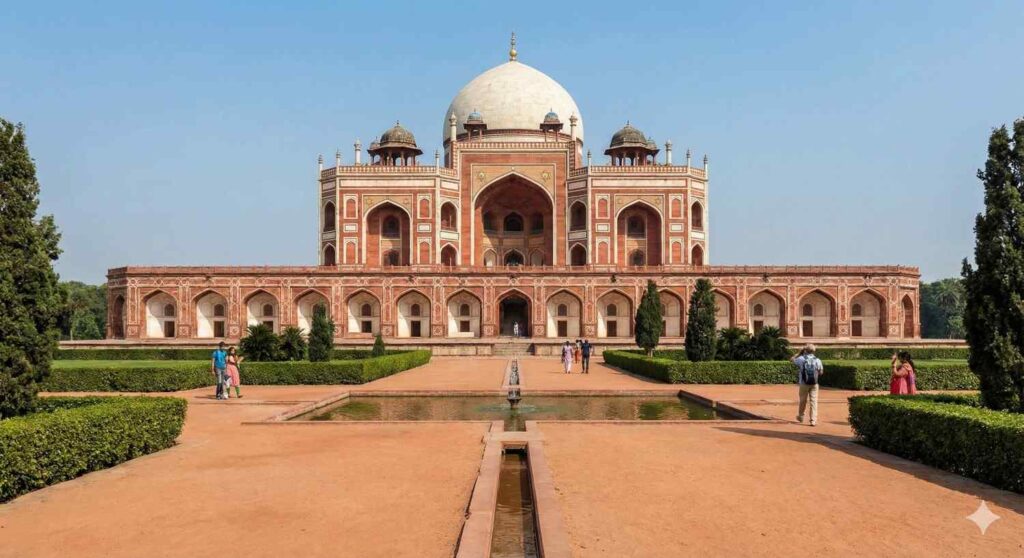
3. Humayun’s Tomb
- The Vibe: Symmetrical, Peaceful, Garden Paradise.
- Why Visit: This tomb is the first garden-tomb on the Indian subcontinent and the architectural predecessor to the Taj Mahal. Built in 1570, its double dome and Charbagh (four-part garden) layout are stunning examples of Persian influence.
- What to See: The main mausoleum is breathtaking, but explore the smaller monuments in the complex like Isa Khan’s Tomb. It is arguably the most photogenic spot in Delhi.
- Nearest Metro: JLN Stadium (Violet Line).
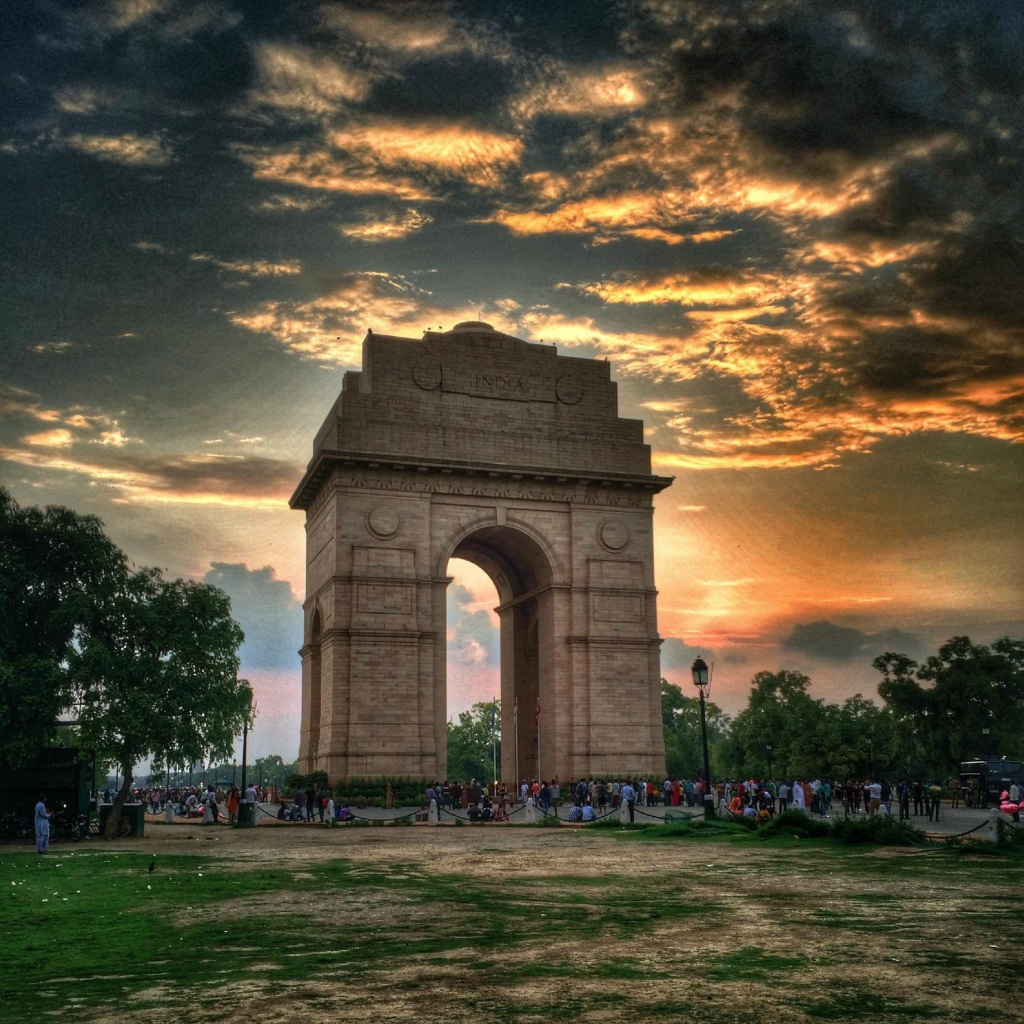
4. India Gate
- The Vibe: Patriotic, lively, picnic spot.
- Why Visit: This 42-meter high archway is a war memorial dedicated to the 70,000 soldiers of the British Indian Army who died in the First World War. Beneath the arch burns the Amar Jawan Jyoti (an eternal flame).
- What to See: A walk along the Kartavya Path (formerly Rajpath) from Rashtrapati Bhavan to India Gate is a quintessential Delhi experience. In the evenings, the monument is beautifully lit, and the lawns are full of families enjoying ice cream.
- Nearest Metro: Central Secretariat (Yellow/Violet Line).
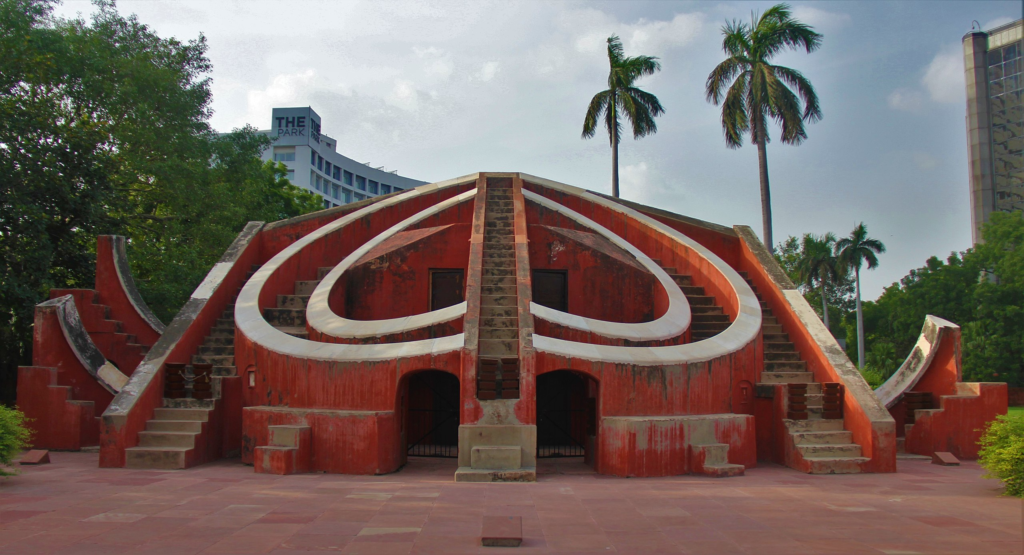
5. Jantar Mantar
- The Vibe: Scientific, Geometric, Curiosity.
- Why Visit: Built in 1724 by Maharaja Jai Singh II of Jaipur, this is an astronomical observatory. It consists of 13 architectural astronomy instruments used to predict the movement of planets and the sun.
- What to See: The Samrat Yantra, a giant sundial that can tell time to an accuracy of two seconds. It is a fascinating look at ancient Indian science.
- Nearest Metro: Patel Chowk or Rajiv Chowk (Yellow/Blue Line).
6. Purana Qila (Old Fort)
- The Vibe: Ancient, Ruins, Lakeside.
- Why Visit: One of the oldest forts in Delhi, some believe it is the site of Indraprastha from the Mahabharata. The current structure was built by Sher Shah Suri and Humayun.
- What to See: The Qila-i-Kuhna Mosque and the Sher Mandal (where Emperor Humayun died after falling down the stairs). There is also a small lake for boating.
- Nearest Metro: Supreme Court (Blue Line).
7. Safdarjung’s Tomb
- The Vibe: Quiet, Underrated, Elegant.
- Why Visit: Often called the “last flicker in the lamp of Mughal architecture,” this tomb was built in 1754. It is less crowded than Humayun’s Tomb but offers a similar aesthetic with its sandstone and marble dome.
- What to See: The peaceful palm-lined pathways and the intricate plasterwork on the ceilings.
- Nearest Metro: Jor Bagh (Yellow Line).
8. Agrasen Ki Baoli
- The Vibe: Mysterious, Cinematic, Cool.
- Why Visit: A 14th-century stepwell hidden in the middle of modern high-rises near Connaught Place. It became famous after featuring in the Bollywood movie PK.
- What to See: The 108 steps leading down to the dried-up water reservoir. It is a hauntingly beautiful spot for photography.
- Nearest Metro: Barakhamba Road (Blue Line).
II. The Spiritual Soul (Temples & Mosques)
Delhi is a melting pot of religions, home to some of the most spectacular places of worship in the world.
9. Akshardham Temple
- The Vibe: Grand, Ornate, Divine.
- Why Visit: Officially the World’s Largest Comprehensive Hindu Temple. Opened in 2005, it is a modern architectural masterpiece built from pink sandstone and white marble without using steel.
- What to See: The main temple with 20,000 carved figures, the Sahaj Anand Water Show (a stunning multimedia fountain show at night), and the cultural boat ride that depicts India’s history.
- Note: Mobile phones and cameras are strictly prohibited inside.
- Nearest Metro: Akshardham (Blue Line).
10. The Lotus Temple
- The Vibe: Serene, Silent, Floral.
- Why Visit: This Bahá’í House of Worship is famous for its flower-like shape. It is open to people of all religions to sit and meditate in silence. There are no idols and no rituals—just peace.
- What to See: The stunning white marble petals and the perfectly manicured gardens surrounding the temple.
- Nearest Metro: Kalkaji Mandir (Violet/Magenta Line).
11. Jama Masjid
- The Vibe: Chaotic, Massive, Historic.
- Why Visit: Built by Shah Jahan, this is one of the largest mosques in India, capable of holding 25,000 devotees. It stands tall in the heart of Old Delhi.
- What to See: Climb the southern minaret for a spectacular bird’s-eye view of Old Delhi’s rooftops (a hidden gem activity). The courtyard is an oasis of calm amidst the noise of the bazaar outside.
- Nearest Metro: Jama Masjid (Violet Line).
12. Gurudwara Bangla Sahib
- The Vibe: Compassionate, Golden, Community.
- Why Visit: The most prominent Sikh house of worship in Delhi. It is known for its association with the eighth Sikh Guru, Guru Har Krishan.
- What to See: The Sarovar (holy pond) inside the complex is incredibly soothing. Do not miss the Langar (community kitchen) where thousands of people are fed free meals daily, regardless of caste or creed. Volunteering here is a humbling experience.
- Nearest Metro: Shivaji Stadium (Airport Express).
13. ISKCON Temple
- The Vibe: Energetic, Devotional, Musical.
- Why Visit: Dedicated to Lord Krishna and Radha, this temple is located on a hillock in East of Kailash. It is known for its beautiful architecture and the “Hare Krishna” chanting that fills the air.
- What to See: The Vedic museum and the animatronics show explaining the Bhagavad Gita.
- Nearest Metro: Nehru Place (Violet Line).
III. Modern Culture & Green Spaces
Delhi is one of the greenest capitals in the world. These spots offer culture and fresh air.
14. Rashtrapati Bhavan & Museum
- The Vibe: Presidential, Grand, Elite.
- Why Visit: The official residence of the President of India. It is a masterpiece of Lutyens’ Delhi architecture.
- What to See: While you cannot enter the residence freely, you can book a tour of the Rashtrapati Bhavan Museum and the famous Amrit Udyan (Mughal Gardens) which opens to the public in February-March during the tulip season.
- Nearest Metro: Central Secretariat.
15. Lodhi Gardens
- The Vibe: Local, Green, Historic.
- Why Visit: This is where Delhi’s elite come for morning jogs. It is a 90-acre park dotted with 15th-century tombs of the Sayyid and Lodhi dynasties.
- What to See: A picnic by the Bara Gumbad or the lake. It is the perfect place to watch the sunset and escape the city noise.
- Nearest Metro: Jor Bagh (Yellow Line).
16. Sunder Nursery
- The Vibe: Trendy, Beautiful, Restoration Marvel.
- Why Visit: Originally a plant nursery, it has been transformed into a world-class heritage park. It was named one of TIME Magazine’s “World’s Greatest Places.”
- What to See: The stunning landscaping, restored Mughal monuments, and the Fabcafe by the lake. On weekends, it hosts an organic farmers’ market.
- Nearest Metro: JLN Stadium (Violet Line).
17. National Museum
- The Vibe: Educational, Vast, Treasure Trove.
- Why Visit: If you love history, this is non-negotiable. It holds over 200,000 artworks spanning 5,000 years.
- What to See: The relics of the Indus Valley Civilization (including the famous Dancing Girl statue) and the gallery of miniature paintings.
- Nearest Metro: Udyog Bhawan (Yellow Line).
IV. Shopping & Food (The Heart of Delhi)
No trip to Delhi is complete without shopping and eating.
18. Chandni Chowk
- The Vibe: Crowded, Intense, Delicious.
- Why Visit: The oldest and busiest market in Old Delhi. It is a maze of narrow lanes selling spices, jewelry, fabrics, and electronics.
- What to See/Eat: Take a cycle rickshaw ride through the chaos. Eat at Paranthe Wali Gali (fried stuffed breads), have Jalebis at Old Famous Jalebi Wala, and Chaat at Natraj.
- Nearest Metro: Chandni Chowk (Yellow Line).
19. Connaught Place (CP)
- The Vibe: Colonial, White, Cosmopolitan.
- Why Visit: The commercial hub of Delhi, built in a Georgian style with two concentric circles. It is great for branded shopping, cafes, and nightlife.
- What to See: Sit in Central Park (the garden in the center) and watch the massive Indian flag wave. Visit the underground Palika Bazaar for cheap electronics and clothes.
- Nearest Metro: Rajiv Chowk (Interchange Station).
20. Dilli Haat (INA)
- The Vibe: Cultural, Colorful, Handicrafts.
- Why Visit: An open-air craft bazaar run by Delhi Tourism. It simulates a traditional village market.
- What to See: Artisans from all over India sell authentic handicrafts here—from Kashmiri shawls to Madhubani paintings.
- Food Tip: The food court has stalls from every state in India. Try Momos from the Sikkim stall or Fish Curry from the West Bengal stall.
- Nearest Metro: INA (Yellow/Pink Line).
Dream Trip Guide: Practical Tips for Delhi 2026
- Best Time to Visit: October to March is the golden period. The weather is pleasant (and chilly in Dec-Jan). Avoid May-June (extreme heat) and July-August (monsoon humidity).
- Getting Around: The Delhi Metro is your lifeline. It is world-class, air-conditioned, cheap, and reaches almost every tourist spot on this list. Buy a “Tourist Card” for unlimited travel for 1 or 3 days.
- Safety: Delhi is generally safe for tourists, but standard precautions apply. Avoid isolated areas late at night. Use official apps like Uber or Ola for cabs rather than hailing them off the street at night.
- Food Hygiene: While street food is tempting, ensure the place is crowded (high turnover means fresh food). Avoid tap water; stick to bottled mineral water.
Delhi is a city of layers. It is where the call to prayer from the Jama Masjid blends with the temple bells of Gauri Shankar, and where the smell of frying parathas mixes with the aroma of brewing cappuccino in a modern cafe.
Covering these Top 20 places will give you the complete spectrum of what this magnificent capital has to offer. It is chaotic, yes, but it is also full of heart.
Ready to plan your trip? Keep following Dream Trip Guide for more itineraries, hotel reviews, and travel hacks for your next Indian adventure!
Rishikesh 2026: Ultimate Travel Guide Dream Trip Guide
