
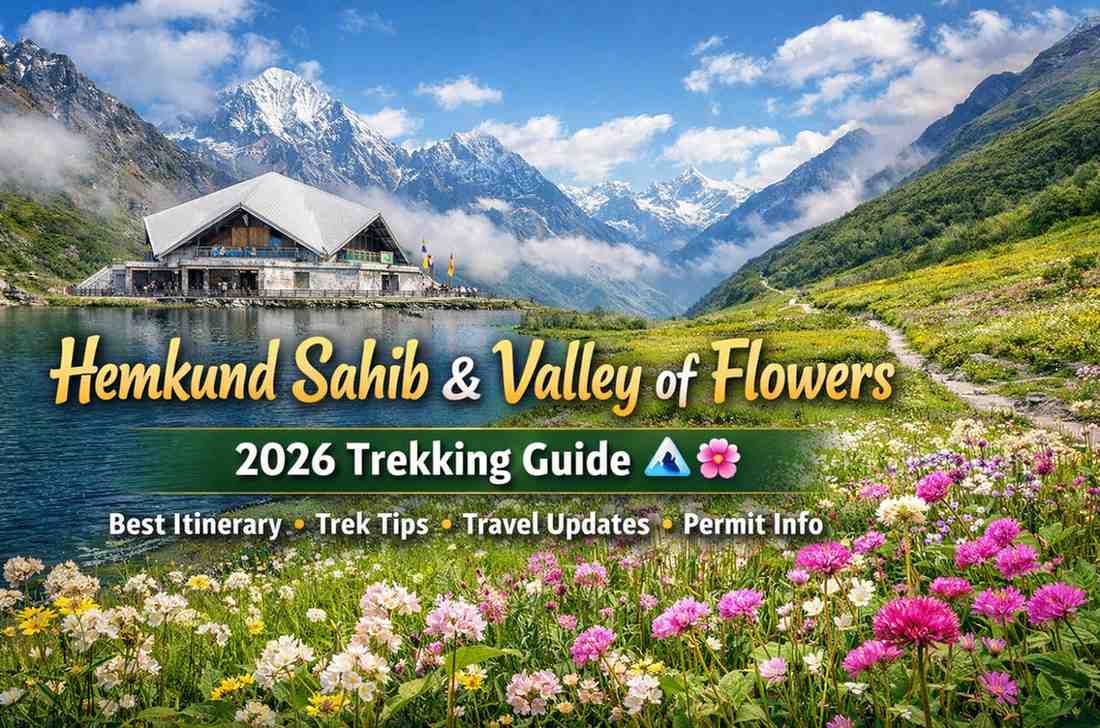
There are certain places on Earth where the line between the physical world and the spiritual realm seems to blur. In the high-altitude wilderness of the Chamoli district in Uttarakhand, two such places exist side-by-side: the celestial glacial lake of Hemkund Sahib and the vibrant, UNESCO World Heritage site known as the Valley of Flowers.
As your Dream Trip Guide, I have curated this comprehensive manual for the 2026 season. Whether you are a pilgrim seeking the blessings of the Tenth Guru or an adventurer looking to walk through a floral kaleidoscope, this Hemkund sahib & valley of flowers trek is a journey that will redefine your perspective on nature. This is not just a hike; it is a transition from the chaotic energy of the plains to the silent, majestic heights of the Himalayas.
Welcome to your Ultimate travel guide for one of the most beautiful dual-treks in the world.
The Divine and the Natural: An Overview
The Hemkund Sahib and Valley of Flowers are distinct destinations that share a common base camp: the bustling village of Ghangaria.
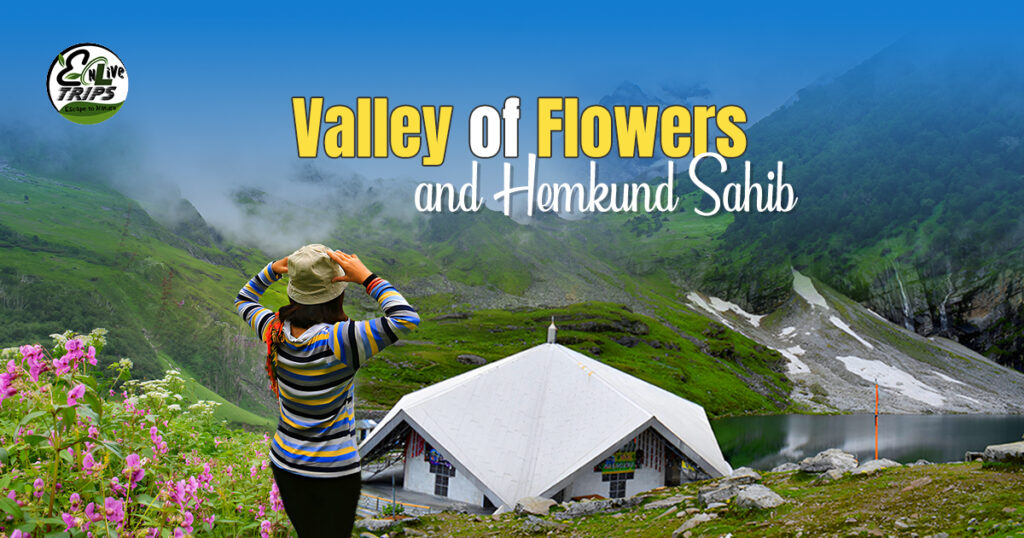
- Hemkund Sahib: Known as the highest Gurudwara in the world, situated at a staggering altitude of 4,329 meters (14,107 ft). It sits on the shores of a crystal-clear glacial lake surrounded by seven snow-capped peaks, known as Sapt Rishi Peaks.
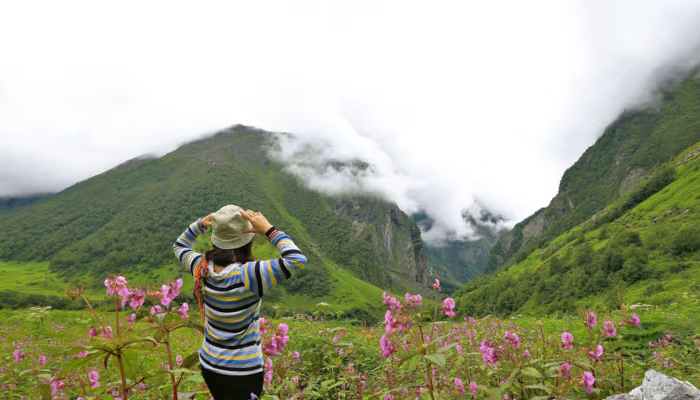
- Valley of Flowers: A vibrant National Park that comes alive between July and September with over 500 species of wildflowers, including the rare Blue Poppy and the Brahma Kamal.
For those planning a Hemkund sahib & valley of flowers from delhi, the journey is a marathon of landscapes, starting from the humid Indo-Gangetic plains and ending in the alpine meadows of the Garhwal Himalayas.
Logistics: Distance, Time, and Route
Planning is the foundation of any Trip planning guide. The Hemkund sahib & valley of flowers distance and travel time require a minimum of 6 to 7 days for a fulfilling experience.
The Distance Breakdown
- Delhi to Rishikesh: 240 km (5–6 hours)
- Rishikesh to Govindghat: 290 km (10–12 hours)
- Govindghat to Pulna: 4 km (Driveable)
- Pulna to Ghangaria (Trek): 9–10 km
- Ghangaria to Hemkund Sahib (Trek): 6 km (Steep ascent)
- Ghangaria to Valley of Flowers (Trek): 4 km (Gentle ascent)
The Route Map
Delhi → Haridwar → Rishikesh → Devprayag → Rudraprayag → Karnaprayag → Joshimath → Govindghat → Ghangaria.
As your Best travel guide, I recommend spending at least one night in Joshimath or Govindghat to help your body begin the acclimatization process before you start the actual Hemkund sahib & valley of flowers trek.
Day-by-Day Itinerary: The 2026 Roadmap
Day 1: The Long Drive (Delhi to Rishikesh/Joshimath)
Most travelers starting the Hemkund sahib & valley of flowers from delhi take an overnight train or bus to Rishikesh. In 2026, with improved road infrastructure, you can reach Joshimath in a single (albeit long) day from Rishikesh.
Day 2: The Gateway (Joshimath to Ghangaria)
Drive from Joshimath to Govindghat, and then a further 4 km to Pulna. This is where the Hemkund sahib & valley of flowers trek officially begins.
- The Trek: The 10 km walk to Ghangaria is well-paved but involves a steady incline. You’ll walk alongside the roaring Pushpavati River.
- Pro Tip: If you have heavy luggage, hire a mule or a porter at Pulna to keep your energy high for the coming days.
Day 3: The Floral Paradise (Valley of Flowers Trek)
Today is dedicated entirely to the Valley of Flowers trek.
- The Trail: After a 1 km walk from Ghangaria, the trail bifurcates. The path to the valley is relatively easy.
- The Experience: You cross a small bridge over the river and enter the National Park. In 2026, eco-regulations are strict—ensure you carry no plastic. The valley stretches for about 8 km, and the further you walk, the more exotic the flowers become.
- Key Sight: Visit the grave of Joan Margaret Legge, a British botanist who lost her life here while studying the flora.
Day 4: The Spiritual Peak (Hemkund Sahib Trek)
This is the most challenging day of the Hemkund sahib & valley of flowers trek.
- The Ascent: A 6 km steep zig-zag path leads you to the Gurudwara. The air gets thin, and every step requires effort.
- The Reward: Reaching Hemkund Sahib is a spiritual victory. The sight of the Nishan Sahib fluttering against the backdrop of the emerald-colored lake is life-changing.
- Tradition: Take a dip in the icy holy sarovar and have the warm Karah Prashad and tea served at the Langar. It is the best meal you will ever have.
Day 5: The Descent (Ghangaria back to Govindghat/Joshimath)
A much easier walk downhill. Stay in Joshimath and visit the Auli ropeway in the evening if you have leftover energy.
Best Time to Visit in 2026
Timing is everything for this Travel guide blog.
- July to August (Peak Bloom): This is the best time for the Valley of Flowers trek. The monsoon rains act as a catalyst for the seeds. However, be prepared for rain and potential road blockages on the way from Delhi.
- September (Clear Skies): The flowers start to fade, but the weather is clear, offering stunning views of the surrounding peaks. This is an excellent time for the spiritual visit to Hemkund Sahib.
- Late October: The Valley closes, and the Gurudwara doors (Kapaat) are shut for the winter.
Essential Trekking Tips & 2026 Updates
As your Travel inspiration guide, I want you to be prepared for the realities of high-altitude trekking.
1. Acclimatization is Key
You are ascending from the plains to over 14,000 feet. Altitude Sickness is real. If you feel a persistent headache or nausea, do not climb higher. Spend an extra day at Ghangaria if needed.
2. Gear and Packing
For the Hemkund sahib & valley of flowers trek, your packing list should include:
- Footwear: Broken-in waterproof trekking shoes with good grip.
- Rainwear: A high-quality poncho is better than an umbrella in mountain winds.
- Layers: Even in August, it gets chilly. Carry thermals and a lightweight puffer jacket.
- Medical Kit: Carry Diamox (consult your doctor), Band-aids, and pain relief spray.
3. Physical Fitness
Start preparing at least a month in advance. Focus on cardio (running/cycling) and leg strength (squats). The Hemkund Sahib climb is a test of endurance.
4. Digital and Cash
In 2026, while Ghangaria has some limited Wi-Fi and mobile data (BSNL and Jio work best), it is unreliable. Carry sufficient cash for meals, mules, and permits, as ATMs are rare beyond Joshimath.
Secondary Highlights of the Journey
The Hemkund Sahib region is rich in folklore and secondary sites:
- Brahma Kamal: This rare flower, which blooms only at night and at high altitudes, can often be spotted on the way to the Gurudwara.
- Laxman Temple: Adjacent to the Gurudwara is a small temple dedicated to Lord Laxman, where it is believed he meditated to regain his strength.
- Joshimath: The winter seat of Badrinath and a major hub for mountaineers. Visit the ancient Narasimha Temple.
Sustainable Travel: The Eco-Guide
The Valley of Flowers trek is located in a fragile ecosystem. In 2026, the Uttarakhand Forest Department has increased monitoring.
- Zero Waste: Whatever you take in, you must bring out.
- Stay on the Path: Do not wander off the designated trails in the Valley; you might crush rare seedlings.
- No Plastic: Single-use plastic bottles are strictly discouraged. Carry a reusable filtered water bottle.
More Visit – Manali to Koksar Road Journey Guide
Conclusion: A Journey for the Soul
The Hemkund sahib & valley of flowers trek is a rare combination of physical challenge, botanical wonder, and deep spiritual peace. From the vibrant meadows that look like an impressionist painting to the chanting of prayers at the edge of a glacial lake, every moment is a memory in the making.
As your Dream travel guide, I encourage you to take this trip not just as a tourist, but as a pilgrim of nature. Whether you are starting your Hemkund sahib & valley of flowers from delhi or joining from elsewhere, the mountains are waiting to tell you their stories.
Frequently Asked Questions: Hemkund Sahib & Valley of Flowers 🏔️🌸
Planning a trek to the world’s highest Gurudwara and a UNESCO World Heritage valley involves a lot of moving parts. As your Dream Trip Guide, I’ve gathered the most common questions from our Travel guide blog to help you prepare for your Perfect trip planner experience in 2026.
1. 🚶 How difficult is the Hemkund Sahib & Valley of Flowers trek?
The Hemkund sahib & valley of flowers trek is considered moderate to difficult.
- The walk to the Valley of Flowers trek is a gentle 4 km incline from Ghangaria.
- The trek to Hemkund Sahib is a steep, 6 km zig-zag climb that tests your lung capacity and leg strength. Most people with average fitness can complete it, but it requires mental grit!
2. 🗓️ What is the best month to see the flowers in full bloom?
For the ultimate Valley of Flowers trek experience, visit between mid-July and the end of August. This is the peak monsoon season when the seeds germinate and the valley turns into a multi-colored carpet. If you prefer clearer views of the peaks at Hemkund Sahib, early September is a great window.
3. 🚗 How do I travel from Delhi to the base camp?
To plan your Hemkund sahib & valley of flowers from delhi, you have three main options:
- By Road: Drive or take a bus from Delhi to Govindghat via Rishikesh (approx. 500 km).
- By Train: Take a train to Haridwar or Rishikesh, then hire a taxi for the remaining 10-hour drive.
- By Air: Fly to Jolly Grant Airport in Dehradun, followed by a day-long drive to Govindghat.
4. 🚁 Are there helicopter services available for those who can’t trek?
Yes! Helicopter services operate between Govindghat and Ghangaria. This saves you the initial 10 km trek. However, there is no helicopter service from Ghangaria to Hemkund Sahib or the Valley itself. For the final stretches, you can hire a pony (mule) or a palanquin (pithu/doli).
5. 🎒 What are the essential items to pack for 2026?
As your Best travel guide, I recommend:
- A high-quality poncho: Umbrellas are useless in the high-altitude winds.
- Waterproof trekking shoes: You will be walking through small streams and over slippery rocks.
- Layers: Even in summer, the temperature at Hemkund Sahib can drop to 5°C.
- Power Bank: Electricity in Ghangaria can be unreliable during heavy rains.
6. 🏥 Is Acute Mountain Sickness (AMS) a risk on this trek?
Yes. Hemkund Sahib is located at over 14,000 feet, which is higher than many base camps in the Himalayas. It is crucial to spend a night in Ghangaria (9,600 ft) to acclimatize. Drink plenty of water and carry basic medicines for altitude sickness after consulting your doctor.
7. 🏨 Where should I stay during the trek?
The primary base for both treks is Ghangaria. You will find plenty of budget guest houses, private hotels, and a GMVN (Garhwal Mandal Vikas Nigam) lodge. For a more spiritual experience, you can also stay at the Gurudwara in Ghangaria, which provides basic accommodation and langar meals.
More Visit – Delhi to Badrinath Road Trip Guide
