
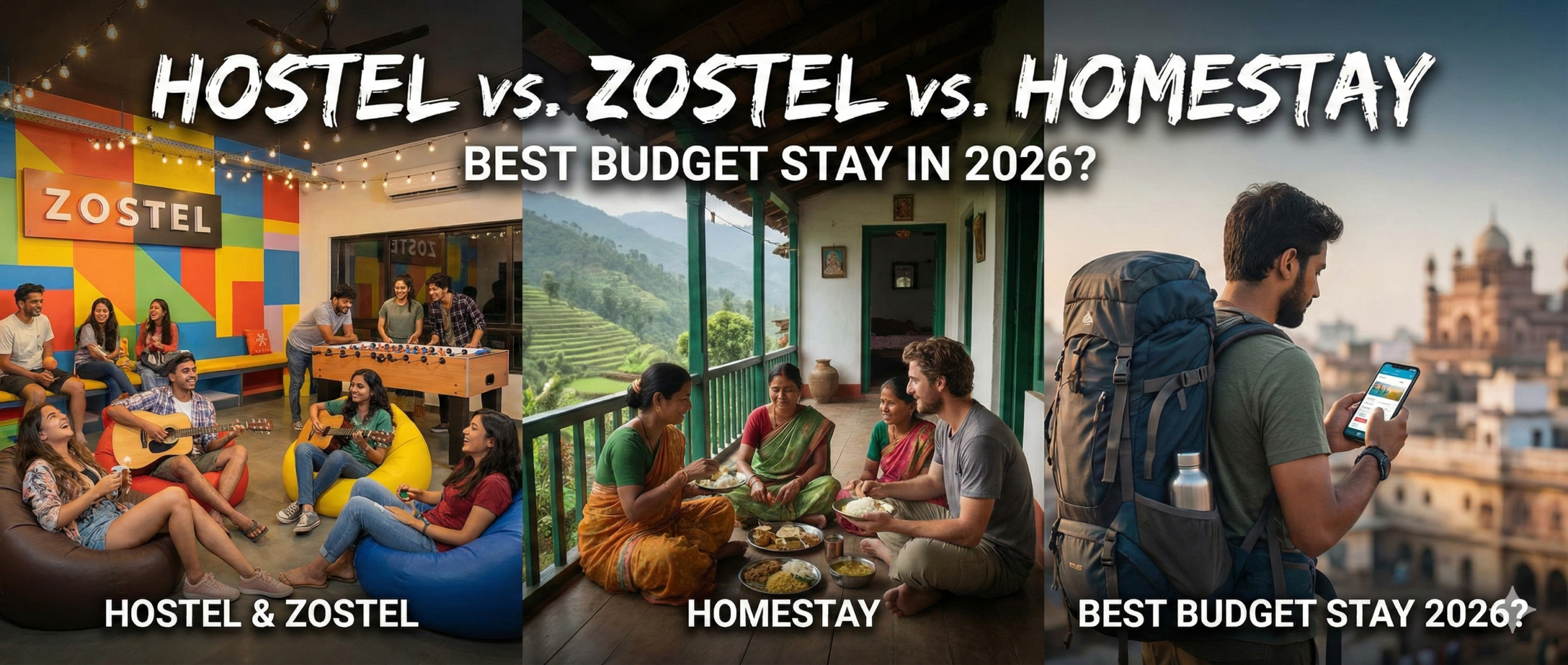
India’s travel landscape has transformed dramatically in 2026. The days of choosing between a shady cheap lodge and an expensive hotel are over. Today, the “budget” traveler is spoiled for choice with high-quality, experience-led accommodation options. But with so many choices, a new confusion has emerged: Hostel vs. Zostel vs. Homestay—which one should you pick?
In 2026, the decision isn’t just about saving money; it is about the vibe. Do you want the high-energy social life of a backpacker hostel? The branded, reliable community of a Zostel? Or the quiet, authentic cultural immersion of a local Homestay?
This guide breaks down everything you need to know to book the perfect stay for your 2026 adventure.
Read Also:- Top 10 Places to Visit in Ramnagar From Corbett National Park to Sholay Hills
1. The Rise of Backpacker Hostels in India
In 2026, the concept of a “hostel” in India has graduated from basic dorm rooms to “Poshtels” (posh hostels). If you are a solo traveler, a digital nomad, or a group of friends looking for energy, this is your playground.
The Vibe: High Energy & Networking
Modern hostels in India are designed for interaction. They are no longer just places to sleep; they are co-living spaces. In 2026, you will find most top-tier hostels (brands like The Hosteller, goSTOPS, Moustache) equipped with co-working spaces, high-speed fiber internet, and dedicated “social captains” whose job is to break the ice among guests.
The crowd here is diverse—you might share a dorm with a German gap-year student, a start-up founder from Bangalore working remotely, and a trekker from Mumbai. The common rooms are the heart of the experience, often featuring foosball tables, bean bags, and nightly events like Bollywood karaoke or rooftop movie screenings.
Amenities You Can Expect in 2026
Gone are the days of creaky bunk beds. The 2026 standard for Indian hostels includes:
- Privacy Curtains: Almost every dorm bed now comes with a privacy curtain, reading light, and charging station.
- Female-Only Dorms: Enhanced safety features with key-card access and female-only wings are standard.
- In-House Cafes: You don’t need to step out for breakfast; most have vibrant cafes serving everything from Maggi to Avocado Toast.
- Smart Lockers: RFID-controlled lockers are becoming common for securing laptops and cameras.
Who is it for?
Hostels are best for travelers aged 18–35 who suffer from FOMO (Fear Of Missing Out). If you want to make friends instantly, find a trekking buddy, or party until 2 AM, a standard backpacker hostel is your best bet. However, if you are a light sleeper or need absolute silence to work, the constant activity might be draining.
2. Zostel: The Brand That Defined “Cool”
Why is “Zostel” a separate category? Because in India, Zostel has become synonymous with backpacking, much like “Xerox” is for photocopying. As of 2026, Zostel has expanded aggressively, differentiating itself into two distinct tiers: Standard Zostels and Zostel Plus.
Standard Zostel vs. Zostel Plus
The classic Zostel remains the king of affordable reliability. You know exactly what you will get: colorful graffiti walls, a chilling area with board games, and a standardized level of cleanliness.
Zostel Plus, however, is the 2026 game-changer. These are luxury hostels located in offbeat or scenic spots (like a private estate in Wayanad or a cliff-side villa in Mukteshwar). They offer the social vibe of a hostel but the amenities of a 3-star resort. Think swimming pools, private glamping tents, and expansive gardens.
The “Community-First” Approach
Zostel’s biggest selling point in 2026 is its technology and community integration.
- Zobu AI: Their new integration helps you plan itineraries and connect with other travelers staying at the same property before you even arrive.
- Passports: The “Zostel Passport” challenge encourages travelers to visit multiple properties to unlock discounts, creating a loyal tribe of “Zostelers.”
Is it worth the hype?
In 2026, Zostel is often priced slightly higher than generic competitor hostels. You are paying a “brand tax,” but in exchange, you get a guarantee of quality. If you are a first-time solo traveler nervous about safety or hygiene, Zostel acts as a safety net. You won’t find damp walls or bed bugs here. The crowd is usually slightly more “cultivated” than random hostels—often filled with creative professionals and long-term travelers.
3. Homestays: The Authentic Indian Heartbeat
While hostels and Zostels are about the social world, Homestays are about the local world. In 2026, the “Work from Mountains” trend has turned humble village homes into fully equipped powerhouses of hospitality.
The “Real” Experience
A homestay is exactly what it sounds like—you stay in a spare room or a dedicated wing of a local family’s house. In places like Kerala, Himachal, and Sikkim, this is the gold standard of travel.
The magic lies in the details. You aren’t ordering food from a menu; you are eating what the family eats (often grown in their own garden). Your host isn’t a receptionist; they are a local guide who can show you the hidden waterfall that isn’t on Google Maps.
Privacy and Peace
Unlike the chaotic energy of a hostel, homestays offer peace. They are ideal for couples, families, or writers who want to escape the noise. You get your own private room (often cheaper than a private room in a hostel) and a quiet verandah to sip chai.
2026 Upgrades: The “Smart” Homestay
Historically, homestays had bad internet. That has changed. Recognizing the influx of digital nomads, top-rated homestays in 2026 have installed:
- Fiber Optic WiFi: Essential for Zoom calls.
- Power Backup: Inverters and generators are now standard in remote areas like Jibhi or Tirthan Valley.
- Long-Stay Discounts: Many hosts offer massive discounts (up to 40-50%) if you book for a month.
The Trade-off
The trade-off is amenities. You likely won’t get room service, a swimming pool, or a late-night party scene. You also have to respect the house rules—some hosts may be strict about curfews, smoking, or noise levels. It is a home, not a hotel.
Quick Comparison: Hostel vs. Zostel vs. Homestay
| Feature | Hostel (General) | Zostel (Brand) | Homestay |
| Best For | Solo backpackers, Party lovers, Budget travelers. | First-timers, “Flashpackers”, Brand loyalists. | Couples, Families, “Slow Travel”, Culture seekers. |
| Average Price (Dorm) | ₹600 – ₹900 / night | ₹800 – ₹1,200 / night | N/A (Usually Private Rooms) |
| Avg Price (Private) | ₹2,000 – ₹3,500 / night | ₹3,000 – ₹6,000 (Zostel Plus) | ₹1,500 – ₹4,000 / night |
| Vibe | High Energy, Loud, Chaotic Fun. | Curated Social, Reliable, Creative. | Quiet, Personal, Authentic, Warm. |
| Food | Café Menu (Burgers, Pasta, etc.) | Standard Café Menu + Local Specials. | Home-cooked local meals (Thalis). |
| Privacy | Low (unless in private room). | Medium (Dorms are spacious). | High (Private room in a house). |
| Safety | Good (Lockers, CCTV). | Excellent (Standardized protocols). | Very High (Family environment). |
| Internet | High Speed (Co-working focus). | High Speed (Reliable). | Variable (Check reviews for “Fiber”). |
Expert Review: The 2026 Verdict
(Expert Insight on current travel trends)
“In 2026, we are seeing a ‘Premiumisation’ of the budget sector. Travelers are no longer just looking for the cheapest bed. They are looking for ‘Depth-Based Tourism’—staying longer in one place to connect with the community. Zostel has capitalized on this with their ‘Plus’ properties, essentially offering a resort experience at a hostel price point. However, for the true budget traveler, Homestays currently offer the best value-for-money in India, especially for long stays (7+ days), as food costs are significantly lower when you eat with the host family compared to hostel cafes.”
Pros and Cons Breakdown
Hostels
- Pros:
- Cheapest option for solo travelers.
- Instant social life; easy to find travel buddies.
- Great locations (usually city centers or near main attractions).
- Cons:
- Can be noisy and disruptive to sleep.
- cleanliness varies wildly between non-branded hostels.
- “Hidden costs” (breakfast often not included).
Zostel
- Pros:
- High reliability; no nasty surprises.
- “Zostel Plus” offers luxury at decent rates.
- Safe and standardized environment.
- Cons:
- Often fully booked weeks in advance (especially weekends).
- Slightly more expensive than competitor hostels.
- Can feel “commercial” compared to a family home.
Homestays
- Pros:
- Most authentic cultural experience.
- Best food (hygienic, tasty, cheap).
- Directly supports the local economy.
- Cons:
- Less social interaction with other travelers.
- Amenities might be basic (no AC in mountains, simpler bathrooms).
- Locations can sometimes be far from the main market/town center.
What To Do and What Not To Do
✅ DO:
- Check the “Last Mile” Connectivity: For homestays in 2026, always ask the host if the road to their house is accessible by car or if it requires a hike.
- Book Zostels Early: If you are planning a trip to popular spots like Spiti or Goa in peak season, book your Zostel at least 3 weeks in advance.
- Bring a Padlock: Even in 2026, while hostels have lockers, they often require your own padlock.
- Ask for “Thali” Prices: In homestays, ask for a monthly or weekly meal package deal—it saves you huge money compared to ordering à la carte.
❌ DON’T:
- Don’t Post Live Locations: For safety, never post your hostel or homestay name on Instagram Stories in real-time. Post it after you check out.
- Don’t Expect Hotel Service in Homestays: Do not treat your host family like waiters. It is polite to clean up your own plate and interact respectfully.
- Don’t Ignore Reviews: In 2026, look specifically for reviews from the last 3 months. A hostel that was great in 2024 might be run-down today.
- Don’t Be “That Guy” in the Dorm: Don’t pack plastic bags early in the morning (it makes noise) and don’t take calls on speakerphone in the room.
Read Also:- 7 Smart Luggage Trackers That Are Better Than the AirTag
Conclusion: Which One is For You?
If your 2026 travel goal is to meet people, party, and network, book a Hostel or Zostel.
If your goal is to relax, save money on long stays, and eat amazing food, book a Homestay.
Ultimately, the best itinerary often mixes them! Spend your weekdays working from a quiet homestay, and move to a lively Zostel on the weekend to party.
Happy Travels!
