
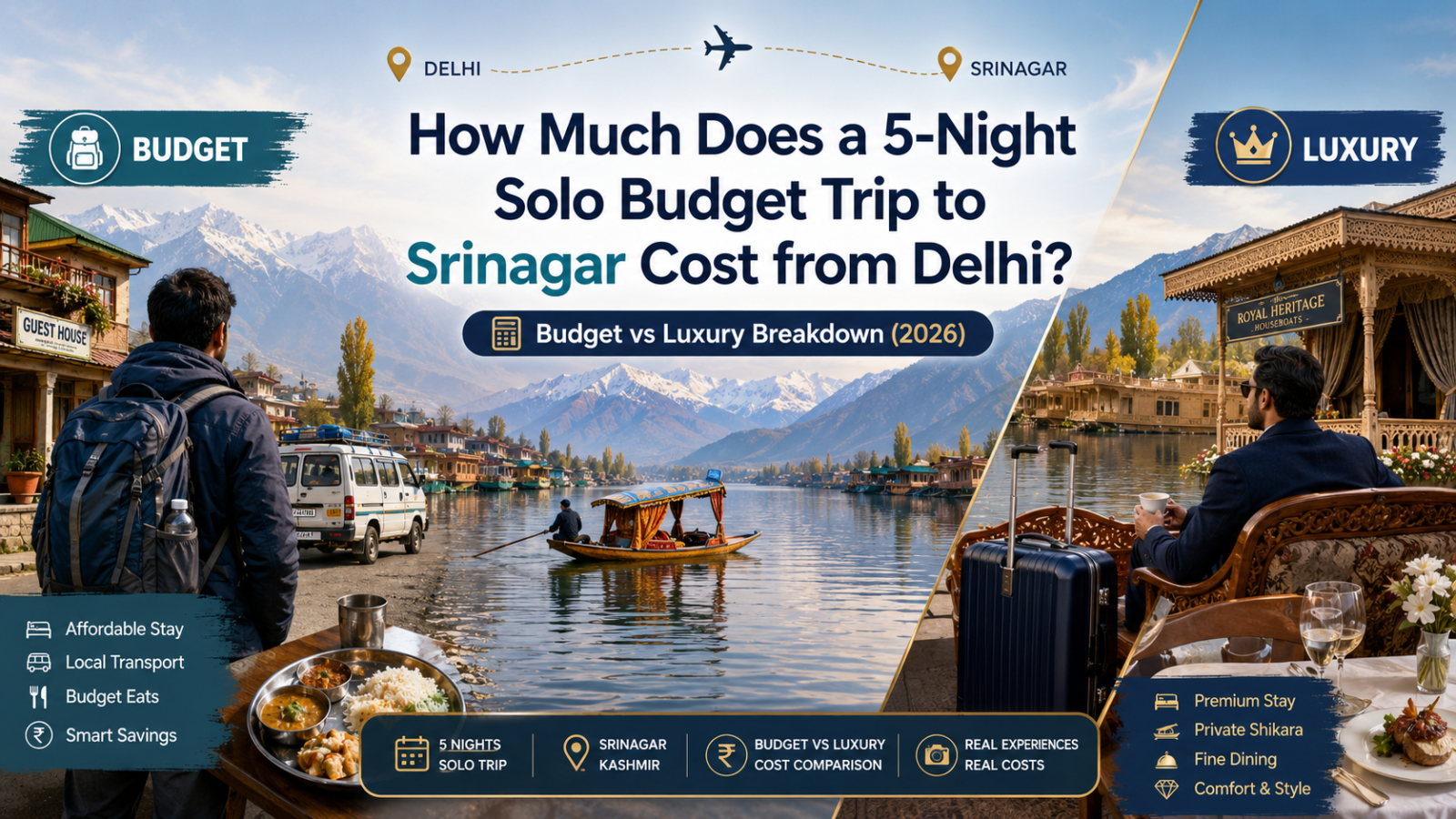
Kashmir on a budget is 100% possible! Read our exhaustive 3,000-word Delhi to Srinagar solo budget trip manual. Master the train-to-shared-sumo transit, houseboat bargaining scripts, and high-protein local food hacks.
1. The Shoestring Himalayan Reality: Introduction to Srinagar Budgeting
Kashmir is frequently projected as a premium, high-end luxury destination where only expensive honeymoon packages or structured family tours can operate. When solo riders, college students, or independent backpackers from Delhi NCR plan a getaway to Srinagar, their biggest fear is that the mountain economics will completely drain their wallet. The reality on the ground is completely opposite. If you learn how to effectively leverage local Kashmiri ground logistics, transit protocols, and community networks, a solo journey to Srinagar can cost significantly less than a trip to a standard commercialized hill station.
When you search for a Srinagar solo budget guide online, the biggest financial trap you encounter is online middleman commissions. Houseboat bookings and luxury packages listed on major aggregator portals are often inflated by up to 200% compared to real on-ground rates. A smart independent backpacker never falls into these pre-booked digital traps.
Bypassing financial exploitation in the valley comes down to a single rule: understanding on-ground resource allocation. Srinagar’s local transport networks, traditional local eateries, and back-lane homestays offer an authentic experience at a fraction of the cost. At DreamTripGuide, we treat travel not just as a casual vacation, but as a system of smart resource management. This master manual serves as your raw financial ledger. We will break down every single rupee from your initial train transit out of Delhi to your final night stay in a hidden Dal Lake homestay, ensuring your solo adventure stays highly cost-efficient.
🏔️ Kedarnath Yatra Checklist 2026: 12 Must-Have Items for a Successful Trek

- ✅Altitude Protection: Prevents breathlessness and headaches caused by low oxygen levels at Kedarnath top.
- ✅Instant Energy: Helps you recover faster during the steep 16km trek from Gauri Kund.
- ✅Lightweight: Fits easily in your side pocket and weighs almost nothing.

- ✅Unbeatable Grip: Anti-skid soles designed specifically for slippery mountain rocks and mud.
- ✅100% Waterproof: Keeps your feet dry during sudden rains or while crossing small streams.
- ✅Ankle Support: Prevents injuries on the uneven zig-zag paths of the Kedar valley.

- ✅Total Coverage: Covers you and your large backpack completely during heavy mountain rains.
- ✅Quick Dry: Much better than heavy raincoats; it's light and dries in minutes.
- ✅Windproof: Blocks the freezing cold winds that follow the rain at high altitudes.

- ✅Heat Retention: Advanced fabric that locks body heat even when the temperature drops to 0°C.
- ✅Odour Resistant: Can be worn for multiple days without feeling unhygienic.
- ✅Slim Fit: Fits comfortably under your regular clothes without looking bulky.

- ✅Cold Protection: Battery dies fast in cold weather; this ensures your phone stays alive for photos.
- ✅Massive Capacity: Charge your phone and camera 4-5 times fully during the trip.
- ✅Fast Charging: Don't waste time at charging points in tea stalls.

- ✅Knee Support: Reduces 25% of the pressure on your knees during the steep descent.
- ✅Better Balance: Essential for crossing slippery patches or walking in narrow trails.
- ✅Anti-Shock: Absorbs ground impact to prevent wrist and shoulder pain.

- ✅12H Hot: Keep hot water/tea ready to fight the freezing cold of the Himalayas.
- ✅BPA Free: Safe and healthy stainless steel that won't rust.
- ✅Strong Body: Survives accidental drops on rocky terrains easily.

- ✅Mountain Ready: Contains pain sprays, bandages, and altitude sickness tablets.
- ✅Lightweight: Small enough to fit in any backpack side pocket.
- ✅Must Have: Medical help is far away on the trek; be your own first responder.

- ✅Hands-Free: Essential for early morning treks (3 AM) so you can use trekking poles freely.
- ✅High Brightness: Powerful beam that covers up to 100 meters clearly.
- ✅Weatherproof: Continues to work even during rain or heavy mist.
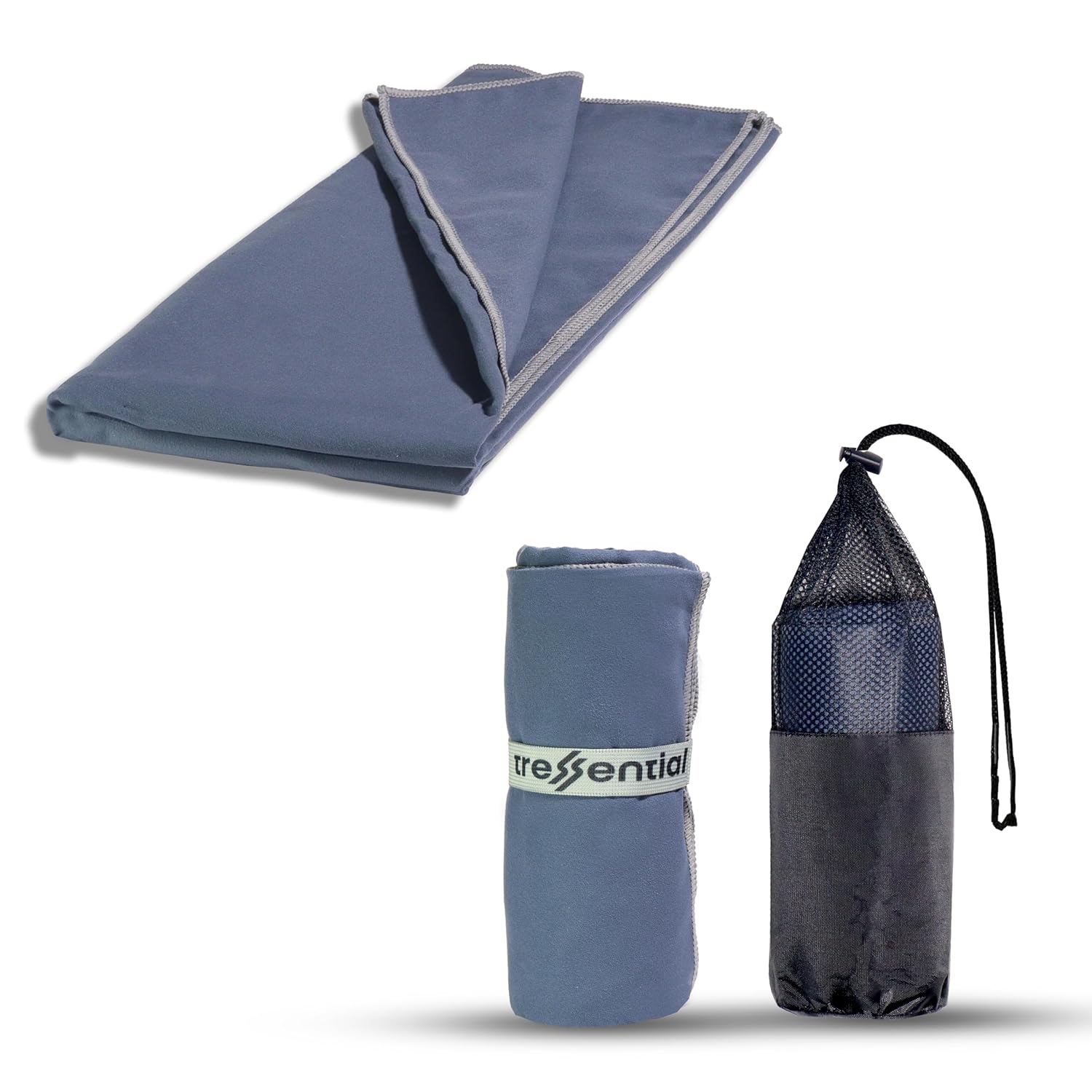
- ✅No Wet Smell: Dries in minutes so you don't carry a heavy, smelly towel in your bag.
- ✅Super Tiny: Folds into a small pouch, leaving more room for warm clothes.
- ✅Gentle: Ultra-soft fabric that is perfect for cold weather skin care.

- ✅High Altitude Protection: Himalayan sun is harsh and causes severe tanning & burns.
- ✅Non-Greasy: Doesn't feel oily while trekking or sweating.
- ✅Sweat Resistant: Stays on your skin even during high-intensity walking.

- ✅Dual Protection: Ponchos are good, but this ensures no water enters your bag.
- ✅Reflective Logo: Helps others see you in heavy mist or night treks.
- ✅Universal Fit: Fits perfectly on all 30L to 60L trekking backpacks.
Streamlining your expenses on a Kashmir solo trip does not mean compromising on your personal safety. It simply means making smart, logical choices on the ground. In the ledger below, we have mathematically mapped out a 5-Night / 6-Day solo itinerary starting and ending at the Delhi NCR transit hub.
📊 Delhi to Srinagar Solo Trip Cost Analysis
- Delhi to Srinagar Return Transit:
- Pure Budget Strategy (Shared Local): ₹1,800 (Sleeper Class Rail + Shared Sumo Cabs)
- Luxury Comfort Strategy (Pre-Booked Flight): ₹8,500+ (Direct Flight via Delhi IGI Airport)
- On-Ground Reality: Shared Sumo stands operate directly outside Jammu and Udhampur railway stations, bypassing heavy private taxi pricing.
- Stays & Accommodations (5 Nights):
- Pure Budget Strategy (Shared Local): ₹3,500 (Back-lane Homestays @ ₹700/Night)
- Luxury Comfort Strategy (Pre-Booked Flight): ₹18,000 (Lakeside Front-row Premium Houseboats)
- On-Ground Reality: Online booking applications add heavy platform convenience tags. Direct on-ground walk-ins yield the lowest rates.
- Local Sightseeing & Communication:
- Pure Budget Strategy (Shared Local): ₹1,200 (Local Shared Minibuses & Taveras)
- Luxury Comfort Strategy (Pre-Booked Flight): ₹10,500 (Private Dedicated Chauffeur Car Rental)
- On-Ground Reality: Srinagar’s local minibus network is highly efficient, charging just ₹20 to ₹40 per macro zone.
- Food, Nutrition & Calorie Intake:
- Pure Budget Strategy (Shared Local): ₹2,500 (Local Market Dhabas, Eggs, Thalis)
- Luxury Comfort Strategy (Pre-Booked Flight): ₹7,000 (Premium Boulevard Road Tourist Cafes)
- On-Ground Reality: Traditional neighborhood bakeries offer filling local breads for under ₹10, keeping your baseline food costs low.
- Emergency Buffer Cash:
- Pure Budget Strategy (Shared Local): ₹1,500 (Kept strictly in hand as physical liquid cash)
- Luxury Comfort Strategy (Pre-Booked Flight): ₹4,000 (Digital wallets or electronic bank reserves)
- On-Ground Reality: Extreme high-altitude network drops often make digital UPI scanning codes entirely unresponsive.
- Master Net Expenditure:
- Pure Budget Strategy (Shared Local): ₹10,500/- Net Capital
- Luxury Comfort Strategy (Pre-Booked Flight): ₹48,000/- Plus
- On-Ground Reality: Meticulous on-ground choices successfully lock your entire multi-day trip well under a ₹12,000 threshold.
The absolute biggest expense head on a standard Delhi-to-Kashmir itinerary is flight tickets, which regularly cross the ₹10,000 mark during peak touring seasons. To slash this overhead, budget-conscious solo travelers must deploy a multi-stage overland transit protocol. Your journey begins at New Delhi Railway Station (NDLS) or Old Delhi Station.
By booking an overnight superfast train link, such as the Uttar Sampark Kranti Express or the Jammu Mail, you can secure a Sleeper Class ticket for just ₹450 to ₹550. This eliminates the cost of a hotel room for your first night. After a comfortable overnight run across the northern plains, you will arrive at Jammu Tawi or the Udhampur terminal station by 6:00 AM. As you exit the station gates, private cab operators will try to intercept you, quoting high private drop rates of ₹4,000—ignore them completely and walk directly to the government-registered shared Sumo stands.
The flat union-regulated rate for a shared seat in a Tata Sumo or Mahindra Xylo from Jammu/Udhampur to the Srinagar Tourist Reception Centre (TRC) ranges between ₹600 to ₹800. Slicing through the engineering marvel of the Chenani-Nashri Tunnel and the new Banihal highway corridors, this shared transit gets you to Dal Lake in roughly 6 to 7 hours. Your total one-way transit cost from Delhi to the heart of Srinagar settles well under ₹1,200, saving you a massive chunk of money right at the start of your trip.
4. Focus: The Self-Sustained Adventure Backpacking & Gear Grid
If you intend to extend your solo run past Srinagar into the raw interior valleys of Sonamarg, Pahalgam, or Gurez, erratic seasonal hotel rates can quickly dismantle your budget strategy. The ultimate financial shield against high-altitude room price spikes is carrying Self-Sustained Backpacking & Camping Gear.
By packing lightweight, compact survival equipment, you gain the independence to pitch your own shelter at designated community camping grounds or private homestay backyards for a nominal fee of just ₹200, bringing your nightly stay cost practically down to zero.
📦 Independent Backpacker Survival Kit Checklist
- High-Altitude Stay Price Spikes:
- Technical Item Needed: Waterproof Dual-Layer 2-Person Camping Tent
- Value to Traveler: Eliminates room booking anxiety entirely during peak months. Protects you against harsh alpine winds and midnight mountain showers.
- Sub-Zero Midnight Temperatures (0°C to 4°C):
- Technical Item Needed: Compact Microfiber Sleeping Bag (Comfort Rated to 0°C)
- Value to Traveler: Efficiently traps your core body heat inside insulated fiber walls. Extremely lightweight and fits into the bottom compartment of a rucksack.
- Multi-Stage Shared Transit & Extended Walking:
- Technical Item Needed: 65-Liter Rugged Water-Resistant Rucksack with Internal Frame
- Value to Traveler: Distributes your gear weight evenly across your hips and shoulders, preventing lower back fatigue during local bus shifts and walking transfers.
- Rapid Battery Drainage in Cold Terrains:
- Technical Item Needed: 20,000mAh Heavy-Duty Fast Charge Power Bank
- Value to Traveler: Sub-zero alpine conditions drain lithium-ion phone and camera batteries up to three times faster. Keeps your offline navigation maps and emergency tracking lines continuously alive.
5. The Houseboat Bargaining Script & High-Protein Local Food Strategy
The historical houseboats lining the front rows of Dal Lake’s Boulevard Road carry premium tourist price tags, but there is a highly effective execution script to crack their pricing structure: The 3:00 PM Ghat Rule. Never pre-book heritage stays online, as digital aggregators apply steep middleman platform commissions. Instead, arrive at Dal Lake around 3:00 PM when the daily check-out cycles are completely over and the boatmen are looking to fill remaining vacancies.
Walk over to Ghat Number 7 or Ghat Number 14 and hire a local shikara boatman to row you past the premium front row into the quieter, interior channels. When you communicate face-to-face with the actual boat owner, state clearly that you are an independent solo traveler requiring minimal maintenance and just a single clean room. Because an empty room yields zero revenue, owners will readily drop their room tariff from an online price of ₹4,000 down to an offline rate of ₹800 to ₹1,000 per night.
To optimize your daily food budget under ₹400 while securing clean, high-performance calories, utilize the network of traditional neighborhood bakeries known as Kandur Shops. Found in every local street corner, these bakeries serve fresh, hot local breads like Girda or Lavasa for just ₹5 to ₹10. Pairing this with traditional salted pink tea (Noon Chai) gives you a slow-release carbohydrate baseline that keeps you energized for hours. For substantial lunches and dinners, walk away from the tourist tracks into local market lanes and order the standard Vegetarian Thali. These basic thalis are strictly regulated by the local administration, providing you with unlimited refills of high-protein lentils (dal) and clean rice for a flat price of just ₹120 to ₹150.
6. Critical Operational Dos and Don’ts for Solo Budget Explorers
What to Do (Do’s):
- DO Convert Your SIM Card to Postpaid Early: Due to strict regional security regulations, all out-of-state prepaid mobile connections go completely dead the moment you cross into Jammu & Kashmir. Convert your primary number to a postpaid connection before leaving Delhi, or purchase a temporary local tourist prepaid SIM at the Srinagar TRC office.
- DO Leverage Shared Sumos from the Batamaloo Stand: For inter-district transits to Gulmarg, Sonamarg, or Pahalgam, always utilize the high-occupancy shared Sumo networks operating out of the Batamaloo terminal. This keeps your point-to-point travel costs limited to a couple of hundred rupees.
- DO Carry Ample Physical Cash in Low Denominations: Intermittent data connectivity across high-altitude mountain sectors can cause digital scanning portals and wallet apps to fail completely. Keep your cash reserves split cleanly into ₹100 and ₹200 notes to ensure smooth transactions.
What NOT to Do (Don’ts):
- DON’T Hire Auto-Rickshaws on Boulevard Road Stretches: Auto-rickshaws operating along the main lakefront tracks regularly quote inflated tourist rates. Walk directly to the roadside edge and hail the shared local running minibuses, which cover the entire lake circuit for a flat fare of just ₹15.
- DON’T Purchase Saffron or Pashmina from Lakeside Hawkers: Hawkers selling “pure saffron or premium pashmina shawls” from shikaras or roadside stalls are almost always selling highly duplicated, synthetic imitations. For authentic Kashmiri handicrafts, buy strictly from government-approved emporiums.
- DON’T Take Unregulated Pony Rides in Alpine Meadows: Upon arriving at the Gulmarg or Pahalgam base stands, local pony handlers will often claim that walking across the meadow trails is legally prohibited. This is a complete hoax; all major points are fully walkable via paved pedestrian paths.
7. Expert Technical Review: Financial Engineering on the K2K First Leg
“Streamlining a solo travel budget from Delhi NCR to the Kashmir Valley under a fixed ₹12,000 threshold comes down to a clear logistical formula: minimize fixed intermediate variables and rely entirely on local public infrastructure. The primary financial drain on any long-distance itinerary stems from dynamic flight pricing and independent vehicle hiring fees. By shifting your transit framework to the overnight rail corridor combined with the highly organized shared Tata Sumo networks, your baseline travel costs align perfectly with local commuter economics.
Furthermore, carrying independent survival gear—specifically dual-layer lightweight tents and compact sleeping bags—completely eliminates your vulnerability to high-season accommodation price spikes. Utilizing neighborhood Kandur bakeries and admin-regulated market dhabas provides clean macro nutrition while keeping your daily food costs incredibly low. Avoid digital middleman platforms, negotiate face-to-face directly with property owners past peak hours, and your entry leg into the K2K circuit will stand as a masterpiece of cost-efficient travel engineering.” — Saurav Pal, Chief Travel Infrastructure Analyst, DreamTripGuide.
8. People Also Ask (PAA) – Kashmir Solo Budget Edition
- Can I realistically complete a solo trip from Delhi to Srinagar under ₹12,000? Yes, by utilizing sleeper trains, shared local Sumo networks, dining at neighborhood market dhabas, and executing face-to-face bargaining for back-lane homestays, your total 5-night cost will easily stay under ₹12,000.
- Why does my Delhi mobile network stop working inside Jammu & Kashmir? Local security guidelines mandate that all out-of-state prepaid cellular lines get automatically deactivated at the border. To stay connected, you must carry a standard Postpaid SIM card or buy a temporary local prepaid card upon arrival.
- Where can I locate the cheapest safe homestays in Srinagar? Avoid the primary lake-facing boulevard row. Explore the quiet inner alleys of the Khonak Khan area right behind the main banks, where clean budget rooms can be locked in for ₹600 to ₹800 per night through offline negotiation.
- How can I avoid getting scammed during houseboat bookings? Never transfer advance payments to unverified online third-party portals or local street agents. Walk directly to the ghats after 3:00 PM, visually inspect the room quality and bathroom sanitation yourself, and strike a deal directly with the boat owner.
- What is the most economical way to travel from Srinagar to Gulmarg? Walk over to the local Batamaloo or TRC shared cab junction early in the morning. Board a shared Sumo heading to Tangmarg base for around ₹100, and then switch to a local mountain shuttle for the final climb.
- Should I rely on digital mobile wallets for payments in Kashmir? No, high-altitude network fluctuations make online payment screens highly unstable. It is a mandatory rule for budget backpackers to keep a reliable reserve of physical cash bills at all times.
👉 Instagram Regular Bulletins: @dreamtripguide.india
👉 Himalayan Budget Travel Hub: www.dreamtripguide.com
