
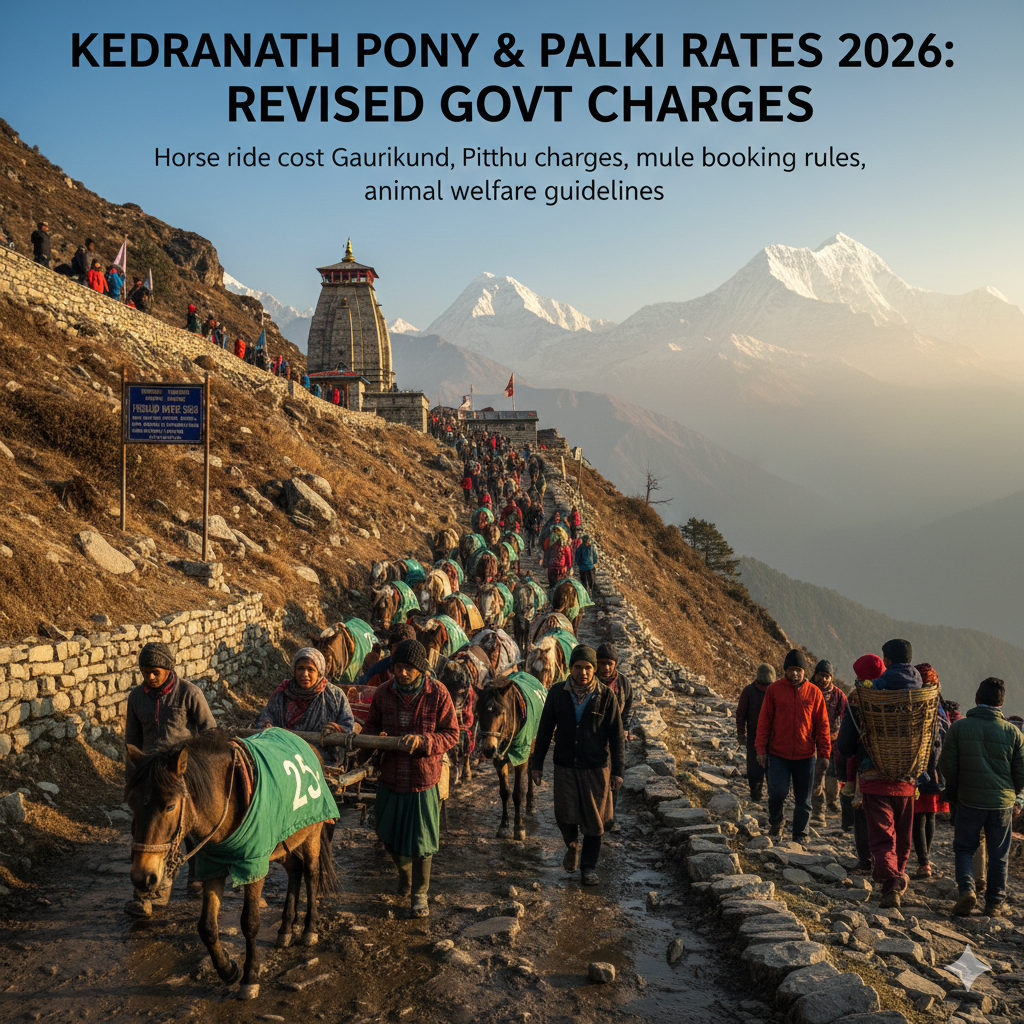
The Kedarnath Yatra in 2026 is seeing significant changes, especially in how pilgrims traverse the 16km trek from Gaurikund. For many, the journey to the Himalayan shrine of Lord Shiva is physically impossible without the help of Ponies (Horses), Palkis (Palanquins), and Kandi (Baskets).
To prevent overcharging and ensure the safety of both pilgrims and animals, the Uttarakhand government has released the Revised Govt Charges for 2026. This guide provides a detailed breakdown of the new rates, booking rules, and essential tips for a smooth pilgrimage.
Read Also:- The Proposed 7km Kedarnath Tunnel: Everything You Need to Know
1. Understanding the New Rate Structure for 2026
The pricing for animal and human-assisted transport in Kedarnath is strictly regulated by the District Administration of Rudraprayag. For 2026, the rates have been adjusted to reflect the increasing cost of animal feed and the welfare of the operators.
Why do rates change?
The trek from Gaurikund to Kedarnath is steep, rising from approximately 6,500 ft to nearly 11,755 ft. This puts immense strain on the horses and the porters. The government revises these rates annually to ensure that the “Khachars” (mules) and “Dandi-Kandi” workers are fairly compensated while keeping the journey affordable for devotees.
Prepaid vs. Spot Booking
The most important update for 2026 is the emphasis on Prepaid Booking Counters. These are located at Sonprayag and Gaurikund. When you book here, you receive a computerized slip that includes the horse’s number and the operator’s details. This prevents the “hidden charges” trap that many first-time pilgrims fall into when negotiating directly on the trail.
2. Kedarnath Pony and Palki Rates: Official 2026 Table
Below is the official rate list for the 2026 season. Please note that these rates are for one-way and round-trip journeys. Weights are strictly monitored; if a passenger exceeds the weight limit, additional charges apply.
Official Rate Chart (Revised)
| Service Type | From – To | Weight Limit | Revised Rate (INR) |
| Pony (Horse) | Sonprayag to Kedarnath | Per Person | ₹3,200 |
| Pony (Horse) | Gaurikund to Kedarnath | Per Person | ₹2,950 |
| Pony (Horse) | Kedarnath to Gaurikund (Return) | Per Person | ₹2,050 |
| Palki (Dandi) | Gaurikund to Kedarnath | Up to 75 kg | ₹8,000 |
| Palki (Dandi) | Gaurikund to Kedarnath | 75 kg to 90 kg | ₹10,000 |
| Kandi (Basket) | Gaurikund to Kedarnath | Up to 25 kg | ₹1,500 |
| Pitthu (Porter) | Gaurikund to Kedarnath | Up to 40 kg (Baggage) | ₹1,200 |
Note: For a “Next Day Return” on a pony, the charges are usually double minus a small discount (approx. ₹5,500–₹6,000 total). Always verify the stamp on your prepaid slip.
3. Mule Booking Rules & Animal Welfare Guidelines
In 2026, the Uttarakhand High Court and the Animal Husbandry Department have introduced strict Animal Welfare Guidelines to curb the history of animal cruelty on the Kedarnath route.
New Rules for 2026
- Daylight-Only Operation: Following a landmark court order, no horses or mules are allowed to operate on the Kedarnath trail between sunset and sunrise. This ensures the animals get adequate rest.
- One Trip Per Day: To prevent overworking, each registered horse is permitted only one trip (ascent) per day.
- Health Checkpoints: Every animal must pass a fitness test at Sonprayag. You will notice horses wearing numbered jackets—this indicates they are registered and medically fit.
- Warm Water Stations: 13 locations along the trek now provide warm water for the animals to drink, which is essential in the freezing Himalayan climate.
Booking Process
- Biometric Registration: You cannot book a horse without your Yatra QR Pass. Ensure you have registered on the official portal.
- Prepaid Counter: Go to the counter at Sonprayag or Gaurikund.
- Payment: Pay the fixed govt rate and get your slip.
- Verification: Check the horse’s health and the operator’s ID before starting.
4. Pros and Cons of Choosing Manual Transport
While the 7km tunnel and helicopter services are modern alternatives, the traditional pony and palki remain the most common choices.
The Pros (Benefits)
- Availability: Unlike helicopter tickets, which sell out in seconds on the IRCTC portal, ponies and palkis are generally available on the spot (though queues can be 3–4 hours long in peak May-June).
- Flexibility: You can start your journey at any time during the day (before sunset).
- The Experience: It allows you to stay connected with the natural beauty of the Mandakini valley at a slower pace than a flight.
The Cons (Challenges)
- Physical Strain: Riding a horse for 6 hours is not “relaxing.” It can be very hard on the lower back and inner thighs.
- Safety Risks: The path is narrow and shared with thousands of other pilgrims and mules. There is a constant risk of being bumped or the horse slipping on wet rocks.
- Weather Exposure: Unlike a helicopter or the future tunnel, you are exposed to rain and cold for the entire 6–8 hour duration.
5. Expert Review: Tips for a Safe Journey
Travel experts and frequent trekkers suggest that while the pony service is a lifesaver, it requires preparation.
“Many people think a horse ride is an easy way out,” says a veteran Yatra coordinator. “In reality, the posture required to stay balanced on a steep Himalayan incline for 16km is exhausting. We always recommend ‘Palki’ for senior citizens over 65, as it is much more stable and safer than a horse.”
Expert Advice for 2026:
- Leg Guards: Wear thick trousers or even leg guards. The friction against the horse’s saddle can cause “saddle sores” by the time you reach Kedarnath base camp.
- Rain Gear: Always carry a heavy-duty poncho. Even if you are on a horse, the rain in the mountains is unforgiving and can lead to hypothermia.
- The “Side” Rule: If you are walking, always stay on the mountain side of the trail (the inner side). Never stand on the valley side when a mule train is passing, as they can accidentally nudge you toward the edge.
6. Your Checklist: What to Do and What Not to Do
To make your 2026 Yatra successful, follow these simple guidelines regarding pony and porter services.
What You Should Do
- Carry Cash: While some counters take UPI, network issues are frequent. Carry enough cash for the pony/palki charges.
- Check the Slip: Ensure the amount on the slip matches what you paid.
- Be Compassionate: If you see an operator ill-treating an animal, report the jacket number at the next police chowki (Bhimbali or Lincholi).
- Tipping: While not mandatory, a small tip (₹100–₹200) is appreciated by porters who carry your heavy bags up the steep incline.
What You Should NOT Do
- Don’t Overload: If the limit is 75kg, do not try to hide your weight. It is dangerous for the animal and for you.
- Avoid Unregistered Mules: Never hire a mule without a numbered jacket or from someone lurking outside the prepaid queue. These are often “maverick” operators with unhealthy animals.
- Don’t Feed the Animals: Do not give snacks or processed food to the horses; it can make them sick.
- No Night Trekking: Do not pressure an operator to take you up after dark. It is illegal in 2026 and extremely dangerous due to the terrain.
Read Also:- Kedarnath Master Plan 2026: New Facilities for Pilgrims
