
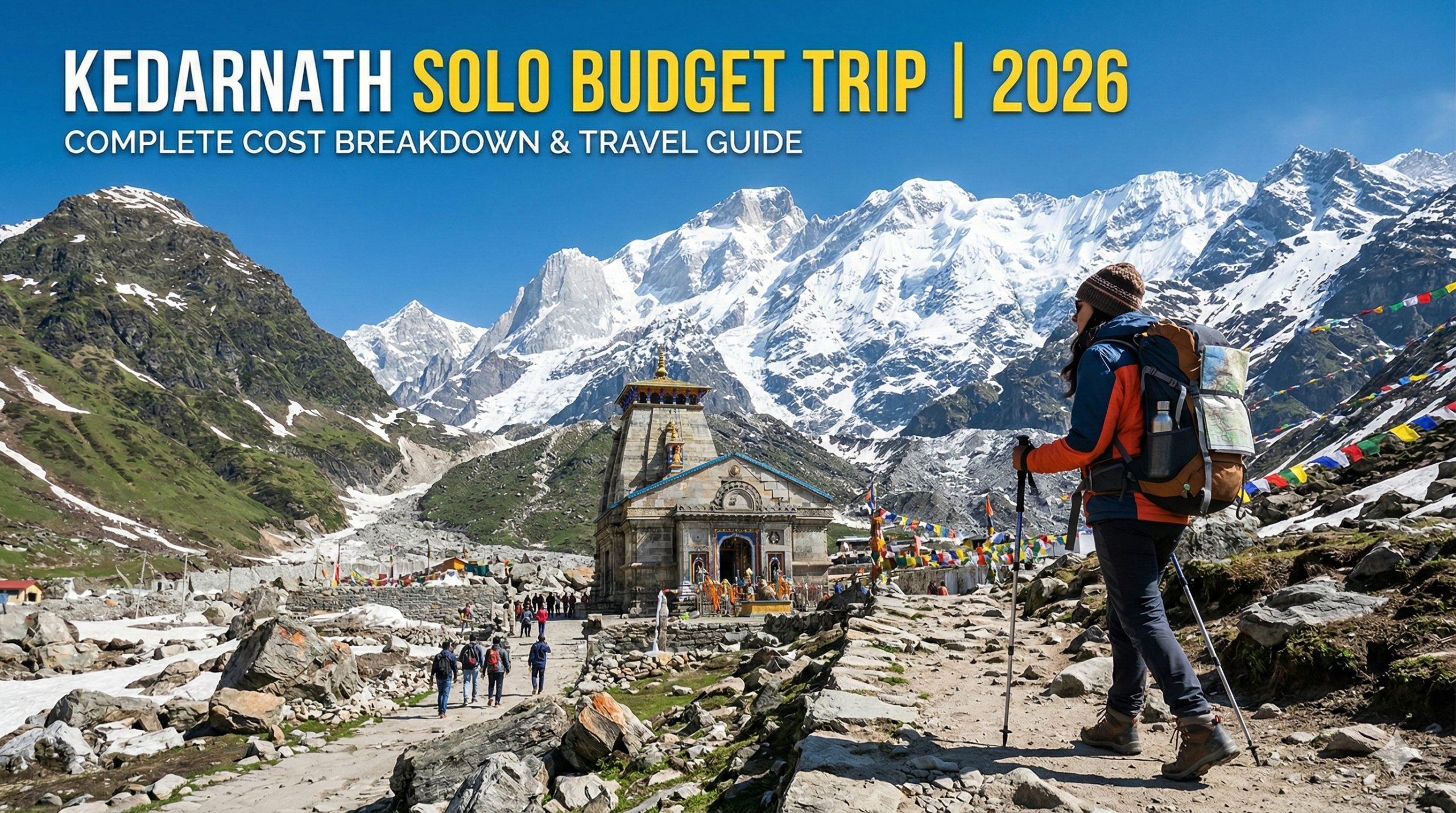
Traveling solo to the spiritual heart of the Himalayas is a dream for many, but the perceived cost often acts as a barrier. For 2026, with improved infrastructure and standardized pricing for pilgrims, Kedarnath has become more accessible than ever for the budget-conscious traveler. This guide breaks down how you can complete this sacred journey without burning a hole in your pocket.
Read Also:- Kedarnath Pony & Palki Rates 2026: Revised Govt Charges
Kedarnath Solo Budget Trip: Complete Cost Breakdown for 2026
Planning a solo trip requires a balance between safety and savings. In 2026, the Uttarakhand government has implemented a streamlined registration process that helps regulate the flow of pilgrims, which indirectly keeps the Kedarnath trip cost 2026 stable by preventing “surge pricing” in local transport and stays.
For a 4-day trip starting from Rishikesh or Haridwar, a solo traveler can realistically expect to spend between ₹6,500 and ₹9,000, including food, stay, and transport. This budget assumes you are using shared public transport and opting for budget-friendly dormitory stays. The key to maintaining this budget is avoiding the peak “VIP” services and instead embracing the local way of travel.
2026 Estimated Budget Table
| Item | Estimated Cost (Shared/Budget) |
| Transport (Haridwar to Sonprayag & back) | ₹1,200 – ₹1,500 |
| Accommodation (4 nights) | ₹2,000 – ₹3,000 |
| Food (4 days) | ₹1,800 – ₹2,500 |
| Registration & Local Shuttle | ₹200 |
| Miscellaneous/Emergency | ₹1,000 |
| Total | ₹6,200 – ₹9,200 |
Shared Cab Fares and Transportation
Transportation is often the biggest variable in your budget. To keep your Kedarnath trip cost 2026 low, you must rely on shared cab fares and GMOU (Garhwal Motor Owners Union) buses.
From Haridwar or Rishikesh, buses start as early as 4:00 AM. A shared Sumo or Maxx cab from Rishikesh to Sonprayag typically costs around ₹600 to ₹800 per seat. Once you reach Sonprayag, you cannot take your private or long-distance vehicle further. You must use the local shuttle service to Gaurikund, which is priced at a fixed ₹50 per person.
If you are a solo traveler, never book a full cab. Stand near the “Yatra Bus Stand” in Rishikesh; there are always groups or other solo travelers looking to fill a seat. In 2026, the BRO (Border Roads Organization) has significantly improved the road conditions, reducing travel time to about 7–9 hours, which means you spend less on midway snacks and breaks.
Transport Breakdown
- Bus (Rishikesh to Sonprayag): ₹450 – ₹550
- Shared Cab: ₹700 – ₹900
- Shuttle (Sonprayag to Gaurikund): ₹50
- Pony/Palki (Optional): ₹2,500 – ₹5,000 (Avoid these to stay on budget)
Free Ashram Stays and Budget Accommodation
Finding a place to sleep is where most solo travelers overspend. However, Kedarnath offers several free ashram stays and low-cost GMVN (Garhwal Mandal Vikas Nigam) dormitories.
In Sonprayag and Guptkashi, look for “Bharat Sevashram” or “Bhole Baba Ashram.” These places often offer a clean bed and a basic meal for a nominal donation or sometimes entirely for free, depending on availability. If you prefer a bit more structure, the GMVN tents near the Kedarnath temple are your best bet. In 2026, a bunk bed in a shared tent costs roughly ₹500 to ₹800 per night.
Budget Tip: Do not book hotels online through major aggregators; they often list premium prices. Instead, reach Sonprayag before 4 PM and talk to local lodge owners directly. Solo travelers can often find a “single bed” in a common room for as low as ₹400.
Accommodation Pros and Cons
| Type | Pros | Cons |
| Ashrams | Extremely cheap/Free, Spiritual vibe | Basic facilities, First-come-first-served |
| GMVN Tents | Close to temple, Government regulated | Can get very cold, Shared bathrooms |
| Private Guest Houses | More privacy, Hot water | Expensive for solo travelers |
Budget Food Options: Eating for Less
You don’t need fancy cafes to enjoy the mountains. To manage your Kedarnath trip cost 2026, stick to budget food options like local Bhandaras (community kitchens) and small Dhabas.
During the Yatra season, many charitable organizations set up Langar or Bhandaras along the trekking route from Gaurikund to Kedarnath. These provide free, nutritious meals like Khichdi, Dal-Chawal, or Tea to pilgrims. If you are eating at Dhabas, a standard “Veg Thali” will cost you between ₹150 and ₹250.
Avoid buying bottled water at high altitudes; it gets expensive (up to ₹50-60 per bottle). Instead, carry a reusable water bottle with a built-in filter. The mountain spring water is generally clean and free. Also, carry light snacks like foxnuts (Makhana), dates, and energy bars from your home city to avoid paying the “high-altitude premium” on MRP.
Solo Travel Safety Tips for the Himalayas
Traveling alone to high altitudes requires more than just money; it requires grit and caution. Solo travel safety tips are essential because at 11,755 feet, your health is your primary asset.
- Acclimatization: Spend a night in Guptkashi or Sonprayag before climbing. This helps your body adjust to lower oxygen levels.
- Emergency Contacts: Always keep a physical copy of your emergency contacts and the “Char Dham Helpline” number (1364). Network connectivity can be spotty.
- Weather Tracking: In 2026, use the official “Kedar-Yatra” app for real-time weather updates. Never start the trek if a heavy rain alert is issued.
- Stay with the Crowd: Even as a solo traveler, keep within sight of other pilgrims during the 16km trek. The path is well-marked, but it’s safer to be near others.
What to Do and What Not to Do
What to Do (The “Dos”)
- Register Early: Complete your biometric registration online at least 15 days in advance. It’s free and mandatory.
- Pack Light: Carry a rucksack, not a suitcase. You have to carry it for 16km of uphill climbing.
- Layer Up: Wear thermals, a fleece, and a waterproof down jacket. Weather changes in minutes.
- Start the Trek Early: Begin from Gaurikund at 4:00 AM to reach the temple by noon and catch the evening Aarti.
What Not to Do (The “Don’ts”)
- Don’t Rush: Walking too fast causes Acute Mountain Sickness (AMS). Take slow, steady steps.
- Don’t Trek at Night: The path is steep, and temperature drops can cause hypothermia.
- Don’t Ignore Health: If you feel dizzy or have a headache, stop immediately and visit the nearest medical relief center.
- Don’t Litter: The Himalayas are fragile. Carry your plastic waste back to the base.
Expert Review: Is a Solo Trip Feasible?
Expert Review by Travel Consultant Aryan Sharma:
“In 2026, Kedarnath is highly feasible for solo travelers. The introduction of the RFID tracking system for every pilgrim has made it much safer for those going alone. My biggest advice for a budget trip is to travel in June or September. Avoid the peak opening week in May and the monsoon months of July-August. Traveling mid-week (Tuesday to Thursday) will also help you find shared cabs and ashram beds much easier than on weekends.”
Pros of a Solo Trip:
- Complete freedom of pace and prayer.
- Easier to find a single seat in shared transport.
- Higher chance of meeting diverse fellow travelers.
Cons of a Solo Trip:
- No one to share the cost of a private room.
- You must be extra vigilant about your luggage and health.
- Loneliness during long travel hours.
Read Also:- The Proposed 7km Kedarnath Tunnel: Everything You Need to Know
