
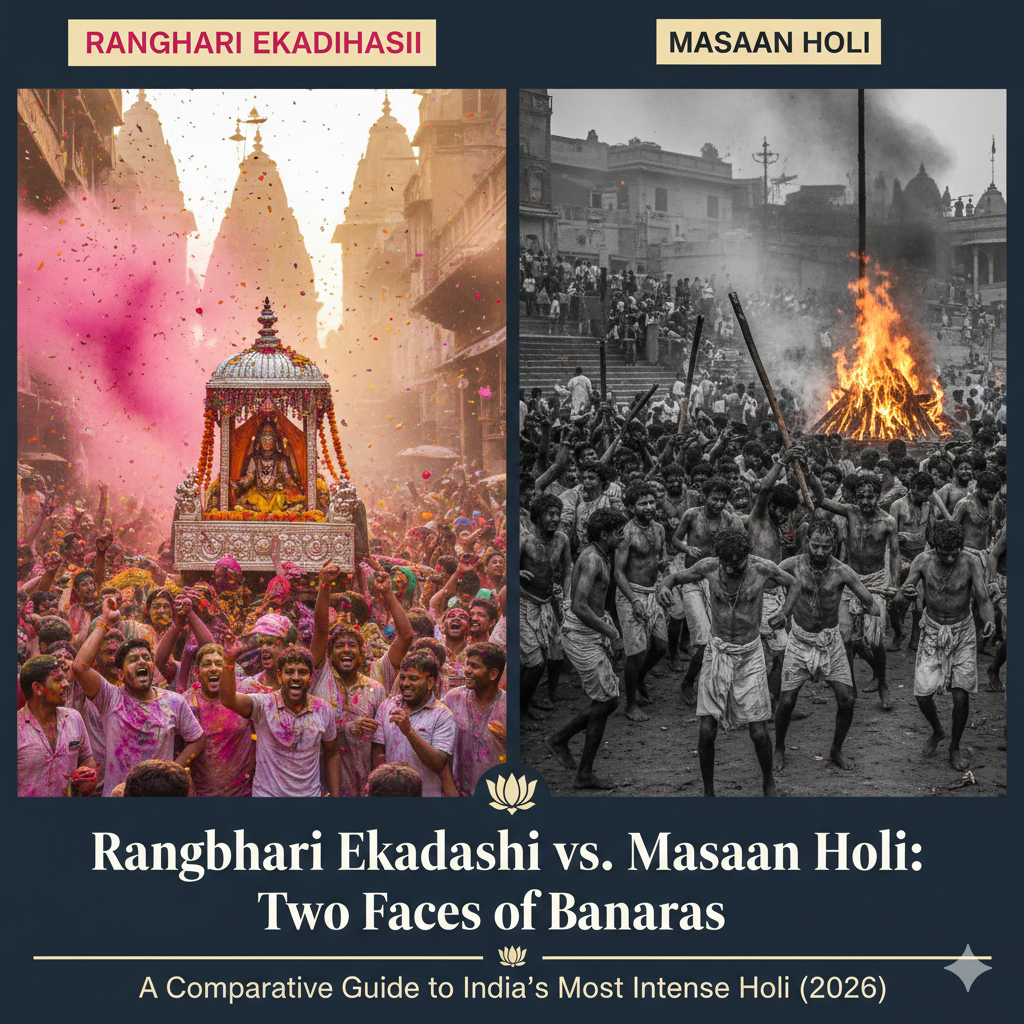
Banaras is not just a city; it is a feeling, especially during the spring. While the rest of India prepares for a single day of colors, Varanasi (Banaras) celebrates a festival that spans across dimensions—from the worldly joy of a wedding to the spiritual reality of the cremation grounds.
If you are planning to visit in 2026, understanding the transition from Rangbhari Ekadashi to Masaan Holi is crucial. It is a journey from Gulaal (colored powder) to Bhasma (ash), and from the celebration of life to the honoring of death. Here is your ultimate comparative guide to the two faces of Banaras Holi.
Read Also:- Varanasi Holi Guide: A Spiritual Celebration on the Ghats
Rangbhari Ekadashi: The Divine Homecoming (Gauna)
Rangbhari Ekadashi marks the official start of Holi in Kashi. According to Vedic legend, this is the day Lord Shiva (Baba Vishwanath) brought Goddess Parvati to his home after their wedding (the ritual of Gauna). The city erupts in celebration as the divine couple enters the Kashi Vishwanath Temple.
The atmosphere is one of pure, unadulterated joy. Thousands of devotees throng the narrow lanes of Vishwanath Gali, showering the silver idols of Shiva and Parvati with pink and red Gulaal. This is the “Social” face of Holi—it is vibrant, musical, and filled with the scent of flowers. For a traveler, this is the best time to see the “Shringar” (decoration) of the deity. The celebration represents the householder aspect of Shiva, the protector and provider who rejoices in the company of his bride and his devotees.
Masaan Holi: The Dance of Life and Death
Just as the colors of Ekadashi begin to settle, the city takes a turn toward the profound. The very next day, at the Manikarnika Ghat, the world-famous Masaan Holi (Cremation Ground Holi) takes place. This ritual is dedicated to Mahashmashan Nath (Shiva as the Lord of the Cremation Ground).
Legend says that while Shiva played Holi with the gods and humans on Ekadashi, he couldn’t take his Ganas (ghosts, spirits, and outcasts) to the city. To include them, he visits the Manikarnika Ghat to play Holi with the ashes of the departed. Devotees smear themselves with funeral pyre ash, dancing to the beat of drums amidst the burning pyres. It is a scene that is both haunting and deeply spiritual, reminding us that in Banaras, death is not the end, but a liberation (Moksha).
Comparing the Two Traditions
To help you plan your timeline, here is a breakdown of how these two days differ in energy, location, and essence:
| Feature | Rangbhari Ekadashi | Masaan Holi (Chita Bhasma Holi) |
| Primary Theme | Celebration of Marriage & Life | Celebration of Liberation & Death |
| Primary Deities | Shiva and Parvati | Shiva and his Ganas (Spirits) |
| Medium used | Herbal Gulaal, Flowers, Perfume | Funeral Ash (Bhasma), Sandalwood |
| Primary Location | Kashi Vishwanath Temple / Streets | Manikarnika Ghat (Cremation Ground) |
| Energy Level | Ecstatic, Social, Musical | Intense, Raw, Transcendent |
| Vibe | “Sattvic” (Pure/Devotional) | “Tamasic” (Primal/Fearless) |
Pros and Cons of Visiting During Banaras Holi
Pros:
- Cultural Immersion: You see the full spectrum of Hindu philosophy—from the joy of creation to the reality of destruction.
- Photography: The visual contrast between the pink clouds of Gulaal and the grey ash of Masaan is a photographer’s dream.
- Spiritual Energy: The “Har Har Mahadev” chants create a vibration that is physically palpable.
Cons:
- Extreme Crowds: The lanes of Banaras are narrow; during Ekadashi, they become almost impassable.
- Intensity: Masaan Holi is not for the faint-hearted. Seeing funeral pyres while people celebrate can be culturally shocking for some.
- Skin Irritation: While many use herbal colors, some people use synthetic ones. The ash at Masaan can also be abrasive.
Expert Review: A Journey through the 2026 Season
Expert Take: “If you want to understand the soul of India, you must see Banaras during these 48 hours. Rangbhari Ekadashi is the ‘Beauty’ and Masaan Holi is the ‘Truth.’ In 2026, we expect a record turnout because of the expanded Kashi Vishwanath Corridor, which makes the Ekadashi procession much easier to witness than in previous decades.”
Strategy for 2026:
- Ekadashi: Reach the Kashi Vishwanath Corridor by 9:00 AM. Position yourself near the gate to see the Palaki (palanquin) of Baba Vishwanath.
- Masaan: Do not try to enter the Manikarnika Ghat floor. Instead, book a boat in advance. Watching Masaan Holi from the Ganga provides a safe distance and a panoramic view of the rituals without getting overwhelmed by the smoke and ash.
What to Do vs. What Not to Do
What to Do:
- Wear Old Clothes: Whether it’s pink Gulaal or grey ash, your clothes will not survive the day.
- Stay Hydrated: The Banaras sun in March can be harsh. Drink plenty of Thandai (ensure it’s the non-intoxicating version if you aren’t prepared for the effects of Bhang).
- Seek Permission: Before taking close-up photos of people at Manikarnika Ghat, a simple nod of the head is respectful.
- Use Sunglasses: This protects your eyes from flying powder and ash particles.
What Not to Do:
- Don’t Push in the Crowd: The flow of the crowd in Banaras is like a river. Let it carry you; do not fight against it.
- Don’t Disrespect the Pyres: At Masaan Holi, remember that families are still mourning their loved ones at the pyres. Celebrate, but keep a respectful distance from the actual funeral proceedings.
- Don’t Travel Alone: Especially for women travelers, it is recommended to go in a group or with a local guide, as the energy can get very boisterous.
- Don’t Forget Skin Protection: Apply a thick layer of coconut oil or moisturizer on your skin and hair before stepping out; it makes washing off the ash and color much easier.
Read Also:- Masaan Holi 2026: Dates, Timings, and Your Ultimate Varanasi Trip Guide
