
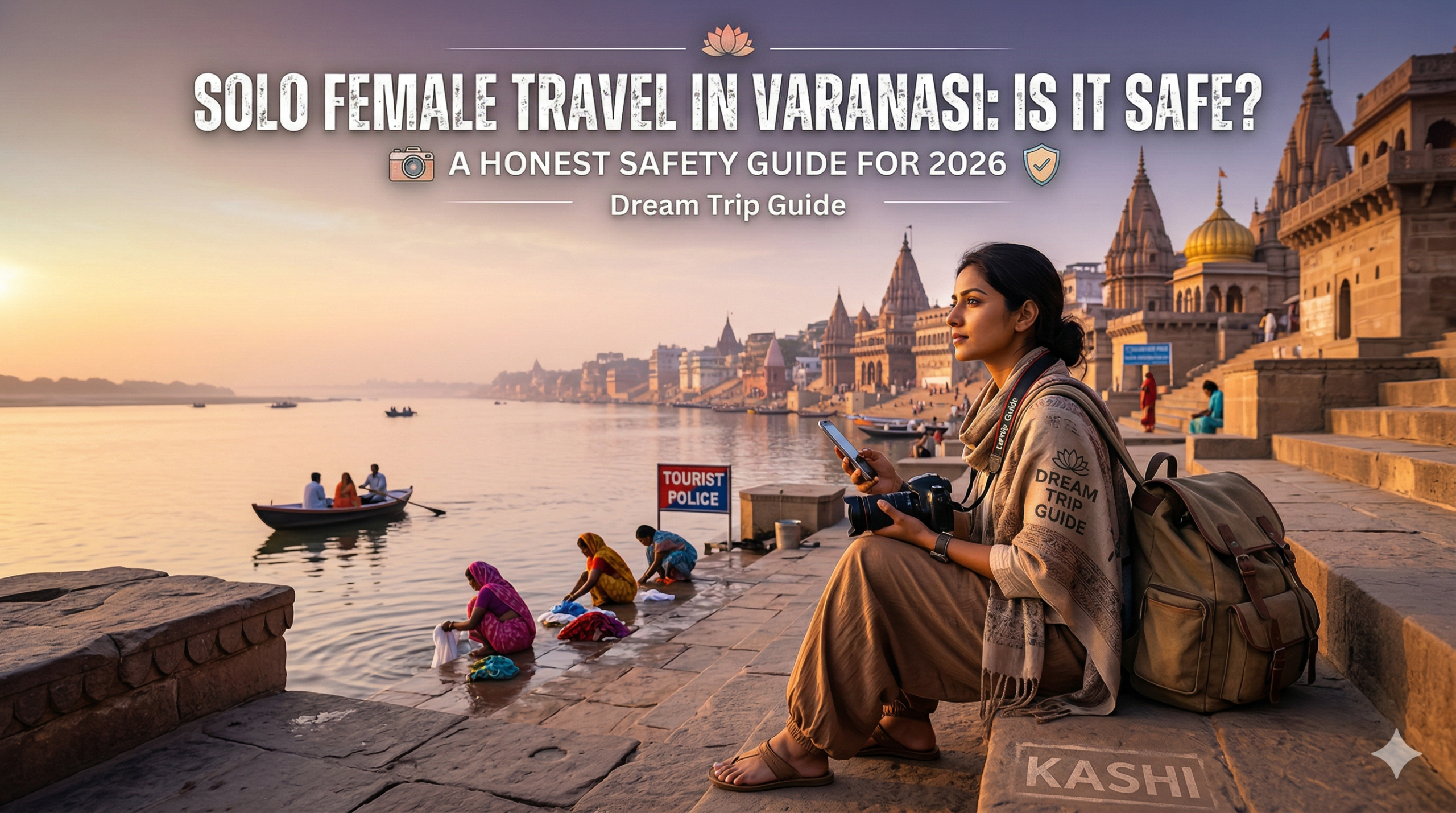
Varanasi is not a city you “visit”; it is a city you “experience.” For a solo female traveler, the thought of navigating the narrow, ancient gallis (lanes) of Kashi can feel like a mix of exhilarating freedom and deep-seated anxiety. Is it safe? The short answer for 2026 is: Yes, with active awareness and cultural alignment.
Varanasi is one of India’s most visited spiritual hubs, and the local economy thrives on tourism. In 2026, the city has seen significant upgrades in lighting, CCTV coverage, and “Tourist Police” presence. However, the intensity of the crowds and the sensory overload remain. This blog breaks down how to navigate the “City of Light” with confidence, ensuring your solo journey is transformative rather than stressful.
Also Read:- The Role of Doms in Kashi: The Keepers of the Eternal Flame
1. The Safety Landscape in 2026: What to Expect
In 2026, Varanasi continues to be a safe destination for millions of pilgrims and thousands of solo women. Violent crime against tourists is extremely rare. The primary challenges are “soft” safety issues: persistent touts, unwanted attention (staring), and the occasional “selfie-request” that can feel invasive.
The city’s rhythm is its greatest safety feature. Kashi is awake almost 24/7. Whether it’s the 4:00 AM Subah-e-Banaras at Assi Ghat or the late-night Ganga Aarti, you are rarely ever truly “alone.” There is always a crowd, which provides a natural layer of security. However, as a solo woman, your safety strategy should focus on “blending in” and managing your timings. The “Tourist Police” stations near Dashashwamedh and Vishwanath Temple are now more accessible and tech-enabled to assist visitors instantly.
| Safety Factor | Risk Level | 2026 Context |
| Violent Crime | Very Low | Rare in tourist zones; heavy police patrolling. |
| Touts & Scams | High | Persistent “guides” and fake donation collectors. |
| Harassment | Moderate | Mostly verbal or unwanted staring; physical contact is rare. |
| Navigation | Moderate | Lanes are confusing; GPS often fails in the Old City. |
| Transport | Low | Uber/Ola are reliable; e-rickshaws are plentiful. |
2. Choosing Your Base: Where to Stay Solo
Location is your #1 safety tool in Varanasi. In the labyrinth of the Old City, the difference between a “well-lit main path” and a “dark, isolated alley” can be just ten meters. For 2026, we recommend two specific areas that balance safety with the authentic Kashi vibe.
Assi Ghat: The “Open” Choice
Assi Ghat is the southernmost ghat and is widely considered the best base for solo women. The lanes here are wider, there are many “foreigner-friendly” cafes, and it is the cultural heart of the city. Most importantly, it is accessible by vehicle directly to the ghat, meaning you don’t have to walk through dark alleys to reach your hotel at night.
- Expert Review: “Assi is the ‘softer’ side of Banaras. It’s safer for women because of the high density of international travelers and student populations from BHU.” — Maya S., Solo Traveler & Blogger.
Dashashwamedh/Bangali Tola: The “Heart” Choice
If you want to be where the action is, stay near Dashashwamedh Ghat. However, choose a property in Bangali Tola. These lanes are busy until late at night, and there are many well-regarded guest houses and hostels like Wander Station or Zostel.
- Safety Tip: Always ask your guest house for a “landmark” near the main road so you can take a rickshaw as close as possible before walking.
3. The “Invisible Shield”: Cultural Alignment & Dress
In a traditional city like Varanasi, how you present yourself acts as a social “invisible shield.” It’s not about restricting your freedom; it’s about signaling respect and maturity to the local population.
Dress to Disappear
The most effective way to reduce unwanted attention is to dress conservatively. In 2026, the “backpacker uniform” of loose linen pants and a cotton Kurta is still the gold standard.
- The Scarf Strategy: Always carry a Dupatta (long scarf). It’s perfect for covering your shoulders in temples, protecting you from dust, and making you look like a seasoned traveler who understands the local culture.
- Avoid: Shorts, tank tops, or extremely tight clothing. While you can wear them, they will significantly increase the amount of staring and “selfie” requests you receive.
The “No-Smile” Rule
In Western cultures, a smile to a stranger is a polite greeting. In rural or traditional India, a smile from a solo woman can sometimes be misinterpreted as an invitation for conversation.
- Pro Tip: Maintain a neutral, confident expression. Walk with purpose as if you know exactly where you are going (even if you are completely lost).
4. Pros and Cons of Solo Travel in Varanasi
Traveling alone in Kashi is a double-edged sword. It offers the highest highs and some challenging lows.
The Pros
- Spiritual Autonomy: You can sit by the Ganga for 4 hours without anyone rushing you. Kashi is a place for introspection, which is best done alone.
- Ease of Connection: Solo women often find that local Indian families are incredibly protective and welcoming. You’ll likely be invited for chai more often than a solo man.
- Budget Control: You can easily live on ₹1,500–₹2,000 a day including a decent room and great food.
- Empowerment: Navigating the chaos of Banaras solo will give you a level of travel confidence that stays with you forever.
The Cons
- Constant Negotiation: From boat rides to rickshaws, you are always “haggling,” which can be mentally exhausting.
- The “Fishbowl” Effect: You will be stared at. It’s usually curiosity, not malice, but it can feel draining over several days.
- Sanitary Challenges: Solo travel means you have to handle everything—finding a clean toilet or managing your bags—without a partner to help.
5. The “Do’s and Don’ts” for Solo Women
Follow these updated 2026 guidelines to ensure your safety and respect the local traditions.
What to Do (The Do’s)
- Arrive in Daylight: Never arrive at the Varanasi Junction (BSB) or the Airport (VNS) late at night solo. If you must, pre-book a “Kashi Taxi” or an Uber and share your live location with a friend.
- Use the “Ladies Waiting Room”: If your train is delayed at the station, use the dedicated Ladies Waiting Room. They are safe, have female guards, and cleaner toilets.
- Buy a Local SIM: Connectivity is safety. Having a working 5G SIM (Jio/Airtel) ensures you have GPS and can call your hotel if you get lost in the maze of lanes.
- Trust Your Gut: If a “student” or “guide” offers a free tour or a trip to a “special silk factory,” say a firm “No, thank you” and keep walking.
- Carry a Door Stopper: If staying in budget guest houses, a simple ₹200 rubber door stopper provides an extra layer of security for your room at night.
What Not to Do (The Don’ts)
- Don’t Walk Alleys After 10:00 PM: While the main ghats are safe, the deep interior lanes become deserted and poorly lit. Stay on the main ghat steps or the main roads after dark.
- Don’t Accept “Bhang Lassi” Alone: Varanasi is famous for its government-authorized Bhang (cannabis) shops. Never try this for the first time alone. It is very potent and can leave you vulnerable.
- Don’t Feel Obligated to Talk: You do not owe your life story to every stranger who asks. It is okay to be “rude” if someone is making you uncomfortable.
- Don’t Go to Isolated Ghats: Avoid the very far north or south ends of the ghats (beyond Assi or Adi Keshav) where the crowds thin out significantly, especially at sunset.
- Don’t Flash Your Wealth: Keep your expensive smartphone and camera tucked away when navigating crowded markets. Use a crossbody bag that you can keep in front of you.
Also Read:- Instagram Spots in Varanasi: Where to Get the Best Shots
