
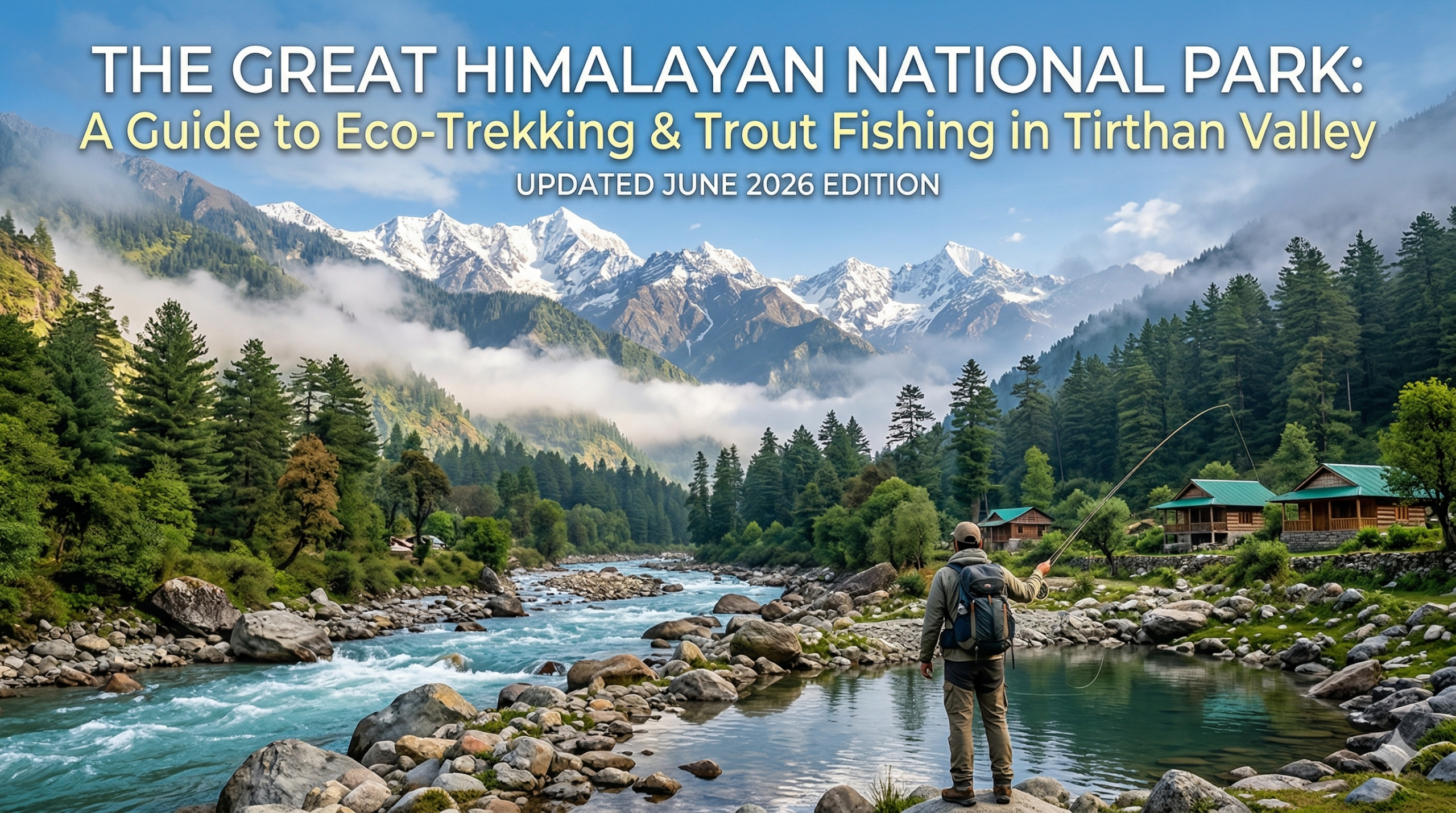
Welcome to Tirthan Valley, the gateway to one of India’s most pristine natural wonders: The Great Himalayan National Park (GHNP). If you are tired of the commercial chaos of Manali or Shimla, this is your sanctuary. Located in the Kullu district of Himachal Pradesh, Tirthan Valley is a UNESCO World Heritage site known for its “slow travel” vibe, crystal-clear glacial waters, and some of the best trout fishing in Asia.
This guide is designed for the modern eco-conscious traveler. Whether you want to challenge yourself with high-altitude trekking or simply spend your days by the river with a fishing rod, we’ve gathered all the updated 2026 information you need. Let’s dive into why Tirthan is the ultimate “unplugged” destination.
Also Read:- Munsiyari: The Base Camp for Peace: Why This Uttarakhand Gem is Perfect for June
The Heart of the Park: Eco-Trekking in GHNP
Trekking in the Great Himalayan National Park is not just about walking; it is a lesson in biodiversity. Unlike other popular trails, GHNP follows a strict “no-impact” policy. There are no permanent structures, no shops, and no plastic allowed inside the core zone. This means you are stepping into a world that looks exactly as it did centuries ago.
The trails range from easy nature walks to the GHNP gate to strenuous multi-day expeditions like the Tirth Trek or the Pin Parvati Pass. In June, the meadows (Thachs) are carpeted in wildflowers, and the higher passes are finally clear of heavy snow. You’ll walk through dense forests of Horse Chestnut, Deodar, and Oak, often accompanied by the sound of the Tirthan River. For wildlife enthusiasts, this is the prime spot to see the Western Tragopan (one of the rarest birds in the world) or the elusive Himalayan Blue Sheep.
Essential Trekking & Park Data
| Feature | Details (Updated 2026) |
| Park Entry Fee | ₹50 (Indians), ₹200 (Foreigners) per day |
| Permit Office | Sai Ropa Forest Complex (Gushaini) |
| Popular Base Camp | Gushaini Village |
| Best Moderate Trek | Rolla to Shilt Thach (3-4 days) |
| Altitude Range | 1,500m to 6,000m |
| Mandatory | Registered Guide & Porter (arranged at Gushaini) |
Angler’s Paradise: Trout Fishing in the Tirthan River
If there is one thing Tirthan Valley is legendary for, it is Brown and Rainbow Trout. The river is fed by glacial melt from the GHNP, providing the cold, oxygen-rich water these fish need to thrive. The valley has a 45-km stretch of river dedicated solely to angling, making it a world-class destination for fly-fishing.
Fishing here is a regulated sport to ensure the population remains healthy. You must obtain a daily permit from the Fisheries Department. The 2026 season officially runs from March 1st to October 31st. Most eco-resorts in the valley practice a “Catch and Release” policy to promote sustainability. Imagine standing in hip-deep cool water, the sun filtering through the pine trees, and the thrill of a 2-kg Brown Trout tugging at your line—that is the Tirthan experience.
Fishing Logistics & Rules
| Feature | Details |
| Fishing Permit Fee | ₹100 per day per rod (Local Office) |
| Fishing Season | March 1 to October 31 |
| Equipment | Available for rent at “Himalayan Trout House” or local homestays |
| Best Spots | Nagini, Gushaini, and the Palachan stream |
| Daily Limit | Usually 6 fish (if not practicing catch & release) |
| Pro Tip | Use local guides to find the hidden “pools” where the big fish hide. |
Expert Review: The Tirthan Experience
We consulted with Himalayan conservationists and veteran trekkers to give you a balanced look at this destination.
The Expert Verdict: “Tirthan Valley is a rare success story of community-led eco-tourism. Unlike other valleys that have succumbed to concrete hotels, Tirthan has stayed true to its roots with wooden homestays and forest rest houses. It is perfect for someone who values silence over nightlife. The trekking is raw—don’t expect paved paths or tea stalls every kilometer. It is a true wilderness experience. If you are a beginner, stick to the Eco-zone hikes; if you are an expert, the crossing into Spiti via Pin Parvati is a bucket-list item.”
Pros and Cons of Tirthan Valley
| Pros | Cons |
| Pure Air & Water: No industrial pollution or heavy traffic. | Difficult Access: 12-hour drive from Delhi; road to Gushaini can be rough. |
| Authentic Culture: Stay in traditional ‘Kath-Kuni’ architecture homes. | No Luxury Malls: Limited shopping and no high-end luxury chain hotels. |
| World-Class Fishing: Best trout waters in Northern India. | Slow Internet: Don’t rely on it for “Work from Home”; signals are weak. |
| Eco-Friendly: A guilt-free travel experience that supports locals. | Permit Hassle: You must visit offices in person for permits. |
What to Do and What Not to Do
Tirthan is a sensitive ecosystem. To ensure you have the best time while protecting the valley, follow these rules:
✅ What to Do
- Hire Local Guides: This is the best way to support the local economy and stay safe on unmarked trails.
- Carry Cash: There are very few ATMs (mostly in Banjar), and they often run out of cash.
- Pack for Rain: Even in June, mountain weather is unpredictable. Always carry a poncho.
- Visit the Chhoie Waterfall: A short 45-minute hike from Sai Ropa that offers a stunning reward.
- Try the Local Siddu: A steamed Himachali bun served with ghee—perfect after a long day of trekking.
❌ What Not to Do
- No Plastic in the Park: Forest guards check bags. If you take it in, you must bring it out.
- Don’t Fish Without a Permit: It is a punishable offense with heavy fines and equipment confiscation.
- Don’t Use Soaps in the River: The river water is used for drinking downstream. Use biodegradable products.
- Avoid Driving After Dark: The roads are narrow and landslides, though rare in June, can happen.
- Don’t Rush the Trek: Altitude sickness is real. Spend at least one night in Gushaini (1,600m) to acclimate.
Also Read:- Cheapest International Trips from India in 2026 Under ₹50,000
