
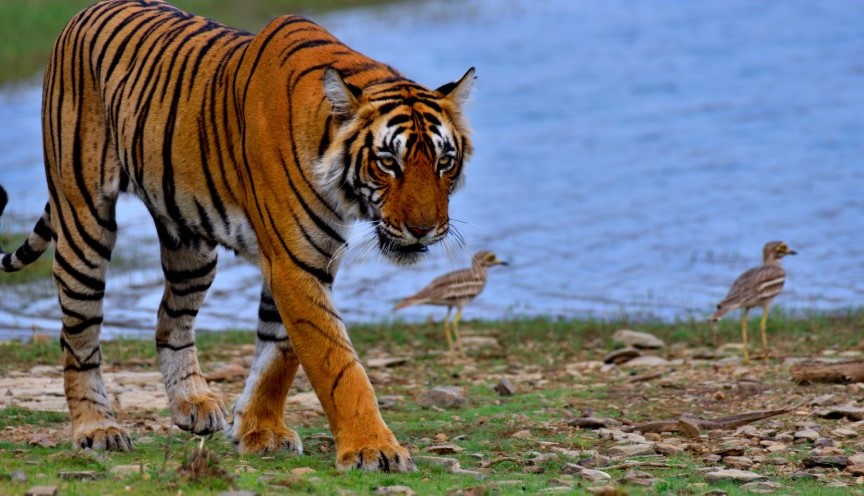
What should you know before planning a tiger safari in Ranthambore? Simply this: it is a real wildlife experience, not a guaranteed tiger sighting. A good trip depends on a few things coming together: your permit and zone, the vehicle you pick, the season you travel in, and the resort in Ranthambore you choose to stay at too. Get these right before you book, and the rest of the trip tends to fall into place on its own.
A Tiger Sighting Is Never Guaranteed, and That’s Worth Knowing Early
Here’s the true bit nobody likes saying upfront. Even in a park as famous as Ranthambore, nobody can promise you will see a tiger. Sightings depend on weather, the animal’s own mood and movement, and a fair bit of plain luck.
What helps is your naturalist reading the signs. Alarm calls from deer, fresh pugmarks on the track, langurs going quiet in the trees- all of it points to something in the place of a safari; this is how experienced guides build up a picture of where a tiger might be.
And here is a thought worth holding onto. If you go in only hoping to spot a tiger, you might miss everything else. Ranthambore is full of life beyond the tiger, deer, crocodiles, birds, and an old fort watching over it all.
How Ranthambore’s Safari Zones and Permits Work
Ranthambore is divided into ten numbered safari zones. Zones 1 to 5 sit closer to the historic core of the park, near the main lakes and the old fort, and have generally had a longer track record of tiger activity. Zones 6 to 10 lie further out, hillier and quieter, with their own charm even if sightings have historically been less frequent there. So, which zones perform best can genuinely shift from year to year, so it is worth checking current information rather than trusting an old list. If you’re weighing up a luxury resort in Ranthambore for your stay, a good one can help you make sense of all this before you even book.
Here is the permit process:
- You book through an official online system, either the government portal directly or a recognised local agent
- You choose your date, safari shift (morning or evening), and vehicle type, gypsy or canter
- You submit ID details for every traveller, and these must match exactly on the day
- Payment is made in full upfront, and bookings are typically non-refundable
- Zone preference can sometimes be selected at booking, but it isn’t always guaranteed, some systems allocate zones closer to the date based on availability
Gypsy or Canter: Which Safari Vehicle Should You Choose?
This is worth deciding before you book, not after.
- Gypsy: seats around 6 people, easier to move through the park, feels more personal, generally the pick for photographers
- Canter: seats up to 20, works out cheaper per person, suits bigger groups and families
Neither one improves your odds of seeing a tiger. The choice really comes down to your budget, your group size, and whether you want a quieter, more flexible ride or a bigger shared one.
Common Ranthambore Safari Myths, Busted
A few things people believe that just aren’t quite true.
“There’s one best zone, and I need to get into it.” Zones shift in reputation over time. A zone that was quiet last year might be lively this year.
“Booking a safari means you’ll see a tiger.” As covered above, no safari can promise this, however good the zone or guide.
“One safari is enough.” Doing two or three drives, ideally across different times of day, genuinely improves your chances and gives you a fuller picture of the park.
How the Season Changes Your Ranthambore Safari
The time of year changes the whole feel of a safari.
October to February brings cooler, more comfortable mornings, good for a relaxed first safari. March to June gets hot, but animals often move closer to shrinking water sources, which can work in your favour for sightings. The monsoon months bring some closures for the park to rest, though the exact dates and which zones are affected can vary by year, so it is worth checking before you plan around them.
Safari timings themselves shift with sunrise and sunset too, so always confirm your reporting time close to your actual travel date rather than assuming a fixed slot.
What to Budget Before Booking Your Safari
Safari costs depend on your vehicle choice, the season, and which booking route you use. A canter generally costs less per person than a gypsy, simply because more people share the vehicle and its fee.
But don’t just budget for the permit. Think of your stay, transfers to and from the gate, and meals too. Looking at the whole trip cost upfront, rather than just the safari fee, gives you a far more realistic picture before you commit.
Where You Stay Can Make Safari Days Easier
Safari mornings start early, often before sunrise, and evening drives can end close to dusk. Staying close to the gate cuts down on travel time both ways, which matters more than people expect once they’re doing it.
A good place to stay does more than just offer a bed. Look for help with safari coordination, proper transfers, meal timings that match your safari schedule, and a calm space to rest between drives.
This is where Ranthambore Tiger Machan fits in naturally. Close to the park boundary, it is built around exactly this kind of schedule: early starts that don’t eat into your sleep, and evenings that feel like genuine rest rather than another long drive. Among the places to stay in Ranthambore, proximity and a pace that matches the safari day make a real difference to how the whole trip feels.
What to Carry and What to Expect on Safari Day
Keep this simple:
- Neutral or earth-toned clothing, nothing bright
- A warm layer for cool mornings
- Sunscreen, a cap, and sunglasses
- Water and binoculars
- Camera gear, if you’re bringing it
And once you’re inside the park, follow your guide’s instructions, keep noise down, and give the wildlife its space. This isn’t just etiquette; it genuinely improves everyone’s chances of a good sighting.
Final Thought: Plan for the Forest, Not Just the Tiger
A good Ranthambore trip comes from getting the basics right early: understanding how zones and permits work, picking the right vehicle, going in with honest expectations, and choosing a place to stay that fits the rhythm of a safari day. Do that, and whether or not a tiger shows up, you’ll still come away with a trip worth remembering.
Frequently Asked Questions
Q. How far in advance should I book a Ranthambore safari?
Ans. There’s no single answer here. It really depends on the season and which booking system you end up using; it could be a few weeks out, or it could need to be much earlier if you’re eyeing peak dates. Your safest bet is just checking the current official booking window right before you plan, since this tends to shift.
Q. Which season is best for a Ranthambore tiger safari?
Ans. Depends on what you’re going for. Winter’s more comfortable, with easier mornings. Summer’s rougher heat-wise, but animals tend to cluster around water, so sightings can improve. Just keep in mind the park shuts for part of the monsoon too.
Q. What should I carry for a Ranthambore safari?
Ans. Neutral-coloured clothes, something warm for the early chill, sun protection, water, and a pair of binoculars. That covers most people just fine.
