
Traveling across India is a dream for many students. It’s a country of incredible diversity, with stunning landscapes, vibrant cultures, and delicious food. But for a student on a tight budget, the thought of exploring this vast nation can seem daunting. However, with careful planning and smart choices, it’s absolutely possible to experience the magic of India on just 1500 INR a day! This guide is specifically designed for students looking to embark on an unforgettable and affordable summer adventure in India. We’ll break down the costs, provide practical tips, and show you how to make the most of your budget without compromising on the experience.
Also Read:- Kashmir in Bloom: Srinagar Tulip Festival Guide 2026 (Peak Season)
Section 1: The Ultimate Budget Breakdown: Making 1500 INR Work
Understanding Your Daily Budget
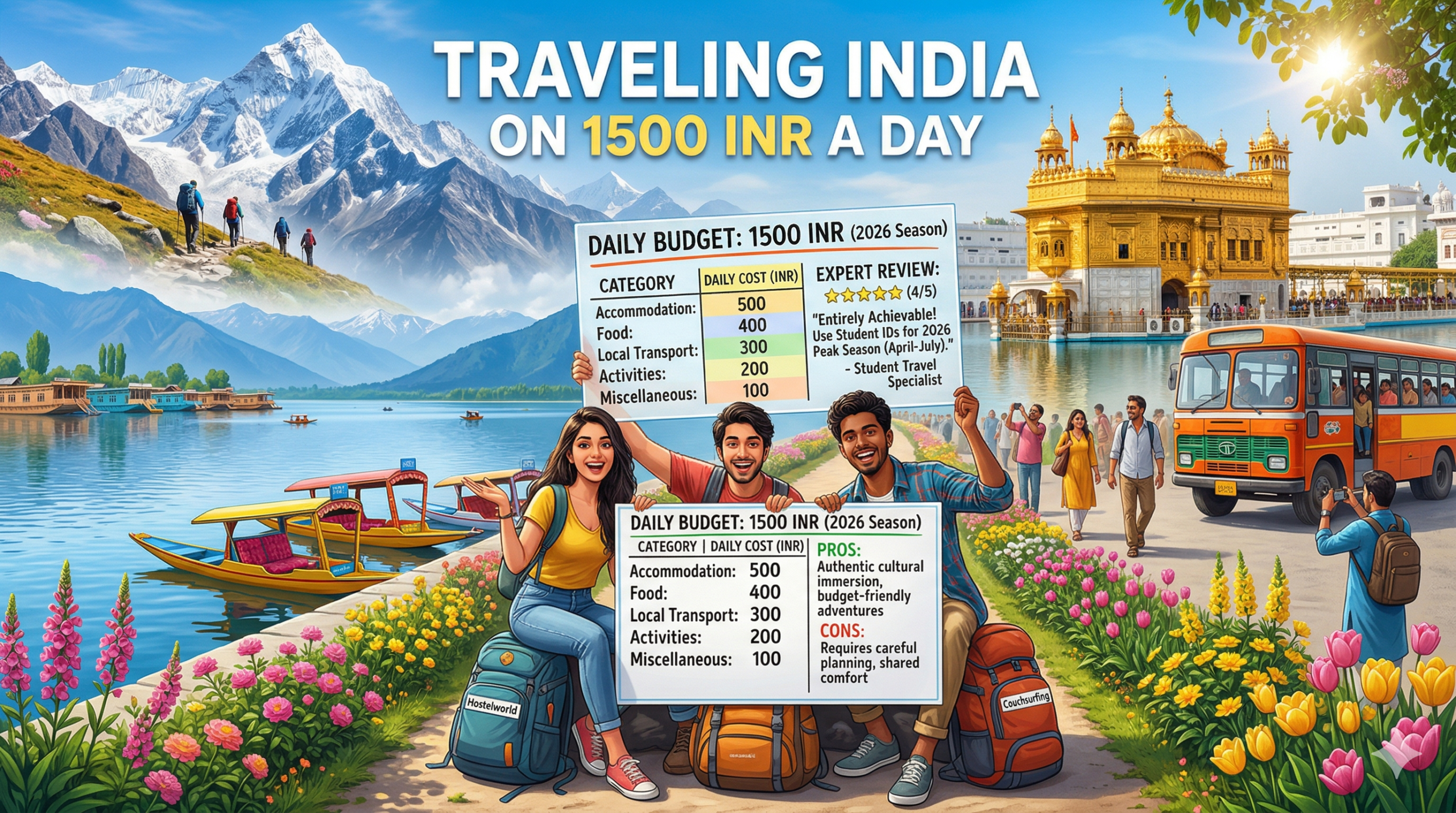
To make 1500 INR a day work, you need a realistic breakdown of your expenses. This budget is achievable, but it requires conscious spending and a willingness to embrace the local way of life. Here’s a typical daily budget allocation:
- Accommodation (500 INR): This is your biggest daily expense. Your best bet is to stay in hostels, guesthouses, or homestays. These options are not only affordable but also great for meeting fellow travelers. Many hostels offer dorm beds for as low as 300-400 INR, especially in smaller towns and off-season.
- Food & Drinks (400 INR): India is a paradise for street food and affordable eateries. A substantial meal at a local ‘dhaba’ (roadside eatery) can cost around 100-150 INR. Embrace the street food culture – a delicious plate of momos, samosas, or a refreshing glass of lassi won’t break the bank. Carry a reusable water bottle to save on purchasing plastic bottles.
- Local Transportation (300 INR): Use public transport whenever possible. Local buses, shared auto-rickshaws, and the extensive Indian Railways network are your best friends. A single bus ride or a short auto-rickshaw trip will typically cost between 10-50 INR.
- Activities & Sightseeing (200 INR): While some major monuments have higher entry fees, many parks, temples, and museums are either free or have a nominal fee. Look for free walking tours or explore local markets. Prioritize the experiences that matter most to you.
- Miscellaneous (100 INR): This is for essentials like toiletries, small souvenirs, or unexpected expenses. It’s always good to have a little buffer.
Important Note for the 2026 Season: Prices can fluctuate, and with the growing popularity of tourism, expect slightly higher costs in major cities and popular tourist hubs. This budget is based on 2026 estimates and assumes you’ll be traveling smart, not in luxury. In 2026, the cost of living and transportation might be slightly higher than in previous years, but the core principles of budget travel remain the same.
Section 2: Smart Savings: Insider Tips for Students
Leverage Your Student Status
As a student, you’re entitled to various discounts that can significantly reduce your travel costs. Always carry your valid student ID card.
- Monument Entry Fees: Many national monuments and museums offer heavily discounted entry fees for students. For example, the entry fee to a major fort could be 500 INR for adults but only 100 INR for students with a valid ID.
- Train & Bus Bookings: While student concessions on train tickets are not always guaranteed or straightforward, it’s always worth inquiring at the booking counter. Some private bus operators might also offer student discounts.
- Cultural Shows & Events: Look for student rates for cultural performances, workshops, and other events.
Embrace the Sharing Economy
- Couchsurfing: If you’re adventurous, Couchsurfing is a great way to stay with locals for free. It’s a fantastic way to experience authentic Indian hospitality and gain local insights.
- Carpooling: Use apps like BlaBlaCar or local ride-sharing groups to find rides between cities. This can often be cheaper than taking a train or bus, and you might make some new friends along the way.
- Group Travel: Traveling with a few friends allows you to split costs for accommodation, meals, and local transport, making your individual share significantly lower.
Section 3: Destinations for Budget Travelers
Beyond the Golden Triangle
While Delhi, Agra, and Jaipur are popular, they can be more expensive. For the 2026 season, consider exploring less-frequented but equally captivating destinations that are friendlier to your wallet.
- The Himalayan States (Himachal Pradesh, Uttarakhand): These regions offer stunning mountain scenery, charming hill stations, and excellent trekking opportunities. Small towns like Kasol, Old Manali, or Rishikesh are popular with backpackers and offer plenty of affordable hostels and guesthouses. Enjoy breathtaking views without the hefty price tag.
- The Spiritual Heartlands (Varanasi, Amritsar): Experience the spiritual and cultural depth of India without spending a fortune. Affordable accommodation is plentiful, and food costs are generally low. Witnessing the Ganges Aarti in Varanasi or visiting the Golden Temple in Amritsar are powerful and largely free experiences.
- The Coastal Vibe (Goa’s Northern Beaches, Gokarna): Skip the luxury resorts and head to the northern beaches of Goa or the laid-back town of Gokarna. Budget-friendly shacks, hostels, and local eateries abound. Enjoy the sun, sand, and sea without overspending.
- The Historic Towns of Rajasthan (Bikaner, Bundi): If you’re keen on exploring Rajasthan, move beyond the popular cities and discover gems like Bikaner or Bundi. These towns boast beautiful architecture, historical significance, and a more authentic feel, often with lower prices for accommodation and food.
Section 4: Expert Review and Practical Advice
Expert Review (Student Travel Specialist):
“The 1500 INR a day budget for students is a challenging but entirely achievable target for the 2026 summer season in India. The key is to avoid tourist traps, embrace local experiences, and plan meticulously. Students should leverage their IDs at every opportunity. The 2026 season might see a marginal increase in transportation and popular hostel rates, but the core strategy of staying in shared dorms, eating at local ‘dhabas’, and using public transport is the way to make it work. It’s not just about saving money; it’s about a more authentic and immersive travel experience. Be prepared for some compromises in comfort, but the memories will be priceless.”
Key Budget Travel Comparison (2026)
| Feature | Details for Budget Traveler | Est. Daily Cost (INR) |
| Accommodation | Hostels, Guesthouses, Dorm Beds | 300 – 600 |
| Food | Street Food, Local Dhabas, Thalis | 300 – 500 |
| Transportation | Local Buses, Shared Auto-Rickshaws, Second Seating Trains | 200 – 400 |
| Activities | Parks, Free Walking Tours, Student Monument Fees | 100 – 300 |
| Total Daily Budget | 1000 – 1800 |
Section 5: The “Golden Rules” for Budget Travel: Do’s and Don’ts
To make your trip smooth and successful, follow these simple guidelines.
What to DO:
- Do Book in Advance: Especially during peak season or for popular routes, book your train tickets and hostel beds a few days or weeks ahead to get the best prices. Use apps like IRCTC for trains and Hostelworld or Booking.com for accommodation.
- Do Be Flexible: If a popular destination is too expensive, look for alternatives nearby. Often, the smaller, less-known towns offer more authentic experiences at lower costs.
- Do Negotiate (Respectfully): For auto-rickshaw rides and shopping in local markets, a bit of friendly haggling is expected. Start by asking for a fair price and go from there.
- Do Respect Local Customs: Dress modestly, especially when visiting religious places. Learn a few basic phrases in the local language; it goes a long way in connecting with people.
What NOT to DO:
- Don’t Fall for Touts: Be wary of overly helpful strangers who approach you at train stations or tourist spots, offering deals on hotels or tours. They often work on high commissions.
- Don’t Be Afraid of Street Food: While being mindful of hygiene is important, street food in India is often delicious and very safe, especially if you eat where the locals are eating. Just make sure the food is cooked fresh.
- Don’t Forget to Stay Hydrated: The Indian summer can be intense. Carry a reusable water bottle and fill it up with filtered water whenever possible. Avoid tap water.
- Don’t Overpack: Traveling light makes it easier to use public transport and walk short distances, saving you money on taxis and auto-rickshaws.
Also Read:- Beyond Shimla: 5 hidden hamlets in Himachal (like Kalpa and Shoja) for a quiet May.
Traveling India on a 1500 INR a day budget is more than just a money-saving exercise; it’s an opportunity to engage with the country on a much deeper level. You’ll meet incredible people, experience a variety of cultures, and create memories that will last a lifetime. So, pack your bags, carry your student ID, and get ready for an unforgettable adventure. With a little planning and a lot of enthusiasm, you’re about to embark on the trip of your dreams!
