
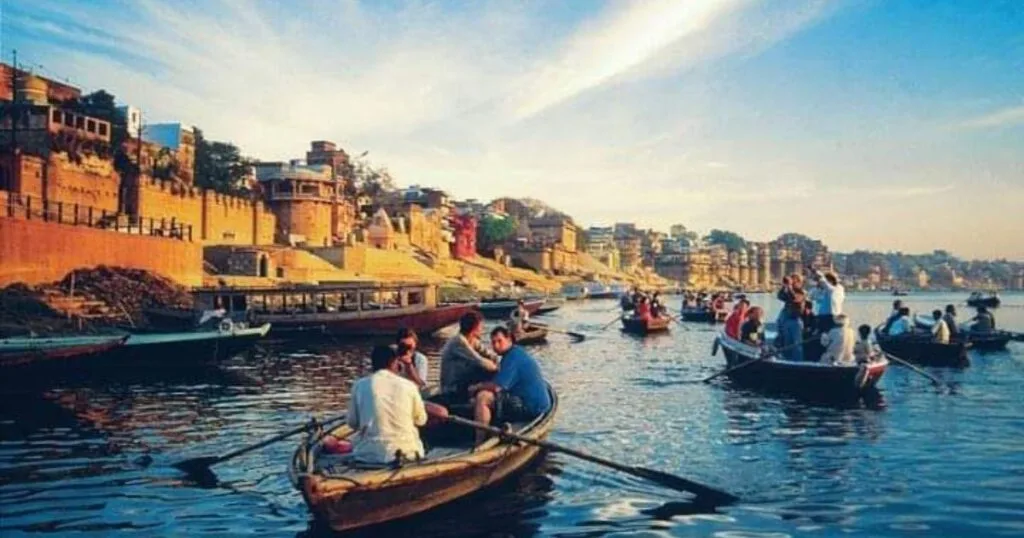
Varanasi, the spiritual capital of India, is best experienced from the water. A boat ride on the sacred Ganges is more than just a tourist activity; it is a front-row seat to the cycle of life, death, and rebirth that defines this ancient city. Whether you are watching the sun rise over the horizon as the city chants its morning prayers or witnessing the fiery spectacle of the Ganga Aarti at night, the river is where the soul of Benares truly resides. In 2026, the boating scene has evolved with more luxury options and structured pricing, but the essence remains as timeless as ever.
Read Also:- Budget Challenge: How I Did Delhi-Varanasi in 3 Days Under ₹5,000
The Ultimate Price Guide for 2026
Navigating boat prices in Varanasi can be tricky. There are two main pricing systems: the Official Government Rates (often displayed on boards at major ghats) and the Local Negotiation Rates. While government rates aim for transparency, most travelers prefer negotiating directly with boatmen for a better deal. Generally, prices vary based on the type of boat (hand-rowed vs. motorized), the time of day, and the duration of the trip.
2026 Price Breakdown Table
| Boat Type | Capacity | Standard Price (1 Hour) | Peak Time Price (Aarti/Sunrise) |
| Shared Row Boat | 10–15 Pax | ₹150 – ₹250 per person | ₹300 – ₹500 per person |
| Private Row Boat | 2–4 Pax | ₹500 – ₹800 total | ₹1,000 – ₹1,500 total |
| Small Motor Boat | 6–8 Pax | ₹1,500 – ₹2,500 total | ₹3,000 – ₹4,500 total |
| Luxury Cruise | 50+ Pax | ₹700 – ₹900 (Upper Deck) | ₹1,200 – ₹2,500 (Event-based) |
Pro Tip: In 2026, many boatmen accept UPI payments (Paytm/Google Pay), but always carry small denominations of cash for “tips” or small offerings like flower diyas.
Sunrise Boat Ride: The Spiritual Awakening
The Sunrise Boat Ride, often called the “Subah-e-Banaras” experience, is widely considered the best time to be on the river. Starting around 5:00 AM or 5:30 AM (depending on the season), the city is bathed in a soft, ethereal golden light. This is when the ghats are most active with locals performing their daily Sandhya Vandanam, taking holy dips, and offering prayers to the sun.
Why Sunrise is Special
- The Light: For photographers, the “Golden Hour” in Varanasi is unmatched. The reflection of the orange sun on the ancient stone facades of the ghats creates a mystical glow.
- The Rituals: You will see the morning Aarti at Assi Ghat, followed by classical music and yoga sessions.
- The Silence: Before the city’s chaotic traffic begins, the only sounds you’ll hear are the rhythmic splashing of oars and distant temple bells.
Expert Review: Sunrise vs. Sunset
Expert Verdict: If you can only do one, choose Sunrise. While the evening Aarti is spectacular, the morning ride offers a more authentic glimpse into the spiritual life of the city without the crushing crowds and noise of the evening motorized boats.
Luxury Cruises in Varanasi: A New Era
If you prefer comfort over the traditional wooden plank seating, Varanasi now offers world-class luxury cruises. Vessels like the Alaknanda and Annie Besant provide a climate-controlled, stable environment to view the 84 ghats. These are perfect for elderly travelers or those looking for a “dinner-and-a-show” vibe.
Features of Luxury Cruises
- Climate Control: Fully air-conditioned lower decks.
- Amenities: On-board bio-toilets, snacks, and sometimes live traditional music or storytelling.
- Safety: These are the safest options, equipped with modern life-saving gear and stable double-decker designs.
Pros and Cons of Luxury Cruises
Pros:
- Extremely comfortable and safe for families.
- No need to haggle; fixed pricing and online booking.
- Clear views of the Aarti from a heightened perspective.
Cons:
- Less “authentic” than being in a small rowboat.
- Cannot enter the narrow gaps between other boats during the Aarti.
- More expensive than local options.
Avoiding Scams: A Guide for the Smart Traveler
Varanasi is beautiful, but it can be overwhelming. “Touts” and “Lapkas” (unauthorized guides) often haunt the ghats looking for tourists to overcharge. Being aware of their tactics is the best way to stay safe.
Common Scams to Watch Out For
- The “Fixed Price” Lie: Touts might tell you that prices are fixed by the “Boat Union” at a very high rate (e.g., ₹4,000 for a rowboat). This is almost always false.
- The Manikarnika Photo Scam: People may approach you at the cremation ghat (Manikarnika) claiming you need a “photo license” or asking for money for “wood for the poor.” Do not pay them; there is no such license, and taking photos of cremations is strictly prohibited and disrespectful.
- The Changing Fare: Some boatmen will quote a price and later claim it was “per person” instead of “for the whole boat.” Always clarify this before stepping onto the boat.
What to Do vs. What Not to Do
| What to Do | What NOT to Do |
| Do negotiate and finalize the price before boarding. | Don’t take photos of the cremation rituals at Manikarnika. |
| Do wear a life jacket, especially on motorized boats. | Don’t believe touts who say your hotel is “closed” or “burned down.” |
| Do start your ride from Assi or Dashashwamedh. | Don’t pay the full amount upfront; pay at the end. |
| Do dress modestly (cover shoulders and knees). | Don’t dip your hands or feet in the water if it looks heavily polluted. |
Final Thoughts and Planning
A Varanasi boat ride is a core memory in the making. In 2026, the variety of options means there is something for every budget—from a ₹200 shared ride to a ₹15,000 private luxury booking for festivals like Dev Deepawali. The key is to stay calm, haggle with a smile, and focus on the spiritual energy of the river.
Expert Review Summary: For the best experience, book a Private Row Boat for sunrise to get close to the rituals, and consider a Luxury Cruise for the evening Aarti to avoid the chaotic boat-jams near the main ghat.
Would you like me to find the direct booking links or contact numbers for the verified luxury cruise operators in Varanasi?
Read Also:- A Guide to the Burning Ghats: Manikarnika and Harishchandra
