
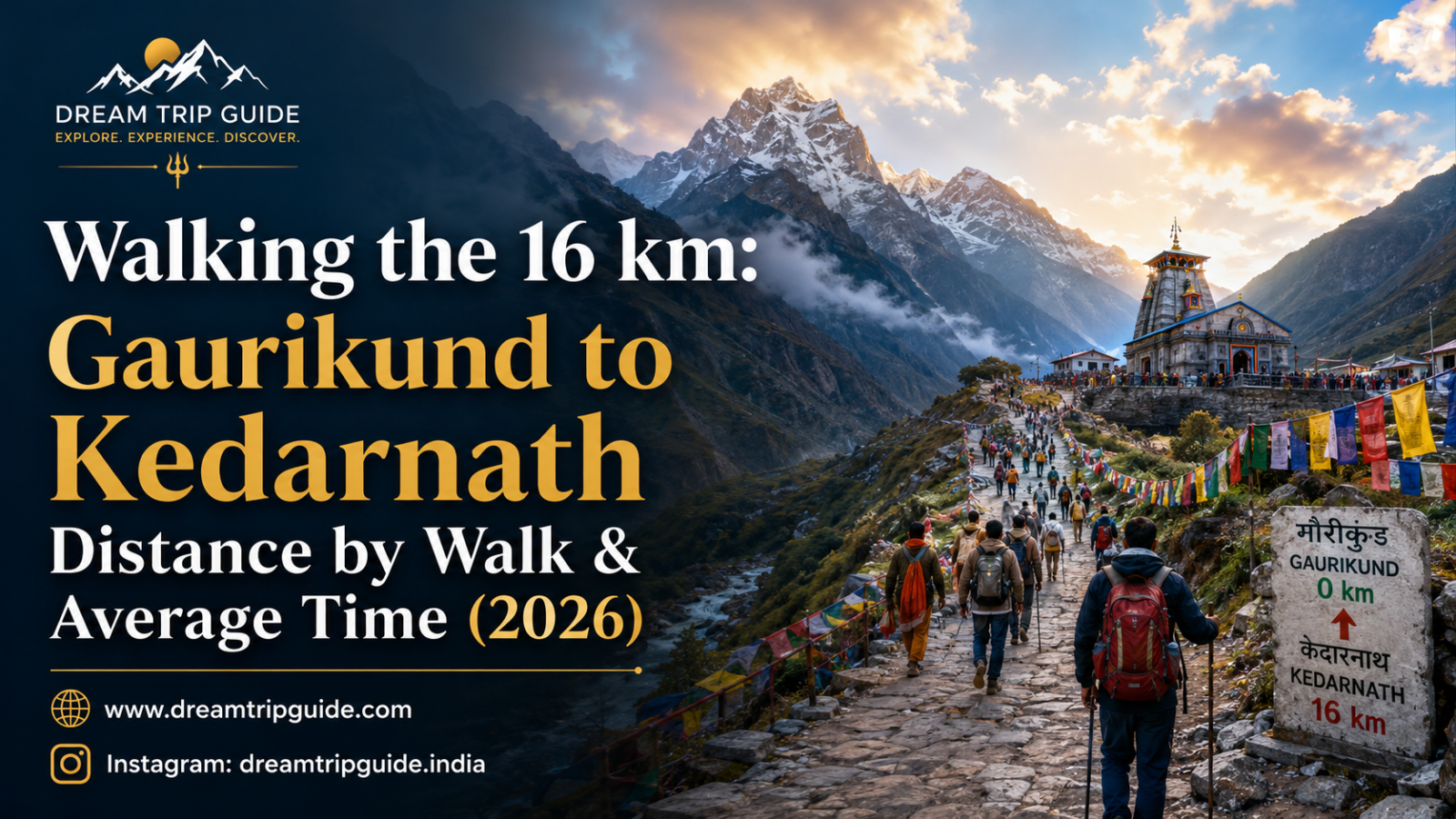
Planning to walk the 16km Kedarnath trek in 2026? Read our 3,000-word comprehensive guide on trek distance, hourly breakdown, altitude maps, and expert survival tips for a safe spiritual journey.
KEDARNATH WEATHER1. Decoding the 16 km Legend: The Reality of the Kedarnath Climb
The spiritual walk from Gaurikund to Kedarnath is not just a physical distance of 16 kilometers; it is a test of human endurance, faith, and lung capacity. Located at an altitude of 11,755 feet, the shrine is accessible only via a steep, winding stone path that was redesigned after the 2013 floods. In 2026, the trail has been widened and reinforced, but the challenge remains the same: you are ascending over 5,000 feet in a single day.
For a beginner, 16 km on a flat road takes about 3 hours. But in the Himalayas, the “Mountain Distance” rule applies. Every 1 km of steep ascent feels like 3 km of walking on a plain. The thin air reduces your oxygen intake, making your heart pump faster and your legs feel heavier. This section of our guide at DreamTripGuide focuses on the mental preparation required. Most people quit not because their legs gave out, but because their mind couldn’t handle the sight of the steep “Z-turns” ahead.
Understanding the terrain is the first step. The trek starts at Gaurikund (1,982 m) and ends at the Kedarnath Temple (3,583 m). The path is a mix of moderate slopes and punishingly steep stairs. In 2026, the administration has placed milestones every 500 meters, allowing you to track your progress. Remember, the goal is not to reach the top first, but to reach the top safely. Whether you take 6 hours or 12, the blessing at the end is the same.
🏔️ Kedarnath Yatra Checklist 2026: 12 Must-Have Items for a Successful Trek

- ✅Altitude Protection: Prevents breathlessness and headaches caused by low oxygen levels at Kedarnath top.
- ✅Instant Energy: Helps you recover faster during the steep 16km trek from Gauri Kund.
- ✅Lightweight: Fits easily in your side pocket and weighs almost nothing.

- ✅Unbeatable Grip: Anti-skid soles designed specifically for slippery mountain rocks and mud.
- ✅100% Waterproof: Keeps your feet dry during sudden rains or while crossing small streams.
- ✅Ankle Support: Prevents injuries on the uneven zig-zag paths of the Kedar valley.

- ✅Total Coverage: Covers you and your large backpack completely during heavy mountain rains.
- ✅Quick Dry: Much better than heavy raincoats; it's light and dries in minutes.
- ✅Windproof: Blocks the freezing cold winds that follow the rain at high altitudes.

- ✅Heat Retention: Advanced fabric that locks body heat even when the temperature drops to 0°C.
- ✅Odour Resistant: Can be worn for multiple days without feeling unhygienic.
- ✅Slim Fit: Fits comfortably under your regular clothes without looking bulky.

- ✅Cold Protection: Battery dies fast in cold weather; this ensures your phone stays alive for photos.
- ✅Massive Capacity: Charge your phone and camera 4-5 times fully during the trip.
- ✅Fast Charging: Don't waste time at charging points in tea stalls.

- ✅Knee Support: Reduces 25% of the pressure on your knees during the steep descent.
- ✅Better Balance: Essential for crossing slippery patches or walking in narrow trails.
- ✅Anti-Shock: Absorbs ground impact to prevent wrist and shoulder pain.

- ✅12H Hot: Keep hot water/tea ready to fight the freezing cold of the Himalayas.
- ✅BPA Free: Safe and healthy stainless steel that won't rust.
- ✅Strong Body: Survives accidental drops on rocky terrains easily.

- ✅Mountain Ready: Contains pain sprays, bandages, and altitude sickness tablets.
- ✅Lightweight: Small enough to fit in any backpack side pocket.
- ✅Must Have: Medical help is far away on the trek; be your own first responder.

- ✅Hands-Free: Essential for early morning treks (3 AM) so you can use trekking poles freely.
- ✅High Brightness: Powerful beam that covers up to 100 meters clearly.
- ✅Weatherproof: Continues to work even during rain or heavy mist.
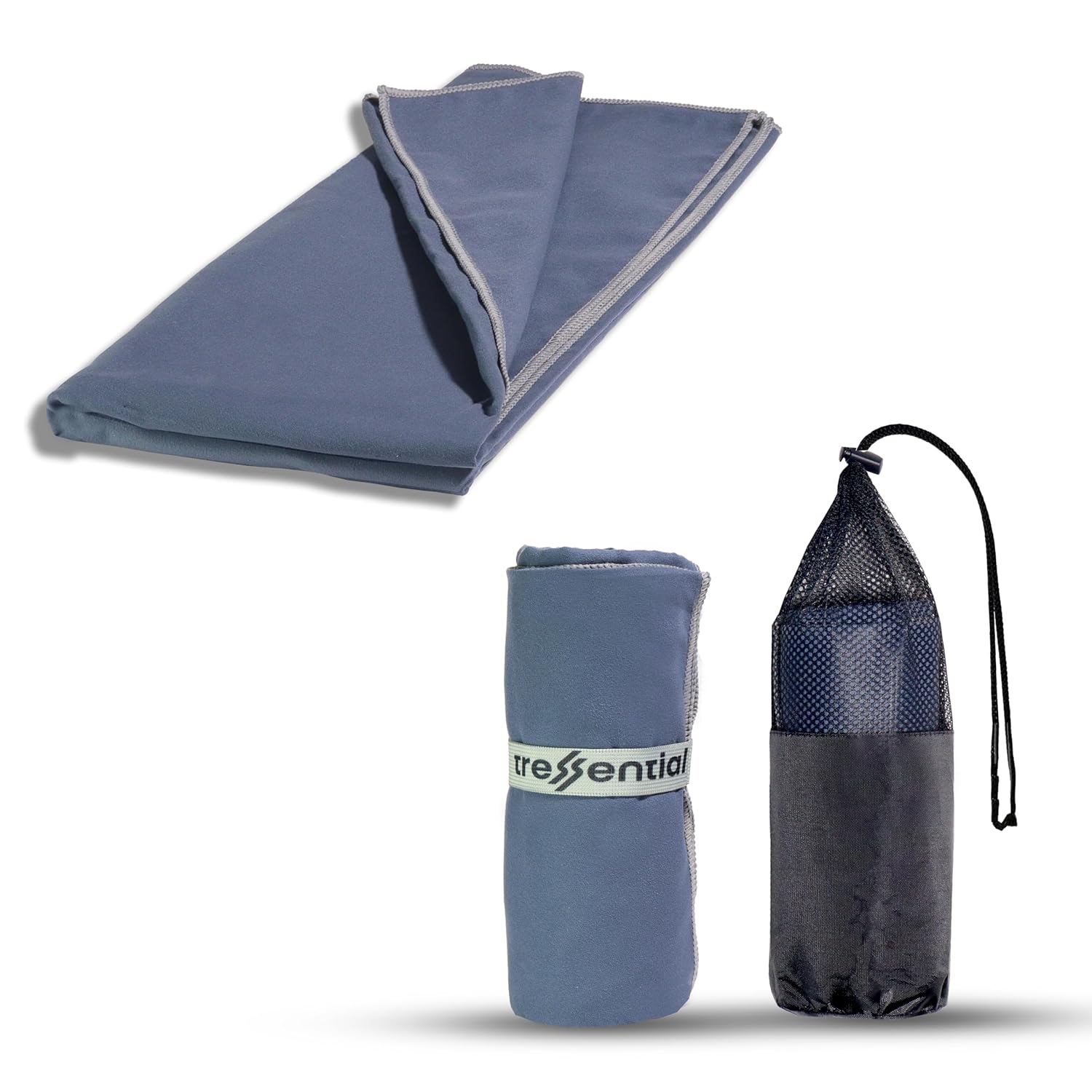
- ✅No Wet Smell: Dries in minutes so you don't carry a heavy, smelly towel in your bag.
- ✅Super Tiny: Folds into a small pouch, leaving more room for warm clothes.
- ✅Gentle: Ultra-soft fabric that is perfect for cold weather skin care.

- ✅High Altitude Protection: Himalayan sun is harsh and causes severe tanning & burns.
- ✅Non-Greasy: Doesn't feel oily while trekking or sweating.
- ✅Sweat Resistant: Stays on your skin even during high-intensity walking.

- ✅Dual Protection: Ponchos are good, but this ensures no water enters your bag.
- ✅Reflective Logo: Helps others see you in heavy mist or night treks.
- ✅Universal Fit: Fits perfectly on all 30L to 60L trekking backpacks.
2. Hourly Breakdown: Managing Your Time on the 16 km Trail
Timing is everything on the Kedarnath trek. If you start too late, you get stuck in the dark; if you rush too fast, you risk Acute Mountain Sickness (AMS). On average, a healthy adult takes 7 to 9 hours to complete the ascent and 5 to 6 hours for the descent. In 2026, the peak season rush means you might spend an extra 1 hour just navigating through the crowds and pony traffic.
We recommend the “4 AM Strategy.” Starting at 4:00 AM from Gaurikund allows you to cover the first 7 km (up to Bheembali) before the sun gets too harsh. The early morning air is fresh, and the trail is less congested. By 10:00 AM, you should ideally be crossing Linchauli, leaving only the final 5 km stretch. This schedule ensures you reach the temple by 1:00 PM or 2:00 PM, giving you enough time to check into your GMVN room, rest, and attend the glorious Evening Aarti.
Typical Trek Time Table (Ascent)
| Time Window | Segment | Distance Covered | Physical State |
| 04:00 AM – 06:00 AM | Gaurikund to Jungle Chatti | 0 – 4 km | High Energy, Fresh Air |
| 06:30 AM – 08:30 AM | Jungle Chatti to Bheembali | 4 – 7 km | Moderate Fatigue, Sun Rising |
| 09:00 AM – 11:30 AM | Bheembali to Linchauli | 7 – 11 km | High Fatigue (Steep Z-Turns) |
| 12:00 PM – 02:00 PM | Linchauli to Temple Base | 11 – 16 km | Low Oxygen, High Adrenaline |
3. The “Z-Turns” and Milestone Analysis
Between the 7th and 11th kilometer (Bheembali to Linchauli), you will encounter the infamous “Z-Turns.” These are sharp, zigzag paths designed to help you climb the vertical mountain face. While they are safer than climbing straight up, they are the most exhausting part of the 16 km. Each turn offers a resting bench, and in 2026, the government has installed solar-powered lighting for those who get delayed.
Milestones on this trek are your best friends. Every time you see a marker saying “Kedarnath 5 KM,” it provides a psychological boost. However, the last 2 kilometers from Rudra Point to the temple often feel like the longest. This is where the “Plaza” begins. The terrain flattens out, but because the altitude is now nearly 11,500 feet, your walking speed will naturally drop to a crawl. Use this time to hydrate and regulate your breathing; do not try to “sprint” to the temple.
Pros and Cons: Walking the Full 16 km
| Pros (Fayde) | Cons (Nuksan) |
| Spiritual Connection: Every step is a prayer; the sense of achievement is unmatched. | Physical Toll: Severe knee pain and muscle soreness for 3-4 days after. |
| Cost Saving: You save ₹3,000 – ₹5,000 on pony/helicopter fares. | Time Consuming: Takes up your entire day; less time for temple exploration. |
| Flexibility: You can stop at any waterfall or tea stall to enjoy the views. | Health Risks: High risk of AMS (oxygen drop) if not physically prepared. |
4. Expert Review: Physical Fitness and 2026 Trail Conditions
As a consultant managing DreamTripGuide, I’ve observed that 60% of trekkers are under-prepared. The 16 km walk is equivalent to doing 400 flights of stairs. In 2026, the trail condition is excellent—paved with non-slip interlocking tiles in many sections—but the sheer incline cannot be “paved away.”
Expert “Survive the Walk” Tips:
- The “Turtle” Pace: Walk slow. If you can’t talk while walking, you are going too fast. Your heart rate should stay steady.
- Trekking Poles: Do not consider these optional. Using two trekking poles shifts 20% of your body weight from your legs to your arms.
- Footwear Mastery: Never wear new boots. Use shoes you have “broken in” for at least 50 km of walking.
- Hydration Rule: Drink 500ml of water every hour, even if you don’t feel thirsty. Dehydration is the #1 cause of mountain sickness.
5. Critical Dos and Don’ts for the 16 km Walk
To ensure you reach Baba Kedar’s feet without an emergency evacuation, follow these non-negotiable rules.
What to Do (Kya Karein):
- DO Start Early: The 4:00 AM start is your biggest safety net.
- DO Layer Your Clothes: Wear a base layer (wicking), a fleece (warmth), and a jacket (wind/rain).
- DO Keep an Oximeter: Check your oxygen at Bheembali and Linchauli. If it’s below 80, rest for 30 mins.
- DO Walk on the Inner Side: Let the horses pass on the valley (cliff) side.
What NOT to Do (Kya Na Karein):
- DON’T Take Shortcuts: Many local paths look shorter but are extremely steep and prone to loose rocks. Stick to the main 16 km paved trail.
- DON’T Consume Heavy Meals: Eat light (Paratha/Maggi/Fruits). A heavy stomach diverted blood from your muscles to digestion.
- DON’T Overpack: Your bag should not exceed 5-7 kg if you are walking solo. Every gram feels like a kilo at 11,000 feet.
- DON’T Stop for Long Breaks: 10-minute breaks are fine. 30-minute breaks make your body cold and muscles stiff.
6. Gear Essentials for the 16 km Trek
Your success on the 16 km walk depends 50% on your legs and 50% on your gear. In 2026, the weather is more volatile than ever, meaning you might face sun, rain, and snow all in those 16 kilometers.
- The Poncho: Do not carry an umbrella; the mountain wind will break it. Use a high-quality 2000mm waterproof poncho that covers you and your bag.
- Socks: Wear “dual-layer” socks or a thin liner with a thick wool blend to prevent blisters.
- Energy Kit: Carry dates, almonds, and ORS. Glucose powder (Glucon-D) is an instant lifesaver when your energy dips at the 12th kilometer.
- First Aid: Keep Volini spray, Band-aids (for blisters), and tablets for altitude sickness (consult a doctor for Diamox).
FAQs
Q1. Is the Kedarnath trek 16 km or 22 km?
The official distance from the Gaurikund base stand to the temple is 16 kilometers. Older routes were shorter, but the post-2013 route is longer and safer.
Q2. Can a beginner walk 16 km to Kedarnath?
Yes, but with preparation. Start walking 5-8 km daily at home 1 month before the trip to build stamina.
Q3. What is the average time to walk 16 km to Kedarnath?
For an average adult, it takes 7 to 9 hours to go up and 5 to 6 hours to come down.
Q4. Is the trek open at night?
No. For safety, movement from Gaurikund is stopped after 1:30 PM. You must stay at Jungle Chatti or Bheembali if you are late.
Q5. Are there shortcuts on the 16 km route?
There are some “pedestrian-only” stairs that bypass the long pony loops, but they are much steeper. Use them only if your knees are strong.
Q6. What is the steepest part of the trek?
The 4 km stretch between Bheembali and Linchauli (the Z-turns) is the steepest and most exhausting.
Q7. Is water available on the trek?
Yes, there are government water points and private shops every 500m to 1km selling bottled and filtered water.
Q8. Can we do the 16 km trek in one day (Up and Down)?
It is physically possible but highly discouraged. Doing 32 km in a day at high altitude is dangerous for the heart and lungs.
Q9. Are there toilets on the 16 km walk?
Yes, clean eco-toilets are available at every major milestone (Jungle Chatti, Bheembali, Rambara, Linchauli).
Q10. Do I need a guide for the walk?
No, the trail is very well-marked and crowded. You just need to follow the paved path.
Connect with Us for Live Updates!
Planning your trek this week? For real-time weather alerts from the 16 km trail and stunning 2026 Yatra reels, follow our journey:
👉 Instagram ID: @dreamtripguide.india
For hotel bookings and full itineraries, visit DreamTripGuide. Har Har Mahadev! 🏔️👣✨
👉 Also Read – Book Kedarnath Package
