
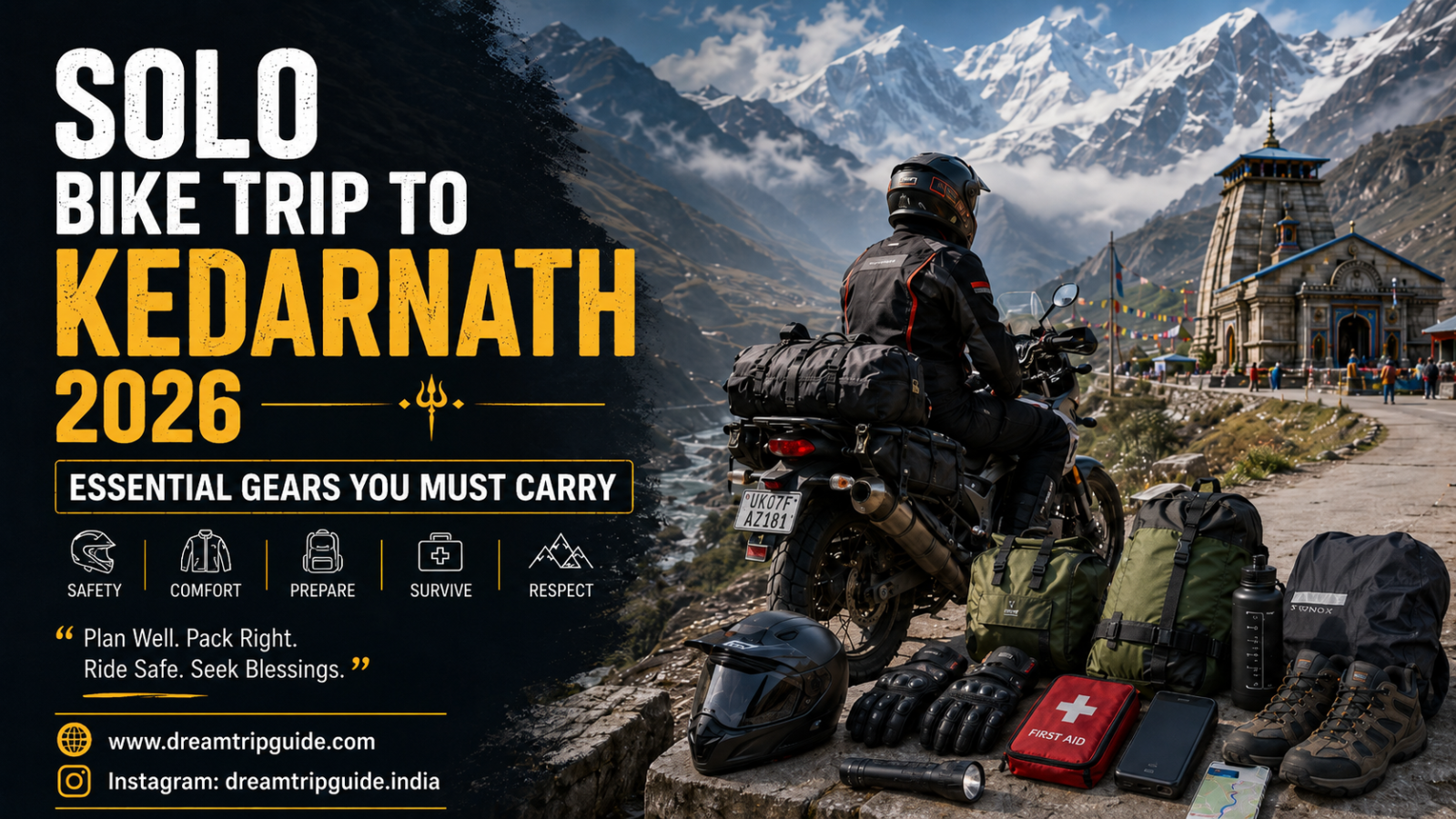
Planning a solo bike trip to Kedarnath? Discover the ultimate packing list for 2026, focusing on high-capacity power banks, waterproof gloves, and survival rain ponchos for a safe Himalayan ride.
KEDARNATH WEATHER1. The Solo Rider’s Mindset: Preparation for the Kedar Valley
Riding solo to Kedarnath is a dream for many, but the route from Rishikesh to Sonprayag is as dangerous as it is beautiful. With sharp hairpin bends, shooting stones, and sudden weather changes, your gear is your only partner. Unlike a group trip, a solo rider has to be self-sufficient. If your phone dies or your hands freeze, there is no one to immediately bail you out.
The most critical aspect of a solo trip is “Redundancy”—having a backup for everything. In 2026, the roads are better but the traffic has increased, making long riding hours mandatory. Your gear should focus on three things: Safety, Connectivity, and Weather Protection. This guide is tailored for the rider who manages everything alone, ensuring that even if you face a breakdown or a heavy downpour near Guptkashi, you have the right tools to survive and keep moving.
2. Stay Connected: Why a High-Capacity Power Bank is Non-Negotiable
On a solo bike trip, your phone is your GPS, your camera, and your emergency lifeline. However, cold weather drains batteries 30% faster, and using GPS constantly will kill your phone before you even reach Rudraprayag. This is where a 20,000mAh 33W Fast Charging Power Bank becomes the heart of your luggage.
You need a power bank that supports Power Delivery (PD 3.0) so you can charge your phone, your action camera (GoPro), and your Bluetooth intercom quickly during a 15-minute tea break. In 2026, many riders make the mistake of carrying cheap power banks that fail in sub-zero temperatures. At DreamTripGuide, we recommend gears with 12-layer circuit protection to handle the voltage fluctuations that happen in remote mountain homestays.
🏔️ Kedarnath Yatra Checklist 2026: 12 Must-Have Items for a Successful Trek

- ✅Altitude Protection: Prevents breathlessness and headaches caused by low oxygen levels at Kedarnath top.
- ✅Instant Energy: Helps you recover faster during the steep 16km trek from Gauri Kund.
- ✅Lightweight: Fits easily in your side pocket and weighs almost nothing.

- ✅Unbeatable Grip: Anti-skid soles designed specifically for slippery mountain rocks and mud.
- ✅100% Waterproof: Keeps your feet dry during sudden rains or while crossing small streams.
- ✅Ankle Support: Prevents injuries on the uneven zig-zag paths of the Kedar valley.

- ✅Total Coverage: Covers you and your large backpack completely during heavy mountain rains.
- ✅Quick Dry: Much better than heavy raincoats; it's light and dries in minutes.
- ✅Windproof: Blocks the freezing cold winds that follow the rain at high altitudes.

- ✅Heat Retention: Advanced fabric that locks body heat even when the temperature drops to 0°C.
- ✅Odour Resistant: Can be worn for multiple days without feeling unhygienic.
- ✅Slim Fit: Fits comfortably under your regular clothes without looking bulky.

- ✅Cold Protection: Battery dies fast in cold weather; this ensures your phone stays alive for photos.
- ✅Massive Capacity: Charge your phone and camera 4-5 times fully during the trip.
- ✅Fast Charging: Don't waste time at charging points in tea stalls.

- ✅Knee Support: Reduces 25% of the pressure on your knees during the steep descent.
- ✅Better Balance: Essential for crossing slippery patches or walking in narrow trails.
- ✅Anti-Shock: Absorbs ground impact to prevent wrist and shoulder pain.

- ✅12H Hot: Keep hot water/tea ready to fight the freezing cold of the Himalayas.
- ✅BPA Free: Safe and healthy stainless steel that won't rust.
- ✅Strong Body: Survives accidental drops on rocky terrains easily.

- ✅Mountain Ready: Contains pain sprays, bandages, and altitude sickness tablets.
- ✅Lightweight: Small enough to fit in any backpack side pocket.
- ✅Must Have: Medical help is far away on the trek; be your own first responder.
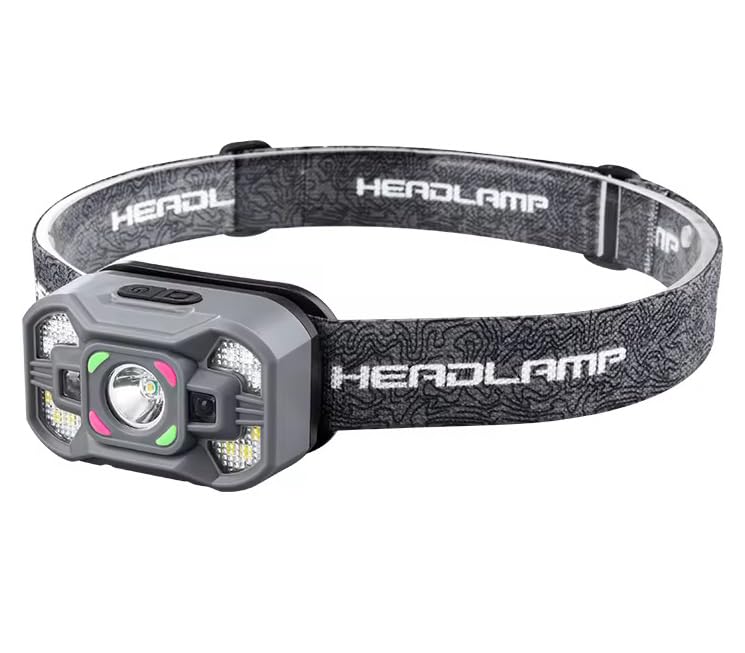
- ✅Hands-Free: Essential for early morning treks (3 AM) so you can use trekking poles freely.
- ✅High Brightness: Powerful beam that covers up to 100 meters clearly.
- ✅Weatherproof: Continues to work even during rain or heavy mist.
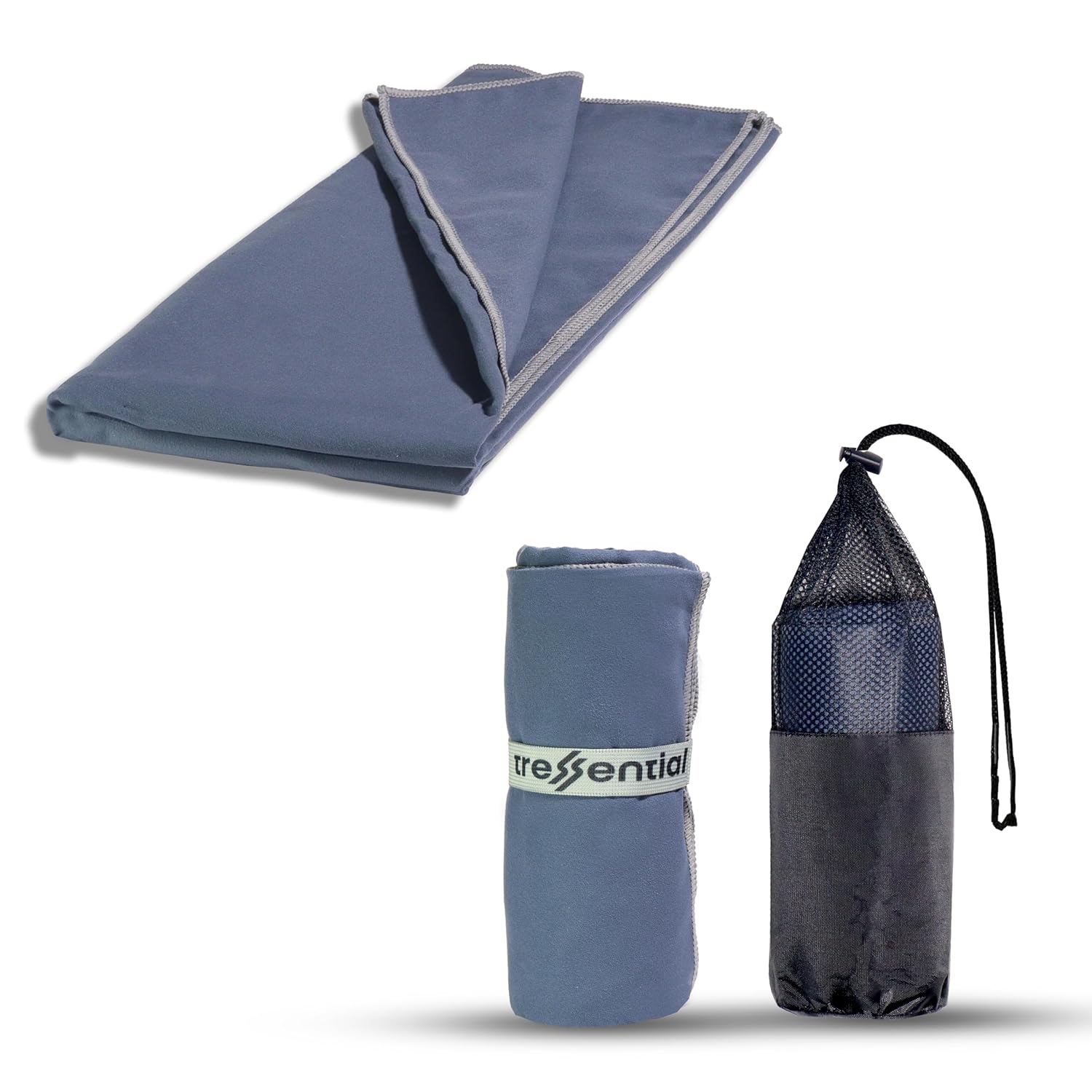
- ✅No Wet Smell: Dries in minutes so you don't carry a heavy, smelly towel in your bag.
- ✅Super Tiny: Folds into a small pouch, leaving more room for warm clothes.
- ✅Gentle: Ultra-soft fabric that is perfect for cold weather skin care.

- ✅High Altitude Protection: Himalayan sun is harsh and causes severe tanning & burns.
- ✅Non-Greasy: Doesn't feel oily while trekking or sweating.
- ✅Sweat Resistant: Stays on your skin even during high-intensity walking.

- ✅Dual Protection: Ponchos are good, but this ensures no water enters your bag.
- ✅Reflective Logo: Helps others see you in heavy mist or night treks.
- ✅Universal Fit: Fits perfectly on all 30L to 60L trekking backpacks.
Expert Choice: Power Bank Specifications
| Feature | Ideal Requirement | Why it’s needed? |
| Capacity | 20,000 mAh | At least 3-4 full charges for a smartphone. |
| Charging Speed | 33W Two-Way Fast Charge | Quickly recharges both the phone and the power bank. |
| Ports | Triple Output (Type-C + USB-A) | Charge phone, GoPro, and Intercom simultaneously. |
| Build | Anti-smudge / Rugged Texture | To prevent slipping from vibrating bike tanks. |
3. Grip and Warmth: Selecting the Right Riding Gloves
Your hands control the clutch and brake—if they go numb due to the biting cold of the Kedar Valley, you lose control of the bike. Standard city gloves will fail you the moment you cross Vyasi. For a Kedarnath trip, you need Thermal Waterproof Riding Gloves with proper knuckle protection.
In 2026, we suggest a “Two-Glove Strategy.” Carry one pair of lightweight mesh gloves for the humid heat of the plains (Delhi to Rishikesh) and one pair of heavy-duty, insulated, waterproof gloves for the mountains. Look for gloves with touchscreen-sensitive fingertips so you don’t have to take them off every time you need to check Google Maps. Remember, a solo rider cannot afford a slip-up because of “frozen fingers.”
Pros and Cons: Heavy-Duty Riding Gloves
| Pros (Fayde) | Cons (Nuksan) |
| Impact Protection: Knuckle guards protect in case of a fall. | Bulkiness: Harder to feel the switches initially. |
| Weather Shield: Keeps hands dry during unexpected rain. | Heat: Can get sweaty during the lower altitude ride. |
| Vibration Dampening: Reduces palm fatigue on long rides. | Drying Time: If soaked from inside, they take long to dry. |
4. The Ultimate Shield: Why a Rain Poncho Beats a Raincoat
Traditional two-piece rainsuits are great, but for a bike tripper, a 3-in-1 Tactical Rain Poncho is a survival tool. Why? Because a poncho is spacious enough to cover you and your backpack at the same time. On a bike, if water seeps into your rucksack, your dry clothes are ruined, and you risk hypothermia.
A poncho with a PU 2000mm waterproof rating is essential for the torrential rains of June and September. It can also be used as a ground sheet if you need to inspect your bike’s underbelly or as a temporary tarp if you get stranded in an open area. It’s lightweight (approx 360g) and packs down smaller than a standard raincoat, saving precious space in your saddlebags.
5. Critical Checklist: Dos and Don’ts for Solo Riders
Riding solo means you are the rider, the mechanic, and the navigator. Follow these rules to ensure you reach Sonprayag safely.
What to Do (Kya Karein):
- DO Carry a Tool Kit: Basic spanners, a puncture kit, and a portable air inflator are mandatory.
- DO Layer Up: Use the 3-layer system (Base layer, Fleece, Riding Jacket).
- DO Offline Maps: Download the entire Rishikesh-Kedarnath route on Google Maps for offline use.
- DO Inform Someone: Share your “Live Location” via WhatsApp with a family member.
What NOT to Do (Kya Na Karein):
- DON’T Ride After Sunset: Himalayan roads have no streetlights; landslides and wildlife are invisible at night.
- DON’T Overload the Bike: Keep the weight balanced on both sides to prevent wobbling at high speeds.
- DON’T Ignore the Bike: Check oil levels and chain tension every morning at your stay.
- DON’T Rely on UPI: Carry at least ₹5,000 in cash for fuel and remote dhabas.
6. Expert Review: Gear Recommendations for 2026
As a technical consultant and rider, my review for 2026 is simple: Don’t compromise on quality for price. A cheap power bank that stops working at 5°C is useless. A poncho that tears in the wind is a liability.
The “Expert Survival” Kit
- Electronics: Use a high-quality 33W power bank. Connectivity is your biggest safety net.
- Safety: Use “Full Gauntlet” gloves. They provide better wrist protection during long Himalayan hauls.
- Vision: Always carry a clear visor for your helmet. Smoke or tinted visors are dangerous during evening rain or fog.
- Boots: Waterproof lace-up boots (like Bacca Bucci) are better than sneakers because they protect your ankles from the hot engine and cold rain.
People Also Ask (PAA) – FAQs
Q1. Can I ride my Pulsar 220 to Kedarnath?
Yes, Pulsar 220 is a capable bike. Just ensure your tires are in good condition and the chain is well-lubricated.
Q2. Is a 10,000mAh power bank enough?
For a solo trip, 20,000mAh is recommended. You need to charge multiple devices (phone, camera, intercom) over 2-3 days in case of power cuts.
Q3. Which gloves are best for Kedarnath?
Waterproof thermal gloves with knuckle protection are best. Look for brands that offer “Thinsulate” lining.
Q4. Should I buy a rainsuit or a poncho?
A poncho is better for covering your backpack, while a rainsuit is better for high-speed riding. Carry both if possible.
Q5. How many kilometers can I ride in a day in the mountains?
Limit yourself to 150-200 km per day. Mountain riding is much more tiring than highway riding.
Q6. Is there a petrol pump near Kedarnath?
The last major petrol pumps are in Guptkashi and Phata. Always top up your tank there.
Q7. Can I park my bike at Sonprayag?
Yes, there is a large authorized parking ground in Sonprayag. You have to park there and take a shuttle to Gaurikund.
Q8. What if my bike gets a puncture?
Always carry a tubeless puncture kit and a portable electric pump. Finding a mechanic in the evening is very hard.
Q9. Is riding to Kedarnath safe for solo travelers?
It is safe if you follow traffic rules and avoid riding at night. The local community is very helpful.
Q10. Do I need extra lights (Aux lights) on my bike?
While not mandatory, they are very helpful during foggy mornings or if you get slightly delayed in reaching your stay.
Connect with Us!
Planning your solo ride? For bike maintenance tips and live trail updates from the 2026 season, follow us:
👉 Instagram ID: @dreamtripguide.india
For the full 2026 Himalayan Gear Guide, visit DreamTripGuide. Ride hard, ride safe! 🏍️🏔️✨
👉 Also Read – Book Kedarnath Package
