
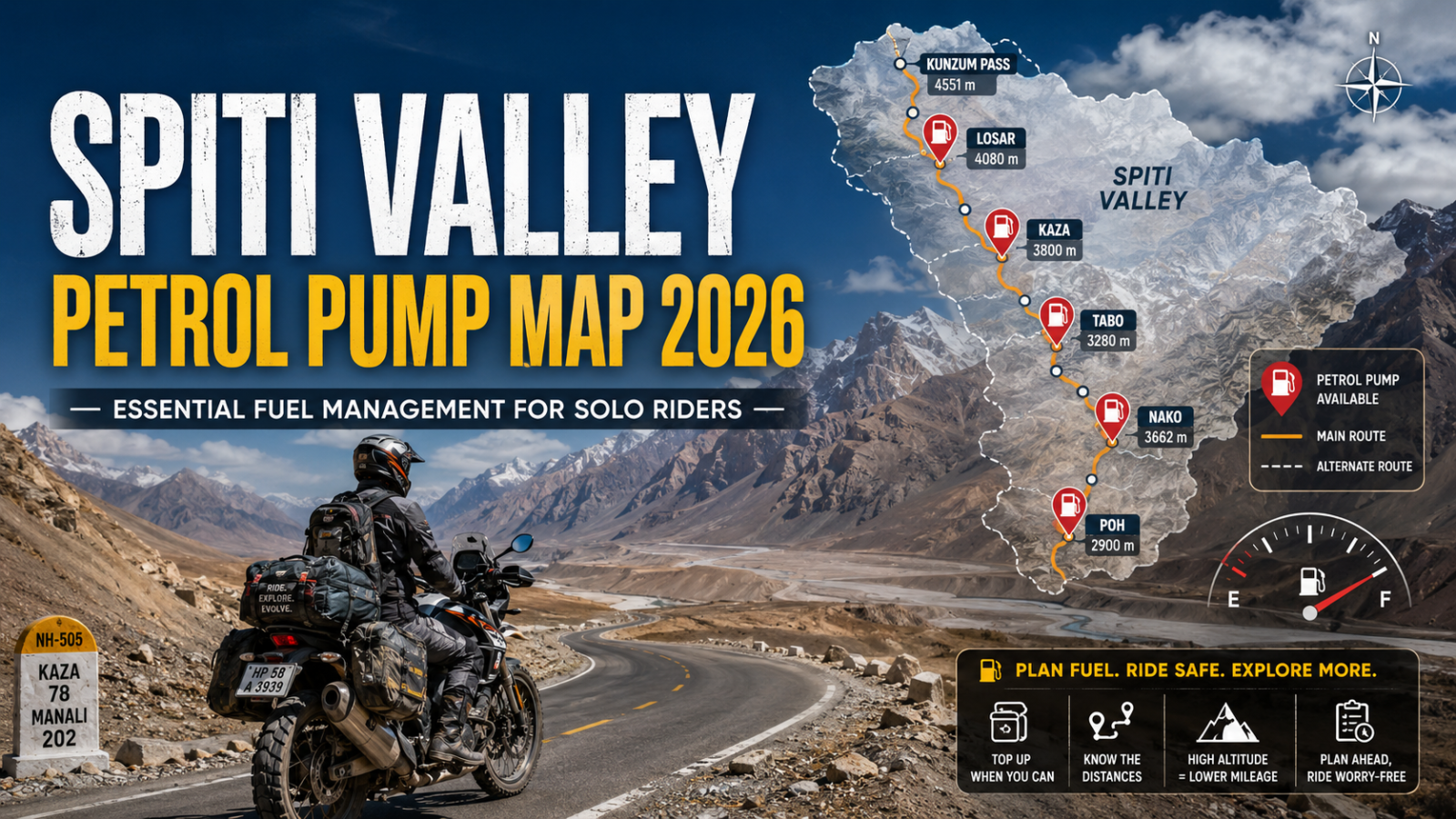
Don’t get stuck in a network-blind cold desert! Read our definitive 3,000-word Spiti Valley petrol pump map and fuel calculation manual for 2026. Master the Kaza supply realities and reserve carrying hacks.
1. The Cold Desert Vulnerability: Introduction to Spiti Fuel Logistics
Riding a motorcycle solo into the raw, wind-swept landscapes of Spiti Valley is a powerful experience that takes you through some of the highest inhabited villages in the world. With its towering barren mountains, historic monasteries like Key and Dhankar, and dangerous dirt tracks carved along the Spiti River, this cold desert calls out to riders looking for a true challenge. However, unlike the plains where a petrol pump is visible every few kilometers, executing a successful loop through Spiti Valley requires careful calculation. Here, your most critical resource isn’t your physical stamina or your bike’s peak horsepower—it is Fuel Management.
When solo riders search for a Spiti Valley petrol pump map, they aren’t just looking for casual location pins; they are trying to solve a real logistics puzzle. The distance between functional fuel stations in this high-altitude terrain can stretch over 200 kilometers across demanding trails like Kunzum La or the rugged water crossings of Malling Nallah. At DreamTripGuide, we look at travel through a lens of mechanical reality. The high-altitude air density drop means your engine’s combustion efficiency changes, directly impacting your real-world fuel economy. Running out of fuel in a sub-zero, network-blind mountain pass can turn into a serious survival situation. This 3,000-word master blueprint map serves as your financial and operational ledger, detailing every single fuel station, black-market availability spot, and reserve carrying technique to keep your wheels moving safely.
🏔️ Kedarnath Yatra Checklist 2026: 12 Must-Have Items for a Successful Trek

- ✅Altitude Protection: Prevents breathlessness and headaches caused by low oxygen levels at Kedarnath top.
- ✅Instant Energy: Helps you recover faster during the steep 16km trek from Gauri Kund.
- ✅Lightweight: Fits easily in your side pocket and weighs almost nothing.

- ✅Unbeatable Grip: Anti-skid soles designed specifically for slippery mountain rocks and mud.
- ✅100% Waterproof: Keeps your feet dry during sudden rains or while crossing small streams.
- ✅Ankle Support: Prevents injuries on the uneven zig-zag paths of the Kedar valley.

- ✅Total Coverage: Covers you and your large backpack completely during heavy mountain rains.
- ✅Quick Dry: Much better than heavy raincoats; it's light and dries in minutes.
- ✅Windproof: Blocks the freezing cold winds that follow the rain at high altitudes.

- ✅Heat Retention: Advanced fabric that locks body heat even when the temperature drops to 0°C.
- ✅Odour Resistant: Can be worn for multiple days without feeling unhygienic.
- ✅Slim Fit: Fits comfortably under your regular clothes without looking bulky.

- ✅Cold Protection: Battery dies fast in cold weather; this ensures your phone stays alive for photos.
- ✅Massive Capacity: Charge your phone and camera 4-5 times fully during the trip.
- ✅Fast Charging: Don't waste time at charging points in tea stalls.

- ✅Knee Support: Reduces 25% of the pressure on your knees during the steep descent.
- ✅Better Balance: Essential for crossing slippery patches or walking in narrow trails.
- ✅Anti-Shock: Absorbs ground impact to prevent wrist and shoulder pain.

- ✅12H Hot: Keep hot water/tea ready to fight the freezing cold of the Himalayas.
- ✅BPA Free: Safe and healthy stainless steel that won't rust.
- ✅Strong Body: Survives accidental drops on rocky terrains easily.

- ✅Mountain Ready: Contains pain sprays, bandages, and altitude sickness tablets.
- ✅Lightweight: Small enough to fit in any backpack side pocket.
- ✅Must Have: Medical help is far away on the trek; be your own first responder.
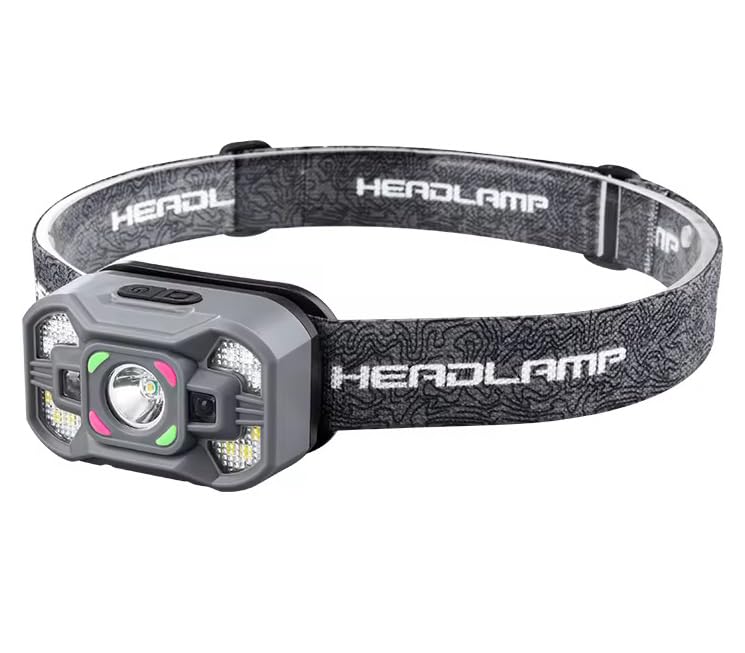
- ✅Hands-Free: Essential for early morning treks (3 AM) so you can use trekking poles freely.
- ✅High Brightness: Powerful beam that covers up to 100 meters clearly.
- ✅Weatherproof: Continues to work even during rain or heavy mist.
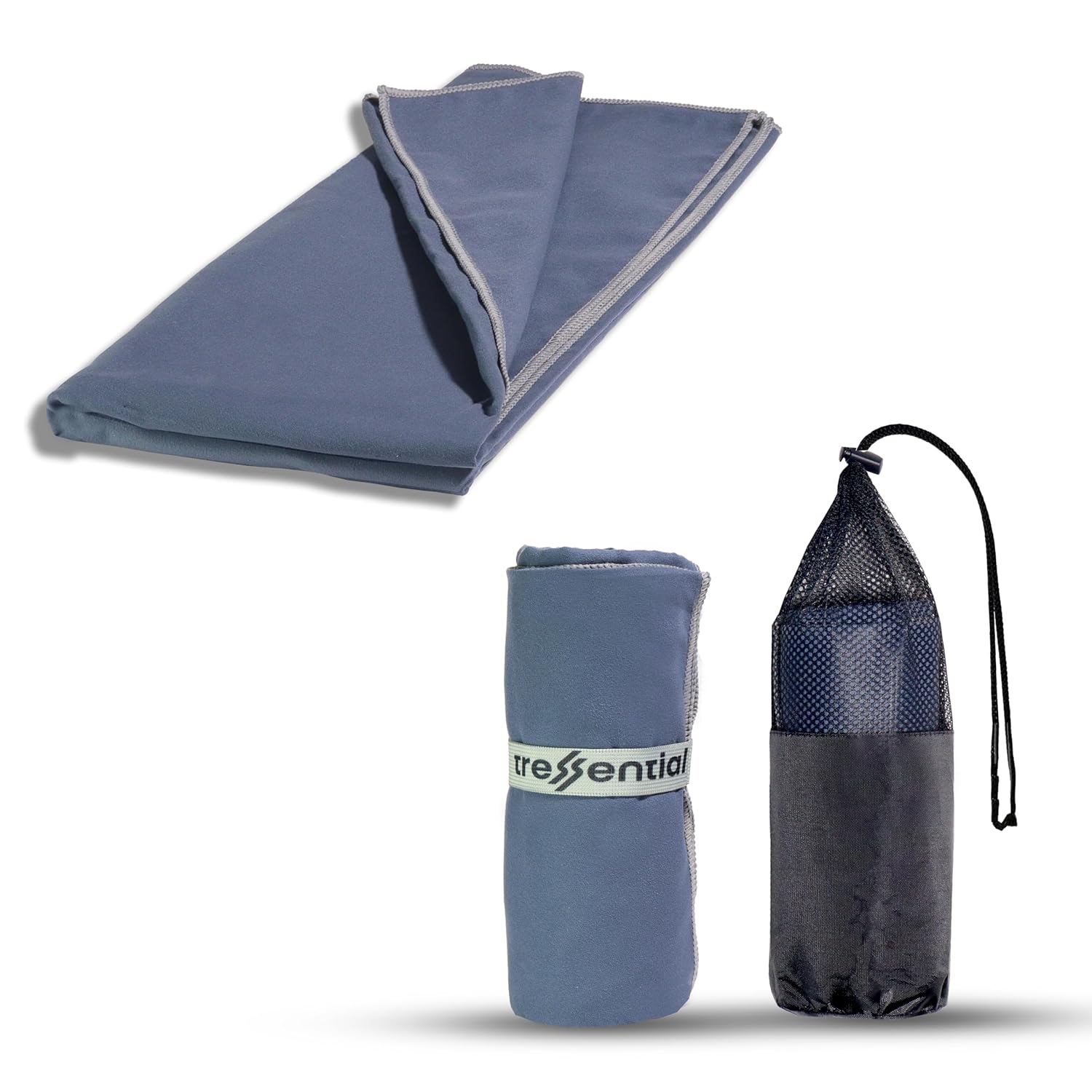
- ✅No Wet Smell: Dries in minutes so you don't carry a heavy, smelly towel in your bag.
- ✅Super Tiny: Folds into a small pouch, leaving more room for warm clothes.
- ✅Gentle: Ultra-soft fabric that is perfect for cold weather skin care.

- ✅High Altitude Protection: Himalayan sun is harsh and causes severe tanning & burns.
- ✅Non-Greasy: Doesn't feel oily while trekking or sweating.
- ✅Sweat Resistant: Stays on your skin even during high-intensity walking.

- ✅Dual Protection: Ponchos are good, but this ensures no water enters your bag.
- ✅Reflective Logo: Helps others see you in heavy mist or night treks.
- ✅Universal Fit: Fits perfectly on all 30L to 60L trekking backpacks.
2. The Supply Mapping: Structural Fuel Station Grid & Station Analysis
To ensure you never face an empty tank while exploring high destinations like Hikkim or Langza, you must plan your refueling stops around the exact coordinates of the valley’s fuel supply hubs. The core logistical challenge of the Spiti Circuit is the Kaza Petrol Pump Dependency. Being the world’s highest retail outlet, it faces heavy tourist rush and occasional supply delays when heavy landslides block the lower access roads.
📊 Spiti Valley Strategic Fuel Availability Grid
- Recong Peo / Powari (Kinnaur Entry Hub):
- Real-World Supply Status: 95% Stable, Excellent Quality Digital Dispensers
- Real Distance to Next Pump: 200 KM (To Kaza Hub)
- Critical Operational Risk: This is your last fully stable, non-adulterated commercial fuel source before entering Spiti.
- Strategic Refueling Pro-Tip: Mandatory Stop. Fill your main tank to the brim and top up your external plastic jerry cans here without exception.
- Puh / Pooh Station (NH-5 High Altitude Link):
- Real-World Supply Status: 70% Stable, Intermittent Supply Windows
- Real Distance to Next Pump: 135 KM (To Kaza Hub)
- Critical Operational Risk: Frequent power variations can pause dispenser operations for hours.
- Strategic Refueling Pro-Tip: Always check in with local incoming taxi drivers to verify if the Puh station has active stock.
- Kaza Outpost Hub (The Highest Petrol Pump):
- Real-World Supply Status: Variable, Heavy Peak Season Queues
- Real Distance to Next Pump: 200 KM (To Manali via Kunzum)
- Critical Operational Risk: Complete dry-out risks during landslide blocks; massive tourist rush.
- Strategic Refueling Pro-Tip: Queue up at 7:00 AM sharp; keep physical cash ready as local digital card networks are highly unstable.
- Manali / Karjan Hub (Manali Exit Gateway):
- Real-World Supply Status: 100% Flawless, Multi-brand Stations
- Real Distance to Next Pump: End of Mountain Loop
- Critical Operational Risk: Traffic congestion near the main town entrance.
- Strategic Refueling Pro-Tip: Refuel after crossing the Atal Tunnel line to ensure your city return run stays smooth.
3. Focus: The Self-Sustained Fuel Carrying & Auxiliary Storage Kit
Regular plastic mineral water bottles dissolve, leak, or crack when filled with petrol over bumpy mountain roads, creating a severe fire hazard. This is why investing in high-grade, chemical-resistant fluid storage and rugged mounting accessories is a mandatory prerequisite for solo explorers.
📦 Self-Sustained Fuel & Luggage Armor Checklist
- 200 KM Absolute Fuel Dry Zone over Kunzum La Pass:
- Technical Item Needed: Heavy-Duty 5-Liter HDPE Engineering Jerry Cans
- Value to Rider: Standard plastic containers puncture easily under strap pressure. Certified high-density polyethylene (HDPE) cans resist chemical corrosion and impact fractures during a tip-over.
- Securing Heavy Fuel Cans Over Rough Dirt Tracks:
- Technical Item Needed: Stainless Steel Rear Luggage Rack with Top Plate
- Value to Rider: Heavy fluid weight shifts constantly on mountain curves. A structural steel rack mounts your jerry cans securely, keeping your bike’s center of gravity balanced.
- Dust & Water Protection for Essential Electronics & Tools:
- Technical Item Needed: IP67 Waterproof Heavy-Duty Motorcycle Saddlebags
- Value to Rider: Fine mountain dust and river crossings can damage your gear. Rugged, waterproof bags keep your backup power and mechanical tool kits clean and dry.
4. Pros and Cons: Carrying External Reserve Fuel vs. Relying on Local High-Altitude Villages
Carrying External HDPE Jerry Cans
- Pros: Absolute peace of mind to explore extreme offbeat hamlets like Demul or Mud Village; zero dependence on erratic local village shops; enables you to help fellow riders stranded with empty tanks.
- Cons: Increases the overall tail weight of your motorcycle; requires extra time for securing heavy mounting straps; slight risk of fluid spillage over rough terrain if cap seals are loose.
Relying on Local Village Black-Market Petrol (Bottled Sales)
- Pros: Keeps your motorcycle lightweight and agile over technical dirt tracks; removes the need for expensive luggage racks.
- Cons: Extremely high cost inflation (often sold at ₹150 to ₹180 per liter); high risk of fuel contamination and water mix that can damage your engine’s fuel injector.
Expert Review: “Scaling the Spiti circuit on a motorcycle means operating in an ecosystem with zero margin for mechanical error. Modern fuel injection (FI) systems are highly sensitive to contaminated fuel. Buying loose petrol sold in plastic bottles at local village grocery shops can clog your fuel pump filter instantly, causing engine stalling issues on high passes. Always secure certified HDPE containers, filter your fuel using a clean cloth when filling from unknown sources, and manage your throttle smoothly to optimize your range.” — Saurav Pal, Chief Mechanical Analyst, DreamTripGuide.
5. Technical Throttle & Fuel Optimization Dos and Don’ts
What to Do (Do’s):
- DO Keep Your Chain Clean and Properly Lubed: A dry, dust-clogged drive chain increases mechanical drag on your engine, dropping your fuel economy by up to 15% on long mountain climbs.
- DO Turn Off Your Engine at Long Landslide Halts: If you encounter a road clearance block, turn off your engine immediately. Idling your engine at high altitudes wastes precious fuel and causes unnecessary heating.
- DO Keep Track of Your Odometer Calculations: Reset your trip meter at every primary fuel pump stop. This helps you cross-verify your machine’s real-time mileage against your route map.
What NOT to Do (Don’ts):
- DON’T Ride with Under-Inflated Tires: Low tire pressure increases your tire’s contact patch with the road, adding extra rolling resistance that drains your fuel tank much faster over mountain miles.
- DON’T Ride Aggressively in Low Gears on Flat Sections: If the terrain flattens out along the Spiti river bed, shift up to a higher gear immediately. Riding at high RPMs in low gears burns through fuel unnecessarily.
- DON’T Trust Verbal Promises of “Aage Petrol Mil Jayega”: Local travel patterns change daily. Never pass a functional petrol pump without topping up your tank based on casual roadside advice.
6. People Also Ask (PAA) – Spiti Valley Fuel Map Edition
- Where is the last major functional petrol pump on the Spiti Valley loop? Entering from the Shimla side, the last fully stable pump is at Recong Peo / Powari. Entering from the Manali side, the last station is located in Manali town.
- What happens if the Kaza petrol pump runs completely dry? If the main outpost is out of stock, you will have to source loose fuel from local mechanics or village shops at heavily inflated prices, which carries a high risk of fuel contamination.
- My motorcycle has a 12-liter tank. Do I absolutely need an extra container? Yes, a minimum of 5 to 10 liters of extra fuel carrying capacity is mandatory for the Spiti loop to account for detour exploration and unexpected route extensions.
- Does sub-zero cold weather freeze petrol inside the engine? Petrol does not freeze at these temperatures, but the extreme mountain cold can instantly drain your battery charge, making morning cold-starts difficult.
- How can I secure cheap, high-protein food in Spiti villages? Avoid commercial cafe menus. Stick to local homestays for traditional dal, rice, and boiled eggs, which are nutritious, safe, and highly economical.
- Are there any hidden environmental fees for entering the Spiti loop? Yes, a nominal eco-zone maintenance fee of approximately ₹50 to ₹100 is collected per vehicle at the forest department checkpoints.
👉 Instagram Updates: @dreamtripguide.india
👉 Spiti Complete Fuel Guide: www.dreamtripguide.com
