
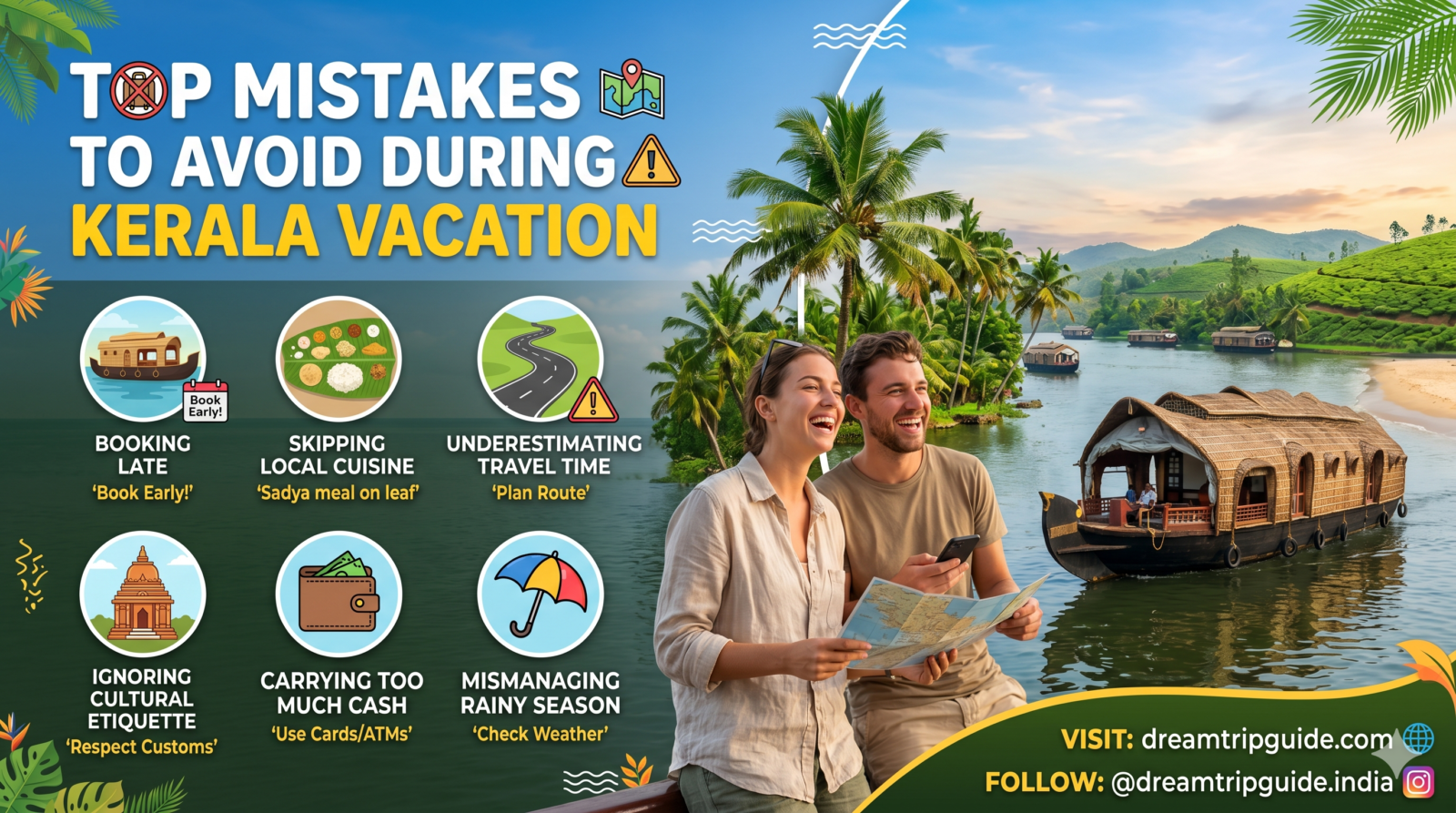
With its iconic emerald palm trees, mist-covered mountain valleys, and tranquil coastal sanctuaries, Kerala—popularly known as “God’s Own Country”—remains one of the premier highlights of South India tourism. Whether you are aiming to view the majestic tea plantations of the Western Ghats Kerala, taste authentic Malabar biryani, or unwind on a quiet houseboat cruise Kerala, this coastal state offers a diverse mix of culture and relaxation.
However, navigating this tropical paradise is not entirely without friction. Many first-time Kerala tourists fall into common travel traps that can turn a relaxing holiday into an exhausting logistical challenge. From over-packing your itinerary to misjudging regional weather patterns, small oversights can heavily affect your overall experience.
This exhaustive Kerala travel guide 2026 breaks down the most frequent Kerala travel mistakes, offers critical Kerala local food guide tips, and provides actionable advice to ensure your getaway runs smoothly. To browse specialized tour itineraries, book vetted accommodations, and explore premium vacation packages, access the Dream Trip Guide homepage—your go-to trip planning guide and ultimate travel guide.
1. The Route Planning Trap: Over-Cramming Your Kerala Itinerary
The single most common mistake made during a Kerala vacation planning phase is trying to see the entire state in less than a week. It can be incredibly tempting to bundle the colonial streets of Fort Kochi, the sprawling tea gardens of Munnar, the wildlife preserves of Thekkady, the backwaters of Alleppey, and the dramatic red bluffs of Varkala cliff beach into a single 5-day trip.
The Reality of Mountain Logistics
While distances look relatively short on digital maps, the physical terrain tells a completely different story. Most roads connecting the coastal plains to high-altitude destinations like the Munnar hill station or Wayanad tourism circuits are narrow, winding, two-lane highways crawling with local transport buses.
A distance of just 120 kilometers from Kochi to Munnar can easily take four to five hours of intense mountain driving. Trying to change hotels every single night results in spending your entire vacation stuck inside a vehicle, leading to severe travel fatigue.
The Expert Solution
To enjoy a genuinely affordable Kerala trip, divide the state into focused geographical zones. If you have five to seven days, stick strictly to the classic Southern/Central circuit (Kochi – Munnar – Alleppey/Kumarakom – Varkala). If you prefer rugged eco-tourism, old-growth forests, and quiet trekking, focus entirely on the Northern circuit (Kozhikode – Wayanad – Bekal fort beach). Limit your active driving to a maximum of four hours a day to allow ample time for authentic sightseeing.
2. The Houseboat Pitfall: Blind Booking at the Jetty
An Alleppey houseboat cruise through the labyrinthine networks of the Vembanad Lake is an unmissable bucket-list experience. Unfortunately, it is also an area where travelers frequently experience budget inflation and substandard service due to poor booking strategies.
The Danger of Street Brokers
Many budget travelers make the mistake of showing up at the Alappuzha tourism jetty without a reservation, hoping to score a cheap deal via local street brokers. This often leads to boarding poorly maintained boats with failing air conditioning systems, subpar food hygiene, or routes restricted to noisy, overcrowded channels.
To ensure your Kerala backwaters travel experience is completely seamless, use this structured booking methodology:
1.Verify Official Registration:Prerequisite.
Ensure the vessel is officially licensed and approved by the Kerala Ports Department and Kerala Tourism. Licensed boats strictly adhere to safety standards, carrying functional life jackets and fire extinguishers.
2.Clarify Route and Mooring Details:Route Vetting.
Confirm your specific cruise route. Premium operators cruise through quieter, scenic canals like those in Kumarakom backwaters, whereas lower-tier options stay within congested pathways. Ensure you know exactly where the boat hooks up for the night.
3.Confirm the Menu and Amenities:Onboard Comfort.
Explicitly detail what food is included. A reputable operator will serve fresh, hot meals consisting of traditional Kerala sadya (feast served on a banana leaf), locally caught pearl spot fish (Karimeen Pollichathu), and aromatic red rice. Check the operational hours for the air conditioning.
3. Ignoring Seasonal Realities: Monsoon and Summer Miscalculations
Many international and domestic tourists plan their travel without checking the unique tropical climate cycles of Southwest India, assuming the weather remains identical year-round.
The Intensity of the Humid Summer
Traveling between March and May requires serious physical preparation. This is peak summer, where daytime temperatures frequently surpass $36^\circ\text{C}$ with humidity levels hovering above 80 percent. If you do not pace your outdoor excursions, the midday heat will quickly exhaust you.
The Dynamic Monsoon Season
The Kerala monsoon travel window (stretching from June to September) offers magnificent, lush landscapes and is considered the ideal time for authentic wellness tourism and holistic healing Kerala therapies. However, it is not a standard sightseeing period. Heavy downpours can cause unexpected delays, halt houseboat operations due to high water levels, and temporarily close mountain trekking paths near Chembra peak or Silent Valley due to safety protocols.
To help you align your travel objectives with the correct calendar window, consider this comprehensive seasonal planning matrix:
| Travel Season | Core Months | Best Regions to Visit | Primary Highlights & Activities |
| Peak Winter Season | October to February | Munnar, Alleppey, Kovalam, Varkala, Thekkady | Clear skies, comfortable mountain weather, beach swimming, active wildlife safaris, and major cultural festivals. |
| Tropical Summer | March to May | Wayanad, Vagamon, Athirappilly waterfalls | Budget-friendly hotel deals, minimal tourist crowds, vibrant temple festivals like the grand Thrissur Pooram. |
| Monsoon Renewal | June to September | Kumarakom retreats, Ayurvedic wellness centers | Revitalizing Ayurvedic massage Kerala treatments, full panchakarma treatment Kerala, viewing overflowing waterfalls. |
4. Packing Incorrectly for Temple Visits and Cultural Excursions
Kerala is highly progressive yet deeply rooted in conservative social traditions, particularly regarding sacred spaces and historic monuments. A frequent oversight among first-time visitors is packing purely for a beach holiday, completely ignoring the dress codes of local religious institutions.
Strict Traditional Sanctuary Dress Codes
Major heritage sites, such as the ancient temples of Thiruvananthapuram and Thrissur, enforce traditional attire mandates. For men, this typically means wearing a Mundu (traditional lower garment) and removing shirts before entering inner sanctums. Women are generally required to wear sarees, salwar kameez, or modest long skirts. Showing up in shorts, short dresses, or sleeveless tops will result in being denied entry at the gate.
[Proper Cultural Attire] ──► Respects Local Traditions ──► Seamless Entry to Historic Sites
[Improper Beachwear]     ──► Violates Temple Norms     ──► Denied Entry at Sanctuary Gates
Essential Packing List for Kerala
When building your Kerala packing tips checklist, ensure you strike a functional balance:
- Fabrics: Stick exclusively to loose-fitting, breathable light cotton or linen clothing to manage the persistent tropical humidity.
- Footwear: Pack easily removable sandals or slip-on shoes, as you will need to step out of your footwear frequently before entering homes, homestays, and temple premises.
- Weather Defense: Always pack a compact, high-quality umbrella and a reliable bug spray containing DEET, especially when exploring the spice plantations of Thekkady or embarking on a Wayanad wildlife safari.
5. Falling for Fake “Government-Approved” Scams and Unvetted Spices
Wellness tourism and exotic spice farming form the economic backbone of Kerala’s travel sector. Unfortunately, this high demand creates a marketplace where unvetted vendors exploit unsuspecting tourists.
The Premium Ayurveda and Massage Trap
Kerala is the global capital for traditional Ayurvedic massage Kerala treatments and deep tissue detoxification. However, tourist hubs like Fort Kochi and Kovalam are dotted with unauthorized massage parlors claiming to offer authentic “Panchakarma.”
Many of these establishments utilize untrained staff and unrefined oils, which can lead to zero health benefits or skin reactions. Always verify that your chosen wellness center is officially certified with either a Olive Leaf or Green Leaf classification issued directly by the Kerala Tourism Department.
Buying Fake Spices and Essential Oils
When taking a guided tour through spice plantations, your driver or local guide might steer you toward specific commercial retail outlets. Be cautious when purchasing highly inflated essential oils, saffron, or specialty herbal remedies without proper labeling. For authentic purchases, stick to established cooperative societies or government-vetted outlets in Munnar and Kumily.
To discover verified cultural centers for witnessing ancient martial arts like Kalaripayattu or elaborate Kathakali dance dramas without paying inflated agent commissions, review our specialized regional compilations page via the Dream Trip Guide to utilize our perfect trip planner mechanics.
6. Underestimating Local Food Spice Levels & Water Safety
Keralite cuisine is an incredible culinary journey, famous for its heavy use of fresh coconut, crushed curry leaves, and locally grown black pepper. However, failing to communicate your spice tolerance can lead to a very uncomfortable digestive experience.
Deciphering the Local Culinary Landscape
Local toddy shop food Kerala is legendary for its fiery preparation styles, featuring items like spicy red fish curry and tapioca (Kappa Meen Curry). If your palate is unaccustomed to intense heat, always ask the kitchen to prepare your meal with mild spice levels.
When enjoying a traditional Kerala sadya, remember to eat exclusively with your right hand, as using the left hand for handling food or passing dishes is traditionally considered improper across India.
       ┌────────────────────────────────────────────────────────┐
       │              KERALA FOOD SAFETY CARDINAL RULES         │
       ├────────────────────────────────────────────────────────┤
       │ 1. Drink strictly bottled or reverse-osmosis water.   │
       │ 2. Prioritize high-turnover local vegetarian joints.   │
       │ 3. Request mild options if sensitive to black pepper.  │
       │ 4. Consume freshly fried hot banana chips only.        │
       └────────────────────────────────────────────────────────┘
Frequently Asked Questions (FAQs)
1. Is it safe to execute a solo trip to Kerala as a female traveler?
Yes, Kerala is widely recognized as one of the safest and most hospitable states in India for solo international and domestic travelers. The state boasts exceptionally high literacy rates and an active tourist police force. However, it is wise to maintain basic travel precautions: avoid walking alone through deserted coastal stretches or unlit village lanes late at night, and always use registered ride-hailing apps or metered auto-rickshaws for transit.
2. Can I rent a vehicle for a self-drive Kerala road trip?
While self-drive rentals are available in major cities like Kochi and Thiruvananthapuram, first-time international visitors should think twice before driving themselves. The state’s main highways are narrow, heavily congested with fast-moving local buses, and pedestrian traffic is common through village markets. Hiring a private car with an experienced local chauffeur is affordable, safer, and lets you enjoy the scenery without stress.
3. How many days are ideally required for a balanced Kerala trip?
To properly experience the diversity of the region without rushing through destinations, a timeline of 7 to 9 days is highly recommended. This allows you to spend 1 night in historic Fort Kochi, 2 nights relaxing in the cool climate of Munnar, 1 night exploring the wildlife sanctuaries of Thekkady, 1 night on an immersive houseboat cruise in Alleppey, and 2 nights unwinding along the beaches of Varkala or Kovalam.
4. What is the significance of the Nehru Trophy Boat Race, and when does it happen?
The Nehru Trophy Boat Race is Kerala’s most iconic competitive water sport, featuring massive traditional snake boats (Chundan Vallams) powered by over 100 oarsmen rhythmic drumming and paddling in unison. It takes place annually on the second Saturday of August on the Punnamada Lake in Alappuzha. If you plan to visit during this window, book your gallery tickets and hotel stays months in advance due to massive international crowds.
Conclusion & Trusted Local Contacts
Avoiding these common travel mistakes guarantees that your tropical vacation remains completely relaxing, culturally respectful, and highly cost-effective. By choosing a realistic, slow-paced itinerary, booking certified houseboats, and respecting the local weather patterns, you can fully enjoy everything this incredible coastal paradise has to offer.
Dream Trip Guide Pvt Ltd.
For custom itinerary curation, transparent package pricing, and real-time destination updates across India and Nepal, reach out to our editorial desk:
- Name: Dream Trip Guide
- Address: India Based Online Travel Blog | Helping Travelers Explore India
- Email: dreamtripguides@gmail.com
- Instagram ID: @dreamtripguide.india
