
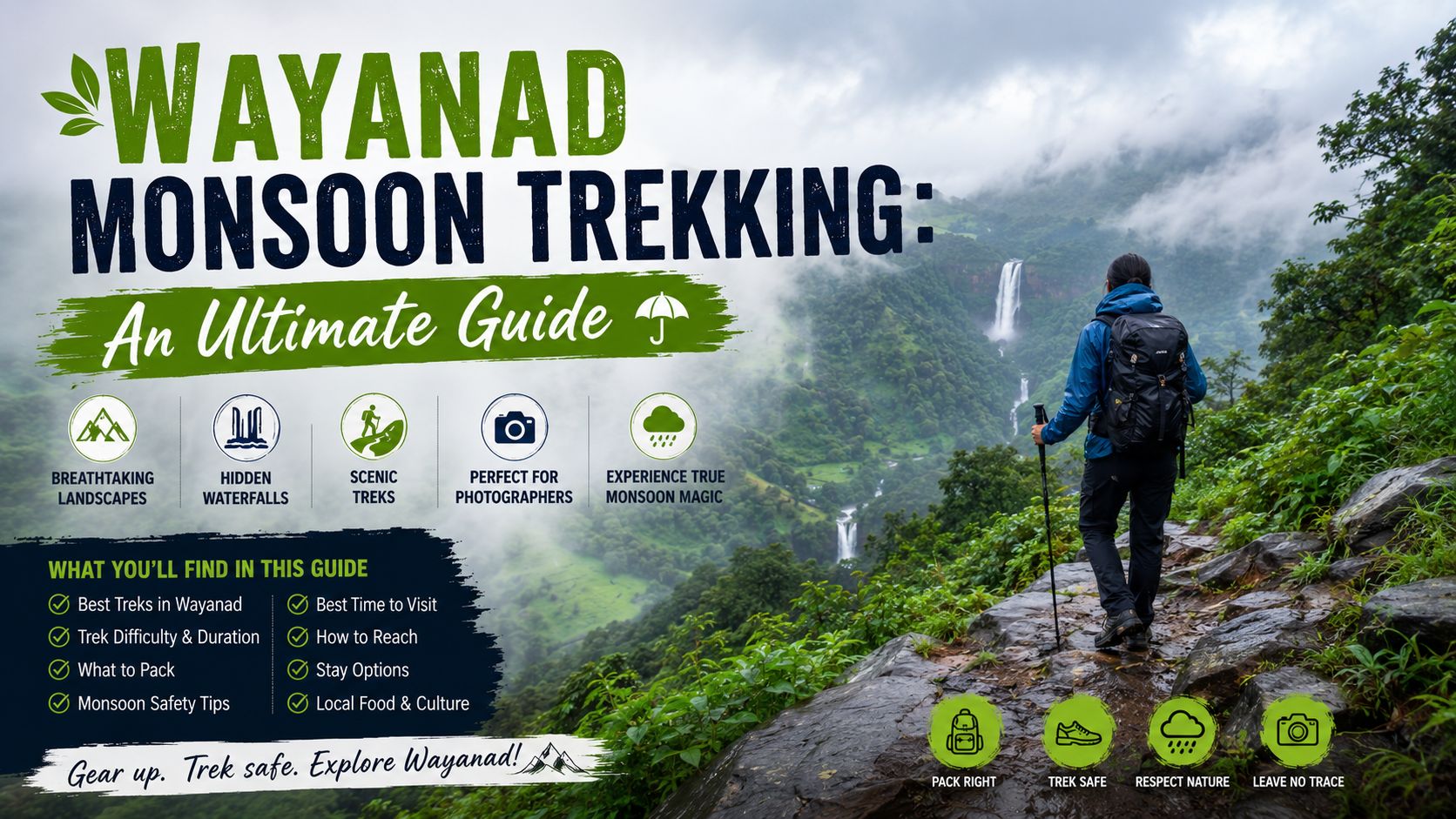
Wayanad, in northern Kerala, becomes a spectacular green paradise during the monsoon. Mist-covered hills, dense forests, flowing streams, waterfalls, plantations, and cool mountain weather create a completely different landscape from the dry-season experience. Kerala Tourism describes Wayanad as a destination with opportunities for rainforest trekking, heritage trails, spice plantations, and other outdoor experiences, while the district receives substantial rainfall during the monsoon months.
For adventure lovers, Wayanad monsoon trekking can be an unforgettable experience. However, trekking during heavy rain requires more preparation than a normal hike. Slippery trails, leeches, poor visibility, swollen streams, falling branches, and temporary trail restrictions can make conditions unpredictable. Therefore, the best monsoon trek is not simply about finding a beautiful trail—it is about choosing the right route, checking local conditions, carrying suitable gear, and knowing when to turn back.
This ultimate guide explains everything you need to know before planning a Wayanad monsoon trek, including the best trekking experiences, preparation, safety, weather considerations, packing essentials, and responsible trekking practices.
Why Wayanad Is Special During the Monsoon
The monsoon transforms Wayanad into one of Kerala’s most dramatic landscapes. The hills become intensely green, waterfalls become more active, and clouds frequently move across the valleys. Kerala Tourism specifically highlights Wayanad’s rain, greenery, plantations, forests, and cool winds as major attractions during the monsoon.
Wayanad is situated in the Western Ghats and includes misty peaks, forests, valleys, plantations, and wildlife habitats. The district administration also identifies its natural environment and wildlife as important tourism attractions.
For photographers and nature lovers, monsoon offers excellent opportunities to capture:
- Misty mountain landscapes
- Rain-covered forests
- Waterfalls and streams
- Tea and coffee plantations
- Cloud-filled valleys
- Green trails
- Local village life
- Dramatic sunrise and sunset conditions
However, beautiful scenery should never encourage travelers to ignore weather warnings or trail restrictions.
Best Time for Wayanad Monsoon Trekking
The southwest monsoon generally affects Wayanad from June through September, while another rainy period occurs later in the year.
June to September can offer the classic monsoon experience, but trekking conditions vary significantly from day to day. Heavy rain can make some trails unsafe or temporarily unavailable.
For travelers whose priority is trekking rather than experiencing rain, October to May is generally more favorable. Incredible India notes that October to May is considered the more suitable period for sightseeing, trekking, and outdoor activities, while June to September brings heavy rain and may restrict some activities.
Therefore, if you specifically want a monsoon adventure, plan around the weather rather than choosing dates only by calendar.
Best Trekking Experiences in Wayanad
Wayanad offers a variety of trekking opportunities through forests, hills, plantations, and heritage landscapes.
Chembra Peak
Chembra Peak is among Wayanad’s best-known mountain experiences. The trek is popular for its scenic views and the famous heart-shaped lake associated with the route.
During the monsoon, the surrounding landscape becomes exceptionally green. However, wet rocks and muddy sections can make the trail considerably more challenging.
Always confirm current access rules, weather conditions, and guide requirements before beginning the trek.
Banasura Hills
The Banasura Hills region offers beautiful mountain scenery and views around Banasura Sagar. It is particularly attractive to travelers who enjoy challenging hill terrain.
Monsoon conditions can make the route slippery, and trekking may be restricted during periods of heavy rain. Current local instructions should therefore take priority over information found in older travel guides.
Edakkal Caves and Ambukuthi Hills
Edakkal Caves combine hiking with history. The caves contain ancient rock engravings, including petroglyphs associated with prehistoric periods. The Wayanad district administration identifies the site as an important heritage attraction.
Because access conditions can change during severe weather, check official updates before visiting.
Rainforest and Plantation Trails
Not every Wayanad adventure needs to involve a difficult summit. Guided rainforest, spice plantation, and heritage trails can provide a more relaxed way to experience the monsoon environment.
Kerala Tourism specifically lists rainforest trekking, heritage trails, and spice plantation experiences among Wayanad’s outdoor opportunities.
Wayanad Monsoon Trekking Safety Tips
Safety should be the first priority during a rainy-season trek.
Check Weather and Local Advisories
Before leaving your accommodation, check the latest weather conditions and local administration updates. Wayanad’s disaster-management authorities publish monsoon-related orders and preparedness information, and restrictions can be introduced when conditions become dangerous.
Never continue a trek simply because you have already paid for transport, accommodation, or a guide.
Avoid Restricted Trails
A trail that was open last week may not be open today.
Heavy rain can create risks from:
- Landslides
- Falling rocks
- Flash flooding
- Slippery slopes
- Damaged bridges
- Falling trees
If authorities, forest officials, or authorized guides advise against entering an area, follow their instructions.
Use a Local Guide Where Required
A knowledgeable local guide can understand trail conditions, weather changes, water crossings, and forest-related risks better than a first-time visitor.
For forest routes, follow the rules established by the relevant authorities and do not enter restricted areas independently.
Start Early
Starting early provides more daylight for the trek and gives you additional time to return if weather conditions deteriorate.
Avoid attempting unfamiliar forest trails late in the afternoon.
What to Wear for a Monsoon Trek
Your clothing can make a major difference to comfort and safety.
Wear:
- Quick-drying trekking trousers
- Moisture-wicking T-shirts
- Lightweight rain jacket
- Waterproof or water-resistant backpack cover
- Non-slip trekking footwear
- Extra socks
- Lightweight warm layer
- Hat or cap
Avoid ordinary smooth-soled shoes because wet rocks and muddy paths can become extremely slippery.
Essential Things to Pack
A well-prepared backpack should include:
- Drinking water
- Energy snacks
- Basic first-aid kit
- Personal medicines
- Power bank
- Waterproof phone pouch
- Small flashlight or headlamp
- Rain cover
- Extra socks
- Personal identification
- Offline maps
- Emergency contact information
- Waste bag
Pack electronics inside waterproof pouches rather than depending only on the backpack’s rain cover.
Dealing With Leeches
Leeches are a normal possibility on wet forest trails.
You can reduce discomfort by wearing suitable socks and trekking footwear and checking your shoes and clothing during breaks.
If you find a leech attached to your skin, avoid panicking or pulling aggressively. Follow appropriate first-aid practices and ask your guide for assistance.
Most importantly, do not allow concern about leeches to make you rush across slippery terrain.
Photography Tips for Wayanad in Monsoon
Wayanad’s monsoon scenery is ideal for nature photography.
Try photographing:
- Mist moving across hills
- Water droplets on leaves
- Waterfalls
- Plantation landscapes
- Forest paths
- Clouds around mountain peaks
- Local architecture
- Rainy village scenes
Carry a waterproof camera cover or protective pouch. Keep lenses and electronics protected when moving between heavy rain and humid conditions.
The best photographs often come during breaks in the rain when clouds begin to lift and sunlight reaches the green landscape.
Responsible Trekking in Wayanad
Wayanad is environmentally sensitive and supports diverse wildlife and local communities. Responsible travel is therefore essential.
Follow these principles:
- Do not throw plastic on trails.
- Carry your waste back.
- Do not disturb wildlife.
- Stay on authorized trails.
- Avoid loud music in forest areas.
- Do not damage plants.
- Respect local communities and cultural sites.
- Do not collect rocks, plants, or historical objects.
- Follow forest and tourism regulations.
Kerala Tourism also highlights responsible tourism initiatives in Wayanad, emphasizing sustainable tourism practices.
How to Plan a Wayanad Monsoon Trek
A simple planning approach can make the experience much safer.
Step 1: Select a trek appropriate for your fitness and experience.
Step 2: Check the latest weather forecast.
Step 3: Confirm whether the trail or attraction is currently open.
Step 4: Arrange an authorized guide where required.
Step 5: Pack waterproof clothing and essential safety equipment.
Step 6: Share your itinerary with someone at home.
Step 7: Start early and avoid unnecessary risks.
Step 8: Turn back if rainfall, visibility, water levels, or trail conditions become dangerous.
For more India travel inspiration, destination guides, road-trip ideas, and practical trip-planning resources, explore Dream Trip Guide at dreamtripguide.com.
Where to Stay in Wayanad
Wayanad has accommodation options ranging from hotels and homestays to resorts and nature-oriented stays. Kerala Tourism notes that visitors can find accommodation across different budgets and preferences.
For trekking-focused trips, consider staying within convenient reach of your chosen activity rather than selecting accommodation solely on price.
Kalpetta, Vythiri, Sultan Bathery, and Mananthavady can serve as useful bases depending on your itinerary.
During monsoon, prioritize accommodation with:
- Good road access
- Secure parking
- Reliable power backup
- Drying space for wet clothes
- Nearby food options
- Clear cancellation policies
How to Reach Wayanad
Wayanad is connected by road with other parts of Kerala as well as neighboring Karnataka and Tamil Nadu. The nearest major railway connection is generally through Kozhikode, while Calicut International Airport serves as the nearest major airport for many travelers.
If you are driving during monsoon, allow additional time for wet and winding hill roads. Avoid rushing through sharp bends, especially when visibility is reduced by rain or fog.
Frequently Asked Questions
Is Wayanad good for trekking during the monsoon?
Yes, Wayanad can be spectacular during the monsoon, but trekking conditions can become challenging. Heavy rainfall may lead to slippery trails or temporary restrictions, so always check current local conditions before trekking.
Which month is best for Wayanad monsoon trekking?
June to September generally represents the southwest monsoon period. However, the safest and most suitable trekking date depends on the weather and the current status of individual trails.
Is Wayanad safe during heavy rain?
Wayanad can be visited during the rainy season, but heavy rainfall can increase risks from landslides, slippery terrain, flooding, and reduced visibility. Travelers should follow official advisories and avoid restricted areas. The district maintains dedicated disaster-management information and emergency-control resources.
What shoes are best for Wayanad trekking in monsoon?
Choose sturdy trekking footwear with good grip and adequate protection from wet conditions. Avoid smooth casual shoes because rocks and mud can become extremely slippery.
Do I need a guide for trekking in Wayanad?
Some routes may require or strongly recommend authorized guides, particularly in forest areas. Check the current rules for your chosen trail before starting.
Can beginners go trekking in Wayanad during monsoon?
Beginners can enjoy suitable guided trails, but they should avoid challenging routes during severe weather. Start with an easier route and follow the advice of local guides and authorities.
Final Thoughts
Wayanad monsoon trekking offers a unique combination of misty mountains, lush forests, waterfalls, plantations, and adventure. The rain gives Wayanad an extraordinary visual character, but it also demands responsible planning.
The key is to remember that monsoon trekking is about enjoying nature without fighting it. Check the weather, confirm trail access, carry appropriate equipment, use authorized guides when necessary, and be prepared to turn back when conditions deteriorate.
With the right preparation, Wayanad can provide an unforgettable monsoon adventure while respecting the environment and local communities.
For more travel inspiration, practical destination information, and trip-planning resources, follow Dream Trip Guide on Instagram and explore more travel content on Dream Trip Guide.
Paid Blog Post & Advertising Opportunities
Dream Trip Guide also publishes paid blog posts and promotional content for brands, businesses, travel services, products, websites, and relevant businesses looking to reach a travel-focused audience.
If you would like to publish a sponsored article, promotional feature, brand mention, travel-related collaboration, or paid guest post on Dream Trip Guide, contact us directly:
Email: dreamtripguides@gmail.com
Instagram: @dreamtripguide.india
We also accept paid real-estate blog posts and promotional content through our partner website, UpcomingProperty.in.
For real-estate advertising, property-related articles, sponsored content, and promotional blog opportunities, please contact us using the email above.
Note: Paid and sponsored content should be clearly identified where required and should comply with applicable advertising, disclosure, and search-engine guidelines.
