
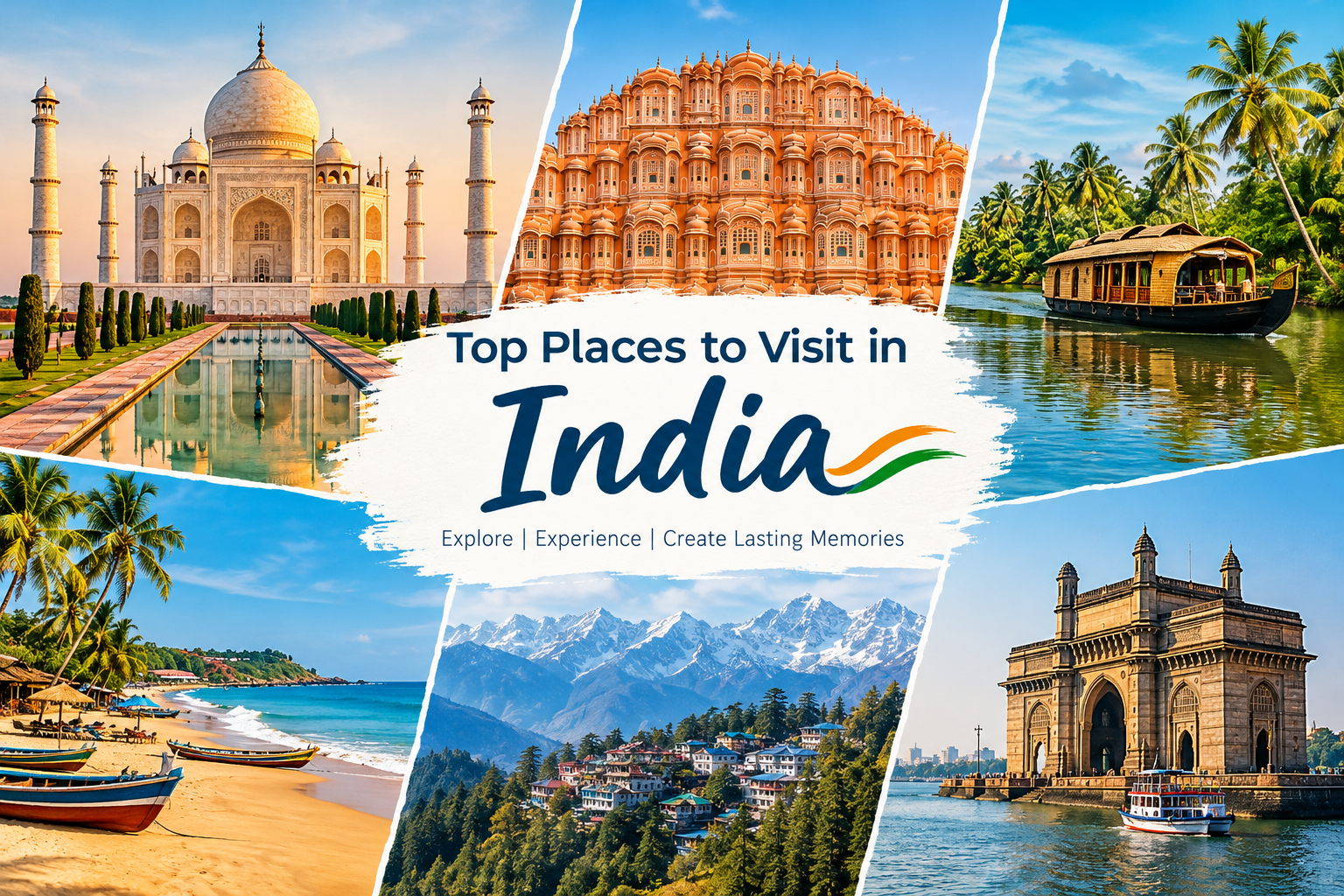
India is a country of remarkable diversity, offering everything from historic monuments and beautiful beaches to peaceful mountains and vibrant cities. Every region has its own culture, traditions, cuisine, and attractions, making India an exciting destination for travellers of all interests. Whether you enjoy exploring ancient architecture, experiencing local traditions, or spending time in nature, there is always something new to discover.
Planning a trip to India can feel overwhelming because of the country’s size and the number of destinations available. However, choosing a few places that match your interests can help you enjoy a more comfortable and memorable journey. From the royal palaces of Rajasthan to the scenic landscapes of Kerala, India’s destinations offer countless opportunities for exploration.
1. Agra: Discover the Beauty of the Taj Mahal
Agra is one of India’s most famous tourist destinations, attracting visitors who want to experience its rich Mughal history and architectural beauty. The city is home to the magnificent Taj Mahal, a UNESCO World Heritage Site and one of the world’s most recognised monuments.
Built by Mughal Emperor Shah Jahan in memory of his wife Mumtaz Mahal, the Taj Mahal is admired for its white marble design, detailed carvings, and symmetrical gardens. Visiting early in the morning can provide a peaceful atmosphere and beautiful views of the monument.
Travellers can also explore Agra Fort, another important historical attraction featuring impressive walls, courtyards, and royal buildings. The combination of historical landmarks and local markets makes Agra an excellent destination for history enthusiasts.
2. Jaipur: Experience Rajasthan’s Royal Heritage
Jaipur, the capital of Rajasthan, is widely known as the Pink City because of the distinctive colour of many buildings in its historic centre. It offers an interesting blend of traditional architecture, royal history, colourful markets, and local culture.
One of Jaipur’s most popular attractions is Hawa Mahal, a beautiful palace recognised for its intricate windows and distinctive façade. Visitors can also explore Amber Fort, which stands on a hill outside the city and provides impressive views of the surrounding landscape.
City Palace is another worthwhile stop for travellers interested in Rajasthan’s royal past. Its museums, courtyards, and decorative architecture provide insight into the region’s history.
Jaipur is also a great place to shop for traditional textiles, jewellery, handicrafts, and souvenirs. Exploring local markets allows visitors to experience the city’s everyday atmosphere while discovering its artistic traditions.
3. Kerala: Enjoy Nature and Peaceful Backwaters
Kerala, located in southern India, is famous for its green landscapes, palm-lined beaches, tea plantations, and tranquil backwaters. It is an excellent destination for travellers seeking relaxation and a closer connection with nature.
Alleppey, also known as Alappuzha, is particularly popular for its backwater experiences. Visitors can take a houseboat cruise through peaceful waterways, passing villages, coconut trees, and lush green fields. These journeys offer a different perspective on life in rural Kerala.
Munnar is another attractive destination, especially for visitors who enjoy cooler weather and scenic mountain views. Its tea gardens, rolling hills, and walking trails create opportunities for photography and outdoor activities.
Kerala is also known for its traditional cuisine and cultural performances. Travellers can sample regional dishes, explore local communities, and learn about the state’s distinctive traditions during their visit.
4. Goa: Relax on Beautiful Beaches
Goa is one of India’s most popular coastal destinations, attracting travellers who enjoy beaches, water activities, local food, and a relaxed atmosphere. Its coastline includes both lively beach areas and quieter places where visitors can spend time away from busy crowds.
Baga and Calangute beaches are known for their restaurants, entertainment, and water sports. Travellers looking for a more peaceful experience can explore beaches such as Agonda and Palolem in South Goa.
Beyond the coastline, Goa has a fascinating cultural heritage influenced by centuries of Portuguese presence. Old Goa is home to historic churches and religious buildings, including the Basilica of Bom Jesus, which is recognised as a UNESCO World Heritage Site.
Visitors can also explore local markets, try traditional Goan seafood, and enjoy the state’s distinctive architecture. Planning activities around the weather and choosing accommodation near preferred attractions can make a Goa holiday more enjoyable.
5. Varanasi: Explore India’s Spiritual Traditions
Varanasi, situated on the banks of the River Ganges in Uttar Pradesh, is one of India’s oldest continuously inhabited cities and an important centre of Hindu religious life. It attracts pilgrims, cultural travellers, and visitors interested in understanding India’s spiritual traditions.
The city’s riverfront ghats are among its most distinctive features. Travellers can walk along the steps beside the river, observe daily rituals, and learn about the historical significance of these locations.
The evening Ganga Aarti ceremony at Dashashwamedh Ghat is a well-known experience. The ceremony features lamps, prayers, and devotional chanting, creating a powerful cultural atmosphere.
Visitors should approach religious sites respectfully, follow local guidance, and ask permission before photographing people during private or sensitive moments. Taking time to explore the narrow lanes and traditional markets can also provide a deeper understanding of Varanasi’s character.
6. Manali: Enjoy the Beauty of the Himalayas
Manali, located in Himachal Pradesh, is a popular destination for travellers seeking mountain scenery, fresh air, and outdoor adventures. Surrounded by the Himalayas, the town offers opportunities for sightseeing, nature walks, and seasonal activities.
Visitors can explore Old Manali, known for its relaxed atmosphere and small cafés, or visit Hadimba Devi Temple, a historic wooden temple set among tall cedar trees. The surrounding landscape is especially appealing to travellers who enjoy photography and spending time outdoors.
Solang Valley is another popular attraction, offering mountain views and seasonal recreational activities. During suitable weather conditions, visitors may enjoy activities such as paragliding or skiing through licensed operators.
The best time to visit Manali depends on the type of experience you want. Summer is generally suitable for sightseeing and escaping hotter weather, while winter attracts visitors interested in snow-covered landscapes. Travellers should check road conditions and weather forecasts before planning mountain excursions.
7. Mumbai: Discover India’s Vibrant City Life
Mumbai, the capital of Maharashtra, is a dynamic city known for its entertainment industry, historic architecture, busy markets, and coastal views. It provides a different experience from India’s quieter natural destinations.
The Gateway of India is one of Mumbai’s best-known landmarks and a popular starting point for sightseeing. Nearby, visitors can admire the historic architecture of South Mumbai and explore the Colaba neighbourhood.
Marine Drive is another favourite attraction, particularly in the evening when people gather to enjoy the sea breeze and city skyline. Travellers interested in culture can visit museums, art galleries, and theatres or explore the city’s diverse food scene.
Mumbai is also famous for its street food, including vada pav and pav bhaji. Visitors should choose clean, reputable food stalls and take sensible precautions when trying unfamiliar dishes.
Because traffic can be heavy, planning activities by neighbourhood can help travellers save time and explore more comfortably.
8. Rishikesh: Experience Adventure and Wellness
Rishikesh, located in Uttarakhand near the foothills of the Himalayas, is known for yoga, spiritual retreats, river scenery, and outdoor activities. It attracts travellers who want to combine relaxation with adventure.
The town sits beside the River Ganges and offers scenic walking routes, peaceful places for reflection, and opportunities to learn about yoga and meditation. Visitors can attend classes or retreats suited to their experience level.
Rishikesh is also popular for white-water rafting during permitted seasons and under suitable river conditions. Travellers should use reputable operators, follow safety instructions, and check local restrictions before participating.
The suspension bridges, including Ram Jhula and Lakshman Jhula’s surrounding area, are associated with the town’s identity, although access arrangements may change. Checking current local guidance before visiting specific structures is advisable.
Whether you prefer outdoor adventures or a quieter wellness-focused holiday, Rishikesh offers a distinctive experience.
Best Time to Visit India
India’s climate varies significantly between regions, so the ideal travel period depends on your destination and planned activities.
October to March
These months are generally suitable for exploring many popular destinations in northern and central India. The weather is often more comfortable for sightseeing in places such as Agra, Jaipur, and Varanasi. However, winter temperatures can be cold in northern mountain regions.
April to June
These months can be very hot in many cities and lowland regions. However, destinations in the Himalayas, including parts of Himachal Pradesh and Uttarakhand, can be attractive for travellers seeking cooler conditions.
June to September
The monsoon season brings rainfall to many parts of India. It can make landscapes particularly green, especially in Kerala, but heavy rain may affect road travel, outdoor activities, and sightseeing plans.
Before booking, check the weather forecast for each destination and consider regional festivals, public holidays, and peak-season accommodation prices.
Practical Tips for Planning a Trip to India
A little preparation can make travelling around India easier and more enjoyable. Keep these practical suggestions in mind when organising your itinerary.
Plan Your Route Carefully
India is a large country, and travelling between distant destinations can take considerable time. Instead of trying to visit every major attraction in one trip, focus on a particular region or select destinations with convenient transport connections.
Choose Suitable Accommodation
Consider your budget, preferred facilities, location, and access to public transport when booking accommodation. Staying near major attractions may save time, particularly in large cities with heavy traffic.
Understand Local Customs
India has diverse cultural and religious traditions. Dress respectfully when visiting religious sites, remove footwear where required, and follow local rules for photography and visitor behaviour.
Use Reliable Transportation
Depending on your route, trains, domestic flights, buses, taxis, and app-based transport services may be useful. Book through reputable providers and allow extra time for delays, particularly during busy travel periods.
Keep Essential Documents Ready
International visitors should check the latest Indian visa requirements that apply to their nationality. Keep copies of important travel documents and confirm your bookings before departure.
Stay Flexible
Weather, traffic, local events, and transport schedules can affect travel plans. Leaving some flexibility in your itinerary helps you manage unexpected changes without unnecessary stress.
Conclusion
India offers an extraordinary variety of travel experiences, from the historical beauty of Agra and Jaipur to the peaceful backwaters of Kerala and the Himalayan scenery around Manali. Its cities, coastlines, spiritual centres, and cultural landmarks provide something for almost every type of traveller.
The key to a successful trip is choosing destinations that match your interests, planning your route realistically, and learning about local customs before you arrive. Whether you are visiting India for the first time or returning to explore another region, careful preparation can help you make the most of your journey and create lasting memories.
Frequently Asked Questions
1. Which places should first-time visitors explore in India?
Agra, Jaipur, Delhi, Kerala, and Goa are popular choices for first-time visitors. The best options depend on your interests, available time, and preferred travel style.
2. How many days are enough to explore India?
A trip of 7–10 days can cover a small selection of destinations in one region. Exploring several distant regions may require two weeks or longer because travel times can be significant.
3. What is the best month to visit India?
October to March is generally a comfortable period for visiting many popular destinations. However, the ideal month varies by region, altitude, and seasonal weather.
4. Is India suitable for family holidays?
Yes, India offers historical attractions, beaches, wildlife experiences, cultural sites, and nature destinations suitable for many families. Choosing family-friendly accommodation and planning manageable travel days can improve the experience.
5. What should travellers pack for a trip to India?
Pack clothing suitable for the season, comfortable walking shoes, personal medications, essential documents, sunscreen, and any items required for your planned activities. If visiting religious sites, include clothing that meets local dress expectations.
