
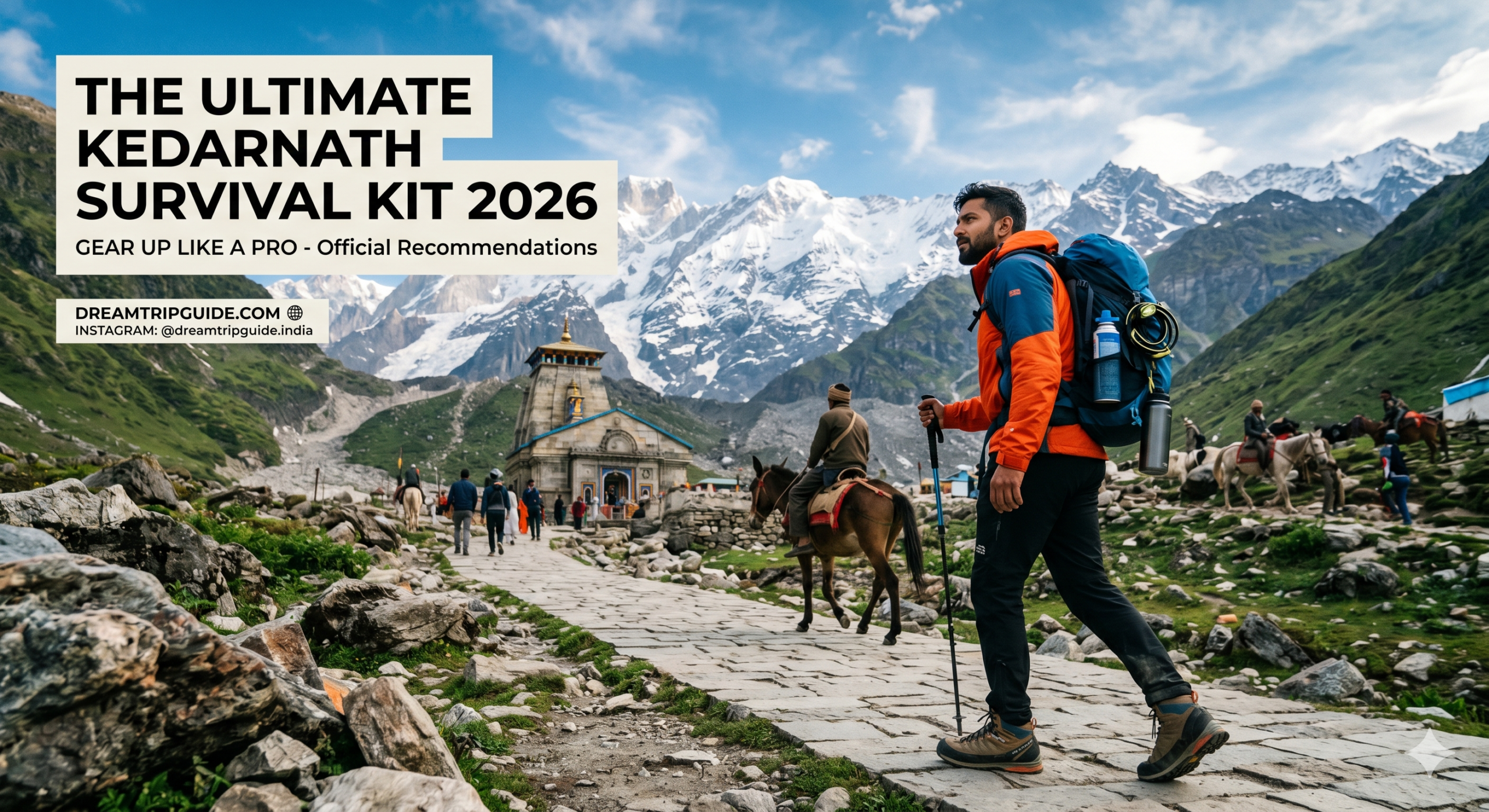
🎒 Ready for Kedarnath 2026? Don’t forget these 10 must-have items in your survival kit. From trekking shoes to oxygen cans, get the complete packing list with official Amazon links.
1. Why a “Survival Kit” is Mandatory for Kedarnath
Kedarnath Dham is situated at an altitude of approximately 11,755 feet. At this height, the oxygen levels are significantly lower than in the plains, and the weather is notoriously unpredictable. In 2026, with the changing Himalayan climate, a simple backpack isn’t enough; you need a “Survival Kit.”
The Reality of the 16km Trek:
Many pilgrims start the trek from Gaurikund in bright sunshine, only to be hit by freezing rain or even light snow at Rambara or Lincholi. If you aren’t prepared with the right gear, a spiritual journey can quickly turn into a medical emergency. Hypothermia and Altitude Sickness (AMS) are real threats. This is why at DreamTripGuide, we emphasize that your gear is your best friend.
Why Proper Gear Saves Money:
Most travelers think they can buy gear locally at Sonprayag. However, the prices there are often 2x to 3x higher than the market rate, and the quality is questionable. Buying your gear in advance through trusted platforms like Amazon not only ensures quality but also saves you from “Panic Buying” at the base camp.
The “Power of 3” Rule:
In 2026, the SDRF advises the “Power of 3” for every survival kit:
- Body Protection: Layering your clothes correctly.
- Foot Comfort: Using shoes that won’t give you blisters on a 16km steep climb.
- Emergency Tech: Keeping your communication lines open with power banks and carrying portable oxygen.
As someone who documents these routes daily, I’ve seen hundreds of people struggling because their shoes were too slippery or their raincoats were too thin. Your survival kit isn’t just a list of items; it’s your insurance policy for a successful Darshan.
Expert Review (Gear Management):
“In my 10 years of experience, the biggest mistake is overpacking heavy clothes but forgetting a high-quality raincoat. In Kedarnath, ‘Dry is Warm.’ If you get wet, you get cold. Focus on waterproof and lightweight gear.” — Saurav Pal, Lead Strategist.
Kedarnath Survival Essentials 2026 (Quick Reference Table)
| Item Category | Recommended Product | Why You Need It? | 2026 Priority |
| Footwear | High-Ankle Trekking Shoes | Prevents ankle twists on rocky terrain. | High |
| Clothing | Waterproof Poncho/Raincoat | Protects from sudden Himalayan rain. | Critical |
| Health | Portable Oxygen Can | Instant relief during breathlessness. | High |
| Electronics | 20,000mAh Power Bank | Phone batteries die fast in cold weather. | Medium |
| Utility | Headlamp / Torch | Essential for early morning (3 AM) treks. | Medium |
Pros and Cons: Amazon Gear vs. Local Buying
Amazon Gear (Pre-Planned)
- Pros: Top-notch quality brands (Decathlon, Columbia, etc.); Lower prices due to discounts; Time-saving.
- Cons: Needs to be ordered 5-7 days in advance.
Local Buying (Sonprayag/Gaurikund)
- Pros: No need to carry extra luggage from home.
- Cons: Very high prices; Fake brands; No return/warranty.
What to Do and What NOT to Do
What to Do:
- Break-in your shoes: Wear your new trekking shoes for at least 7 days before the trip to avoid blisters.
- Check Expiry: Ensure your portable oxygen cans and energy bars are fresh for the 2026 season.
What NOT to Do:
- Don’t carry heavy denim: Jeans become very heavy when wet and take forever to dry.
- Don’t rely on cheap plastic raincoats: They tear easily in the mountain wind.
2. Footwear & Clothing: The Foundation of Your Trek
If you ask any seasoned trekker about the most critical part of their gear, they will point to their feet. The 16km climb to Kedarnath is not just long; it is steep, rocky, and often slippery due to horse dung and rain. In 2026, the trail has been widened, but the stone surface remains a challenge for ordinary sneakers.
The Golden Rule of Footwear:
Never wear flat-soled sports shoes or casual sneakers. You need High-Ankle Trekking Shoes with a deep “Lug” (grip) pattern. The high-ankle support is vital because it protects your ankle from twisting on uneven stones—a common injury that ends many yatras prematurely. Additionally, the sole must be made of “Phylon” or specialized rubber to provide cushioning against the hard rocks.
Layering for 2026 Weather:
The temperature at Kedarnath can drop from 15°C to 2°C in just two hours. The secret to staying comfortable is Layering, not one heavy jacket.
- Base Layer: Moisture-wicking T-shirts (Avoid Cotton as it stays wet with sweat).
- Mid Layer: A lightweight fleece or padded jacket to trap body heat.
- Outer Layer: A professional-grade waterproof Poncho.
Why a Poncho is better than a Raincoat?
In the Himalayas, rain usually comes with heavy wind. A standard raincoat only protects your body, but a Trekking Poncho covers you AND your backpack. It also allows better airflow, so you don’t feel suffocated while climbing.
Expert Review (Comfort vs. Cost):
“Don’t save ₹500 on shoes only to spend ₹5,000 on a horse because your feet are covered in blisters. Invest in quality footwear at least 15 days before your trip. Your feet are your primary vehicle to the Temple.” — Saurav Pal, DreamTripGuide Strategist.
Top Recommendations: Footwear & Apparel 2026
| Product Type | Top Choice (2026) | Key Feature | Best For |
| Trekking Shoes | Water-Resistant High Ankle | Anti-Slip Rubber Sole | Steep Inclines |
| Socks | Merino Wool / Thick Nylon | Cushioning & Blister Protection | Cold Nights |
| Rain Gear | Heavy-Duty Nylon Poncho | Backpack Cover Integrated | Sudden Downpours |
| Inner Wear | Thermal Set (Top & Bottom) | Heat Retention Technology | Overnight Stay |
Pros and Cons: Waterproof Gear
Water-Resistant Shoes
- Pros: Keeps feet dry during light rain; breathable.
- Cons: Can feel slightly heavier than normal shoes.
Waterproof Ponchos
- Pros: Complete protection for you and your bag; very lightweight.
- Cons: Can be flapping in high-velocity mountain winds.
What to Do and What NOT to Do
What to Do:
- Wear Synthetic Socks: Always pair trekking shoes with thick synthetic or wool-blend socks to reduce friction.
- Carry a Spare Set: Always keep one dry pair of socks and a T-shirt in a waterproof plastic bag inside your main bag.
What NOT to Do:
- No Jeans: I cannot stress this enough—jeans are your enemy in the mountains. Opt for “Quick-Dry” trekking pants.
- No Brand New Shoes on Day 1: If you buy shoes on Amazon, wear them to the gym or for walks for a week before heading to Kedarnath.
3. Health & Electronics: Your Digital and Physical Lifeline
When you are trekking at 11,000+ feet, your body and your gadgets both face extreme stress. The cold temperature drains Lithium-ion batteries (phones and cameras) twice as fast as usual. Similarly, the thin air reduces oxygen saturation in your blood, leading to fatigue or dizziness. In 2026, being “Tech-Ready” and “Health-Ready” is not a luxury—it’s a survival requirement.
The Portable Oxygen Revolution:
In previous years, people relied solely on heavy oxygen cylinders. In 2026, Portable Oxygen Cans have become the gold standard for pilgrims. These lightweight cans provide 150-200 puffs of pure oxygen, which can be life-saving if you feel breathless at steep points like Rambara or the final 2km stretch. Even if you don’t use it, carrying one gives you immense mental confidence.
Powering Your Journey:
Between clicking photos for Instagram and using GPS/Maps, your phone will likely die before you reach the temple. At Kedarnath base camp, electricity is limited and charging points are always crowded. A 20,000mAh Power Bank is a non-negotiable item. Ensure it has “Fast Charging” so you can top up your phone during a 30-minute tea break.
The Importance of a Headlamp:
Most pilgrims start their trek at 3:00 AM or 4:00 AM to avoid the afternoon heat and crowds. The path is dimly lit in many sections. While your phone’s flashlight works, it drains your battery and keeps one hand occupied. A LED Headlamp allows you to walk “Hands-Free,” which is much safer when you are using a trekking pole or holding a railing.
Expert Review (Health Tech):
“I always tell my readers: A power bank can save your phone, but an Oxygen can can save your trip. Don’t rely on the hope that you won’t need it. High altitude is unpredictable, and being prepared is the mark of a smart traveler.” — Saurav Pal, DreamTripGuide.
Top Recommendations: Health & Tech 2026
| Product Category | Recommended Specs | Key Benefit | 2026 Essential? |
| Oxygen Support | Portable 6-12 Litre Can | Instant relief from AMS | Yes (Safety) |
| Power Bank | 20,000mAh + PD Fast Charge | Multiple charges for 2 days | Yes (Connectivity) |
| Lighting | Water-resistant LED Headlamp | Hands-free night trekking | Highly Recommended |
| Medical Kit | First-Aid + Pain Sprays | Relieves muscle cramps | Yes (Health) |
Pros and Cons: Portable Electronics
20,000mAh Power Bank
- Pros: Can charge 2 phones and a camera; works in sub-zero temps.
- Cons: Slightly heavy (approx 400-500g).
Portable Oxygen Cans
- Pros: Extremely lightweight; easy to use with a mask.
- Cons: Single-use (cannot be refilled).
What to Do and What NOT to Do
What to Do:
- Keep Electronics Warm: Keep your power bank and phone in an inner pocket close to your body. Body heat prevents the battery from draining due to cold.
- Test the Headlamp: Check the batteries of your headlamp at your hotel in Sonprayag before starting the night trek.
What NOT to Do:
- Don’t wait for AMS: Don’t wait until you are fainting to use oxygen. If you feel a mild headache or heavy breathing, take 2-3 puffs immediately.
- Don’t use cheap cables: Use original fast-charging cables. Cheap cables can fail in cold weather, leaving you with a dead phone.
4. Nutrition & Hygiene: Staying Energized and Clean
When you are trekking 16km uphill, your body burns calories at a massive rate. However, eating a heavy meal of Rajma-Chawal or Paranthas at a roadside dhaba can make you feel lethargic and bloated due to the low air pressure. In 2026, the trend has shifted towards “Functional Snacking”—carrying high-energy, light-weight food that keeps you moving without weighing down your stomach.
The Power of Instant Energy:
Your survival kit must include Energy Bars, Glucose Biscuits, and Dark Chocolate. Dark chocolate is especially helpful in high altitudes as it helps improve blood flow and gives an instant calorie boost. Additionally, carrying ORS (Oral Rehydration Salts) or Electral is non-negotiable. Dehydration is the leading cause of Altitude Sickness. Even if you don’t feel thirsty, you must keep sipping water mixed with electrolytes to maintain your mineral balance.
Hygiene in the Mountains:
Water at Kedarnath is freezing, and taking a bath daily might not be an option for everyone. A pack of Extra-Large Body Wipes is a lifesaver. It helps you stay fresh without the risk of catching a cold from icy water. Furthermore, the Himalayan sun is extremely harsh. The UV rays are much stronger at 11,000 feet, which can cause severe sunburn within minutes. A High SPF Sunscreen (SPF 50+) and a good lip balm are essential to protect your skin from the biting cold wind and sun.
Waste Management (The 2026 Mandate):
The Kedarnath ecosystem is fragile. As a responsible traveler and a “DreamTripGuide” follower, you must carry a small Waste Bag. Do not throw your plastic wrappers or empty oxygen cans on the trail. In 2026, the local administration has increased fines for littering. Pack it in, pack it out.
Expert Review (Nutrition):
“Stop relying on heavy meals during the climb. Your blood needs to be in your muscles for trekking, not in your stomach for digestion. Stick to small, frequent snacks like almonds and raisins. It keeps the energy consistent and prevents nausea.” — Saurav Pal, DreamTripGuide Content Strategist.
Top Recommendations: Nutrition & Hygiene 2026
| Item Category | Recommended Product | Why it’s Essential? | Amazon Priority |
| Energy | Protein/Energy Bars (Pack of 6) | Instant hunger relief | High |
| Hydration | ORS / Electrolyte Sachets | Prevents cramps & AMS | Critical |
| Skin Care | SPF 50+ Sunscreen & Lip Balm | Prevents high-altitude burns | Medium |
| Hygiene | Alcohol-Free Body Wipes | Waterless cleaning | High |
| Towel | Quick-Dry Microfiber Towel | Dries in minutes; lightweight | Medium |
Pros and Cons: Energy Bars vs. Dhaba Food
Energy Bars (Survival Kit)
- Pros: Lightweight; easy to digest; provides consistent energy.
- Cons: Doesn’t feel like a “full meal” to some.
Dhaba Food (On the Trail)
- Pros: Warm and fresh; provides a place to sit and rest.
- Cons: Can cause stomach upset; expensive at higher altitudes; makes you sleepy.
What to Do and What NOT to Do
What to Do:
- Sip, Don’t Gulp: Drink water in small sips every 15 minutes rather than drinking a liter at once.
- Apply Sunscreen Every 4 Hours: The mountain sun is relentless; one application in the morning isn’t enough.
What NOT to Do:
- No Alcohol or Smoking: Alcohol dehydrates you rapidly and smoking reduces oxygen intake. Both are recipes for disaster at Kedarnath.
- Avoid Heavy Oily Food: Avoid “Bread Pakoras” or heavy fried snacks during the trek as they cause acidity at high altitudes.
Saurav, humne trekking gear se lekar health aur hygiene tak sab cover kar liya hai. Ab waqt hai is mega-guide ko conclude karne ka aur user ko ek aisi “Final Checklist” dene ka jo wo apne phone mein save kar sake. Isse tumhara “User-Retention” badhega.
5. Final Preparation: The 2026 Packing Checklist
As you prepare for your spiritual journey to Shri Kedarnath Dham in 2026, remember that the mountains reward the prepared and punish the careless. Your Survival Kit is not just a collection of items; it’s your support system that allows you to focus on your prayers and the breathtaking beauty of the Himalayas rather than struggling with blisters or cold.
The “Lightweight” Philosophy:
While we have listed many essentials, the secret is to choose Multi-functional gear. For example, a high-quality poncho covers both you and your bag. A good power bank can charge your phone and your headlamp. In 2026, the goal is to keep your backpack weight between 5kg to 7kg. Anything heavier will make the 16km trek significantly more difficult, especially at high-altitude stretches like Bhairav Ghati.
Testing Your Gear:
The biggest mistake pilgrims make is opening their Amazon packages directly at Sonprayag. You must test every piece of electronics and wear your trekking shoes for at least 30-40 kilometers of total walking before reaching Uttarakhand. This ensures there are no manufacturing defects and your body is adjusted to the new gear.
The DreamTripGuide Promise:
At DreamTripGuide, our mission is to ensure that every “Bhakit” reaches the temple safely. The 2026 season is expected to be busy, and having your own kit means you don’t have to depend on overpriced and often unavailable local rentals. By following this guide and using the official government-approved rates we’ve discussed, you are already ahead of 90% of the travelers.
Expert Review (Final Word):
“Preparation is 70% of the trek. If your gear is right, the 16km climb feels like a walk of faith. If your gear is wrong, every step feels like a burden. Pack smart, stay hydrated, and keep the Himalayas clean.” — Saurav Pal, Founder of DreamTripGuide.
The Ultimate Kedarnath 2026 Checklist (Printable)
| Category | Item Name | Checked? |
| Feet | High-Ankle Trekking Shoes + 3 Pair Socks | [ ] |
| Body | Thermal Base Layer + Fleece + Waterproof Poncho | [ ] |
| Health | Portable Oxygen Can + First Aid Kit + ORS | [ ] |
| Tech | 20,000mAh Power Bank + Headlamp + Fast Cables | [ ] |
| Food | 6 Energy Bars + Dark Chocolate + 1L Water Bottle | [ ] |
| Hygiene | Sunscreen SPF 50+ + Lip Balm + Body Wipes | [ ] |
| Documents | Yatra Registration (QR Code) + Aadhar Card | [ ] |
Frequently Asked Questions (FAQs)
Q1. Can I get these items on rent in Kedarnath?
Yes, items like jackets and sleeping bags are available on rent at the top, but hygiene is a major concern. For items like shoes and raincoats, it is highly recommended to buy your own for a proper fit and better quality.
Q2. Is one oxygen can enough for two people?
Ideally, no. Each person should carry their own dedicated can. In case of a sudden drop in oxygen levels, you wouldn’t want to share a limited resource.
Q3. Will my normal sneakers work for the trek?
We strictly advise against it. Sneakers lack the grip (traction) needed for slippery stones and the ankle support required for steep inclines.
Q4. Are power banks allowed in helicopters?
Yes, but you must carry them in your hand luggage, not in the check-in or cargo hold of the helicopter.
What to Do and What NOT to Do (Final Summary)
What to Do:
- Check the Weather: Use the IMD Shakti app or follow @dreamtripguide.india for real-time weather alerts before starting the trek.
- Stay in Groups: Always trek with your companions or stay close to other pilgrims for safety.
What NOT to Do:
- Don’t Rush: Kedarnath is not a race. Take small steps, maintain a rhythm, and rest when your body asks for it.
- No Plastic: Do not leave behind wrappers. Carry your waste back to the dustbins in Gaurikund.
👉 Also Read – Book Kedarnath Package
CTA: Follow us on Instagram @dreamtripguide.india for live updates from the ground!
