
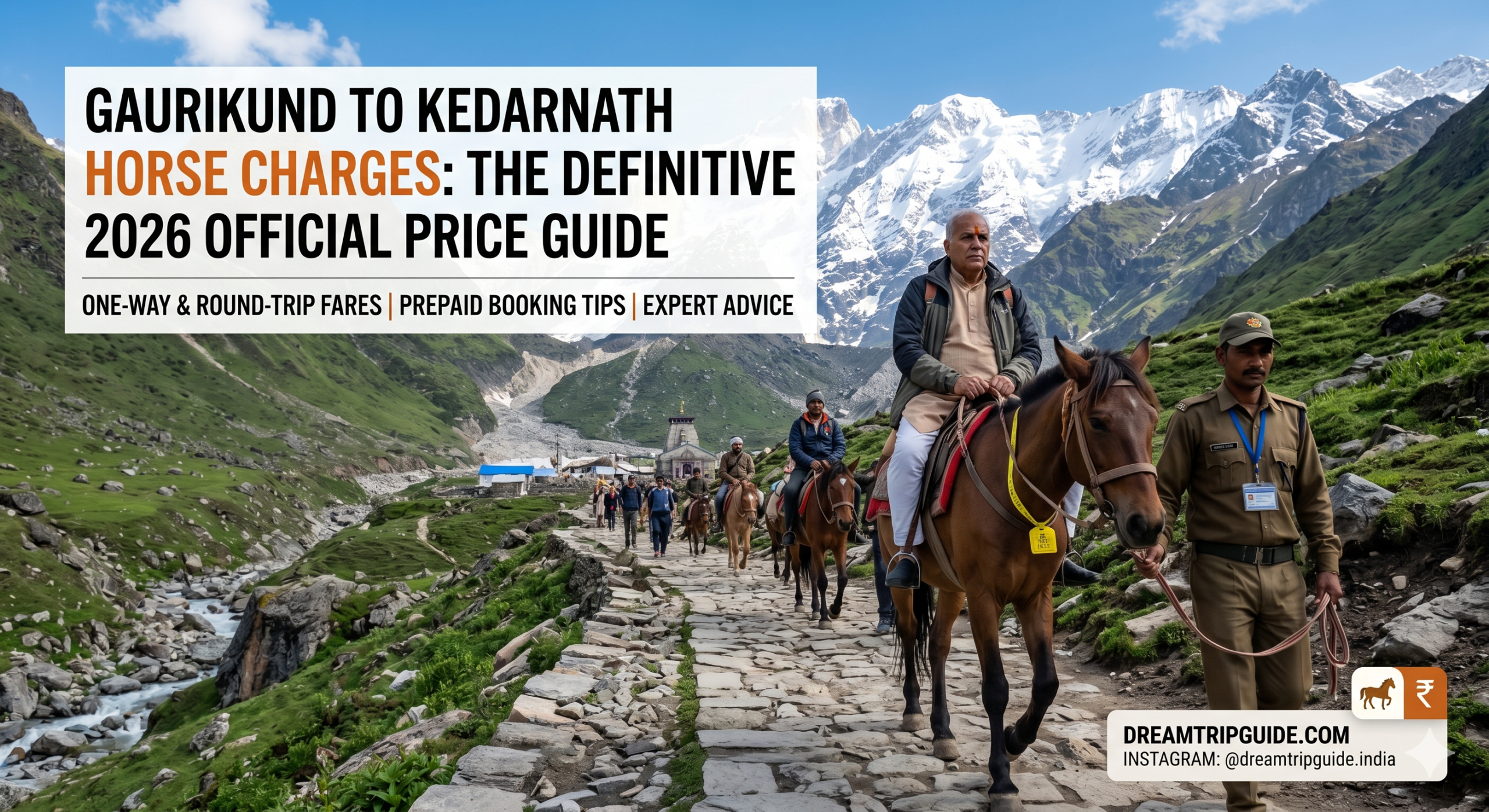
Planning to hire a pony for Kedarnath? Check the official 2026 one-way and round-trip horse charges from Gaurikund to Kedarnath. Get fixed government rates, booking tips, and expert advice.
1. Understanding the Horse & Pony Logistics
The 16km trek from Gaurikund to Kedarnath is one of the most challenging terrains in the Char Dham Yatra. While many young pilgrims prefer walking, a large number of senior citizens, families with kids, and people with physical constraints rely on Horse (Ghoda) and Pony (Khachchar) services. In 2026, the Uttarakhand government and the Zila Panchayat have streamlined the process to prevent overcharging and ensure animal welfare.
Why Pricing Fluctuates:
While there are Official Government Rates, the actual experience can vary based on demand, weather conditions, and the time of the day. For example, during the peak months of May and June, finding a horse at the official counter can involve long waiting times. This is why having a clear understanding of the “Fixed Rate” versus “Ground Reality” is crucial for every traveler.
The Role of Prepaid Counters:
To protect pilgrims from local “middlemen,” the administration has set up Prepaid Booking Counters at Sonprayag and Gaurikund. When you book from these counters, you get a computerized slip that mentions the animal’s registration number and the owner’s details. This system not only ensures a fair price but also provides security and a point of contact in case of any dispute during the journey.
Expert Review (Logistics):
“In 2026, the administration is very strict about animal health. Every horse has a biometric tag. If you see an animal that looks weak or injured, do not hire it, even if the owner offers a discount. Always prioritize safety over a few hundred rupees.” — Saurav Pal, DreamTripGuide.
Official Price List 2026 (Attractive Table)
| Route Type | Journey Details | Official Rate (Approx) | Duration |
| One-Way (Up) | Gaurikund to Kedarnath | ₹2,500 – ₹3,200 | 5 – 6 Hours |
| One-Way (Down) | Kedarnath to Gaurikund | ₹1,500 – ₹2,000 | 3 – 4 Hours |
| Round Trip | Gaurikund-Kedar-Gaurikund | ₹4,500 – ₹5,500 | 2 Days |
| Pithu (Porter) | Carrying Bags/Kids | ₹800 – ₹1,200 | Per Journey |
| Dandi (Palanquin) | For Elderly/Disabled | ₹8,000 – ₹12,000 | Round Trip |
2. One-Way vs. Round-Trip: Which is Better?
Choosing between a one-way booking and a round-trip (return) booking depends entirely on your physical stamina and your stay plan at the top.
The One-Way Advantage:
Many people prefer to take a horse only while going up (Uphill) because the 16km ascent is steep and oxygen levels drop. Coming down is relatively easier on the lungs, though it puts pressure on the knees. If you book one-way, you have the flexibility to decide later if you want to walk down or take a horse again. However, finding a horse at the Kedarnath base camp for the return journey can sometimes be more expensive if you haven’t pre-booked.
The Round-Trip Security:
A round-trip booking is highly recommended for families and senior citizens. When you pay for a round trip, the same handler/horse owner is usually responsible for your return journey. You just need to coordinate the timing after your Darshan. In the 2026 season, round-trip bookings from the prepaid counter are often discounted compared to two separate one-way bookings.
Pros and Cons of Hiring a Horse
Pros:
- Energy Saving: You reach the temple fresh and ready for Darshan/Aarti.
- Saves Time: Horses move at a steady pace, usually reaching 1-2 hours faster than an average walker.
- Safety: Experienced handlers know the narrow paths and “Shortcuts” safely.
Cons:
- Cost: It can be expensive for a large family.
- Physical Discomfort: Sitting on a horse for 6 hours can cause back and inner-thigh soreness (saddle sores).
- Animal Ethics: Some people find it emotionally difficult to see animals working on steep slopes.
🏔️ Kedarnath Yatra Checklist 2026: 12 Must-Have Items for a Successful Trek

- ✅Altitude Protection: Prevents breathlessness and headaches caused by low oxygen levels at Kedarnath top.
- ✅Instant Energy: Helps you recover faster during the steep 16km trek from Gauri Kund.
- ✅Lightweight: Fits easily in your side pocket and weighs almost nothing.

- ✅Unbeatable Grip: Anti-skid soles designed specifically for slippery mountain rocks and mud.
- ✅100% Waterproof: Keeps your feet dry during sudden rains or while crossing small streams.
- ✅Ankle Support: Prevents injuries on the uneven zig-zag paths of the Kedar valley.

- ✅Total Coverage: Covers you and your large backpack completely during heavy mountain rains.
- ✅Quick Dry: Much better than heavy raincoats; it's light and dries in minutes.
- ✅Windproof: Blocks the freezing cold winds that follow the rain at high altitudes.

- ✅Heat Retention: Advanced fabric that locks body heat even when the temperature drops to 0°C.
- ✅Odour Resistant: Can be worn for multiple days without feeling unhygienic.
- ✅Slim Fit: Fits comfortably under your regular clothes without looking bulky.

- ✅Cold Protection: Battery dies fast in cold weather; this ensures your phone stays alive for photos.
- ✅Massive Capacity: Charge your phone and camera 4-5 times fully during the trip.
- ✅Fast Charging: Don't waste time at charging points in tea stalls.

- ✅Knee Support: Reduces 25% of the pressure on your knees during the steep descent.
- ✅Better Balance: Essential for crossing slippery patches or walking in narrow trails.
- ✅Anti-Shock: Absorbs ground impact to prevent wrist and shoulder pain.

- ✅12H Hot: Keep hot water/tea ready to fight the freezing cold of the Himalayas.
- ✅BPA Free: Safe and healthy stainless steel that won't rust.
- ✅Strong Body: Survives accidental drops on rocky terrains easily.

- ✅Mountain Ready: Contains pain sprays, bandages, and altitude sickness tablets.
- ✅Lightweight: Small enough to fit in any backpack side pocket.
- ✅Must Have: Medical help is far away on the trek; be your own first responder.
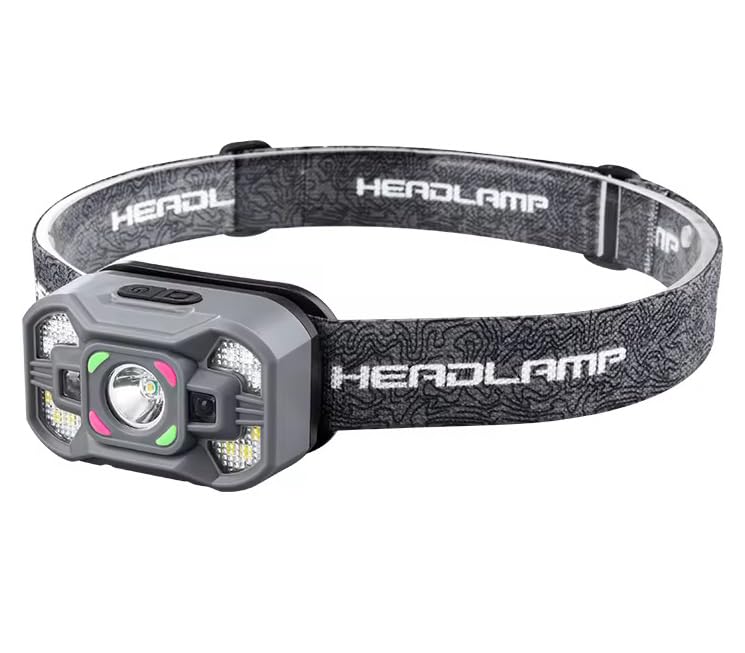
- ✅Hands-Free: Essential for early morning treks (3 AM) so you can use trekking poles freely.
- ✅High Brightness: Powerful beam that covers up to 100 meters clearly.
- ✅Weatherproof: Continues to work even during rain or heavy mist.
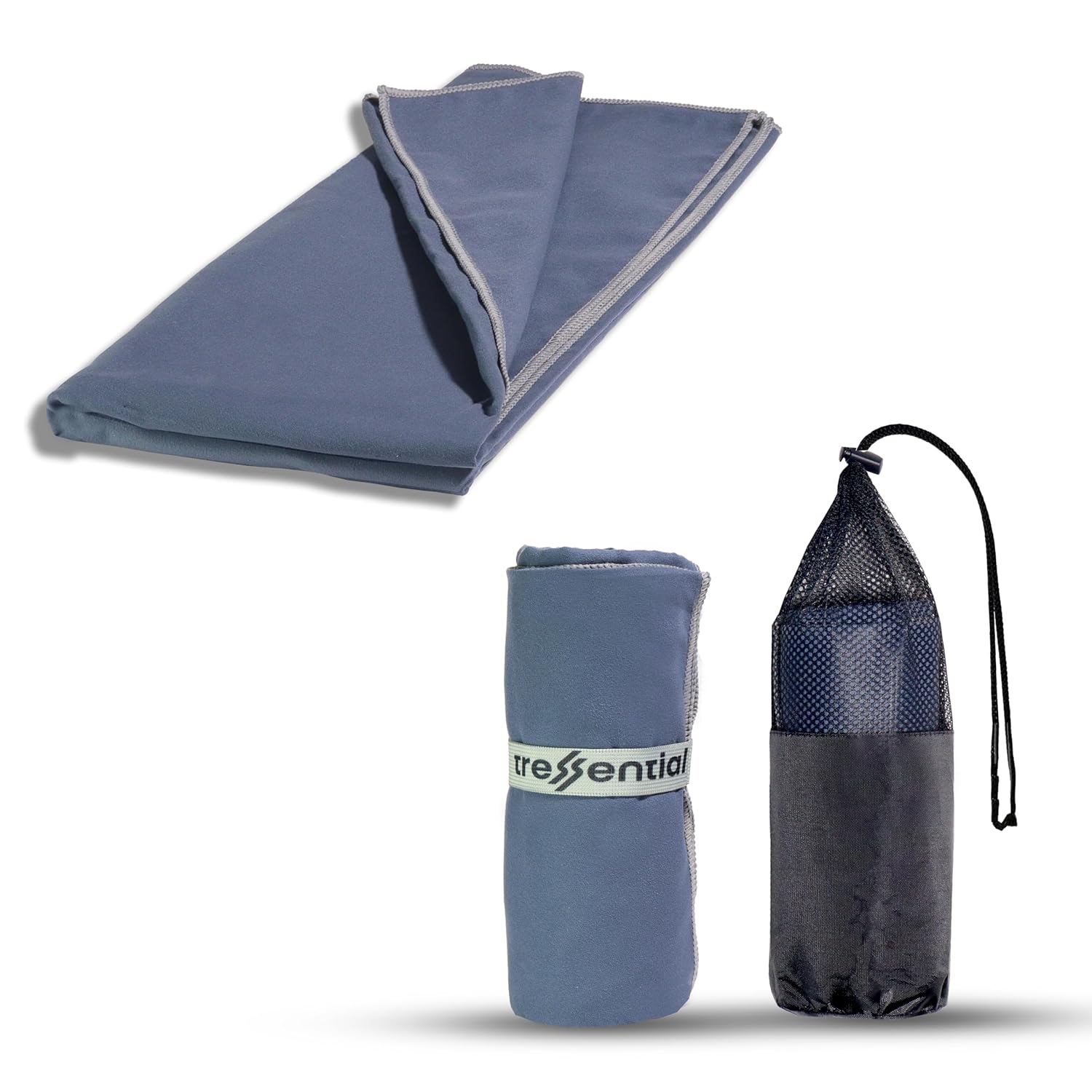
- ✅No Wet Smell: Dries in minutes so you don't carry a heavy, smelly towel in your bag.
- ✅Super Tiny: Folds into a small pouch, leaving more room for warm clothes.
- ✅Gentle: Ultra-soft fabric that is perfect for cold weather skin care.

- ✅High Altitude Protection: Himalayan sun is harsh and causes severe tanning & burns.
- ✅Non-Greasy: Doesn't feel oily while trekking or sweating.
- ✅Sweat Resistant: Stays on your skin even during high-intensity walking.

- ✅Dual Protection: Ponchos are good, but this ensures no water enters your bag.
- ✅Reflective Logo: Helps others see you in heavy mist or night treks.
- ✅Universal Fit: Fits perfectly on all 30L to 60L trekking backpacks.
3. The Booking Process & Counter Locations
Booking a horse in 2026 is much more digital and organized. You cannot simply walk up to any horse owner and start the journey—official registration is a must.
Step 1: The Biometric Registration:
Before booking a horse, ensure you have your Char Dham Yatra Registration QR Code. The prepaid counter will ask for your registration slip or your Yatra ID.
Step 2: Counter Locations:
- Sonprayag: This is the first major point. If you arrive late in the evening, book your horse here for the next morning.
- Gaurikund: This is where the trek actually begins. There is a large dedicated counter near the horse-stand (Ghoda-Parao).
Step 3: Payment & Receipt:
Always pay at the counter and take the Computerized Receipt. Do not pay the full amount to the handler directly on the way. The receipt serves as your “Insurance” and “Contract.” If a handler leaves you halfway, you can complain at the police outpost using that receipt.
Expert Review (Booking Strategy):
“The best time to book is early morning (4 AM to 6 AM). The horses are fresh, and the weather is cool. If you try to book after 10 AM, the prices might stay the same officially, but the availability drops, and you might have to wait for hours.” — Saurav Pal, Travel Strategist.
4. Safety Tips & Physical Preparation
Sitting on a horse for 16km is not as easy as it looks. It requires a certain level of balance and core strength.
How to Ride Safely:
- Lean Forward: While going uphill, lean your body slightly forward. This helps the horse balance the weight.
- Lean Backward: While going downhill, lean slightly backward to prevent yourself from slipping over the horse’s head.
- Hold the Grip: Always keep a firm grip on the saddle handle. Do not try to take selfies or use your phone while the horse is moving on narrow edges.
Weight Limits in 2026:
The administration has strictly implemented weight limits for the safety of the animals. Generally, a person weighing over 85-90 kg may be asked to pay extra or hire a “Dandi” (Palanquin) instead, as it is considered cruel for a single pony to carry excessive weight on steep slopes.
What to Do and What NOT to Do
What to Do:
- Verify the ID: Check if the horse has a government ID tag around its neck.
- Carry Cash: While digital payments are growing, network at Gaurikund is patchy. Keep cash for the prepaid counter.
- Wear comfortable pants: Avoid jeans; wear flexible trekking pants to avoid rashes from the saddle.
What NOT to Do:
- Don’t Shutter/Scream: High-altitude horses are used to crowds, but sudden loud noises can scare them.
- Don’t Pull the Reins: Let the handler manage the horse. They know the animal’s temperament better than you.
- Don’t Tip Excessively: Tipping is common but don’t let handlers “demand” extra money for “Chai-Paani.” Stick to the official fare.
5. FAQs: Common Doubts Cleared
Q1. Are horse prices different for kids?
No, usually the price is per animal. However, for very small children, you can hire a “Pithu” (porter) who carries the child in a specialized basket.
Q2. Can I book a horse online?
As of early 2026, the government is testing an online portal, but the most reliable way remains the physical Prepaid Counter at Sonprayag/Gaurikund.
Q3. What if I get injured during the ride?
The prepaid booking includes basic insurance. Every route has SDRF (State Disaster Response Force) and medical camps at Rambara and Lincholi.
Q4. Does the price include the handler’s food?
Yes, the official fare is all-inclusive. You are not obligated to pay for the handler’s meals or stay.
Final Word: A Balanced Journey
At DreamTripGuide, we believe that the journey to Kedarnath is about faith and endurance. Whether you walk or take a horse, the goal is to reach the feet of Lord Shiva safely and peacefully. Make sure you follow the 2026 guidelines, respect the animals, and keep the Himalayas clean.
👉 Also Read – Book Kedarnath Package
CTA: For more live updates on Kedarnath weather and crowd alerts, follow us on Instagram @dreamtripguide.india. Happy Yatra!
