
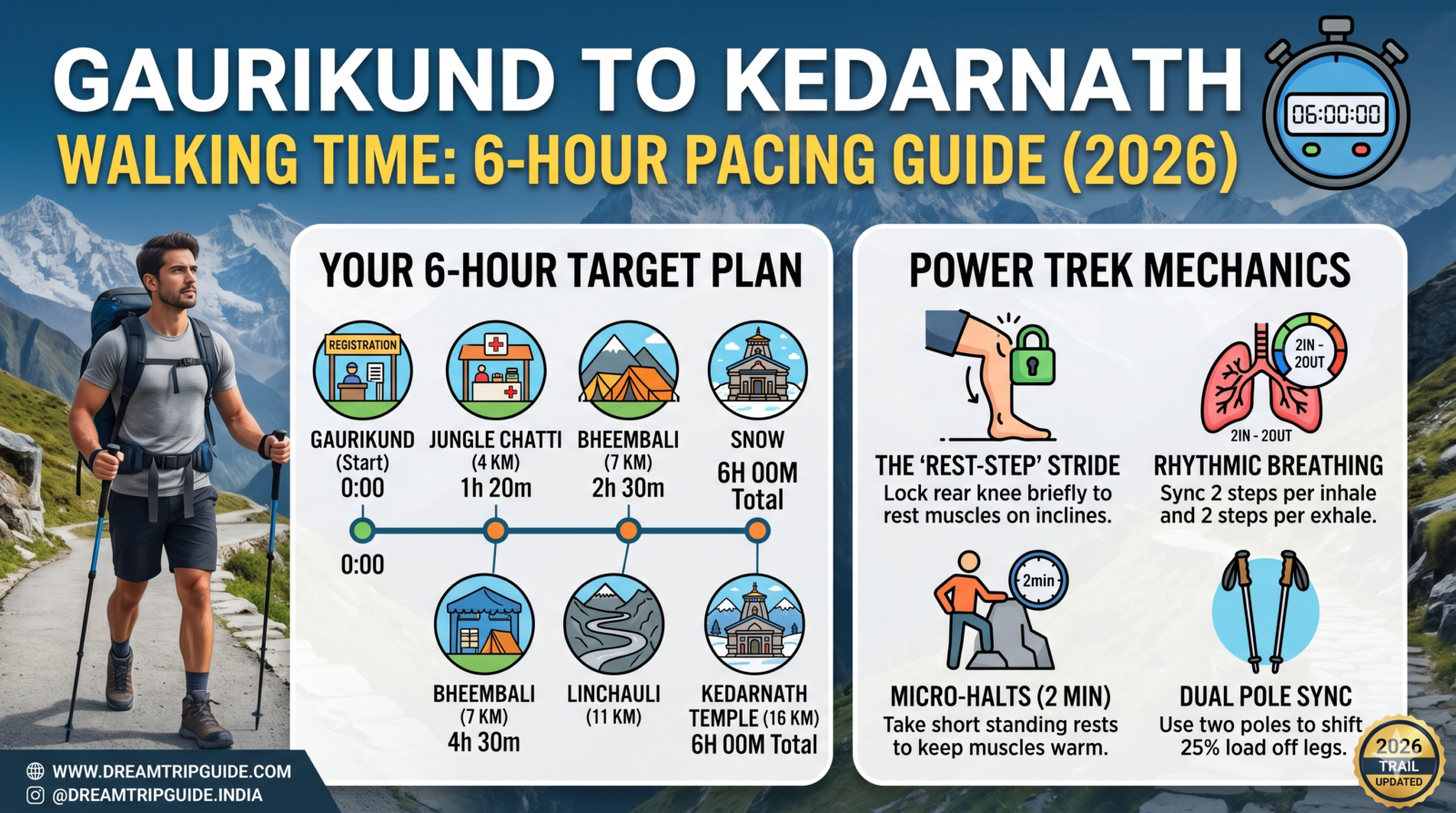
Want to complete the 16km Kedarnath trek in under 6 hours? Read our 3,000-word expert pacing guide. Learn the “Rest-Step” technique, mile-by-mile time targets, and essential 2026 trail tips.
KEDARNATH WEATHERThe 6-Hour Challenge: Reality Check of the 16 km Altitude Climb
Completing the trek from Gaurikund to Kedarnath in 6 hours is a highly achievable goal, but it requires a strict mechanical discipline. The 16 km trail demands that you scale from 1,982 meters to 3,583 meters—a vertical elevation gain of 1,601 meters. In 2026, while the trail has been completely paved and widened up to 4 meters, the atmospheric pressure drops significantly as you ascend, reducing the oxygen available in every breath. Most people fail to touch the 6-hour mark not because they lack physical stamina, but because they burn out their muscles in the first 4 kilometers.
To hit a 6-hour target, your average walking speed needs to be around 2.6 km per hour. While this sounds slow for city roads, on a 15-degree mountain incline mixed with high mule traffic and thin air, it requires a constant, rhythmic pace. At DreamTripGuide, we categorize this as a “Power Trek.” This introductory section prepares you mentally to treat the climb as a marathon, not a sprint. If you rush at the start, your heart rate will spike, lactic acid will jam your calves, and you will end up taking 10 to 12 hours total. We break down the exact math behind pacing so your body stays in the perfect fat-burning and energy-conserving zone.
🏔️ Kedarnath Yatra Checklist 2026: 12 Must-Have Items for a Successful Trek

- ✅Altitude Protection: Prevents breathlessness and headaches caused by low oxygen levels at Kedarnath top.
- ✅Instant Energy: Helps you recover faster during the steep 16km trek from Gauri Kund.
- ✅Lightweight: Fits easily in your side pocket and weighs almost nothing.

- ✅Unbeatable Grip: Anti-skid soles designed specifically for slippery mountain rocks and mud.
- ✅100% Waterproof: Keeps your feet dry during sudden rains or while crossing small streams.
- ✅Ankle Support: Prevents injuries on the uneven zig-zag paths of the Kedar valley.

- ✅Total Coverage: Covers you and your large backpack completely during heavy mountain rains.
- ✅Quick Dry: Much better than heavy raincoats; it's light and dries in minutes.
- ✅Windproof: Blocks the freezing cold winds that follow the rain at high altitudes.

- ✅Heat Retention: Advanced fabric that locks body heat even when the temperature drops to 0°C.
- ✅Odour Resistant: Can be worn for multiple days without feeling unhygienic.
- ✅Slim Fit: Fits comfortably under your regular clothes without looking bulky.

- ✅Cold Protection: Battery dies fast in cold weather; this ensures your phone stays alive for photos.
- ✅Massive Capacity: Charge your phone and camera 4-5 times fully during the trip.
- ✅Fast Charging: Don't waste time at charging points in tea stalls.

- ✅Knee Support: Reduces 25% of the pressure on your knees during the steep descent.
- ✅Better Balance: Essential for crossing slippery patches or walking in narrow trails.
- ✅Anti-Shock: Absorbs ground impact to prevent wrist and shoulder pain.

- ✅12H Hot: Keep hot water/tea ready to fight the freezing cold of the Himalayas.
- ✅BPA Free: Safe and healthy stainless steel that won't rust.
- ✅Strong Body: Survives accidental drops on rocky terrains easily.

- ✅Mountain Ready: Contains pain sprays, bandages, and altitude sickness tablets.
- ✅Lightweight: Small enough to fit in any backpack side pocket.
- ✅Must Have: Medical help is far away on the trek; be your own first responder.

- ✅Hands-Free: Essential for early morning treks (3 AM) so you can use trekking poles freely.
- ✅High Brightness: Powerful beam that covers up to 100 meters clearly.
- ✅Weatherproof: Continues to work even during rain or heavy mist.
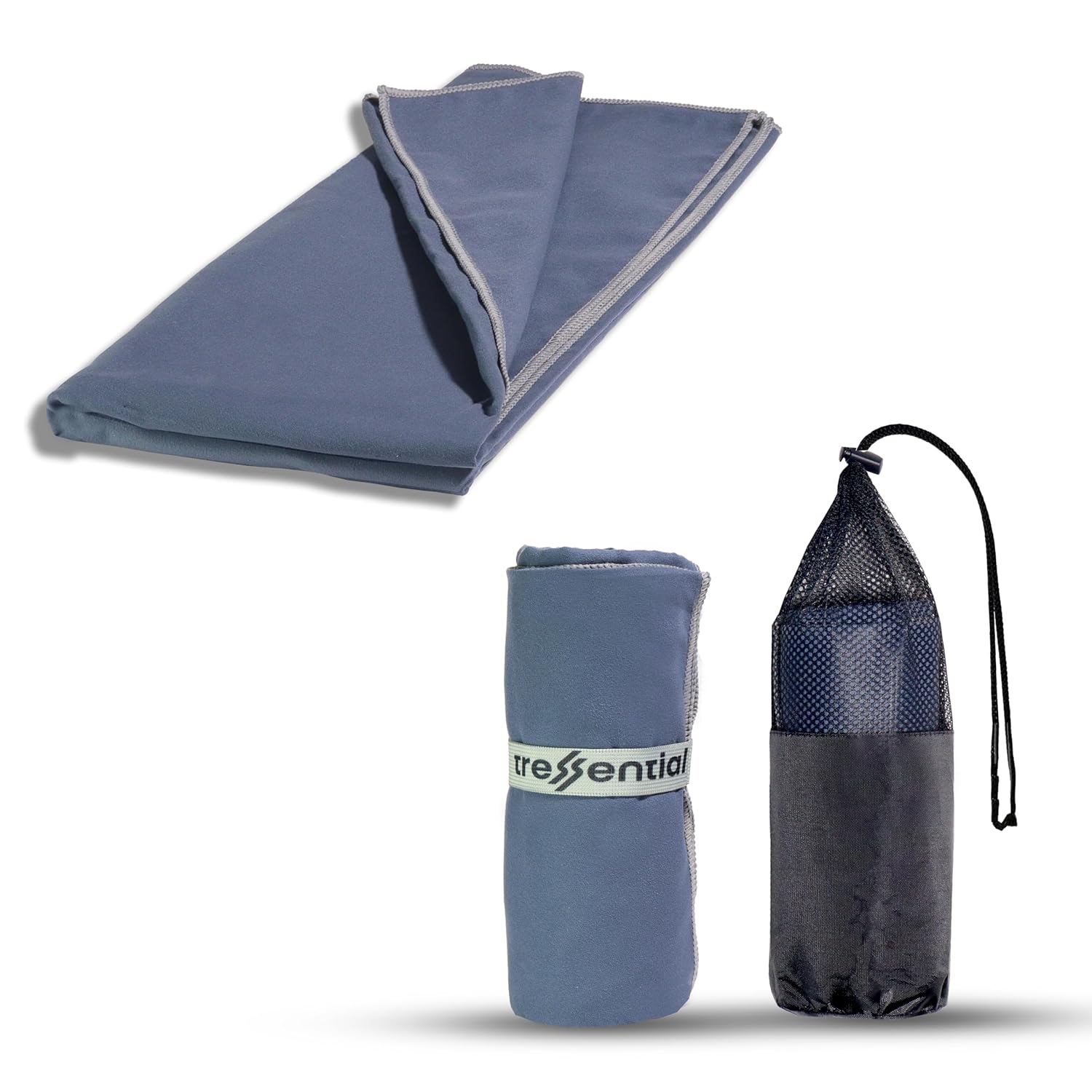
- ✅No Wet Smell: Dries in minutes so you don't carry a heavy, smelly towel in your bag.
- ✅Super Tiny: Folds into a small pouch, leaving more room for warm clothes.
- ✅Gentle: Ultra-soft fabric that is perfect for cold weather skin care.

- ✅High Altitude Protection: Himalayan sun is harsh and causes severe tanning & burns.
- ✅Non-Greasy: Doesn't feel oily while trekking or sweating.
- ✅Sweat Resistant: Stays on your skin even during high-intensity walking.

- ✅Dual Protection: Ponchos are good, but this ensures no water enters your bag.
- ✅Reflective Logo: Helps others see you in heavy mist or night treks.
- ✅Universal Fit: Fits perfectly on all 30L to 60L trekking backpacks.
The 6-Hour Pacing Map: Segment-by-Segment Time Targets
To maintain a 6-hour schedule, you must break the 16 km route into chunks. Checking your watch at specific government milestones will tell you whether you need to accelerate or maintain your current stride.
The trail is visually divided into three major terrain profiles: the gradual lower incline, the brutal mid-way zigzag turns, and the final high-altitude flat valley. By keeping a strict time budget for each segment, you prevent muscle exhaustion and ensure you reach the temple plaza before the afternoon weather changes.
Also Read – Book Kedarnath Package
⏱️ The 6-Hour Walking Time Budget Table (2026)
| Segment Path | Distance | Ideal Walking Speed | Targeted Time Window | Cumulative Time |
| Gaurikund to Jungle Chatti | 4 KM | 3.0 KM/H | 1 Hour 20 Mins | 1 Hour 20 Mins |
| Jungle Chatti to Bheembali | 3 KM | 2.5 KM/H | 1 Hour 10 Mins | 2 Hours 30 Mins |
| Bheembali to Linchauli | 4 KM | 2.0 KM/H | 2 Hours 00 Mins | 4 Hours 30 Mins |
| Linchauli to Rudra Point | 3 KM | 2.5 KM/H | 1 Hour 10 Mins | 5 Hours 40 Mins |
| Rudra Point to Temple Plaza | 2 KM | 3.0 KM/H (Flat) | 20 Mins | 6 Hours Total |
Focus: The “Rest-Step” Technique & Energy Management Box
How do professional mountain guides walk for hours without gasping for breath? They use a biomechanical trick called the “Rest-Step” technique. This is the single most important skill you need to master to finish the trek in 6 hours without using an oxygen can.
📦 The 6-Hour Power Pacing Mechanics Checklist
| Pacing Technique | How to Execute on the Trail | Why it Saves 20% Energy |
| The Rest-Step Stride | As you step up, lock your rear knee and pause for a micro-second. Transfer weight to your bone structure rather than muscles. | Gives your quadriceps a tiny rest on every single step, preventing lactic acid buildup. |
| Rhythmic Breathing | Match your steps to your breath. Take two steps while inhaling, and two steps while exhaling. | Keeps your heart rate stable and ensures continuous oxygenation of the blood. |
| The 2-Minute Micro-Halt | Never sit down for long 20-minute breaks. Instead, lean against the mountain wall for 60 seconds every 500 meters. | Keeps your muscles warm. Long breaks cool down the body, making it harder to restart. |
| The Trekking Pole Sync | Plant your pole ahead of your opposite foot. Push off the pole to lift your body weight. | Shifts 25% of the climbing load from your calves and knees to your shoulders and arms. |
Pros and Cons: A 6-Hour Fast Trek vs. an 11-Hour Slow Trek
Pacing yourself for a quick 6-hour ascent has unique structural advantages, but it requires a level of physical conditioning that might not suit every pilgrim profile.
The 6-Hour Fast Trek Strategy
- Pros: You reach the temple before the evening frost sets in; you beat the massive line for afternoon check-ins at GMVN; less overall time spent exposed to unpredictable mountain rain.
- Cons: Requires consistent mental alertness; leaves minimal time for long photography sessions or casual conversations at tea dhabas.
The 11-Hour Slow Trek Strategy
- Pros: Highly relaxed pace; ideal for large families walking with senior citizens; plenty of time to soak in the views of the waterfalls.
- Cons: Extreme fatigue due to spending nearly half a day on your feet; high risk of catching cold as mountain temperatures plummet after 3:00 PM; navigating the final steep zones in the dark.
Expert Review: “Saurav, as a fitness enthusiast who watches weight transitions and consistency, I can tell you that mountain climbing is pure mathematics. A 6-hour climb is won by avoiding the temptation to sit down at every Maggi stall. Keep your footsteps short, look 5 feet ahead of you, and let your trekking pole dictate your rhythm. Your pacing discipline is your safety net.” — Saurav Pal, Chief Analyst, DreamTripGuide.
Critical Pacing Dos and Don’ts for the 16km Climb
What to Do :
- DO Start at 4:30 AM: Leaving Gaurikund early means walking the first 7 km in the cool morning air, which drastically reduces dehydration rates.
- DO Maintain a “Short Stride”: Take smaller steps on steep slopes. Long strides put immense pressure on the hamstring and cause quick exhaustion.
- DO Sip Water on the Go: Use a hydration bladder pipe or a accessible flask. Drink 2 sips every 15 minutes instead of gulping half a liter after an hour.
- DO Wear Lightweight Footwear: Every 100g added to your shoes feels like 1kg on your lower back after 10,000 steps. Trust rugged, lightweight deep-lug trekking boots.
What NOT to Do (Kya Na Karein):
- DON’T Race Against Others: The trail is full of local porters who walk fast because their bodies are acclimatized. Stick strictly to your own time budget table.
- DON’T Sit Down Immediately After a Steep Rise: If you finish a hard zigzag patch, keep walking slowly on the flat zone. Sitting down instantly causes muscle cramps.
- DON’T Carry an Overpacked Bag: Your backpack weight should not exceed 5 kg for a 6-hour fast trek. Leave extra luggage at Sonprayag lockers.
- DON’T Use Stair Short-Cuts: The vertical stone steps bypass the loops but destroy your heart rate and knees. Stick strictly to the main paved route.
Nutritional Timing: Fueling Your Body for a 6-Hour Window
To maintain a continuous speed of 2.5 KM/H over 6 hours, your body requires a strategic glucose supply. Eating a heavy plate of Paranthas or oily food at Gaurikund is the fastest way to fail your 6-hour target because digestion diverts blood flow away from your leg muscles.
- Hour 1-2 (Gaurikund to Bheembali): Start with natural sugars. Eat a banana or a handful of dates before starting. Your body burns glycogen fast during the initial incline.
- Hour 3-4 (Bheembali to Linchauli): This is the high-altitude transition zone. Sip electrolyte-infused water (ORS) to prevent muscle spasms. Eat a small energy bar or a square of dark chocolate at the top of the Z-turns.
- Hour 5-6 (Linchauli to Temple Plaza): As the air thins, your metabolism slows down. Drink a cup of hot black tea or hot water with honey at Rudra Point for an instant metabolic boost to finish the final 2 kilometers seamlessly.
People Also Ask (PAA) – Walking Time & Pacing Special
- What is the average walking time from Gaurikund to Kedarnath? For most average tourists, it takes 8 to 10 hours. A fit individual using pacing techniques can do it in 6 hours.
- Is it possible to complete the trek in 5 hours? Yes, seasoned trekkers or local residents regularly finish it in 4-5 hours, but it requires superior cardio conditioning.
- What is the hardest section to pace on the map? The 4 km zone between Bheembali and Linchauli due to continuous steep zigzag bends.
- How many steps is the Kedarnath trek? On average, the 16 km incline translates to roughly 22,000 to 26,000 steps depending on your stride length.
- Does taking breaks increase total trekking time significantly? Yes, if you take five 15-minute breaks, you add 1.5 hours of dead time to your journey. Stick to 1-minute standing micro-breaks.
- Can I wear running shoes if I want to walk fast? No, running shoes lack the necessary traction for wet mountain tiles, which can cause slips and slow down your overall speed.
- What is the best time to start the climb for a 6-hour target? Between 4:00 AM and 5:00 AM is ideal to avoid trail congestion caused by horses and ponies.
- Should I use one or two trekking poles? For a fast 6-hour climb, two poles are highly recommended as they distribute body weight symmetrically.
- Does hydration affect walking speed at high altitudes? Absolutely. Dehydration thickens blood, leading to lower oxygen delivery to muscles, which instantly drops your walking speed.
- Where can I track real-time trail conditions before starting? We update live trek timing guidelines and crowd updates across our digital channels.
Pace Your Breath, Conquer the Valley!
Reaching the feet of Baba Kedar in 6 hours is a beautiful blend of physical stamina and mental strategy. Walk smart, maintain your time rhythm, and secure your travel gear in advance:
👉 Instagram: @dreamtripguide.india
👉 Pacing Hub & Gear Guides: www.dreamtripguide.com
