
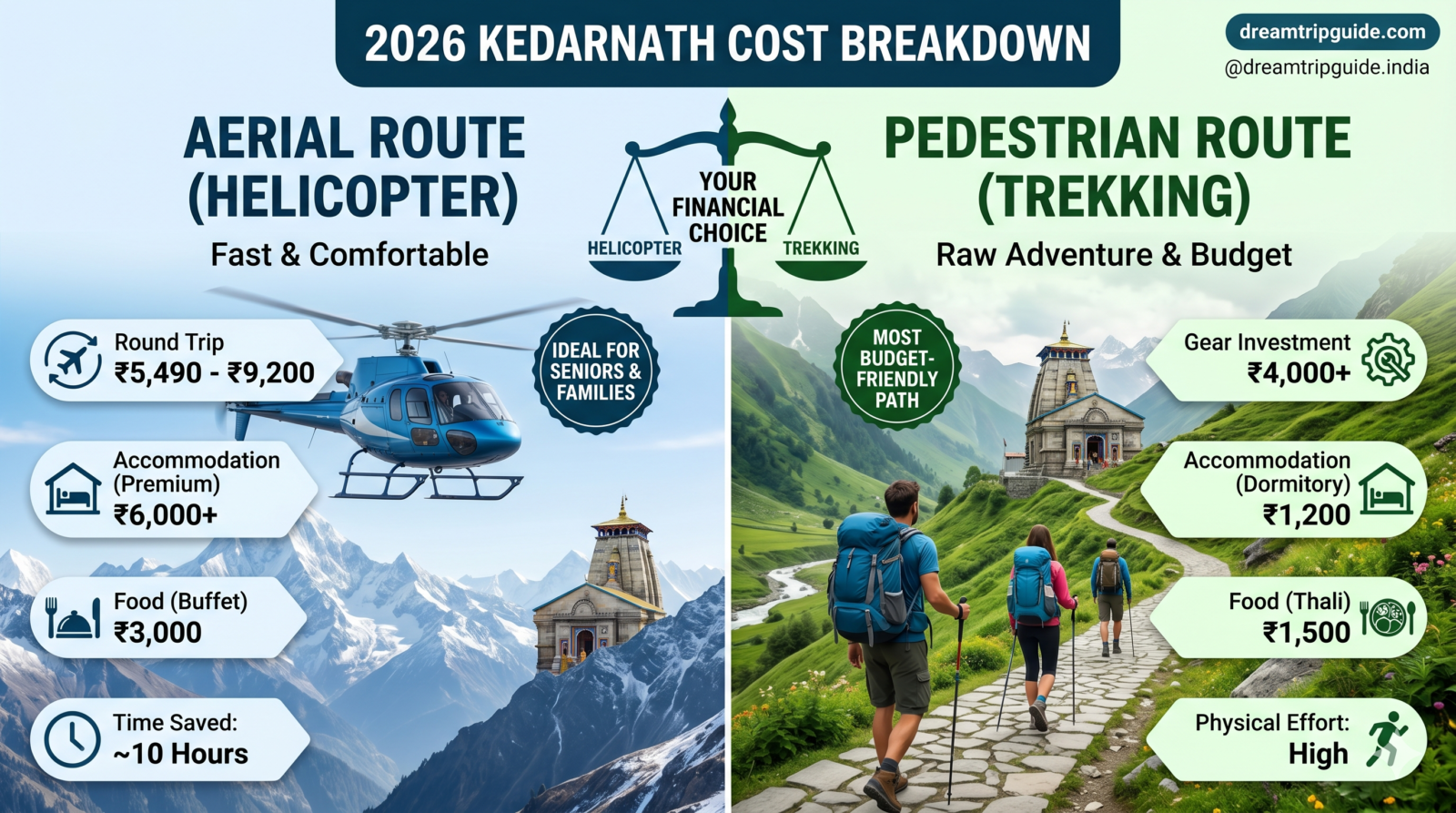
Planning Kedarnath in 2026? Check the total trip cost comparison between Helicopter and Trekking. Detailed month-wise breakdown, accommodation, food charges, and hidden costs explained.
KEDARNATH WEATHERThe Financial Choice: Why This Comparison Dictates Your Entire Plan
Planning a trip to Kedarnath at 11,755 feet is completely different from a regular vacation. Here, your budget is directly tied to your physical comfort and safety. In the 2026 season, as tourist numbers hit record highs, expenses along the Mandakini valley have split into two distinct pricing paths: the fast-track high-comfort aerial route via Helicopter, and the classic, endurance-testing 16km walking Trekking route. Most pilgrims jump into booking without calculating the end-to-end travel expenses, only to face unexpected financial surprises later at Sonprayag.
A common myth is that selecting the trekking route is completely free, while selecting the helicopter route is exclusively for the ultra-wealthy. In reality, when you add up the hidden costs—such as porter charges, multiple mid-way food stops, emergency medical purchases, and extra overnight stays due to fatigue—the price gap narrows considerably. At DreamTripGuide, we encourage travelers to look at their “Total Trip Value” from Rishikesh back to Rishikesh, rather than just comparing a flight ticket against a pair of shoes. This comprehensive guide breaks down every single expense layer so you can select the perfect logistical path that fits your physical limits and your wallet.
🏔️ Kedarnath Yatra Checklist 2026: 12 Must-Have Items for a Successful Trek

- ✅Altitude Protection: Prevents breathlessness and headaches caused by low oxygen levels at Kedarnath top.
- ✅Instant Energy: Helps you recover faster during the steep 16km trek from Gauri Kund.
- ✅Lightweight: Fits easily in your side pocket and weighs almost nothing.

- ✅Unbeatable Grip: Anti-skid soles designed specifically for slippery mountain rocks and mud.
- ✅100% Waterproof: Keeps your feet dry during sudden rains or while crossing small streams.
- ✅Ankle Support: Prevents injuries on the uneven zig-zag paths of the Kedar valley.

- ✅Total Coverage: Covers you and your large backpack completely during heavy mountain rains.
- ✅Quick Dry: Much better than heavy raincoats; it's light and dries in minutes.
- ✅Windproof: Blocks the freezing cold winds that follow the rain at high altitudes.

- ✅Heat Retention: Advanced fabric that locks body heat even when the temperature drops to 0°C.
- ✅Odour Resistant: Can be worn for multiple days without feeling unhygienic.
- ✅Slim Fit: Fits comfortably under your regular clothes without looking bulky.

- ✅Cold Protection: Battery dies fast in cold weather; this ensures your phone stays alive for photos.
- ✅Massive Capacity: Charge your phone and camera 4-5 times fully during the trip.
- ✅Fast Charging: Don't waste time at charging points in tea stalls.

- ✅Knee Support: Reduces 25% of the pressure on your knees during the steep descent.
- ✅Better Balance: Essential for crossing slippery patches or walking in narrow trails.
- ✅Anti-Shock: Absorbs ground impact to prevent wrist and shoulder pain.

- ✅12H Hot: Keep hot water/tea ready to fight the freezing cold of the Himalayas.
- ✅BPA Free: Safe and healthy stainless steel that won't rust.
- ✅Strong Body: Survives accidental drops on rocky terrains easily.

- ✅Mountain Ready: Contains pain sprays, bandages, and altitude sickness tablets.
- ✅Lightweight: Small enough to fit in any backpack side pocket.
- ✅Must Have: Medical help is far away on the trek; be your own first responder.
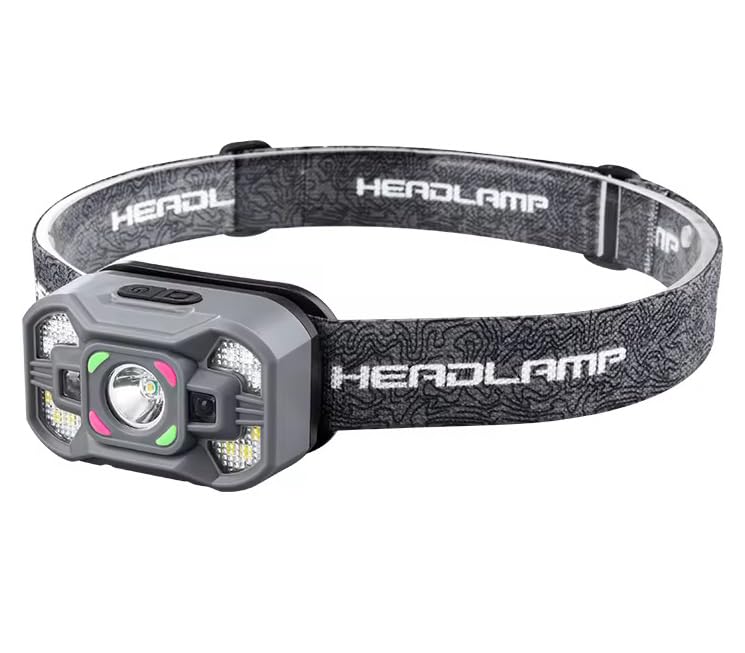
- ✅Hands-Free: Essential for early morning treks (3 AM) so you can use trekking poles freely.
- ✅High Brightness: Powerful beam that covers up to 100 meters clearly.
- ✅Weatherproof: Continues to work even during rain or heavy mist.
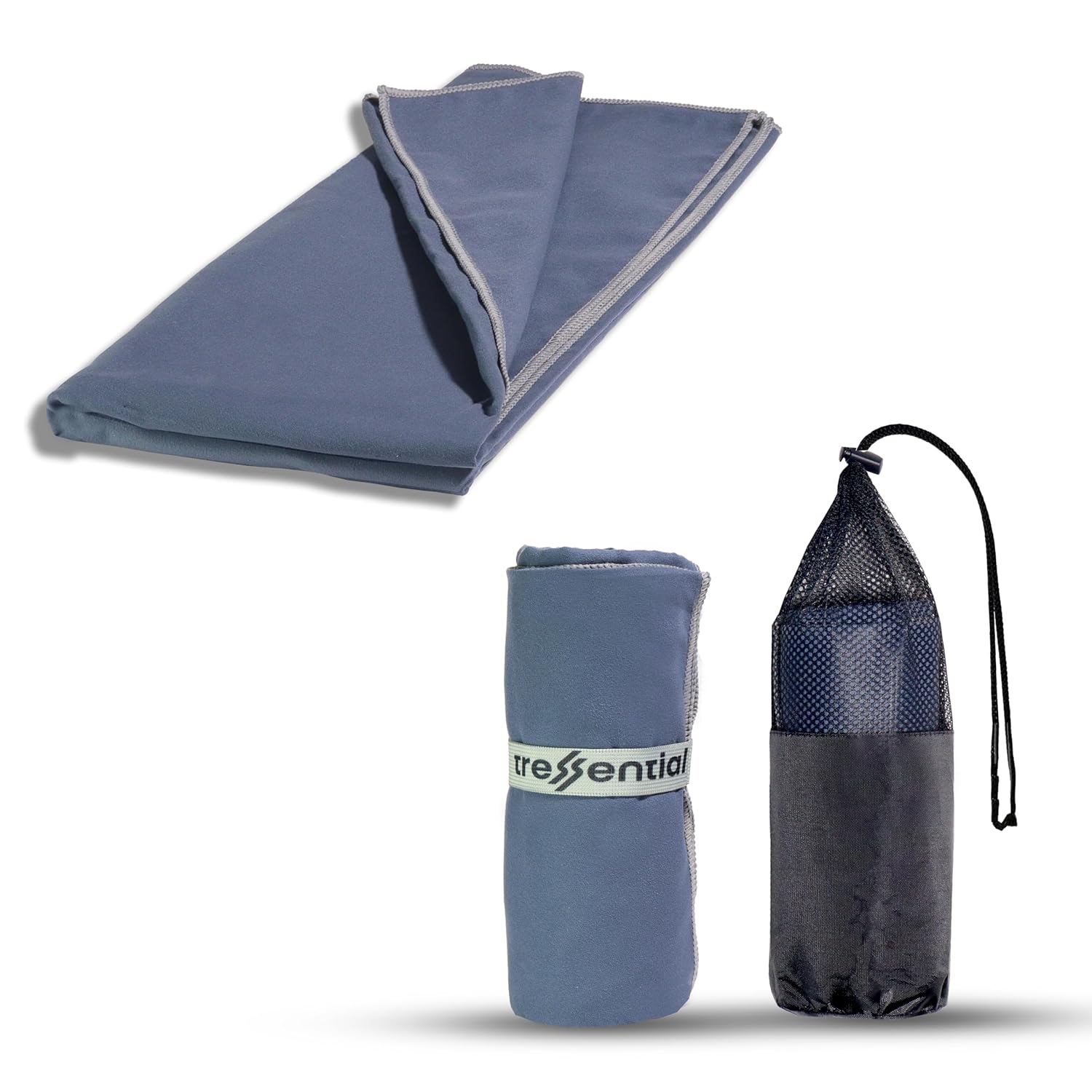
- ✅No Wet Smell: Dries in minutes so you don't carry a heavy, smelly towel in your bag.
- ✅Super Tiny: Folds into a small pouch, leaving more room for warm clothes.
- ✅Gentle: Ultra-soft fabric that is perfect for cold weather skin care.

- ✅High Altitude Protection: Himalayan sun is harsh and causes severe tanning & burns.
- ✅Non-Greasy: Doesn't feel oily while trekking or sweating.
- ✅Sweat Resistant: Stays on your skin even during high-intensity walking.

- ✅Dual Protection: Ponchos are good, but this ensures no water enters your bag.
- ✅Reflective Logo: Helps others see you in heavy mist or night treks.
- ✅Universal Fit: Fits perfectly on all 30L to 60L trekking backpacks.
End-to-End Budget Blueprint: The Full Breakdown Table
To understand where your hard-earned money goes, you need a side-by-side view of a standard 3-Night / 4-Day itinerary starting from Rishikesh. This comparison assumes standard mid-range comfort levels for both profiles without cutting corners on essential health and nutrition.
Also Read – Book Kedarnath Package
📊 Helicopter vs. Trekking Cost Matrix (Per Person – 2026 Rates)
| Expense Category | Helicopter Itinerary Base | Trekking (Pedestrian) Base |
| Transport (Rishikesh to Base) | ₹8,000 (Private Cab/SUV Share) | ₹1,200 (Public GMOU Bus/Shared Maxx) |
| Base Accommodation (Sonprayag) | ₹3,500 (Premium Private Room) | ₹1,000 (Basic Lodge/Homestay) |
| The Mountain Transit | ₹5,490 – ₹8,750 (Official Round-Trip) | ₹0 (Walking) or ₹4,000 (Pony Option) |
| Top Accommodation (Kedarnath) | ₹6,000 (Private Cottage/Attached Bath) | ₹1,200 (GMVN Bunk Bed Dormitory) |
| Food & Water (4 Days Total) | ₹3,000 (Buffet/Premium Dhabas) | ₹1,500 (Local Thalis & Maggi Stops) |
| Mule/Porter for Heavy Luggage | ₹0 (Left at Base / Small 3kg Cabin Bag) | ₹2,500 (16km Baggage carrier load) |
| Total Estimated Cost | ₹25,990 – ₹31,250 | ₹7,400 – ₹11,200 |
Focus: The Survival & Gear Investment Box
Your journey’s financial health is heavily impacted by what you purchase before setting foot in the valley. If you are trekking, your gear requirements are highly specific and non-negotiable. If you are flying, you shift your investment into luggage management and safety trackers.
📦 Essential Kit Cost Allocation Checklist
| Essential Gear Item | Role in Helicopter Route | Role in Trekking Route | Buying Strategy |
| Waterproof Backpack | Must be compact (Under 20L) to fit strict cabin weight limits. | Must be ergonomic (40L+) with hip straps to balance weight over 10 hours. | Choose bags with integrated rain rainwear covers. |
| Trekking Poles (Pair) | Not required (Helicopter lands 500m from temple). | Absolute Lifesaver to save knees during the 16km steep descent. | Invest in foldable aluminum anti-shock poles. |
| Portable Oximeter | Keep in pocket to track quick pressure shift after landing. | Check every 2km to monitor acclimatization milestones. | Buy a high-accuracy bright LED display unit. |
| Premium Rain Poncho | Required for the short walk from helipad to temple. | Mandatory 2000mm+ PU sheet to handle active 6-hour mountain rain. | Buy a rip-stop nylon version before reaching base. |
Pros and Cons: Weighing Luxury Against Raw Adventure
Every mode of transport comes with its own structural advantages and limitations. What saves your physical energy might drain your patience during weather transitions, and what saves your money might strain your muscles.
The Helicopter Experience
- Pros: Ideal for senior citizens and families; cuts travel time to just 10 minutes; zero physical exhaustion, allowing you to attend multiple aartis fresh.
- Cons: 100% dependent on clear mountain visibility; high cancellation rates during July/August monsoons; booking slots on the official IRCTC portal is highly competitive.
The Trekking Experience
- Pros: Most budget-friendly path; full spiritual immersion of walking the historic trail; flexibility to stop at scenic waterfalls and rest camps.
- Cons: High physical stress on calves and lower back; greater exposure to changing weather hazards; requires substantial physical conditioning prior to the yatra.
Expert Review: “Dream Trip Guide, as someone tracking consistent optimization and business logistics, I tell pilgrims that the smart choice is the ‘Hybrid Strategy’. If you have senior parents, don’t let them walk the descent; book a one-way helicopter if round-trip slots are full. If you are a young adult looking for a clean, lean, fast execution, walk the 16km trail but do not skimp on a premium pair of high-ankle trekking shoes. Saving money on footwear will cost you triple in medical bills at the top.”
Critical Financial Dos and Don’ts for the Yatra
What to Do (Do’s):
- DO Book Accommodation via Official GMVN Portal: Government dormitories at Bheembali, Linchauli, and Kedarnath base are clean, standardized, and cost 50% less than private local tents.
- DO Carry Fixed Physical Cash: Network jammers and high-altitude server errors make UPI payments completely unreliable above Gaurikund. Keep at least ₹5,000 in cash per person.
- DO Check the Official Porter/Pony Rate Board: Prices are legally fixed by the Rudraprayag administration at Gaurikund stand. Never pay an un-ticketed handler extra tips.
- DO Complete Free Biometric Registration: The registration card is entirely free. Do not pay local offline agents who charge ₹500 to fill out the form.
What NOT to Do (Don’ts):
- DON’T Purchase Helicopter Tickets via WhatsApp/Instagram: In 2026, the only legal booking mechanism is the IRCTC Heliyatra portal. Fake agents will send you lookalike PDF tickets and steal your money.
- DON’T Buy Oxygen Cans at the Temple Base: Cans that cost ₹450 online or in Rishikesh are sold for ₹800+ near the temple plaza due to supply transport costs.
- DON’T Carry Heavy Suitcases Up the Trail: If trekking, leave your main rolling luggage at your hotel lockers in Sonprayag or Haridwar for a nominal fee of ₹50/day.
- DON’T Skip Travel Insurance Verification: Ensure your mandatory registration card has the updated insurance details active before starting the transit.
The Hidden Expenses: Porter Charges, Food inflation, and Lockers
When setting your budget, it is the small, uncounted expenses that cause the most damage. At 11,000 feet, every item has been carried up on a mule’s back, which means inflation is an active reality.
- The Food Multiplier: A standard plate of Maggi that costs ₹40 in plains is priced at ₹100-₹120 at Linchauli. A basic lunch Thali ranges from ₹250 to ₹400 near the temple plaza. Budget an extra ₹800 per day strictly for hot meals and fluids.
- Luggage Porter Dynamics: If your bag exceeds 10 kg and you cannot carry it, a porter (Kandi carrier) will charge anywhere between ₹2,000 to ₹3,500 based on trail rush. This single expense can completely disrupt a strict “Aam Aadmi” budget.
- Cloakroom and Safe Parking Fees: Leaving your private car at Sonprayag government parking costs approximately ₹200-₹300 per 24 hours. Factor this calculation in if you are driving your own vehicle from cities like Noida or Delhi.
7. People Also Ask (PAA) – Cost Comparison Edition
- What is the exact official price of a Kedarnath helicopter ticket in 2026? The round-trip fare ranges from ₹5,490 to ₹5,700 from Sersi/Phata, and around ₹8,750 to ₹9,200 from Guptkashi.
- Can I save money by booking a pony midway instead of Gaurikund? No, midway rates at Bheembali or Linchauli are often subject to supply shortages, making them more expensive than pre-booking at the Gaurikund base stand.
- Is food included in the GMVN room stay price? Certain premium GMVN cottages include a basic breakfast, but for standard dormitories and bunk beds, food must be purchased separately.
- How much cash backup should a solo trekker carry? A minimum of ₹4,000 to ₹5,000 in physical paper notes is highly recommended for emergency transits.
- What is the cheapest way to reach Sonprayag from Rishikesh? The direct government HRTC or GMVN state buses starting at 4:30 AM from the Rishikesh Yatra bus stand cost under ₹500 per seat.
- Are there any hidden taxes on helicopter tickets? The processing fee and standard GST are added at the final checkout screen on the official IRCTC portal.
- How much does a Palki cost for the full 16km trek? For a standard body weight up to 75 kg, the government-fixed Palki rate is approximately ₹8,000 to ₹10,000.
- Is renting winter jackets at Gaurikund cost-effective? Renting costs around ₹200-₹300 per day, but buying a lightweight thermal layer in advance online saves more money and space.
- What happens to my money if my flight is canceled due to rain? IRCTC initiates an automatic 100% bank refund to your original payment mode within 5-7 working days.
- Where can I double-check live price charts and booking dates for 2026? We track official government notifications and layout real-time pricing updates on our portal.
Plan Your Pocket, Journey Safely with DreamTripGuide!
Conquering the mountain is a spiritual victory, but a well-managed budget ensures you return home without financial stress. Secure your essential travel items and track our live cost alerts:
👉 Instagram: @dreamtripguide.india
👉 Cost & Route Planner Hub: www.dreamtripguide.com
