
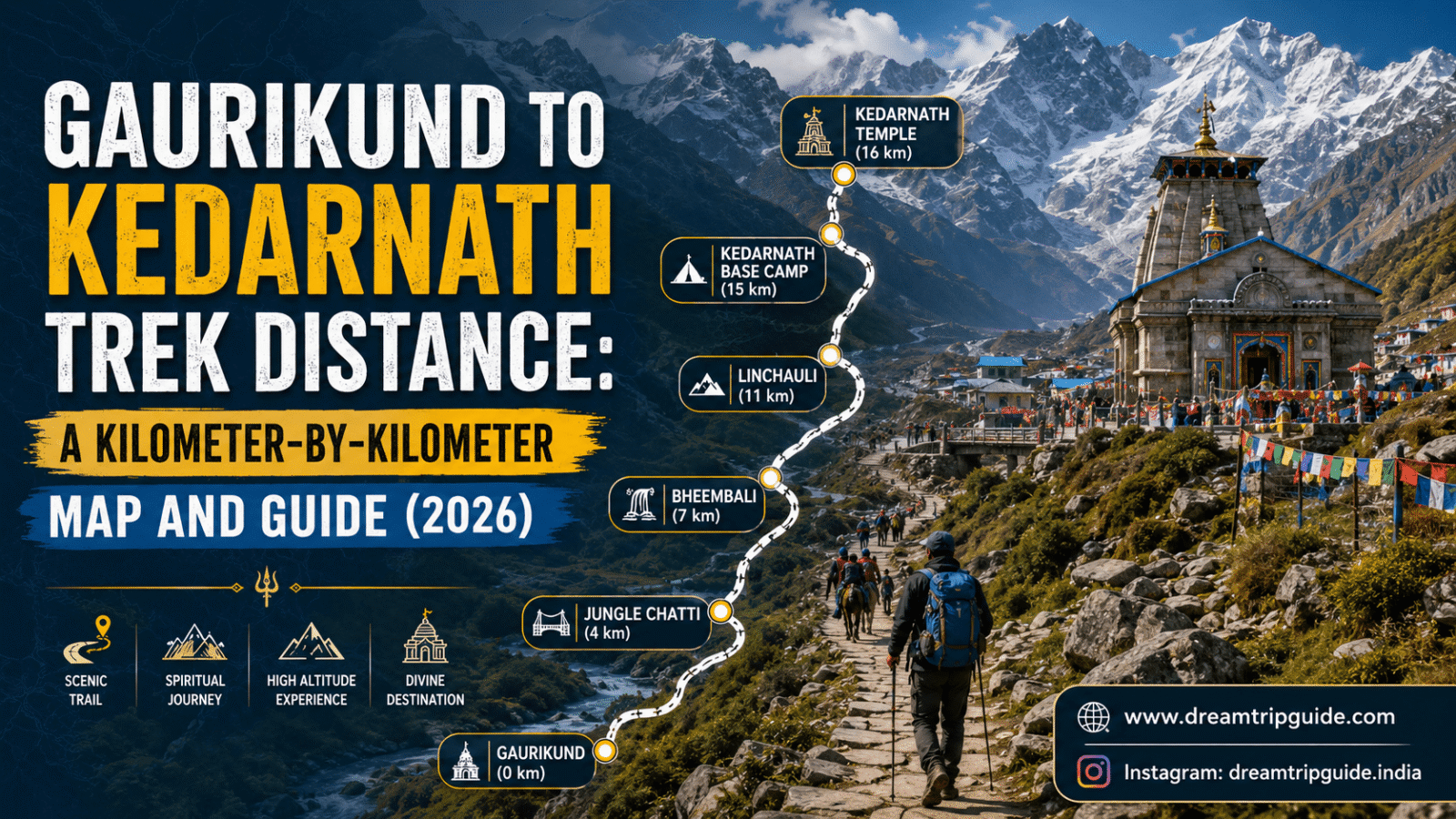
Planning the 16km Kedarnath trek in 2026? Read our detailed kilometer-by-kilometer guide from Gaurikund, featuring official milestones, altitude maps, trekking times, and expert survival tips for a safe Yatra.
1. The Starting Line: Gaurikund to Jungle Chatti (0 km – 4 km)
The spiritual odyssey begins at Gaurikund (1,982 m), a bustling pilgrim town that serves as the last motorable point. After taking a holy dip in the hot springs (Gauri Kund), you cross the biometric registration point where your 2026 Yatra QR code is scanned. The first 4 kilometers to Jungle Chatti are often considered the “warm-up” phase, but don’t let that fool you. The incline starts immediately.
As you leave the Gaurikund base, the trail is well-paved with stones and guarded by iron railings. This segment is characterized by thick forest cover and the constant roar of the Mandakini River below. Jungle Chatti (4 km) is your first major milestone. By the time you reach here, you have already ascended roughly 400 meters. For many solo travelers, this is where the reality of the trek sets in. The air is still oxygen-rich here, so use this stretch to find your breathing rhythm.
Milestone Table: Segment 1
| Milestone | Distance from Start | Altitude | Key Facilities |
| Gaurikund | 0 km | 1,982 m | Biometric Check, Hot Springs, Pony Stand |
| Parvati Temple | 1.5 km | 2,150 m | Small Tea Stalls, Resting Benches |
| Jungle Chatti | 4 km | 2,380 m | Rain Shelters, First Aid, Drinking Water |
🏔️ Kedarnath Yatra Checklist 2026: 12 Must-Have Items for a Successful Trek

- ✅Altitude Protection: Prevents breathlessness and headaches caused by low oxygen levels at Kedarnath top.
- ✅Instant Energy: Helps you recover faster during the steep 16km trek from Gauri Kund.
- ✅Lightweight: Fits easily in your side pocket and weighs almost nothing.

- ✅Unbeatable Grip: Anti-skid soles designed specifically for slippery mountain rocks and mud.
- ✅100% Waterproof: Keeps your feet dry during sudden rains or while crossing small streams.
- ✅Ankle Support: Prevents injuries on the uneven zig-zag paths of the Kedar valley.

- ✅Total Coverage: Covers you and your large backpack completely during heavy mountain rains.
- ✅Quick Dry: Much better than heavy raincoats; it's light and dries in minutes.
- ✅Windproof: Blocks the freezing cold winds that follow the rain at high altitudes.

- ✅Heat Retention: Advanced fabric that locks body heat even when the temperature drops to 0°C.
- ✅Odour Resistant: Can be worn for multiple days without feeling unhygienic.
- ✅Slim Fit: Fits comfortably under your regular clothes without looking bulky.

- ✅Cold Protection: Battery dies fast in cold weather; this ensures your phone stays alive for photos.
- ✅Massive Capacity: Charge your phone and camera 4-5 times fully during the trip.
- ✅Fast Charging: Don't waste time at charging points in tea stalls.

- ✅Knee Support: Reduces 25% of the pressure on your knees during the steep descent.
- ✅Better Balance: Essential for crossing slippery patches or walking in narrow trails.
- ✅Anti-Shock: Absorbs ground impact to prevent wrist and shoulder pain.

- ✅12H Hot: Keep hot water/tea ready to fight the freezing cold of the Himalayas.
- ✅BPA Free: Safe and healthy stainless steel that won't rust.
- ✅Strong Body: Survives accidental drops on rocky terrains easily.

- ✅Mountain Ready: Contains pain sprays, bandages, and altitude sickness tablets.
- ✅Lightweight: Small enough to fit in any backpack side pocket.
- ✅Must Have: Medical help is far away on the trek; be your own first responder.

- ✅Hands-Free: Essential for early morning treks (3 AM) so you can use trekking poles freely.
- ✅High Brightness: Powerful beam that covers up to 100 meters clearly.
- ✅Weatherproof: Continues to work even during rain or heavy mist.
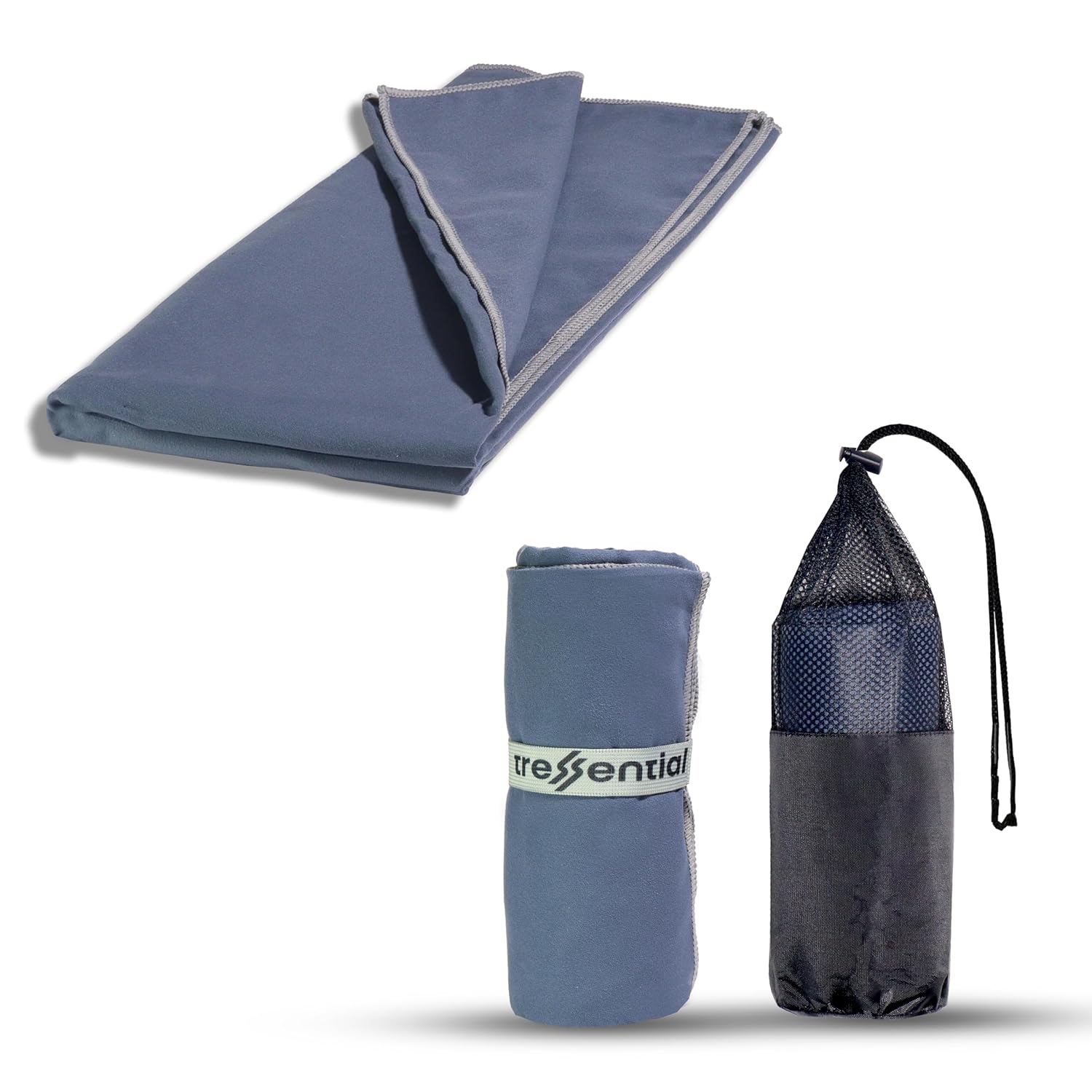
- ✅No Wet Smell: Dries in minutes so you don't carry a heavy, smelly towel in your bag.
- ✅Super Tiny: Folds into a small pouch, leaving more room for warm clothes.
- ✅Gentle: Ultra-soft fabric that is perfect for cold weather skin care.

- ✅High Altitude Protection: Himalayan sun is harsh and causes severe tanning & burns.
- ✅Non-Greasy: Doesn't feel oily while trekking or sweating.
- ✅Sweat Resistant: Stays on your skin even during high-intensity walking.

- ✅Dual Protection: Ponchos are good, but this ensures no water enters your bag.
- ✅Reflective Logo: Helps others see you in heavy mist or night treks.
- ✅Universal Fit: Fits perfectly on all 30L to 60L trekking backpacks.
2. The Mid-Point Push: Jungle Chatti to Bheembali (4 km – 7 km)
Leaving Jungle Chatti behind, the landscape begins to thin out. This 3 km stretch to Bheembali (7 km) is where most trekkers start feeling the first signs of physical fatigue. The trail becomes noticeably steeper. In 2026, the administration has increased the number of “Oxygen Relief Points” in this segment, as the rapid ascent can trigger early symptoms of AMS (Acute Mountain Sickness).
Bheembali is a strategic rest stop. It is a large, flat area equipped with massive rain shelters and government-run food stalls. For those trekking with family, this is the ideal place for a 20-minute “Power Break.” The view of the valley opens up here, offering your first real glimpse of the towering Himalayan peaks that surround the shrine. Pro-tip: Do not sit for more than 20 minutes, as your muscles will “freeze,” making the next segment significantly harder.
Milestone Table: Segment 2
| Milestone | Distance from Start | Altitude | Key Facilities |
| Rambara Bridge | 5.5 km | 2,500 m | River Crossing View, Photography Point |
| Bheembali | 7 km | 2,680 m | Large GMVN Tents, Public Toilets, Medical Post |
3. The Steep Ascent: Bheembali to Linchauli (7 km – 11 km)
This is the most mentally and physically challenging part of the entire 16 km trek. Between Bheembali and Linchauli (11 km), you will encounter the “Z-turns”—a series of steep, zigzagging stone stairs that seem never-ending. The altitude reaches over 3,000 meters here, and the oxygen levels begin to drop significantly.
Linchauli is the “High Altitude Gateway.” In 2026, it has become a major hub for overnight stays for those who cannot finish the trek in one go. The weather here is notoriously unpredictable; even in May or June, you can experience sudden hailstorms. At DreamTripGuide, we recommend all trekkers to put on their heavy woolens or ponchos before reaching Linchauli to prevent their body temperature from dropping.
Milestone Table: Segment 3
| Milestone | Distance from Start | Altitude | Key Facilities |
| Chhoti Linchauli | 9 km | 2,950 m | Small Eateries, Emergency Phone Booths |
| Linchauli | 11 km | 3,150 m | Major GMVN Camps, 24/7 Medical Relief Center |
4. The Final Stretch: Linchauli to Kedarnath Temple (11 km – 16 km)
Once you cross Linchauli, the “Base Camp” feels within reach, but the last 5 kilometers are a test of sheer willpower. The trail becomes very wide and open as you reach Rudra Point (15 km). From here, on a clear day, you can finally see the majestic spire of the Kedarnath Temple in the distance. The sight usually provides a massive adrenaline boost that carries trekkers through the final kilometer.
The last kilometer from the Base Camp to the Kedarnath Temple (16 km) is a relatively flat walk across the glacial plaza. However, because you are now at 3,583 meters (11,755 feet), every step feels like a mile. The air is thin, and the wind is piercing. Reaching the temple steps marks the end of a 1,600-meter vertical climb. This final segment is not about speed; it’s about deep, conscious breathing and soaking in the spiritual aura.
Milestone Table: Segment 4
| Milestone | Distance from Start | Altitude | Key Facilities |
| Rudra Point | 15 km | 3,500 m | Viewpoint, Mobile Network Zone (Jio/BSNL) |
| Base Camp | 15.5 km | 3,553 m | Main Pilgrim Shelter, Baggage Counters |
| Kedarnath Temple | 16 km | 3,583 m | The Shrine, Puja Counters, VIP Queue |
5. Expert Review: Trek Difficulty & 2026 Safety Protocols
As a consultant who has tracked the post-2013 route changes, I categorize the Kedarnath trek as “Moderate to Strenuous.” In 2026, the administration has introduced strict timing rules: No pilgrim is allowed to start from Gaurikund after 1:30 PM, and the trail is officially “closed” for ascent at night to prevent accidents.
The “Expert Verdict” for 2026
| Feature | Professional Advice |
| Preparation | Minimum 4 weeks of cardio (brisk walking/jogging) is mandatory. |
| Health | Carry an oximeter; if your oxygen drops below 80, stop immediately. |
| Logistics | Start at 4:30 AM to reach the temple before the evening Aarti. |
| Weather | 2026 is seeing more localized rain; high-quality silicon ponchos are a must. |
6. Critical Dos and Don’ts for the 16km Trek
To ensure you aren’t part of the emergency evacuation statistics, follow these strict mountain protocols.
What to Do (Kya Karein):
- DO Sip Water Constantly: Drink 3-4 liters of water mixed with ORS to stay hydrated.
- DO Walk on the Valley Side: Always keep yourself on the inside of the trail; let the ponies pass on the edge side.
- DO Use Trekking Poles: A pair of poles reduces the weight on your knees by 25% during the 16km descent.
- DO Carry Your QR Code: Keep a physical printout of your registration in a waterproof pouch.
What NOT to Do (Kya Na Karein):
- DON’T Rush the Ascent: High-altitude trekking is a marathon, not a sprint. Maintain a “turtle pace.”
- DON’T Ignore Headaches: A persistent headache is the first sign of AMS. Inform the nearest medical post.
- DON’T Use Plastic Bottles: Uttarakhand has strict anti-plastic rules; use reusable steel or copper bottles.
- DON’T Trek Alone at Night: Wild animals and sudden temperature drops make night trekking extremely dangerous.
FAQs (Frequently Asked Questions)
Q1. What is the total walking distance from Gaurikund to Kedarnath?
The official one-way distance is 16 kilometers. The total round trip is 32 kilometers.
Q2. How long does it take to complete the trek?
An average healthy person takes 6 to 8 hours to go up and 4 to 6 hours to come down.
Q3. Is the Kedarnath trek difficult for beginners?
It is “Moderately Challenging.” While the path is paved, the altitude and steep inclines require basic physical fitness.
Q4. Can we start the trek at night?
No. For safety, the last departure from Gaurikund is allowed only until 1:30 PM. The trail re-opens at 4:00 AM.
Q5. Are there medical facilities on the 16km route?
Yes, there are major medical relief posts at Jungle Chatti, Bheembali, Linchauli, and the Temple Base Camp.
Q6. Is mobile network available during the trek?
Jio and BSNL provide patchy but usable 4G coverage up to Bheembali and near the Temple. Airtel is less reliable.
Q7. Can I hire a pony midway through the trek?
Yes, if you get tired, you can find registered pony stands at Jungle Chatti and Bheembali for a prorated fare.
Q8. What is the best time to start the trek from Gaurikund?
4:30 AM to 5:00 AM is the ideal window to avoid the afternoon heat and reach the temple by early afternoon.
Q9. Are there toilets on the way?
Yes, the administration has placed eco-toilets and water points every 1-2 km along the trail.
Q10. Do I need any special permits for the trek?
Only your Char Dham Yatra Registration Slip (QR Code) is required to pass the Gaurikund checkpoint.
Connect with Us!
For real-time weather updates from the Kedar Valley and stunning 2026 trail reels, follow our journey:
👉 Instagram ID: @dreamtripguide.india
For more deep-dive guides, visit DreamTripGuide. Safe travels on your sacred climb! 🚀🏔️📈
👉 Also Read – Book Kedarnath Package
