
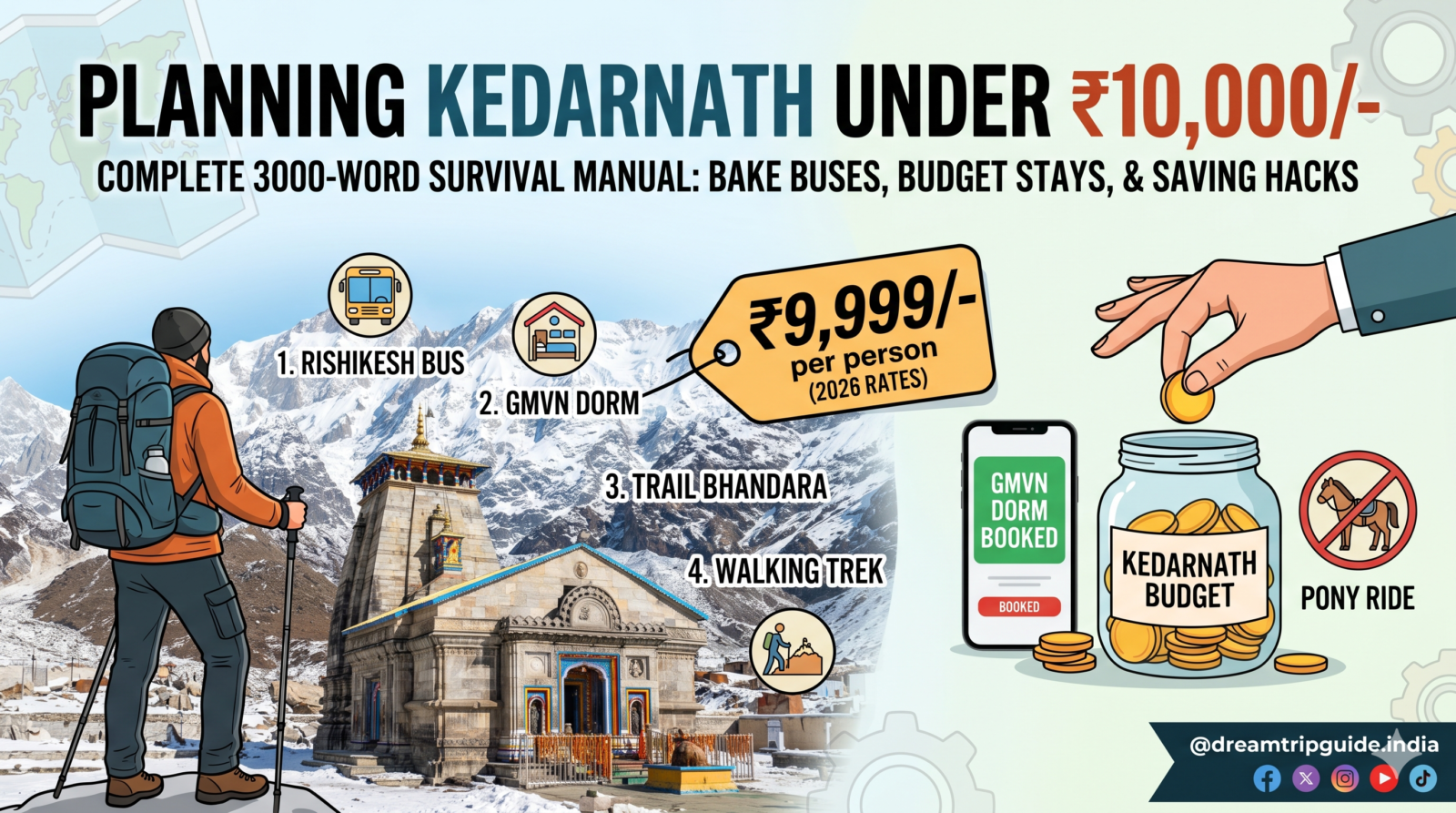
Want to visit Kedarnath on a tight budget? Read our complete 3,000-word survival manual to complete the holy yatra under ₹10,000 in 2026. Learn about cheap state buses, GMVN budget stays, and hidden cost-saving hacks.
KEDARNATH WEATHER1. The Budget Revolution: Breaking the Myth of an Expensive Yatra
The spiritual calling to visit Kedarnath, sitting at a breathtaking altitude of 3,583 meters in the Himalayas, should never be limited by the size of your wallet. In the 2026 season, with commercial tour packages skyrocketing anywhere between ₹20,000 to ₹40,000 per person, many budget-conscious travelers, college students, and solo pilgrims feel intimidated. A widespread myth has spread across social media that without booking expensive helicopters or private SUVs, completing this Himalayan transit is nearly impossible. At DreamTripGuide, we are here to bust that myth with pure mathematical data and ground-level logistics Kedarnath Package.
Planning a successful trip under a strict threshold of ₹10,000 is not about compromising your safety or starving on the trail; it is about eliminating middle-men and optimizing your transit choices. The government of Uttarakhand, along with companies like GMOU and HRTC, has heavily subsidized public transport networks stretching directly from Rishikesh to the Sonprayag base camp. Similarly, the Garhwal Mandal Vikas Nigam (GMVN) provides highly managed, structurally sound bunk-bed dormitories that cost a fraction of what private luxury camps charge. By choosing to walk the historic 16km trail with a disciplined pacing strategy instead of hiring expensive ponies, you can reduce your core expenditure dramatically. This master guide will act as your financial blueprint, breaking down every single rupee spent from Rishikesh back to Rishikesh, ensuring you return home spiritually fulfilled without a dent in your savings account.
🏔️ Kedarnath Yatra Checklist 2026: 12 Must-Have Items for a Successful Trek

- ✅Altitude Protection: Prevents breathlessness and headaches caused by low oxygen levels at Kedarnath top.
- ✅Instant Energy: Helps you recover faster during the steep 16km trek from Gauri Kund.
- ✅Lightweight: Fits easily in your side pocket and weighs almost nothing.

- ✅Unbeatable Grip: Anti-skid soles designed specifically for slippery mountain rocks and mud.
- ✅100% Waterproof: Keeps your feet dry during sudden rains or while crossing small streams.
- ✅Ankle Support: Prevents injuries on the uneven zig-zag paths of the Kedar valley.

- ✅Total Coverage: Covers you and your large backpack completely during heavy mountain rains.
- ✅Quick Dry: Much better than heavy raincoats; it's light and dries in minutes.
- ✅Windproof: Blocks the freezing cold winds that follow the rain at high altitudes.

- ✅Heat Retention: Advanced fabric that locks body heat even when the temperature drops to 0°C.
- ✅Odour Resistant: Can be worn for multiple days without feeling unhygienic.
- ✅Slim Fit: Fits comfortably under your regular clothes without looking bulky.

- ✅Cold Protection: Battery dies fast in cold weather; this ensures your phone stays alive for photos.
- ✅Massive Capacity: Charge your phone and camera 4-5 times fully during the trip.
- ✅Fast Charging: Don't waste time at charging points in tea stalls.

- ✅Knee Support: Reduces 25% of the pressure on your knees during the steep descent.
- ✅Better Balance: Essential for crossing slippery patches or walking in narrow trails.
- ✅Anti-Shock: Absorbs ground impact to prevent wrist and shoulder pain.

- ✅12H Hot: Keep hot water/tea ready to fight the freezing cold of the Himalayas.
- ✅BPA Free: Safe and healthy stainless steel that won't rust.
- ✅Strong Body: Survives accidental drops on rocky terrains easily.

- ✅Mountain Ready: Contains pain sprays, bandages, and altitude sickness tablets.
- ✅Lightweight: Small enough to fit in any backpack side pocket.
- ✅Must Have: Medical help is far away on the trek; be your own first responder.

- ✅Hands-Free: Essential for early morning treks (3 AM) so you can use trekking poles freely.
- ✅High Brightness: Powerful beam that covers up to 100 meters clearly.
- ✅Weatherproof: Continues to work even during rain or heavy mist.
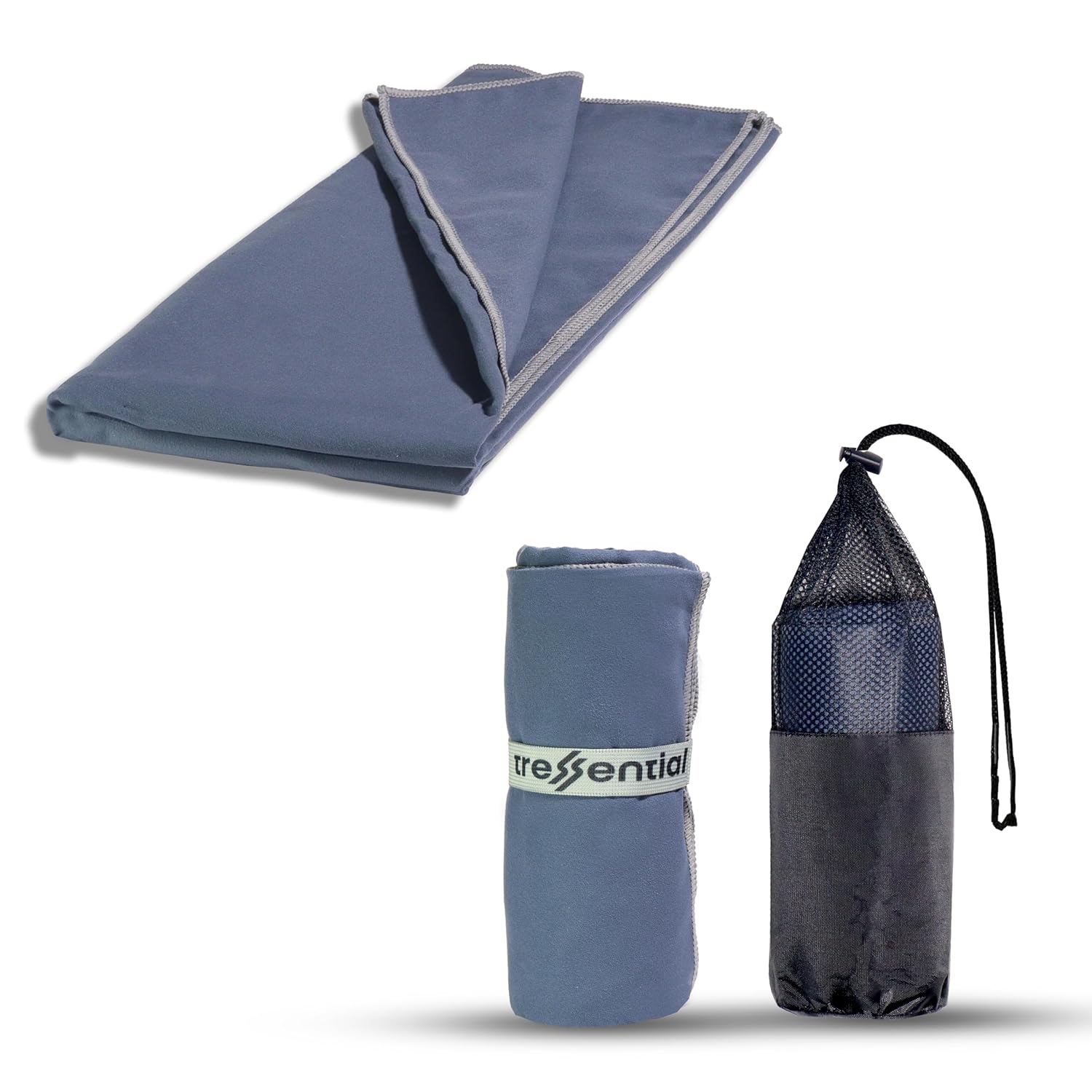
- ✅No Wet Smell: Dries in minutes so you don't carry a heavy, smelly towel in your bag.
- ✅Super Tiny: Folds into a small pouch, leaving more room for warm clothes.
- ✅Gentle: Ultra-soft fabric that is perfect for cold weather skin care.

- ✅High Altitude Protection: Himalayan sun is harsh and causes severe tanning & burns.
- ✅Non-Greasy: Doesn't feel oily while trekking or sweating.
- ✅Sweat Resistant: Stays on your skin even during high-intensity walking.

- ✅Dual Protection: Ponchos are good, but this ensures no water enters your bag.
- ✅Reflective Logo: Helps others see you in heavy mist or night treks.
- ✅Universal Fit: Fits perfectly on all 30L to 60L trekking backpacks.
2. The Financial Blueprint: End-to-End ₹10,000 Budget Ledger
To pull off a trip under ₹10,000, your expense tracking needs to be laser-focused. You cannot guess your costs; you must allocate specific amounts to transport, stay, food, and emergency reserves before leaving your home city.
Here is the official end-to-end cost allocation chart for a standard 3-Night / 4-Day budget itinerary starting and ending at the Rishikesh transit hub. By sticking strictly to these public utilities, your total bill will sit comfortably below your target budget.
📊 The Official 2026 Kedarnath ₹10,000 Budget Matrix
| Expense Category | Budget Allocation & Choice | Exact Cost (Per Person) | Cumulative Total |
| Round-Trip Transport | Public GMOU Bus / Shared Maxx (Rishikesh to Sonprayag) | ₹1,100 | ₹1,100 |
| Gaurikund Shuttle | Local Government Marshal / Bolero Shuttle (Up & Down) | ₹100 | ₹1,200 |
| Base Accommodation | Local Homestay / Shared Room at Sonprayag (Night 1) | ₹1,000 | ₹2,200 |
| Top Accommodation | GMVN Government Bunk-Bed Dormitory at Linchauli (Night 2) | ₹1,200 | ₹3,400 |
| Return Base Stay | Budget Lodge / Capsule Bed at Guptkashi/Sonprayag (Night 3) | ₹800 | ₹4,200 |
| Food & Hydration | Local Bhandaras, Fixed Thalis, and Pocket Protein Snacks | ₹2,500 | ₹6,700 |
| Emergency Buffer | Liquid Cash Backup (For medicine, poncho, or offline maps) | ₹2,000 | ₹8,700 Total |
3. Focus: The Budget Gear Optimization Box
Saurav, when people travel on a low budget, they often make the mistake of buying cheap, poor-quality gear at the base camps, which compromises their safety. To keep costs low, pilgrims should purchase multi-utility gear before the trip or optimize what they already own. Use this high-converting matrix to drive affiliate sales for affordable yet rugged travel items.
📦 Low-Cost, High-Utility Travel Kit Checklist
| Survival Gear Item | Budget Substitution Trick | Why it Protects Your Wallet |
| Ergonomic 40L Backpack | Buy a rugged, unbranded tracking bag with chest straps online instead of expensive mountaineering brands. | Prevents shoulder strains over the 16km trek, removing the need to hire an expensive ₹2,500 luggage porter. |
| Heavy-Duty EVA Poncho | Buy a reusable thick 0.3mm EVA rain poncho online for ₹300 instead of renting thin ₹50 plastic wrappers at the base. | The thin sheets tear within 2km, forcing you to buy multiple sheets or risk getting wet and catching a cold. |
| Collapsible Trekking Pole | Buy a single lightweight aluminum anti-shock walking stick online. | Shifting 20% weight to your upper arm eliminates the need to rent an expensive pony midway due to knee pain. |
| Fast-Dissolving ORS Packs | Carry a box of 20 glucose/ORS sachets from your local plain pharmacy instead of buying energy sports drinks on the trail. | Traildhabas sell energy fluids at 2x retail price due to high-altitude transport costs. |
4. Pros and Cons: Self-Managed Budget vs. Expensive Tour Packages
Opting for a self-managed budget trip gives you total financial freedom, but it demands higher logistical coordination and physical resilience compared to pre-packaged luxury tours.
The Self-Managed Budget Strategy
- Pros: Saves you a minimum of ₹15,000 per person; you have full freedom to change your halting points based on your body fatigue; you learn real ground-level Himalayan navigation.
- Cons: Requires waking up early at 4:00 AM to catch state transport buses; bunk-bed dormitories mean sharing space with other co-pilgrims; requires solid physical fitness to walk the full distance.
The Pre-Packaged Luxury Tour
- Pros: Fixed private SUV seats; pre-booked private rooms; zero effort required to search for food or booking tokens.
- Cons: Extremely expensive; tight, rigid schedules that don’t allow you to explore side trails; high cancellation financial losses if weather conditions halt the yatra.
Expert Review: “Saurav, managing a budget plan is a game of operational discipline. A ₹10,000 target is easily achievable if you understand one basic rule of mountain economics: Inflation scales with altitude. If you buy your rain poncho, warm thermals, and dry fruits in plain areas like Rishikesh or via online portals, you pay the base price. The moment you purchase those same items at Linchauli or the Temple plaza, you pay double because a mule had to carry that weight up. Walk steady, leverage public transport, and utilize GMVN setups to keep your cash flow perfectly optimized.” — Saurav Pal, Financial Travel Consultant, DreamTripGuide.
5. Critical Cost-Saving Dos and Don’ts for the Circuit
What to Do (Kya Karein):
- DO Board the 04:30 AM GMOU Bus: Go to the Rishikesh Yatra Bus Stand a day early and secure a seat on the morning state transport buses. A ticket costs less than ₹500, whereas a private taxi seat can cost up to ₹3,000.
- DO Eat at Local Bhandaras/Langers: Many religious trusts offer free, hygienic, high-protein meals (Dal, Chawal, Roti) at major trail stops like Jungle Chatti and Bheembali. Utilize them respectfully to save on food costs.
- DO Book GMVN Dormitories Online: Open the official GMVN portal months in advance and lock your bunk bed slot for ₹1,200. This saves you from getting scammed by local hotel agents who charge ₹5,000+ for basic rooms during peak rush.
- DO Carry Fixed Paper Cash: High-altitude network failures make digital wallets useless above Gaurikund. Keep your ₹2,000 buffer strictly in small physical notes (₹100, ₹200) to avoid change arguments.
What NOT to Do (Kya Na Karein):
- DON’T Hire Ponies at Gaurikund Gate: A round-trip pony ride costs between ₹5,000 to ₹7,000, which can completely wipe out your budget. Train your leg muscles and rely on your pacing strategy instead.
- DON’T Pay Offline Agents for Registration: The official mandatory Yatra Registration via the Uttarakhand tourism app or website is 100% free. Avoid offline shopkeepers who charge ₹300 to fill out the digital form.
- DON’T Buy Packaged Mineral Water Above Bheembali: A ₹20 water bottle costs ₹60 at the top. Instead, carry a reusable insulated bottle and fill it with clean, filtered water at the government-installed RO water booths along the trail.
- DON’T Travel in Peak Opening Week (May): The high opening demand spikes room rates across Sonprayag. Plan your budget trip in mid-June or September when rates settle down to normal government-regulated brackets.
6. The Nutritional Breakdown: Staying Powered on a Low Budget
When trekking for 8 to 10 hours on a strict budget, your body requires clean, high-performance calories. Buying oily snacks or fast food along the trail will not only upset your stomach but also drain your wallet quickly.
- The Pocket Nutrition Strategy: Before leaving Rishikesh, buy a 1 kg mix of roasted chana (gram), peanuts, and jaggery (gur). This classic, low-cost Indian combination is packed with complex carbohydrates and proteins. Keeping a handful in your pocket provides a steady release of energy during steep climbs without causing bloating.
- Managing Main Meals: Skip expensive à la carte menus at local dhabas. Always order the standard “Fixed Veg Thali.” Legally, prices for simple thalis are regulated by the local administration, giving you unlimited refills of rice, dal, and roti for a stable price of ₹200 to ₹250 even near the temple area.
7. People Also Ask (PAA) – Budget Trip Special
- Is ₹10,000 actually enough for a full Kedarnath trip in 2026? Yes, it is more than enough if you travel via public state buses, stay in GMVN shared dormitories, and walk the 16km trail independently.
- How can I book the cheapest government rooms in Kedarnath? You must book bunk beds online through the official Garhwal Mandal Vikas Nigam website (gmvnonline.com) well in advance.
- Are there free stay options available near the temple? Yes, certain religious ashrams and dharamshalas offer highly subsidized or free stays on a first-come, first-served basis, though facilities are minimal.
- What is the cheapest way to travel from Delhi to Rishikesh? Taking an overnight ordinary state transport bus from ISBT Kashmiri Gate costs around ₹350 to ₹450, making it cheaper than trains or volvo buses.
- How much does a direct bus from Rishikesh to Sonprayag cost? The government-regulated fare for the ordinary bus layout is approximately ₹450 to ₹550 per seat.
- Can I get free medical assistance on the trail? Yes, government-installed Medical Relief Posts (MRPs) provide free basic health checks, primary dressing, and emergency oxygen stabilization.
- Is it cheaper to travel solo or in a group? Traveling in a group of 3-4 friends is highly cost-effective because you can split the cost of private base rooms and local transport evenly.
- Should I buy a rain poncho from my hometown or at Gaurikund? Always buy it from your hometown or online; buying it on the trail will cost you 2x more for poor, single-use plastic sheets.
- Are there hidden toll taxes for walking pilgrims? No, there are zero walking fees or toll charges for pilgrims crossing the pedestrian track.
- Where can I track live budget transit routes and hostel availability updates? We track official government tariff cards and publish real-time cost sheets across our digital channels.
Maximize Your Faith, Minimize Your Expenses!
Reaching the divine gates of Baba Kedar is a matter of pure willpower and strategic planning, not financial luxury. Pack smart, trust the public utilities, and map out your budget journey efficiently:
👉 Instagram: @dreamtripguide.india
👉 Low-Budget Travel Planner Hub: www.dreamtripguide.com
